How Long Has Cancer Been Around? Here Is What the Evidence Says
Cancer has existed throughout much of animal evolution and has been identified in ancient human remains. The oldest evidence is incomplete because soft tissues rarely survive, so bone tumors are easier to find in fossils than many internal cancers.
Key Takeaways
- Cancer has existed throughout much of animal evolution and has been identified in ancient human remains.
- The oldest evidence is incomplete because soft tissues rarely survive, so bone tumors are easier to find in fossils than many internal cancers.
- Cancer is more common in older age because genetic changes can build up in cells over time.
- Modern lifestyles and exposures can affect cancer risk, but cancer was present long before industrialization.
- Most everyday symptoms do not mean cancer, but persistent or unexplained changes should be assessed by a clinician.
Cancer is not a modern disease: evidence shows that cancers have occurred in humans and other animals for millions of years. It is diagnosed more often today largely because people live longer, populations are larger, and medical tests can detect disease more accurately.
Overview: Cancer Is Ancient, Not New
How long has cancer been around? The available evidence indicates that cancer has existed for millions of years and likely appeared early in the evolution of multicellular animals. Scientists have found tumors in fossils, ancient Egyptian remains, and animal species ranging from fish and reptiles to mammals. Cancer is therefore not solely a disease of modern life, although it is diagnosed more often today.
Most physical changes people notice, such as tiredness, pain, lumps, coughs, or changes in digestion, are caused by common and non-cancerous conditions. Still, a symptom that persists, worsens, or is unexplained deserves medical review. A clinician can consider the person’s symptoms, age, health history, and examination findings before deciding whether testing is needed.
Cancer is a broad term for diseases in which abnormal cells grow in an uncontrolled way and may invade nearby tissue or spread to other parts of the body. It is not one single illness, and its causes, behavior, and treatment differ substantially by cancer type. The long history of cancer reflects a basic biological challenge: cells must divide to repair and maintain the body, and occasional errors can occur during that process.
What Evidence Shows About Cancer in the Ancient World
Studying ancient cancer is difficult. Most cancers begin in soft tissues, such as the breast, lung, bowel, or pancreas, and soft tissues usually break down after death. Bones survive much longer, so archaeological and fossil evidence tends to identify cancers that affected bone or cancers that spread to bone. This means the number of ancient cancers found is almost certainly lower than the number that actually occurred.
Researchers have described possible tumors in fossilized animals that lived millions of years ago, including dinosaurs and early human relatives. They have also identified tumors in ancient Egyptian mummies and skeletons from different historical periods. Some findings show destructive or abnormal bone changes consistent with cancer, while others require careful interpretation because infection, injury, and other diseases can produce similar changes.
Ancient medical writings also contain descriptions that may refer to cancer. Egyptian texts from roughly 1600 BCE describe breast masses and note that there was no known treatment for some of these conditions. The Greek physician Hippocrates later used the term karkinos, meaning crab, because some tumors and their surrounding blood vessels appeared crab-like. The word cancer developed from the Latin translation of this term.
These records do not mean that every ancient description can be diagnosed with certainty by modern standards. However, taken together with paleontological and archaeological findings, they strongly support the conclusion that cancer has been part of human and animal biology for a very long time.
Why Cancer May Seem More Common Today
In many countries, cancer is more visible today than it was in the distant past. One important reason is longer life expectancy. Many cancers become more likely with age because cells have had more time to divide, accumulate genetic changes, and experience environmental exposures. In earlier eras, more people died young from infections, injuries, childbirth complications, malnutrition, or other illnesses before they reached ages when many cancers are most common.
Modern medicine also finds cancers that previous generations could not identify. Imaging tests, laboratory analysis, endoscopy, pathology, and organized screening programs can detect some cancers at earlier stages, including before symptoms develop. Better medical records and cancer registries also provide a clearer picture of how often cancer occurs in a population.
At the same time, certain modern exposures can increase the risk of particular cancers. Tobacco use, ultraviolet radiation, some infections, alcohol, obesity, physical inactivity, occupational exposures, and air pollution are examples of factors that may contribute to risk. Risk is influenced by a combination of inherited genes, age, chance cellular changes, environment, and lifestyle; having a risk factor does not mean a person will develop cancer.
Some cancer trends have improved through prevention. For example, reducing tobacco use lowers the risk of several cancers, and vaccination against certain viruses can prevent cancers linked to those infections. These advances show that cancer is ancient, but many cases and deaths can still be prevented or reduced through evidence-based public health measures and timely care.
How Cancer Develops in the Body
The body is made of trillions of cells that follow signals telling them when to grow, divide, repair damage, and die. Cancer can begin when changes, also called mutations, affect genes that help control these processes. A single abnormal change is usually not enough to cause cancer. It often takes a series of changes over time for a cell to become cancerous.
Some mutations are inherited from a parent, but most arise during a person’s lifetime. They may occur randomly as cells divide, or they may be influenced by exposures such as tobacco smoke, radiation, certain chemicals, chronic inflammation, or cancer-related infections. The immune system can recognize and remove many abnormal cells, but this protective process is not perfect.
Not all tumors are cancer. A tumor is an abnormal mass of tissue, and it may be benign or malignant. Benign tumors do not invade nearby tissues or spread to distant organs, although some may still require treatment because of their size or location. Malignant tumors are cancers that can invade or spread. Only clinical assessment and, when needed, testing can establish what a particular mass or symptom represents.
Because cancer is a biological process rather than a single modern exposure, it can occur in people who live health-conscious lives and in people with no known family history. This is not a personal failure. Understanding risk factors can support prevention, but it cannot predict every individual case.
Symptoms: Common Changes and Red Flags
Most symptoms that raise concern about cancer have more common explanations. A new lump may be a cyst, swollen lymph node, or benign growth; fatigue may be related to sleep, stress, anemia, infection, or many other conditions; and digestive changes are often linked to diet or temporary illness. It is sensible to seek medical advice rather than assume the cause.
Symptoms that should be checked, especially when they do not improve or have no clear explanation, include a new or growing lump; unusual bleeding; a persistent change in bowel or bladder habits; ongoing difficulty swallowing; unexplained weight loss; persistent pain; a cough or hoarseness that does not settle; a changing mole or skin lesion; or a wound that does not heal. These symptoms do not diagnose cancer, but they can guide a clinician toward appropriate evaluation.
The urgency depends on the symptom. Sudden severe symptoms, heavy bleeding, coughing up blood, severe shortness of breath, new weakness on one side of the body, or confusion require urgent medical attention. For less urgent but persistent changes, arranging a routine appointment is appropriate and can provide reassurance as well as prompt diagnosis when treatment is needed.
- Pay attention to changes that last longer than expected or continue to worsen.
- Make a note of when symptoms began, what makes them better or worse, and any relevant family history.
- Continue recommended screening even if there are no symptoms.
How Doctors Investigate a Possible Cancer
A doctor starts by listening carefully to the person’s concerns and reviewing symptoms, medical history, medicines, family history, and potential risk factors. A physical examination may focus on the affected area while also checking general health. In many cases, this first assessment identifies a non-cancerous explanation or determines that simple monitoring is appropriate.
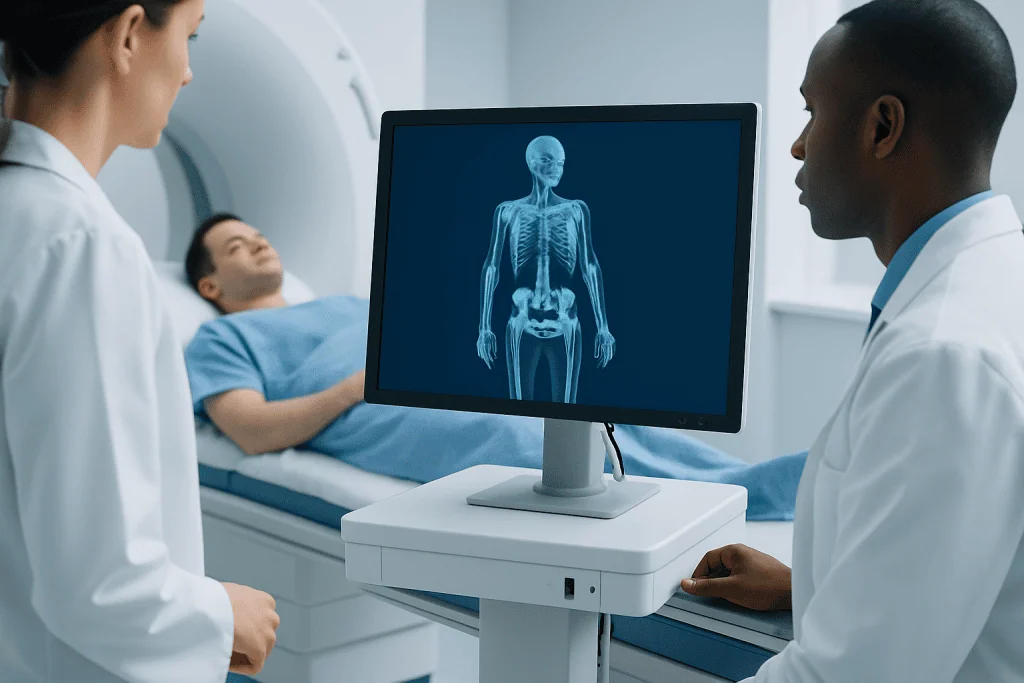
If further investigation is needed, the next steps may include blood or urine tests, ultrasound, X-ray, computed tomography (CT), magnetic resonance imaging (MRI), mammography, or an endoscopic examination. The right test depends on the symptom and the part of the body involved. Blood tests alone generally cannot diagnose most cancers, but they may reveal information that helps guide further evaluation.
A biopsy is often needed to confirm cancer. During a biopsy, a small sample of tissue or cells is removed and examined by a pathologist under a microscope. Pathology can identify the cell type and provide details that help clinicians plan care. If cancer is confirmed, additional tests may assess its stage, meaning its size, location, and whether it has spread.
Diagnostic pathways can feel uncertain, but testing does not mean cancer is expected. It is a structured way to find the cause of a symptom and ensure that any condition needing treatment is recognized as early as possible.
Prevention, Screening, and When to Seek Medical Care
It is not possible to prevent every cancer, but people can lower the risk of several types. Helpful measures include avoiding tobacco, limiting alcohol, protecting skin from excessive ultraviolet exposure, maintaining a healthy body weight where possible, staying physically active, eating a balanced diet, and following workplace safety guidance. Vaccines that protect against human papillomavirus (HPV) and hepatitis B can reduce the risk of cancers associated with these infections.
Screening is different from testing symptoms. Screening is offered to people without symptoms who are in age groups or risk categories where a test may find cancer or pre-cancerous changes early. Recommendations vary between countries and individuals, so a doctor can advise on screening for cervical, breast, colorectal, lung, or other cancers based on age, sex, family history, and personal risk.
Medical care should be sought for a new symptom that persists beyond a few weeks, keeps returning, becomes more severe, or causes concern. A prompt appointment is also appropriate for a growing lump, unexplained bleeding, a changing mole, unexpected weight loss, or a lasting alteration in normal body habits. Early assessment is useful even when the eventual cause is harmless.
Acibadem International’s multidisciplinary specialists and JCI-accredited hospitals support international patients who need evaluation and treatment for cancer-related concerns. A qualified healthcare professional can help interpret symptoms, discuss appropriate screening, and decide whether further tests are necessary.
Frequently asked questions
How long has cancer been around in humans?
Cancer has likely affected humans for millions of years, although direct evidence is limited because most ancient soft tissues do not survive. Scientists have identified evidence consistent with tumors in ancient human remains, while historical writings from ancient Egypt and Greece also describe conditions that may have been cancer.
Did cancer exist before modern pollution and processed foods?
Yes. Cancer existed long before industrial pollution, processed foods, and modern technology. However, some present-day exposures, including tobacco, ultraviolet radiation, certain workplace chemicals, and obesity, can influence the risk of specific cancers.
Why was cancer less commonly reported in ancient times?
Cancer was harder to recognize and record in the past, especially cancers affecting internal organs. People also had shorter average lifespans in many historical periods, and many cancers are more likely to develop later in life.
Can fossils prove that dinosaurs had cancer?
Some fossilized bones show abnormalities that are consistent with tumors, including cancerous tumors. However, diagnosis from fossils can be challenging because injury, infection, and other conditions may leave similar marks, so scientists interpret each finding carefully.
Does having a cancer symptom mean a person has cancer?
No. Most symptoms that may be associated with cancer are more often caused by non-cancerous conditions. A symptom that is persistent, unexplained, worsening, or unusual should be discussed with a doctor so its cause can be assessed.
Can cancer be prevented?
Not every cancer can be prevented because age, inherited factors, and random cellular changes also play a role. Still, avoiding tobacco, protecting the skin from intense sun exposure, limiting alcohol, staying active, and receiving recommended vaccines and screening can reduce risk for some cancers.
References
- World Health Organization
- International Agency for Research on Cancer
- National Cancer Institute
- American Cancer Society
- Cancer Research UK
This article is for general information only and is not a substitute for professional medical advice. Please consult a qualified doctor about your individual situation.
Oncology care in Turkey — second opinion and treatment plan
JCI-accredited · board-certified surgeons · reply within 24h
Add us as a Preferred Source to see more of our trusted health content across Google Search, AI Overviews and Discover.