How Many Hairs Are on a Human Head? Density, Loss Rates, and What’s Normal

A typical human scalp holds roughly 80,000 to 120,000 hairs. Hair density differs from person to person and can vary by hair color, age, and genetics.
Key Takeaways
- A typical human scalp holds roughly 80,000 to 120,000 hairs.
- Hair density differs from person to person and can vary by hair color, age, and genetics.
- Losing 50 to 100 hairs per day is often part of the normal hair cycle.
- Hair thinning is not always the same as hair shedding; pattern, duration, and scalp changes matter.
- A doctor should assess sudden, patchy, or progressive hair loss, especially if it comes with itching, pain, or scalp inflammation.
Most adults have about 80,000 to 120,000 hairs on the scalp, although the exact number varies with genetics, hair color, age, and natural hair density. Shedding around 50 to 100 hairs a day is usually normal because scalp hairs grow in repeating cycles of growth, rest, and release.
Overview: How many hairs are on a human head?
Most adults have about 80,000 to 120,000 hairs on the scalp. This range is considered normal, and the exact number depends on natural hair density, genetics, age, and sometimes hair color. In general, lighter hair shades tend to have a higher average strand count, while darker or red hair may have fewer individual hairs but sometimes thicker strands.
Hair count and hair density are related but not identical. Hair count refers to the total number of scalp hairs, while density describes how closely packed the follicles are in a certain area, often measured per square centimeter. Two people may have a similar total number of hairs but look quite different if one has thicker hair shafts or more tightly grouped follicles.
It is also normal for scalp hair to change over time. Many people notice some reduction in density with age, while others see changes after stress, illness, hormonal shifts, or nutritional problems. For this reason, there is no single “perfect” number of hairs that applies to everyone; what matters most is whether a person’s hair pattern is stable and healthy for them.
What affects hair density and total hair count?
Hair density is largely influenced by genetics. People are born with a fixed number of hair follicles, and the scalp cannot usually create new follicles later in life. The visible fullness of hair depends on how many of those follicles are active, how thick each shaft is, and how many hairs are in the growth phase at the same time.
Hair color is often discussed because studies have found average differences in strand count among natural hair colors. Blonde hair often has a higher average number of strands, while red hair may have fewer strands overall. However, this does not determine how full hair looks. Shaft thickness, curl pattern, and contrast with the scalp can all change the appearance of density.
Age, hormones, and medical conditions also play a role. Over time, some follicles produce finer hairs, a process called miniaturization. This is common in hereditary hair thinning, such as hair loss. Hormonal changes after pregnancy, during menopause, or with thyroid disorders may also affect how dense the hair appears.
- Genetics and family history
- Natural hair color and shaft thickness
- Age-related follicle changes
- Hormonal shifts
- Nutritional status and general health
- Hair care practices and scalp health
How much hair loss per day is normal?

Shedding about 50 to 100 hairs a day is usually considered normal. This happens because each hair follicle follows a cycle with three main stages: growth, transition, and resting. At the end of the resting stage, the hair is released, and a new one usually begins to grow from the same follicle.
Daily shedding may seem more noticeable on wash days, during brushing, or when hair is longer. In many cases, the total number lost over several days is simply being seen all at once. This can make normal shedding feel more dramatic than it really is.
Temporary increases in shedding can happen after fever, major stress, childbirth, surgery, rapid weight loss, or illness. This pattern is often due to more hairs shifting into the resting phase at the same time. If shedding continues for several months, becomes severe, or leads to visible thinning, a medical assessment is sensible.
It is also important to separate shedding from breakage. Shed hairs come out from the root and often have a tiny bulb at one end. Broken hairs snap along the shaft and may point to heat damage, chemical processing, tight hairstyles, or fragile hair structure rather than a scalp disorder.
When hair loss may be more than normal shedding
Hair loss is not always a simple matter of numbers. A person may still have a high total hair count but experience widening of the part, thinning at the temples, recession at the hairline, or reduced volume at the crown. These pattern changes can suggest hereditary thinning rather than ordinary daily shedding.
Some forms of hair loss happen in patches, while others are diffuse across the scalp. Patchy loss may occur with autoimmune conditions such as alopecia areata. Diffuse thinning may follow physical stress, nutritional deficiencies, medication changes, or endocrine disorders. Scalp symptoms such as redness, scaling, pain, burning, or scarring deserve prompt evaluation because they may signal inflammation or infection.
A gradual change in hairline shape is often described using standardized patterns in clinical practice. In men, this may be discussed in relation to Norwood stages. These patterns help doctors document progression and choose the most appropriate treatment plan, but they do not replace a full medical assessment.
How doctors assess hair density and hair loss
Doctors usually begin with a history and scalp examination. They ask when the change started, whether the loss is sudden or gradual, and whether there have been recent illnesses, emotional stress, dietary changes, pregnancy, or new medicines. They also look for a family history of pattern hair loss.
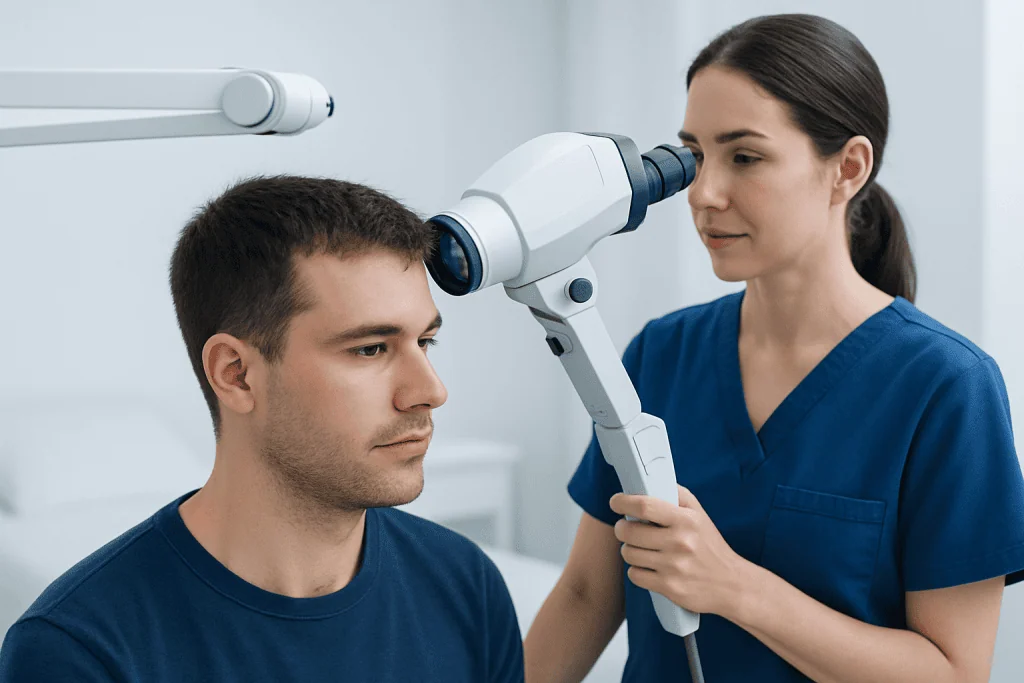
The scalp exam may include checking the hairline, crown, part width, and areas of breakage or inflammation. A pull test, dermoscopy, or close visual inspection can help distinguish shedding from shaft breakage and identify signs of miniaturization. In some cases, photographs are useful for monitoring changes over time.
When needed, further tests may look for contributing factors such as iron deficiency, thyroid disease, hormone imbalance, or autoimmune conditions. If scarring hair loss or an unusual diagnosis is suspected, a dermatologist may recommend a scalp biopsy. The goal is not only to count hairs, but to understand why density has changed and whether the follicles remain capable of healthy growth.
Treatment options for thinning hair and reduced density
Treatment depends on the cause. If the issue is temporary shedding after stress or illness, supportive care and time may be enough for recovery. If there is a nutritional deficiency or hormone-related problem, treating the underlying cause is important. A clinician may also discuss evidence-based medical treatments for pattern hair loss, depending on the individual’s age, health status, and goals.
For people with established hereditary thinning, options may include medical therapy, low-level light devices in selected cases, or procedural approaches. When hair follicles in donor areas remain strong, some individuals may be candidates for hair transplant procedures. These are generally considered after a professional assessment confirms the diagnosis, pattern stability, and donor hair suitability.
Questions about procedure planning often involve expected density rather than total scalp count. Doctors may estimate how many grafts are needed to restore certain areas, which is different from counting all hairs on the head. People exploring treatment often also want to understand how many grafts may be needed for a hair transplant and what recovery is like after hair transplant recovery time.
Near the end of the care pathway, some patients seek treatment in specialized centers. Acibadem International’s multidisciplinary specialists and JCI-accredited hospitals diagnose and treat hair and scalp conditions for international patients, including evaluation for PRP treatment or dermatology care when clinically appropriate.
Self-care, scalp health, and realistic expectations
Healthy hair care can help protect existing strands and reduce breakage, even though it cannot change the number of follicles a person was born with. Gentle washing, avoiding excessive heat, limiting harsh chemical processing, and reducing traction from very tight hairstyles can all support hair shaft health.
A balanced diet matters as well. Hair growth depends on adequate protein, iron, zinc, and other nutrients, although supplements are not always necessary unless a deficiency is present. People considering supplements should speak with a qualified doctor because taking unnecessary or excessive products may not help and can sometimes cause harm.
It also helps to keep expectations realistic. Hair naturally changes with age, and some day-to-day shedding is normal. Rather than focusing only on the number of hairs seen in a brush or shower, it is more useful to watch for a persistent change in volume, widening part lines, visible scalp, or altered hairline shape.
When to seek medical care
Medical advice is recommended if hair loss is sudden, severe, patchy, or clearly increasing over time. A person should also seek assessment if thinning comes with scalp redness, pain, itching, scaling, pustules, or scarring. These features can suggest a condition that needs early treatment.
It is also wise to consult a doctor if hair loss starts after a major illness, significant weight change, childbirth, or a new medication, or if there are other symptoms such as fatigue, menstrual changes, or signs of thyroid problems. Early evaluation can help identify treatable causes and prevent unnecessary worry.
For many people, the answer to how many hairs are on a human head is reassuring: the scalp normally carries tens of thousands of hairs, and losing some every day is part of healthy renewal. If the pattern no longer feels normal, a dermatologist or hair specialist can help clarify the cause and discuss the most suitable next steps.
Frequently asked questions
How many hairs are on a human head on average?
Most adults have about 80,000 to 120,000 hairs on the scalp. The exact number varies from person to person based on genetics, age, hair color, and natural density.
Is losing hair every day normal?
Yes. Shedding around 50 to 100 hairs per day is usually part of the normal hair growth cycle. Hair may seem to fall more on wash days or when it is longer, but that does not always mean true hair loss is happening.
Does hair color affect how many hairs a person has?
Natural hair color can be associated with average differences in hair count. For example, blonde hair often has more strands on average, while red hair may have fewer, but thickness and texture also affect how full hair looks.
What is the difference between hair shedding and hair thinning?
Hair shedding means more hairs are leaving the scalp during the normal cycle. Hair thinning usually refers to reduced density or finer strands over time, often from pattern hair loss or follicle miniaturization.
Can the number of hairs on the scalp increase again?
People are generally born with a fixed number of hair follicles, so new follicles usually do not form naturally. However, treatment may help existing follicles grow healthier, thicker hair or improve density in suitable cases.
When should someone worry about hair loss?
A doctor should assess sudden, patchy, painful, or rapidly worsening hair loss. Medical advice is also important if there is visible scalp inflammation, scarring, or other symptoms such as fatigue or hormonal changes.
References
- American Academy of Dermatology
- National Health Service
- MedlinePlus
- National Institute of Arthritis and Musculoskeletal and Skin Diseases
- Mayo Clinic
This article is for general information only and is not a substitute for professional medical advice. Please consult a qualified doctor about your individual situation.
Hair transplant in Turkey — costs, graft counts & a free assessment
JCI-accredited · board-certified surgeons · reply within 24h
Add us as a Preferred Source to see more of our trusted health content across Google Search, AI Overviews and Discover.