How Many Years Does It Take to Become a Surgeon: An Evidence-Based Patient Guide

Most surgeons complete many years of education and closely supervised clinical training before practising independently. In the United States, the pathway commonly includes four years of college, four years of medical school and at least five years of residency.
Key Takeaways
- Most surgeons complete many years of education and closely supervised clinical training before practising independently.
- In the United States, the pathway commonly includes four years of college, four years of medical school and at least five years of residency.
- Training length differs by specialty; general surgery is often shorter than neurosurgery, cardiac surgery or some paediatric surgical pathways.
- Age 27 is not too late to begin medical training; readiness, academic preparation, finances and personal circumstances matter more than a single age.
- A surgeon’s income varies widely by country, specialty, experience, setting and workload, and very high earnings are not typical for all doctors.
Becoming a surgeon usually takes about 10 to 15 years after high school, including university, medical school and supervised specialty training. The exact path varies by country, chosen specialty and whether further fellowship training is needed.
Overview: how many years does it take to become a surgeon?
How many years does it take to become a surgeon? For most people, it takes approximately 10 to 15 years after finishing high school. This includes undergraduate education or an equivalent pre-medical route, medical school, and a multi-year surgical residency; some surgeons complete additional fellowship training.
The timeline is not identical worldwide. In the United States, a common route is four years of university, four years of medical school and five or more years of residency. In many other countries, students enter medical school directly after secondary education, so the total may be structured differently even though the clinical training remains extensive.
Patients may find this background helpful when choosing a specialist. Surgical care is provided by doctors who have completed medical qualification, specialty training, licensing requirements and ongoing professional development. The long pathway is designed to build medical knowledge, technical ability, clinical judgement, communication skills and patient-safety awareness.
Why surgical training takes many years
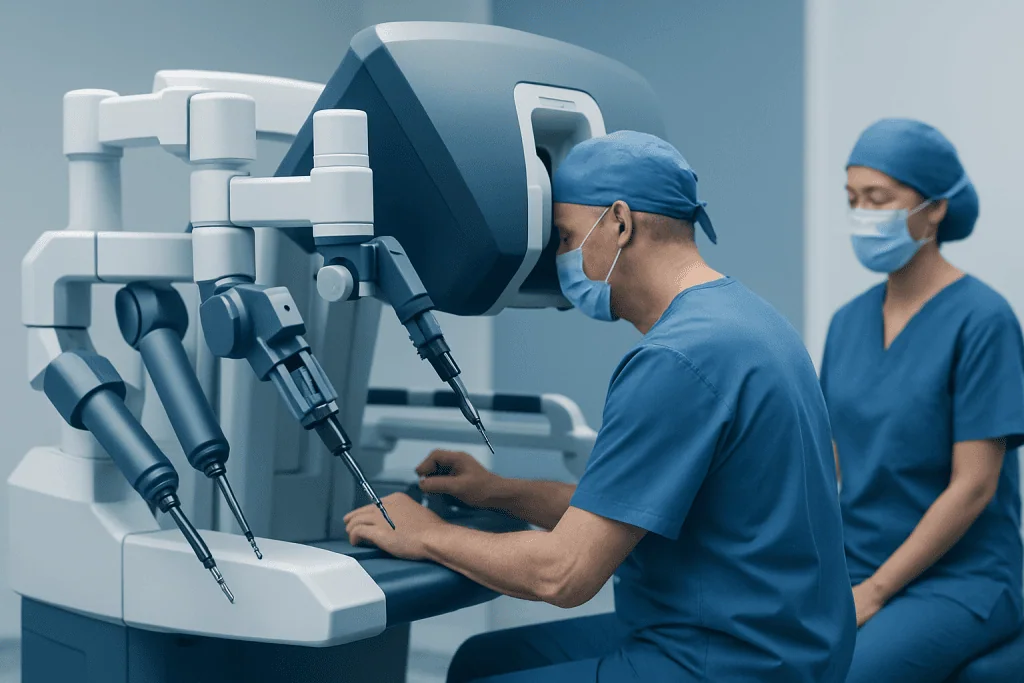
Surgery involves far more than performing an operation. A surgeon must assess symptoms, interpret tests, explain options, identify when an operation is not appropriate, manage complications and coordinate care with anaesthesiologists, nurses, radiologists, pathologists and other specialists.
Early medical education covers the science of the body, illness, medicines, ethics and patient communication. During clinical rotations, medical students learn across a wide range of fields before choosing a specialty. This broad training matters because surgical patients may have medical conditions, infections, nutritional concerns or medication-related risks that affect their treatment.
Residency is the main period of specialty training. Residents care for patients under the supervision of experienced surgeons and gradually take on more responsibility as their competence grows. They learn before, during and after surgery, including emergency assessment, consent discussions, operating-room safety practices, wound care and follow-up.
Many surgeons then choose a fellowship. This is focused training in a narrower area, such as colorectal surgery, surgical oncology, hand surgery, vascular surgery, paediatric surgery or minimally invasive surgery. Fellowship is not required for every surgical career, but it is common in highly specialised fields.
The usual pathway from student to independent surgeon

The sequence may vary between health systems, but the underlying stages are similar. First comes a medical degree or medical qualification. Students must meet academic and admissions requirements, complete practical clinical placements and pass the required examinations.
After medical school, doctors undertake postgraduate clinical training. In the United States, this includes residency in a chosen surgical specialty. General surgery residency commonly lasts at least five years; other surgical specialties may have longer residency programs or require additional training after general surgery.
Training usually includes formal assessments, operative experience documented under supervision, professional examinations and licensing or board-certification processes. A surgeon may also need to meet local registration requirements before practising in a particular country or hospital.
Even after formal training is completed, learning continues. Surgeons maintain their skills through continuing medical education, quality review, case discussions and updated guidance. Patients can reasonably ask a surgeon about their specialty training, experience with a planned procedure and how their care team manages recovery and complications.
- School and pre-medical preparation: academic foundation for medical admission.
- Medical school: general medical education and clinical placements.
- Residency: supervised specialty training in surgery.
- Fellowship, if chosen: additional advanced training in a subspecialty.
- Independent practice: licensing, credentialing and ongoing professional development.
How training relates to a surgical procedure
For patients, a surgeon’s training becomes visible in the way care is planned and delivered. Before an operation, the team confirms the diagnosis, reviews imaging and laboratory results where appropriate, considers non-surgical alternatives and discusses expected benefits, limits and possible risks. Not every condition requires surgery, and a careful recommendation should be individualised.
During an operation, the surgeon works with an operating-room team using established safety processes. These commonly include confirming the patient’s identity, procedure and surgical site; reviewing allergies and relevant health conditions; preventing infection; monitoring anaesthesia; and preparing for unexpected findings or bleeding.
After surgery, the surgeon and wider care team monitor pain, wound healing, mobility, nutrition and signs of complications. Recovery timelines vary substantially according to the procedure, the reason for surgery, the surgical approach, age and overall health. Some procedures allow same-day discharge, while major operations may require a hospital stay and several weeks or months of recovery.
The potential benefit of surgery is to diagnose, treat, remove, repair or relieve a medical problem when the expected benefit outweighs the risks. Risks can include bleeding, infection, blood clots, reactions to anaesthesia, injury to nearby structures, persistent symptoms or the need for further treatment. A qualified surgeon explains the risks that are most relevant to the individual procedure and patient.
What is the quickest surgeon to become?
There is no single “quickest” surgeon to become because training requirements differ by country and accreditation system. In the United States, general surgery is often among the shorter major surgical residency pathways, commonly lasting five years after medical school. However, the total journey still includes medical school and usually prior university education.
Some specialties have shorter residency lengths but may not be considered surgical specialties in every setting, while other pathways combine general and specialty training in different ways. A shorter route should not be interpreted as easier or less rigorous: all recognised surgical training programs require intensive supervised clinical and operative education.
For someone considering this career, the best specialty is not simply the shortest one. Interests, aptitudes, tolerance for emergency work, preferred patient population, lifestyle expectations and the type of procedures involved are all important. Career advice from medical schools, accredited training bodies and practising surgeons can provide a more realistic view of a particular pathway.
Is 27 too late to become a surgeon?
No. Age 27 is not too late to become a surgeon. Medical schools and training programs include people who begin after working in another career, completing another degree, serving in the military or taking time for family responsibilities.
The decision does deserve practical planning. Surgical training is long and demanding, with examinations, shift work, supervised clinical responsibilities and potential geographic moves. Prospective students should consider admissions requirements, tuition or living costs, support networks, wellbeing and the time needed to complete each stage.
Maturity and prior life experience can be valuable in medicine, particularly in communication, teamwork, resilience and understanding patients’ concerns. Admission decisions generally consider academic preparedness alongside personal qualities and relevant experience, rather than focusing solely on age.
People exploring a later start may benefit from speaking with an academic adviser, current trainee or licensed career counsellor. They can help clarify local entry requirements and create a realistic plan without making assumptions about what is possible at a particular age.
Can doctors make $1,000,000 a year?
Some doctors may earn very high incomes, including $1,000,000 a year in certain settings, but this is not typical and should not be assumed. Income depends on the country, specialty, years in practice, employment arrangement, patient volume, private versus public work, hours worked, leadership roles and local regulations.
Surgeons may have higher average earnings than some other medical specialties in some health systems because of the complexity of their work, length of training and procedural responsibilities. However, they also face substantial professional obligations, long training periods, variable schedules and the costs or financial commitments associated with education in some countries.
Compensation figures published online can be incomplete or misleading because they may not distinguish between salary, practice revenue, business expenses, taxes, benefits and on-call payments. For an accurate career decision, it is better to consult official workforce data and local professional organisations in the country where a person hopes to train and work.
What’s the hardest type of surgeon to become?
There is no universally agreed “hardest” surgical specialty. Difficulty can refer to competitiveness of entry, length of training, technical complexity, academic requirements, emotional demands, workload or the level of responsibility involved. Different people may find different aspects of training challenging.
Fields often described as especially long or complex include neurosurgery, cardiothoracic surgery, paediatric surgery, transplant surgery and some surgical oncology pathways. These areas may involve extended training, highly specialised procedures and care for patients with serious or medically complex conditions.
General surgery, orthopaedics, plastic surgery, urology, ENT surgery and other specialties are also demanding. Every surgical field requires sound judgement, technical precision, continual learning and the ability to work calmly and collaboratively in high-stakes situations.
From a patient perspective, the most useful question is usually not which specialty was hardest to enter. It is whether the surgeon is appropriately trained and credentialed for the proposed procedure, communicates clearly, works in a safe clinical environment and offers care suited to the patient’s needs.
When to seek medical care
A person does not need to wait for a surgical consultation to seek care for concerning symptoms. Prompt medical assessment is important for severe or worsening pain, heavy bleeding, trouble breathing, chest pain, sudden weakness, confusion, a high fever with significant illness, persistent vomiting or symptoms after a serious injury.
For non-emergency concerns, a primary care doctor can assess symptoms and arrange referral to the appropriate specialist when needed. Depending on the condition, this may be a general surgeon, orthopaedic surgeon, neurosurgeon, urologist, gynaecologist, vascular surgeon or another clinician. Surgery is only one possible treatment approach.
Before a planned operation, patients should tell their care team about all medicines, allergies, pregnancy status, previous operations and chronic conditions. They should also ask about the diagnosis, alternatives, expected recovery, warning signs after discharge and whom to contact with questions.
Acibadem International’s multidisciplinary specialists and JCI-accredited hospitals support diagnosis and treatment planning for international patients who may need surgical care. The appropriate surgical pathway depends on the individual diagnosis and an in-person medical evaluation.
Frequently asked questions
How many years does it take to become a surgeon after high school?
It commonly takes about 10 to 15 years after high school. The total includes medical education, postgraduate surgical residency and, for some specialties, additional fellowship training.
How long is general surgery residency?
In the United States, general surgery residency commonly lasts at least five years after medical school. Requirements vary by country, and some surgeons pursue further fellowship training afterward.
Do all surgeons need a fellowship?
No. Fellowship training is not required for every surgeon or every surgical career. It is often chosen or required for advanced practice in a specific subspecialty, depending on local standards and the surgeon’s intended field.
Is 27 too old to start medical school for surgery?
No. People begin medical school at many different ages, including after other careers or degrees. The important considerations are academic readiness, the time commitment, financial planning and personal support.
What is the shortest route to becoming a surgeon?
The shortest route depends on the country’s medical education system. In the United States, general surgery is often one of the shorter major surgical residency pathways, but becoming a surgeon still requires extensive education and supervised training.
Can any doctor perform surgery?
No. Doctors require specific surgical training, appropriate licensing and hospital credentialing to perform operations within their area of practice. The exact scope of practice depends on their specialty, training and local regulations.
References
- Accreditation Council for Graduate Medical Education
- American Board of Surgery
- Association of American Medical Colleges
- World Health Organization
- General Medical Council
This article is for general information only and is not a substitute for professional medical advice. Please consult a qualified doctor about your individual situation.
Explore treatments in Turkey — costs, top hospitals & a free quote
JCI-accredited · board-certified surgeons · reply within 24h
Add us as a Preferred Source to see more of our trusted health content across Google Search, AI Overviews and Discover.

More from the Health Library



Related Specialists

Dr. Cem Tekin Baran
Orthopedic Surgery & Traumatology
Dr. Bülent Şengül
Gastroenterology
Assoc. Prof. Dr. Nurcan Kızılcık
Anesthesiology
Dr. Özgün Barış Çolak
Physical Medicine & Rehabilitation