How Sleep Studies Help Neurologists Diagnose Complex Sleep Disorders

Sleep studies record body functions during sleep, including brain activity, breathing, heart rate, oxygen levels, and movement. Neurologists use sleep studies to diagnose disorders such as sleep apnea, narcolepsy, restless legs syndrome, parasomnias, and seizure-related sleep problems.
Key Takeaways
- Sleep studies record body functions during sleep, including brain activity, breathing, heart rate, oxygen levels, and movement.
- Neurologists use sleep studies to diagnose disorders such as sleep apnea, narcolepsy, restless legs syndrome, parasomnias, and seizure-related sleep problems.
- Different tests are available, including overnight polysomnography, home sleep apnea testing, and daytime tests such as the multiple sleep latency test.
- Results guide treatment decisions and help doctors distinguish between similar conditions with different causes.
- Preparing well for the study can improve comfort and make the results more useful.
Sleep studies give neurologists detailed information about what happens in the body and brain during sleep. They help identify complex sleep disorders that may affect breathing, movement, behavior, alertness, and overall neurological health.
Overview: Why Sleep Studies Matter in Neurology
Sleep is not simply a period of rest. During the night, the brain moves through structured sleep stages while breathing, heart rhythm, muscle activity, and body movements change in predictable ways. When these patterns are disrupted, a person may develop symptoms such as excessive daytime sleepiness, unusual nighttime behaviors, headaches on waking, poor concentration, memory difficulties, or repeated awakenings.
Sleep studies help neurologists look closely at these patterns. By recording signals from the brain and body during sleep, these tests can reveal whether symptoms are caused by a sleep-related breathing disorder, a movement disorder, a disorder of alertness such as narcolepsy, unusual behaviors during sleep, or in some cases seizure activity occurring mainly at night.
For patients with complex symptoms, a sleep study can provide objective information that cannot be gathered from symptoms alone. This is especially important because many sleep disorders overlap. For example, snoring and fatigue may suggest sleep apnea, while vivid dream enactment or sudden muscle weakness may point toward different neurological sleep conditions. Testing helps clarify the diagnosis and supports a treatment plan tailored to the individual.
What a Sleep Study Measures
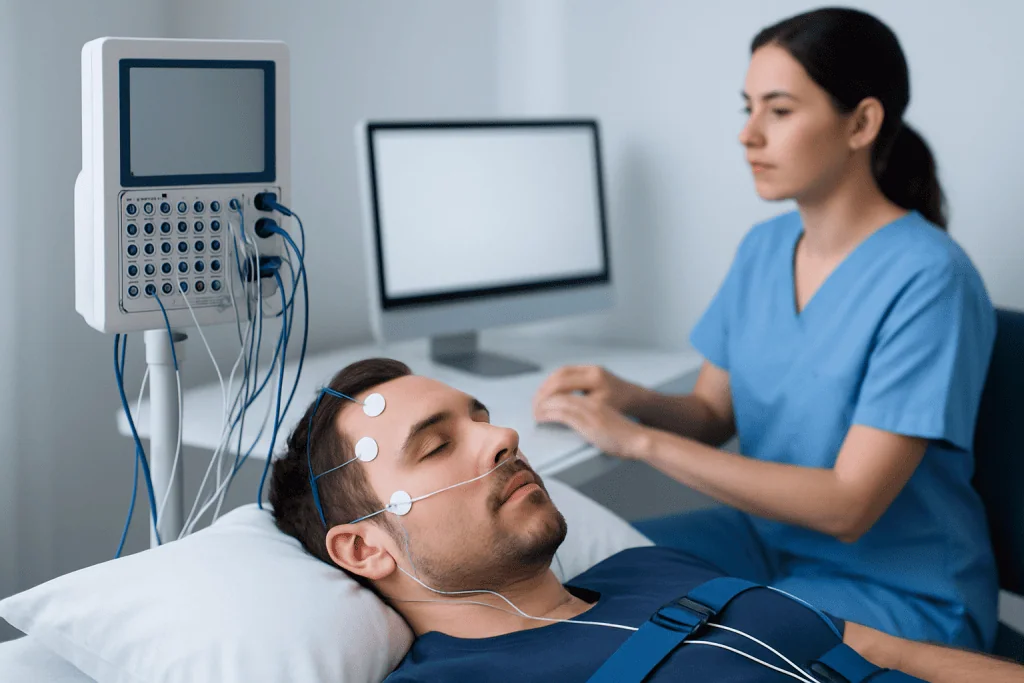
The most complete sleep test is called polysomnography. It is usually performed overnight in a sleep laboratory. Small sensors are placed on the scalp, face, chest, limbs, and finger or ear to measure several body functions while the person sleeps as naturally as possible. The test is painless, although sleeping with sensors may feel unfamiliar at first.
Polysomnography commonly records brain waves, eye movements, muscle tone, heart rhythm, airflow through the nose and mouth, breathing effort from the chest and abdomen, blood oxygen levels, and leg movements. Video monitoring may also be used when unusual nighttime behaviors are being evaluated. Together, these measurements show how the person progresses through different sleep stages and whether breathing pauses, abnormal movements, or arousals are disrupting sleep.
Some patients may also need specialized tests. A home sleep apnea test may be used when obstructive sleep apnea is strongly suspected and no major complicating neurological problem is present. A multiple sleep latency test, usually done the day after an overnight study, measures how quickly a person falls asleep during several daytime naps and whether rapid eye movement sleep appears too early. This can be helpful in evaluating narcolepsy and other causes of severe daytime sleepiness.
Which Complex Sleep Disorders Can Be Diagnosed
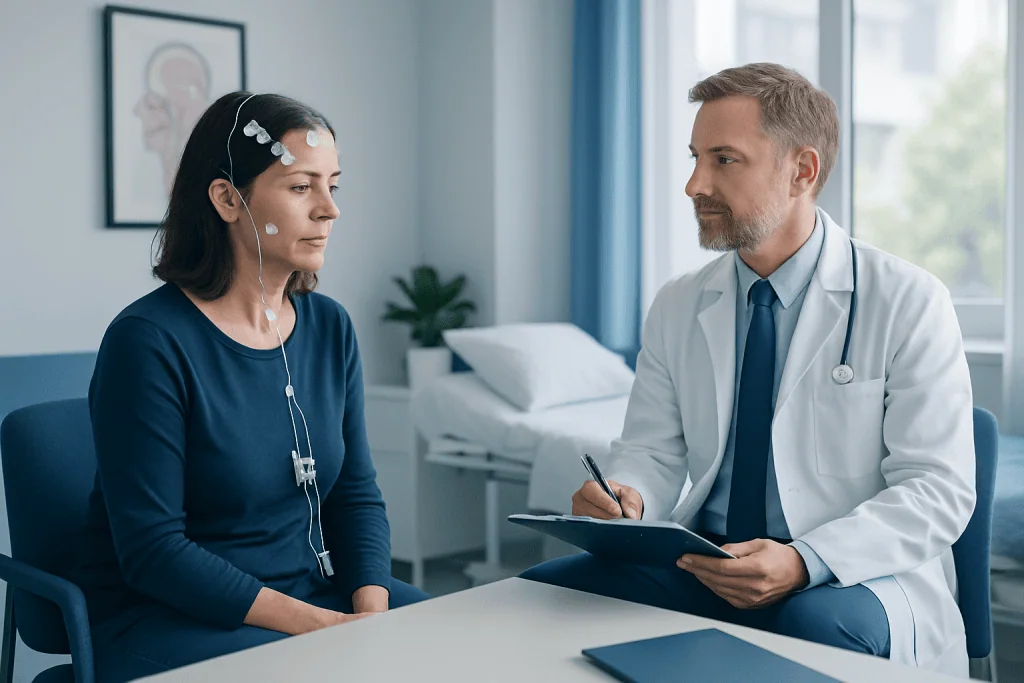
Sleep studies are used to evaluate a wide range of conditions. One of the most common is sleep apnea, in which breathing repeatedly stops or becomes shallow during sleep. The recordings can show how often breathing disruptions occur, whether oxygen levels drop, and how much the problem disturbs normal sleep structure. This helps doctors determine severity and select treatment options such as CPAP therapy.
Neurologists also use sleep studies to assess central hypersomnia disorders such as narcolepsy, especially when a patient reports overwhelming daytime sleepiness, vivid dreams, sleep paralysis, or sudden episodes of muscle weakness triggered by emotions. In these cases, overnight testing and daytime nap testing can help distinguish narcolepsy from insufficient sleep, medication effects, depression, or other medical causes of fatigue.
Movement-related sleep disorders may also be investigated. Periodic limb movement disorder causes repeated leg jerks during sleep that may fragment rest without the person realizing it. Restless legs syndrome is usually diagnosed clinically, but a sleep study may be useful when the picture is unclear or another sleep disorder is suspected. In addition, parasomnias such as sleepwalking, confusional arousals, and dream enactment behavior may require video polysomnography to differentiate them from nighttime seizures or other neurological events.
In some people, sleep studies contribute to the assessment of epilepsy and related conditions when episodes happen mainly at night. Although sleep studies are not the same as full seizure monitoring, the brain-wave recording and video may help neurologists decide whether unusual behaviors are more consistent with a sleep disorder or whether further neurological testing is needed.
Symptoms That May Lead to a Sleep Study
A neurologist or sleep specialist may recommend sleep studies when symptoms suggest that sleep is being interrupted or that the brain is not regulating sleep normally. These symptoms can affect quality of life, mood, memory, work performance, and safety, especially when daytime sleepiness becomes severe enough to interfere with driving or operating machinery.
Common reasons for referral include loud snoring, witnessed pauses in breathing, waking up gasping, unrefreshing sleep, morning headaches, chronic fatigue, difficulty staying asleep, and excessive sleepiness during the day. Other important warning signs include sudden sleep attacks, unusual movements during sleep, dream enactment, sleepwalking, repeated kicking or jerking of the legs, and confusion on waking.
- Frequent nighttime awakenings without a clear reason
- Episodes of choking, breathlessness, or irregular breathing during sleep
- Behaviors such as shouting, punching, or getting out of bed while asleep
- Repeated leg movements or an urge to move the legs, especially in the evening
- Possible nighttime seizures or unexplained events during sleep
- Persistent daytime sleepiness despite enough time in bed
Children and older adults may show symptoms differently. In children, poor attention, irritability, hyperactivity, or learning difficulties can be linked to sleep problems. In older adults, nighttime confusion or falls may sometimes be related to disrupted sleep or sleep behaviors that need specialist evaluation.
How Neurologists Interpret the Results
The value of sleep studies lies not only in collecting data but also in interpreting the pattern as a whole. A neurologist or sleep specialist reviews how long the person sleeps, how quickly sleep begins, how much time is spent in each sleep stage, how often awakenings occur, and whether breathing or movements are causing repeated interruptions. This helps identify whether the main problem is respiratory, neurological, behavioral, or a combination of several factors.
For example, a patient may report insomnia, but the study may show repeated arousals from untreated sleep apnea or frequent limb movements. Another patient may describe vivid dreams and acting out during sleep, and the video plus muscle recordings may suggest REM sleep behavior disorder rather than nightmares alone. In cases of severe daytime sleepiness, nap testing can show whether the person falls asleep unusually quickly and enters dream sleep too early, findings that support narcolepsy.
Results also help rule out conditions. This can be just as important as confirming a diagnosis, especially when symptoms overlap. A clear interpretation may reduce unnecessary treatments, guide additional testing when needed, and help the care team choose the most appropriate next step, whether that involves lifestyle measures, medication review, airway treatment, or more advanced neurological assessment.
Treatment Planning After a Sleep Study
Once a diagnosis is confirmed, treatment can be more precise. If breathing disturbances are the main problem, treatment may involve weight management, sleep position changes, oral appliances, or positive airway pressure therapy for airway support. Some patients with structural airway problems may need further evaluation by ENT or respiratory specialists.
If the study points to a movement disorder, treatment may include reviewing iron status, adjusting medications, or addressing conditions that worsen symptoms. For parasomnias, the plan may focus on safety steps in the bedroom, avoiding triggers such as sleep deprivation or alcohol, and treating any underlying sleep disorder that is provoking the behavior. In people with possible nighttime seizures, the sleep study findings may lead to referral for dedicated neurological monitoring.
For central disorders of hypersomnolence such as narcolepsy, treatment often combines behavioral strategies with medications prescribed by a qualified specialist. Patients may be advised on scheduled naps, regular sleep-wake timing, and safety measures for driving or work. If insomnia is part of the picture, doctors may recommend sleep-focused behavioral therapy and review habits or medicines that affect rest.
At centers with multidisciplinary sleep and neurology services, patients can benefit from coordinated care across specialties. Acibadem International’s multidisciplinary specialists and JCI-accredited hospitals diagnose and treat complex sleep disorders for international patients when advanced evaluation is needed.
How to Prepare and What to Expect
Many people feel nervous before their first sleep study, but the process is generally straightforward and noninvasive. Patients are usually asked to keep a normal sleep schedule in the days before the test unless the doctor advises otherwise. They may also be told to avoid caffeine later in the day, alcohol, or certain medications that could affect sleep results. Any medicines should only be changed under medical guidance.
For an overnight laboratory study, the patient typically arrives in the evening. A technologist places sensors on the skin using adhesive or gentle paste. The room is designed to be quiet and comfortable, and the patient can usually bring personal sleep items such as pajamas or a pillow. Although the equipment may feel unfamiliar, most people are able to sleep enough for the test to provide useful information.
After the study, the sensors are removed in the morning, and the patient can usually return home or continue with daytime testing if planned. Results are not always available immediately because a specialist must carefully review the recordings. If the diagnosis is unclear, further tests may be recommended, such as longer-term monitoring, imaging, or neurological evaluation depending on the symptoms.
When to Seek Medical Advice
Anyone with ongoing sleep problems that affect daytime functioning should discuss them with a doctor. Persistent sleepiness, loud snoring with breathing pauses, unusual nighttime behaviors, or symptoms suggestive of narcolepsy should not be ignored. Sleep disorders are often treatable, and early diagnosis can improve energy, concentration, mood, and safety.
More urgent assessment is important if a person falls asleep unexpectedly during the day, has episodes that may represent seizures, injures themselves or a bed partner during sleep, or develops severe breathing difficulty at night. Children with significant snoring, pauses in breathing, or daytime behavioral changes also need timely medical review.
When symptoms are complex or involve the nervous system, referral to a neurologist or sleep medicine specialist may be especially helpful. A sleep study does not solve every question on its own, but it is often one of the most useful tools for understanding what is happening during sleep and guiding the right treatment path.
Frequently asked questions
What is a sleep study?
A sleep study is a test that records what happens in the body during sleep. It may measure brain waves, breathing, oxygen levels, heart rhythm, muscle activity, and movements to help diagnose sleep disorders.
Why would a neurologist order a sleep study?
A neurologist may order a sleep study when symptoms suggest a disorder involving the brain, nerves, breathing, or movement during sleep. It can help evaluate conditions such as narcolepsy, parasomnias, periodic limb movements, sleep apnea, and events that may resemble nighttime seizures.
Is a sleep study uncomfortable or painful?
A sleep study is not painful. The sensors are attached to the skin and may feel unfamiliar, but they do not usually cause more than mild temporary inconvenience while sleeping.
Can sleep apnea be diagnosed at home?
In some cases, yes. A home sleep apnea test may be appropriate when obstructive sleep apnea is strongly suspected and there are no major complicating conditions, but more complex symptoms often require full overnight laboratory testing.
How long does it take to get sleep study results?
Results are usually reviewed after a specialist analyzes the recording in detail. Timing varies by center, but patients commonly discuss findings at a follow-up appointment rather than receiving a final answer immediately the next morning.
Do sleep studies diagnose narcolepsy?
Sleep studies can play an important role in diagnosing narcolepsy. Diagnosis usually involves an overnight study followed by a daytime nap test called the multiple sleep latency test to measure how quickly sleep occurs and whether REM sleep appears unusually early.
References
- American Academy of Sleep Medicine
- National Institute of Neurological Disorders and Stroke
- National Heart, Lung, and Blood Institute
- National Institute for Health and Care Excellence
- Mayo Clinic
This article is for general information only and is not a substitute for professional medical advice. Please consult a qualified doctor about your individual situation.
Explore treatments in Turkey — costs, top hospitals & a free quote
JCI-accredited · board-certified surgeons · reply within 24h
Add us as a Preferred Source to see more of our trusted health content across Google Search, AI Overviews and Discover.