How to Choose the Right Hospital for Advanced Imaging or Surgery

Hospital accreditation and safety systems are important markers of quality. The right hospital should match the patient’s specific imaging test or surgical procedure.
Key Takeaways
- Hospital accreditation and safety systems are important markers of quality.
- The right hospital should match the patient’s specific imaging test or surgical procedure.
- Specialist expertise, multidisciplinary care, and case volume can influence outcomes.
- Modern technology is helpful, but it should be supported by skilled teams and clear protocols.
- International and out-of-town patients may benefit from strong care coordination and aftercare planning.
Choosing a hospital for advanced imaging or surgery involves more than location or cost. Patients often feel more confident when they compare accreditation, specialist experience, imaging technology, surgical safety, and practical support before making a decision.
Overview
Choosing a hospital for advanced imaging or surgery is an important healthcare decision. For many patients, it happens at a stressful time, when they are trying to balance medical needs, time, cost, and personal comfort. A thoughtful approach can make the process clearer and help patients feel more prepared.
Advanced imaging may include tests such as MRI, CT, PET-CT, mammography, ultrasound, angiography, or nuclear medicine studies. Surgery may range from minimally invasive procedures to complex operations involving several specialties. Because these services can vary widely between hospitals, it helps to look beyond advertising claims and focus on practical signs of quality and safety.
In general, the best choice is a hospital that fits the patient’s exact condition, uses appropriate technology, follows strong safety standards, and offers coordinated care before, during, and after treatment. A hospital that is excellent for one procedure may not necessarily be the best choice for another, so the decision should be individualized.
Why hospital choice matters for imaging and surgery
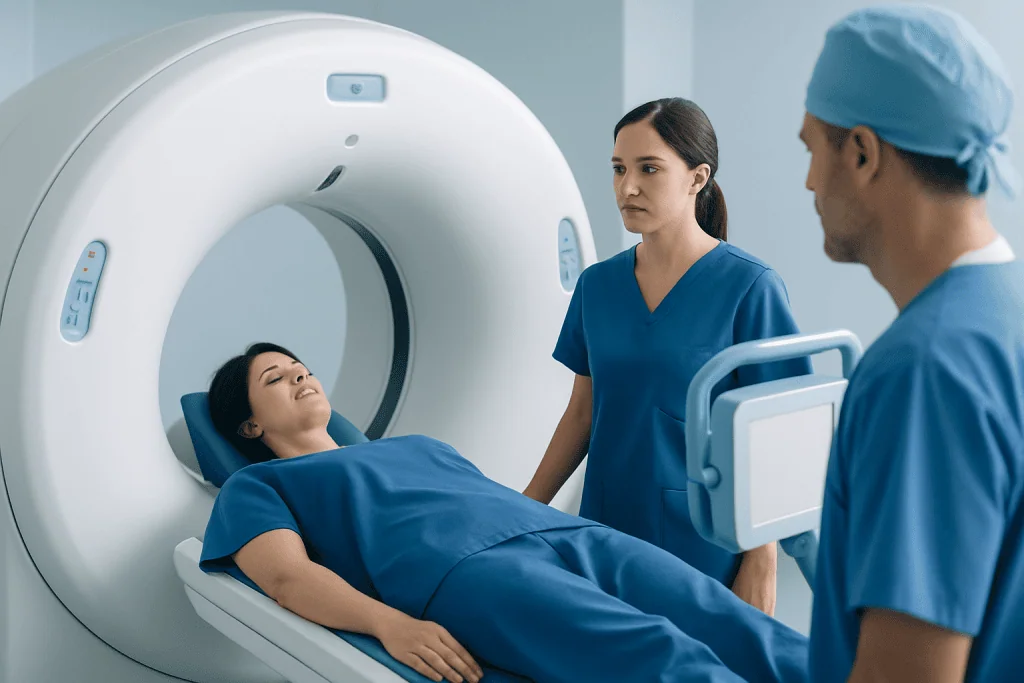
Advanced imaging and surgery both depend on more than equipment alone. Imaging quality can affect how accurately a condition is detected, staged, or monitored. Surgical outcomes can be influenced by the experience of the surgeon, the anesthesia team, operating room protocols, nursing care, and access to intensive care or rehabilitation when needed.
For example, a high-quality imaging department should not only have modern scanners but also trained radiologists, skilled technologists, clear patient preparation instructions, and processes for delivering timely results. In surgery, careful preoperative assessment, infection prevention, pain management, and follow-up planning all contribute to safer care.
Hospital choice may be especially important when the patient has a complex diagnosis, needs repeated imaging, or is considering a specialized operation. In these cases, a center with multidisciplinary expertise may offer more coordinated decision-making. This can be valuable for conditions that overlap specialties, such as cancer, vascular disease, or disorders affecting the brain and spine.
- Better coordination between specialists
- Access to advanced diagnostic tools
- More consistent safety and quality protocols
- Stronger support for recovery and follow-up
What to check before choosing a hospital

One of the first things to review is accreditation. Recognized national or international accreditation can show that a hospital meets structured standards for patient safety, quality improvement, infection control, medication management, and clinical governance. Accreditation does not guarantee a perfect experience, but it is a useful starting point.
It is also helpful to ask whether the hospital has experience with the specific imaging study or surgery being considered. Patients can ask how often the test or procedure is performed, whether a subspecialist interprets the imaging, and whether surgeons work within dedicated teams. The fit between the hospital’s strengths and the patient’s medical needs is often more meaningful than general reputation alone.
Other practical points matter as well. These include waiting times, emergency backup, blood bank availability, intensive care services, pathology support, rehabilitation, language assistance, and how results are communicated. Patients often benefit from making a checklist and comparing hospitals side by side.
- Accreditation and quality certification
- Experience with the exact condition or procedure
- Availability of intensive care and emergency support
- Clear communication about results, risks, and next steps
- Access to aftercare, rehabilitation, or second opinions
How to assess technology, expertise, and teamwork
Modern medical technology can improve diagnosis and treatment, but technology works best in experienced hands. For imaging, patients may ask whether the hospital offers the type of scan their doctor recommends and whether the study is interpreted by a radiologist with expertise in that body area, such as neuroradiology, musculoskeletal imaging, breast imaging, or cardiac imaging. Image quality, protocol standardization, and careful reporting are all important.
For surgery, it helps to look at the whole care pathway. A hospital may offer minimally invasive, robotic, endoscopic, or image-guided techniques, but patients should also understand why a certain approach is recommended and whether it is suitable for their case. The most advanced option is not always the best option for every patient.
Teamwork is another key factor. Hospitals that use multidisciplinary case review can bring together radiologists, surgeons, anesthesiologists, pathologists, oncologists, rehabilitation specialists, and nurses. This approach may improve planning for people with complex needs, such as those undergoing cancer treatment or evaluation for a brain tumor. In some situations, advanced imaging may be paired with procedures such as MRI, PET-CT, or robotic surgery as part of a coordinated care plan.
Questions patients may want to ask
Patients do not need to know every technical detail, but asking a few focused questions can be very helpful. These questions can clarify whether the hospital regularly manages similar cases and whether the patient will receive organized, transparent care. Bringing a family member or written notes to appointments may make these conversations easier.
Useful questions may include who will perform or interpret the test, how long results will take, what preparation is needed, what risks are involved, and what happens if a problem is found. For surgery, patients can also ask who will be involved in the operation, what type of anesthesia is planned, what recovery may look like, and what support is available after discharge.
It is also reasonable to ask about second opinions and alternative approaches. A trustworthy hospital should be comfortable explaining why a recommendation is made and whether there are other suitable options, including non-surgical treatment when appropriate.
- Is the hospital accredited and experienced in this specific area?
- Who will read the scan or perform the surgery?
- What are the benefits, limitations, and possible risks?
- How are complications handled if they occur?
- What follow-up, rehabilitation, or remote support is available?
Special considerations for international or traveling patients
Patients traveling to another city or country for advanced imaging or surgery may have extra concerns. These often include language, travel timing, medical records, visa support, payment planning, and how follow-up will be managed after returning home. In these cases, coordination services can be especially valuable.
Before traveling, patients should ask how the hospital reviews outside test results, whether repeat imaging may be needed, and how long they may need to stay before and after surgery. It is also wise to ask for a clear outline of the expected care pathway, including consultations, testing, the procedure itself, hospital stay, and discharge planning.
A hospital that regularly cares for international patients may provide interpreters, case coordinators, and communication with the patient’s home doctors. Near the end of the decision process, some patients look for centers such as Acibadem International, where multidisciplinary specialists in JCI-accredited hospitals diagnose and treat international patients requiring advanced imaging and surgery. If surgery may involve tissue diagnosis or staging, related services such as pathology can also be part of a coordinated evaluation.
Making a balanced decision
It can be tempting to choose a hospital based on a single factor, such as the newest machine, the shortest waiting time, or the lowest cost. In reality, a balanced decision is usually safer and more practical. Quality of care depends on the combination of skilled professionals, reliable systems, appropriate technology, and good communication.
Patients often feel more confident when they compare two or three hospitals, review medical recommendations carefully, and ask for clarification when something is unclear. A second opinion can be useful if the diagnosis is uncertain, the surgery is major, or the treatment options are complex. This does not mean the first opinion was wrong; it may simply help the patient understand choices better.
The right hospital is the one that meets the patient’s medical needs, explains care clearly, and offers safe, coordinated support throughout the process. Taking time to compare options can help patients make an informed decision and move forward with greater peace of mind.
Frequently asked questions
What is the most important factor when choosing a hospital for advanced imaging or surgery?
There is rarely one single factor that matters most for every patient. In general, patients should look for a combination of accreditation, specialist expertise, appropriate technology, and strong safety systems that match their specific medical needs.
Does a hospital with newer technology always provide better care?
Not necessarily. Modern equipment can be very helpful, but good results also depend on the experience of radiologists, surgeons, anesthesiologists, nurses, and support teams. Technology is most effective when it is used within well-organized clinical pathways.
Why is accreditation important when comparing hospitals?
Accreditation shows that a hospital has been assessed against recognized standards for quality and patient safety. While it does not guarantee outcomes, it can reassure patients that the hospital follows structured processes for safe care.
Should patients seek a second opinion before major surgery?
A second opinion can be helpful, especially for complex diagnoses or major operations. It may confirm the original recommendation or present other suitable options, helping the patient make a more informed decision.
How can patients tell whether a hospital has enough experience with their condition?
Patients can ask how often the hospital performs the recommended scan or surgery and whether specialists with focused expertise are involved. It is also useful to ask whether care is discussed in multidisciplinary team meetings for complex cases.
What should international patients ask before traveling for treatment?
They should ask about medical record review, expected length of stay, language support, follow-up planning, and whether repeat tests may be needed. Clear coordination before travel can reduce uncertainty and help the care process run more smoothly.
References
- World Health Organization
- Joint Commission International
- American College of Radiology
- American College of Surgeons
- European Society of Radiology
This article is for general information only and is not a substitute for professional medical advice. Please consult a qualified doctor about your individual situation.
Explore treatments in Turkey — costs, top hospitals & a free quote
JCI-accredited · board-certified surgeons · reply within 24h
Add us as a Preferred Source to see more of our trusted health content across Google Search, AI Overviews and Discover.