How to Get Rid of Lice Naturally in One Day? A Doctor-Reviewed Answer

Head lice are usually not dangerous, but they can spread easily through close head-to-head contact. No natural method can reliably guarantee complete removal of lice and eggs in one day.
Key Takeaways
- Head lice are usually not dangerous, but they can spread easily through close head-to-head contact.
- No natural method can reliably guarantee complete removal of lice and eggs in one day.
- Wet combing on lubricated, damp hair is the safest and most evidence-based non-drug approach.
- Tea tree oil, olive oil, mayonnaise, and similar home remedies may irritate the scalp or work inconsistently.
- A doctor may confirm lice by finding live lice or viable eggs close to the scalp.
- Medical care is important if there is scalp infection, severe irritation, eye exposure to products, or repeated treatment failure.
Head lice are common and usually harmless, but they can be frustrating and itchy. If someone wants to know how to get rid of lice naturally in one day, the most evidence-based answer is that careful wet combing can remove many live lice right away, while complete clearance usually requires repeat checks and combing over the next 7 to 10 days.
Overview: Can lice be removed naturally in one day?
Head lice are very common, especially in school-aged children, and they are usually more of a nuisance than a danger. The shortest, most accurate answer to the question of how to get rid of lice naturally in one day is this: a thorough wet-combing session can remove many live lice immediately, but no natural method can reliably promise that every louse and every egg will be gone in a single day.
That matters because eggs, often called nits, may remain attached to the hair even after live lice are removed. Some eggs may already be empty, while others may still be viable. For this reason, natural management usually means an intensive first session followed by repeated combing and scalp checks over the next 7 to 10 days.
A calm, methodical approach often works better than trying many remedies at once. In most cases, lice do not reflect poor hygiene, and they do not mean a person is seriously ill. The goal is to remove live lice, reduce the chance of re-infestation, and protect the scalp from unnecessary irritation.
What head lice are and how they spread
Head lice are tiny insects that live on the scalp and feed on small amounts of blood. They cannot jump or fly. They move by crawling, which is why they spread mainly through direct head-to-head contact rather than through the air.
Lice are usually found behind the ears, near the neckline, and in warm areas close to the scalp. Their eggs are attached firmly to the hair shaft and can be difficult to remove with fingers alone. Dandruff, hair product residue, and fabric fibers are often mistaken for nits because they also appear as small white or tan particles in the hair.
Although people often worry about hats, brushes, or bedding, these are less common ways of spreading lice. The main risk is close contact during play, sleepovers, sports, or shared seating where heads touch. Knowing this can help families focus on practical steps instead of deep-cleaning the entire home.
Head lice are different from other skin conditions that can cause scalp itching, including seborrheic dermatitis or eczema. When the cause of itching is unclear, a clinician can help confirm whether lice are actually present.
Symptoms and red flags to watch for
The most common symptom of head lice is itching, especially on the scalp, behind the ears, or at the back of the neck. Some people feel a tickling or crawling sensation. Others may have no symptoms at all, particularly early on.
Small red bumps or scratch marks can appear if the scalp becomes irritated. Trouble sleeping is also possible because lice may be more active in the dark. However, itching alone does not prove someone has lice. Doctors generally recommend looking for live, crawling lice or eggs attached close to the scalp before starting treatment.
Medical review is a good idea if there are signs of infection such as swelling, pus, crusting, warmth, or significant pain. Care is also important if the scalp is bleeding from scratching, if the eyes were exposed to oils or other products, or if the person has repeated lice despite careful treatment. Infants, people with very sensitive skin, and those with chronic scalp conditions may also benefit from early professional advice.
Natural methods: what may help and what to avoid
Among natural approaches, wet combing is the most accepted option because it is mechanical rather than chemical. It does not depend on a product killing the insects. Instead, it uses water, conditioner, and a fine-toothed lice comb to physically remove live lice and some eggs from the hair.
Other home remedies are widely discussed, including olive oil, coconut oil, mayonnaise, vinegar, and essential oils such as tea tree oil. These methods are not consistently supported by strong clinical evidence, and some can irritate the scalp or eyes. Essential oils in particular may trigger allergic reactions or skin sensitivity, especially in children.
Vinegar is sometimes said to loosen nits, but it does not reliably eliminate lice. Smothering methods may slow lice down temporarily, yet they do not ensure that eggs will be destroyed. A remedy that seems to work after one use may simply have removed visible lice while leaving eggs behind.
If a family prefers to avoid medication at first, careful wet combing is usually the safest natural starting point. If it does not work, a clinician may discuss proven lice treatment options and advise which products are appropriate for the person’s age, scalp condition, and medical history.
How to do wet combing properly
For a same-day natural approach, wet combing should be done slowly and systematically. First, wash the hair or dampen it thoroughly, then apply a generous amount of conditioner or another slippery product to make combing easier. Detangle the hair with a regular comb, then divide it into small sections.
Using a metal lice comb, comb from the scalp to the ends of the hair, one small section at a time. After each pass, wipe the comb on a white tissue or rinse it in water so lice can be seen and removed. Good light is important. Continue until the whole scalp has been checked and no more live lice are seen in that session.
It may help to repeat the combing on the same day if the hair is thick or long. Even after a careful first session, repeat wet combing every few days for about 7 to 10 days to catch newly hatched lice before they mature and lay more eggs. This step is the reason complete natural clearance usually takes longer than one day.
- Use a fine-toothed lice comb, ideally metal.
- Work in small sections from scalp to ends.
- Clean the comb after every pass.
- Check close to the scalp where viable eggs are most often found.
- Repeat on schedule rather than assuming one session is enough.
How doctors diagnose lice and when medical care is needed
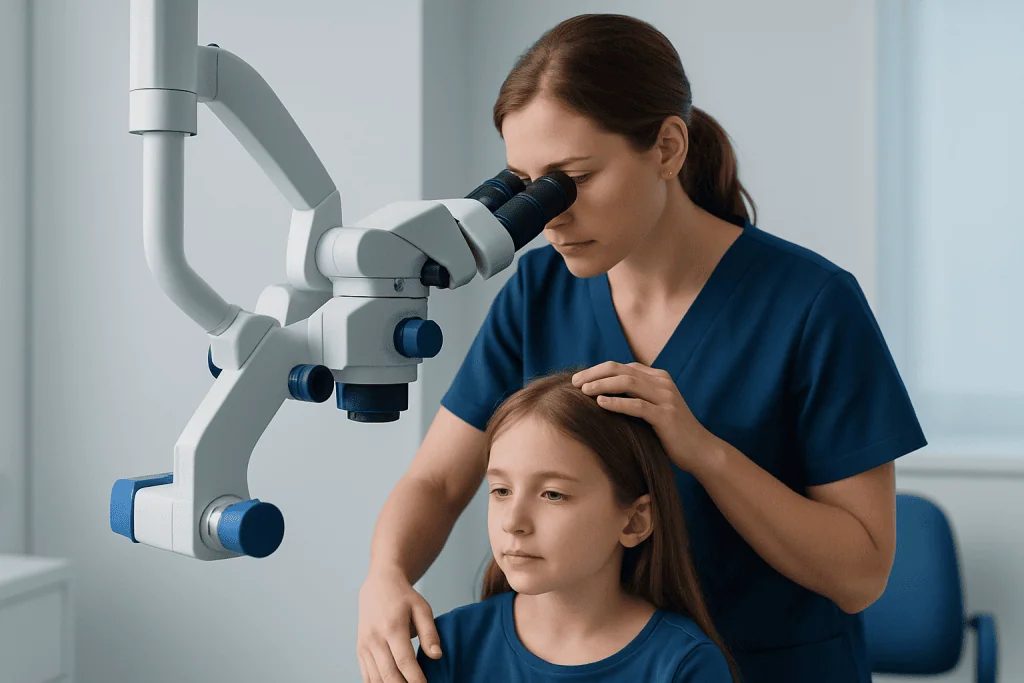
A doctor usually starts by asking about symptoms, school or household exposure, recent treatments, and whether anyone else in the home is affected. The scalp and hair are then examined closely, often under bright light and sometimes with a magnifying device. The key finding is a live louse or a viable egg attached near the scalp.
This step is important because many people treat dandruff, dry skin, or hair debris as if it were lice. Treating the wrong problem can lead to unnecessary skin irritation and frustration. If the diagnosis is uncertain, a doctor may help distinguish lice from other scalp conditions and explain whether further care is needed.
Medical care should be sought if home treatment repeatedly fails, if the scalp looks infected, or if the person has severe itching or an allergic reaction to a home remedy. A clinician may recommend a dermatology consultation when the scalp is inflamed or when there are other skin concerns that need assessment.
Near the end of the care journey, some international patients prefer hospital-based evaluation for persistent or unclear scalp symptoms. Acibadem International’s multidisciplinary specialists and JCI-accredited hospitals diagnose and treat lice-related scalp concerns as well as look-alike skin conditions for international patients.
Practical self-care at home after treatment
After a wet-combing session or other treatment, daily habits can help reduce the chance of lice coming back. Household contacts should be checked, especially if they have itching or visible lice. People who share close contact do not always need treatment, but they do need a careful inspection.
Wash pillowcases, hats, and recently worn clothing in hot water if practical, and dry them thoroughly. Combs and brushes can be cleaned in hot water. Extensive home spraying or deep-cleaning is usually unnecessary because head lice survive poorly away from the scalp.
It is also helpful to avoid sharing items that touch the hair, such as brushes, hair accessories, and hats, until the situation is under control. In children, schools or caregivers may need to know so close contacts can be checked in a calm, private, and non-stigmatizing way.
If itching continues after lice have been removed, the scalp may simply need time to recover from scratching or irritation. Persistent redness, scaling, or flaking can have other causes, and a doctor may evaluate for issues such as scalp eczema or other inflammatory skin conditions.
When to seek medical care
Most cases of head lice can be managed safely at home, but some situations need professional advice. A person should contact a doctor if there are signs of a scalp infection, if the skin becomes very swollen or painful, or if scratching has caused open sores.
Medical review is also sensible if home remedies have irritated the scalp, if essential oils or other substances got into the eyes, or if live lice are still being found after repeated, careful combing. Recurrent cases may need confirmation of the diagnosis and a more structured plan.
Doctors may suggest treatment beyond natural methods when lice persist, when there are many nits close to the scalp, or when repeated exposure is likely. In some cases, a child specialist or pediatric dermatology care may be helpful if the scalp is sensitive, the diagnosis is uncertain, or the family needs guidance tailored to children.
Frequently asked questions
Can lice really be gone in one day with natural treatment?
Many live lice can be removed in one thorough wet-combing session, so improvement can happen the same day. However, natural methods do not reliably guarantee that all eggs are removed in one day, so repeat checking and combing is usually needed.
What is the best natural way to remove lice?
Wet combing is the most evidence-based natural approach. It uses a fine lice comb on damp, conditioned hair to physically remove lice and some eggs without relying on chemicals.
Do olive oil, coconut oil, or mayonnaise kill lice?
These remedies may make hair slippery and may slow lice down, but they do not reliably eliminate all lice and eggs. They also can be messy, and some products may irritate sensitive skin.
How can someone tell the difference between nits and dandruff?
Nits are firmly attached to the hair shaft and do not slide off easily. Dandruff and debris usually move more freely and are not stuck close to the hair in the same way.
Should the whole house be cleaned if one person has lice?
Usually not. Basic cleaning of recently used bedding, hats, brushes, and clothing is reasonable, but large-scale home spraying or deep-cleaning is generally unnecessary because head lice do not survive well off the scalp.
When should a child with lice see a doctor?
A child should be checked by a doctor if the scalp looks infected, if treatment keeps failing, or if the diagnosis is uncertain. Medical advice is also important if the child has very sensitive skin or reacts to a home remedy.
This article is for general information only and is not a substitute for professional medical advice. Please consult a qualified doctor about your individual situation.
Explore treatments in Turkey — costs, top hospitals & a free quote
JCI-accredited · board-certified surgeons · reply within 24h
Add us as a Preferred Source to see more of our trusted health content across Google Search, AI Overviews and Discover.

More from the Health Library
Sleeping Flat vs Head Elevated: Key Differences and How Doctors Tell Them Apart

How Long Does the COVID Vaccine Last? Here Is What the Evidence Says

Can You Swallow Your Tongue? A Doctor-Reviewed Answer

Can You Eat After a Filling? Here Is What the Evidence Says

Bipolar Disorder vs Bpd: Key Differences and How Doctors Tell Them Apart