How to Pop a Boil? Here Is What the Evidence Says

Most boils should not be popped at home because squeezing can push infection deeper into the skin. Warm compresses are the main self-care step and may help a boil come to a head and drain on its own.
Key Takeaways
- Most boils should not be popped at home because squeezing can push infection deeper into the skin.
- Warm compresses are the main self-care step and may help a boil come to a head and drain on its own.
- Medical review is important for large, very painful, recurrent, facial, or fever-related boils.
- Doctors diagnose boils mainly by skin examination and may test drainage if infection is severe or keeps returning.
- Treatment may include drainage by a clinician, wound care, and sometimes antibiotics.
Most boils are minor skin infections that improve with time, warmth, and good hygiene rather than squeezing. If someone is wondering how to pop a boil, the evidence-based answer is that trying to force it open at home can worsen infection, increase pain, and raise the risk of scarring.
What the evidence says about popping a boil
For most people, the safest answer to how to pop a boil is: do not try to pop it at home. A boil is usually a localized bacterial infection around a hair follicle or oil gland. Many small boils settle with warm compresses and gentle skin care, and they may open and drain on their own when ready.
Trying to squeeze, lance, or puncture a boil at home can drive bacteria deeper into the skin, make pain and swelling worse, and increase the chance of spreading infection to nearby skin. It can also leave a larger scar. This is especially important for boils on the face, near the nose, around the eyes, on the genitals, or in people with diabetes or a weakened immune system.
Most boils are not dangerous, which can be reassuring. However, certain red flags matter: fever, rapidly spreading redness, severe pain, a boil larger than about 2 centimeters, multiple boils, or repeated episodes. If these are present, a clinician can examine the area, decide whether it needs drainage, and check for related problems such as cellulitis.
What a boil looks and feels like
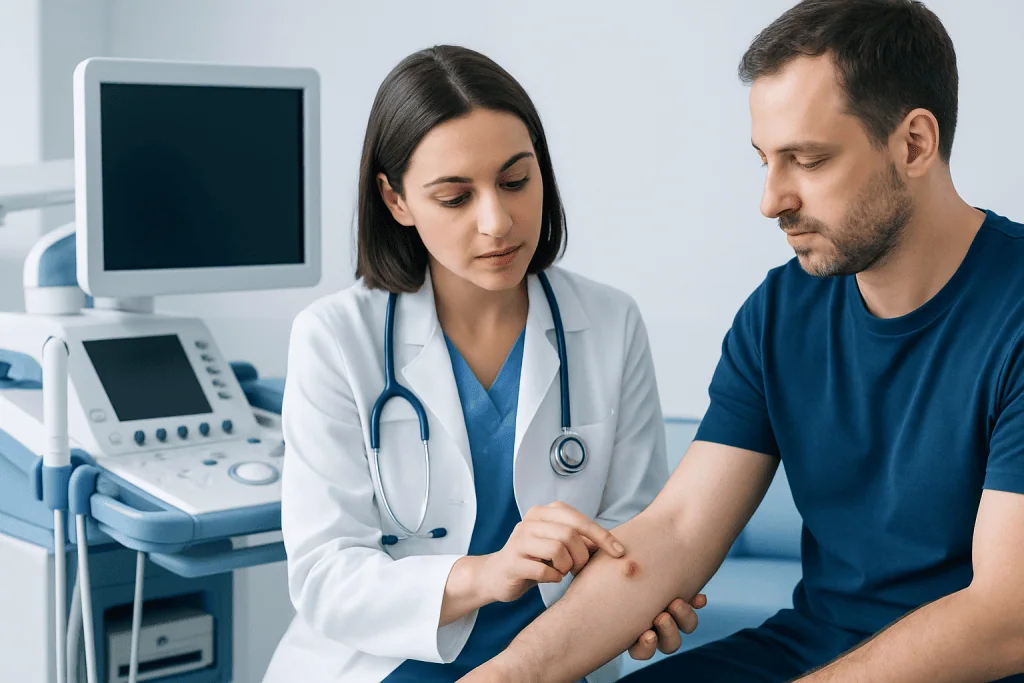
A boil usually begins as a tender, red bump under the skin. Over several days, it may become firmer, more swollen, and more painful as pus collects in the center. The skin around it can feel warm, and the boil may develop a yellow or white point, often called a “head.”
Boils commonly appear in areas where there is friction, sweating, or hair growth, such as the armpits, buttocks, thighs, groin, face, or neck. Some people notice only one lesion, while others may develop clusters of deeper, connected boils called carbuncles.
Symptoms can include:
- A painful, swollen lump under the skin
- Redness and warmth around the area
- A visible center of pus or drainage
- Skin tenderness that makes pressure uncomfortable
- Occasionally fever or feeling unwell, especially with larger infections
A boil can sometimes be confused with an inflamed cyst, insect bite, pimple, or other skin condition. If a lump is not improving, is unusually hard, or does not behave like a typical boil, medical assessment is a good idea.
Why boils happen and who is more at risk

Boils are usually caused by bacteria, most often Staphylococcus aureus, entering the skin through a tiny break or irritated hair follicle. Friction from clothing, shaving, sweating, and repeated rubbing can all make this more likely. Poor hygiene is not the only cause; many people who develop boils keep their skin clean and still get them.
Risk factors include close skin contact, sharing towels or razors, eczema or other skin conditions that damage the skin barrier, obesity, smoking, and living with recurrent bacterial colonization. People with diabetes, kidney disease, or immune suppression may also be more prone to boils or to more severe infections.
Recurring boils can point to an underlying issue such as persistent bacterial carriage, irritation from shaving, chronic skin inflammation, or a condition affecting skin folds such as hidradenitis suppurativa. In those situations, the goal is not only to treat the current boil but also to reduce future episodes through a broader skin-care and medical plan.
What to do at home instead of popping it
If the boil is small and the person feels otherwise well, home care is usually the first step. The main approach is to place a clean, warm compress over the area for 10 to 15 minutes several times a day. This may improve circulation, reduce discomfort, and help the boil drain naturally without force.
The area should be washed gently with soap and water, then kept dry and loosely covered if it is leaking. Hands should be washed before and after touching the skin. Towels, washcloths, razors, clothing, and bedding should not be shared until the infection has cleared.
It helps to avoid squeezing, poking with a needle, or cutting the boil open. These methods are not sterile and can worsen the infection. If the boil opens on its own, drainage can be blotted gently with clean gauze, but the area should still not be pressed hard. Over-the-counter pain relief may help discomfort if suitable for that person, but persistent or severe pain should be assessed by a doctor.
When boils are related to friction, sweat, or body hair, practical steps such as loose clothing, careful shaving habits, and skin protection may help. For people with repeated skin infections, a dermatologist may suggest tailored dermatology care to look for triggers and long-term prevention strategies.
When to seek medical care
Many boils improve without procedures, but some should be reviewed promptly. Medical care is important if the boil is on the face, near the eye, inside the nose, on the spine, breast, or genitals; if it is large or very painful; or if redness is spreading around it. Fever, chills, swollen lymph nodes, or feeling generally unwell are also reasons to seek help.
People should also contact a doctor if a boil does not improve after about a week of warm compresses, keeps getting bigger, keeps coming back, or if several boils appear at once. Anyone with diabetes, poor circulation, cancer treatment, steroid use, an immune condition, or a very young infant should have a lower threshold for medical review.
Urgent assessment is needed if there are signs of severe infection, such as rapidly increasing swelling, streaking redness, confusion, marked weakness, or trouble moving the nearby body part because of pain. These symptoms do not mean a serious complication is certain, but they do mean it is safest to be checked without delay.
How a doctor diagnoses a boil
Diagnosis is usually straightforward and starts with a skin examination. A doctor will look at the size, depth, location, warmth, drainage, and any surrounding redness. They will also ask about pain, fever, recent shaving or friction, whether the person has had similar infections before, and whether anyone close to them has recurrent boils.
If the boil is draining or needs to be opened in a clinic, the doctor may collect a sample of pus for laboratory testing. This helps identify the bacteria and whether they are resistant to common antibiotics. Cultures are particularly useful when infection is severe, recurrent, widespread, or not responding as expected.
Some people may need additional checks for underlying risk factors. Depending on the history, clinicians may consider blood sugar testing for diabetes, review medicines that affect immunity, or evaluate for nearby skin disease. Imaging is not usually needed, but an ultrasound can occasionally help if it is unclear whether there is a pocket of pus beneath the skin.
Treatment options a clinician may recommend
The most effective treatment for a larger boil with a clear pocket of pus is often incision and drainage, a minor medical procedure done under clean conditions. This is different from popping a boil at home. The clinician numbs the area, makes a small opening, allows the pus to drain safely, and gives instructions for dressing changes and wound care.
Antibiotics are not needed for every boil, especially if it is small and fully drained. However, they may be recommended if there is spreading skin infection, fever, multiple lesions, immune suppression, facial involvement, or a high risk of complications. When boils are extensive or recurrent, a doctor may coordinate care with specialists in infectious diseases or other relevant fields.
For repeated boils, treatment may include addressing bacterial carriage on the skin or in the nose, reviewing skin-care habits, and managing related conditions. If an area remains inflamed because of an underlying cyst, tract, or chronic disease, procedures through general surgery may sometimes be discussed. Near the end of the care pathway, some patients also benefit from specialist review at centers such as Acibadem International, where multidisciplinary teams in JCI-accredited hospitals evaluate and treat skin and soft tissue infections for international patients.
Frequently asked questions
Can a boil go away without being popped?
Yes. Many small boils improve with warm compresses, time, and gentle hygiene. They may drain on their own when the skin naturally opens over the pus pocket.
What happens if someone squeezes a boil?
Squeezing can force infected material deeper into the skin and nearby tissue. This may worsen swelling and pain, spread infection, and increase the chance of scarring.
Is it ever safe to lance a boil at home with a needle?
In general, no. Home lancing is not sterile and can lead to bleeding, deeper infection, or delayed healing. If a boil seems to need opening, it is safer to have it assessed by a clinician.
How long does a boil usually last?
A small boil may develop and settle over days to two weeks, though timing varies. If it keeps enlarging, remains very painful, or is not improving after several days of warm compresses, medical review is sensible.
Do all boils need antibiotics?
No. Some boils improve with drainage and local care alone. Antibiotics are more often used when infection is spreading, there is fever, the boil is in a higher-risk area, or the person has certain health conditions.
Why do some people keep getting boils?
Recurring boils can happen because of skin friction, shaving irritation, bacterial colonization, diabetes, smoking, obesity, or chronic inflammatory skin disease. A doctor can help identify triggers and reduce future episodes.
This article is for general information only and is not a substitute for professional medical advice. Please consult a qualified doctor about your individual situation.
Hair transplant in Turkey — costs, graft counts & a free assessment
JCI-accredited · board-certified surgeons · reply within 24h
Add us as a Preferred Source to see more of our trusted health content across Google Search, AI Overviews and Discover.

More from the Health Library

Is Matcha Good for You? Causes, Explanations, and Next Steps

How Long Can You Go Without Food? A Doctor-Reviewed Answer

How to Do a Pullup? Here Is What the Evidence Says

How to Get Ears to Pop? Causes, Explanations, and Next Steps

How to Get Rid of Alcohol Breath? Here Is What the Evidence Says