

How to Prepare for Neuropsych Testing and What Can Affect Your Results

Neuropsych testing measures different thinking skills, mood, and behavior to support diagnosis and care planning. Sleep, stress, pain, medications, hearing or vision problems, and language barriers can affect test performance.
Key Takeaways
- Neuropsych testing measures different thinking skills, mood, and behavior to support diagnosis and care planning.
- Sleep, stress, pain, medications, hearing or vision problems, and language barriers can affect test performance.
- Patients should bring medical information, use usual glasses or hearing aids, and follow instructions about medicines, food, and rest.
- The goal is not to pass or fail, but to understand strengths, challenges, and day-to-day functioning.
- Honest effort and open communication with the clinician help make results more reliable.
Neuropsych testing helps clinicians understand how a person’s brain is functioning in areas such as memory, attention, language, and problem-solving. Preparing well and knowing what can influence performance can help make the results more accurate and useful.
Overview of Neuropsych Testing
Neuropsych testing, also called a neuropsychological evaluation, is a structured assessment of how the brain is working. It looks at skills such as attention, memory, language, visual-spatial abilities, processing speed, planning, and problem-solving. Many evaluations also include questions about mood, behavior, sleep, and daily functioning because these factors can affect thinking.
The testing is usually recommended when a person has concerns such as forgetfulness, trouble concentrating, changes after a concussion or stroke, learning difficulties, or questions about conditions that can affect cognition. It may also help distinguish between different causes of symptoms, guide treatment decisions, and provide a baseline for future comparison.
These assessments are performed by trained specialists, often neuropsychologists, using standardized tasks. Some parts involve answering questions, while others involve paper-and-pencil tasks, speaking, listening, or using a computer. The aim is not to label someone as “good” or “bad” at thinking tasks. Instead, it is to build a clear, balanced picture of strengths and difficulties.
What to Expect During the Evaluation
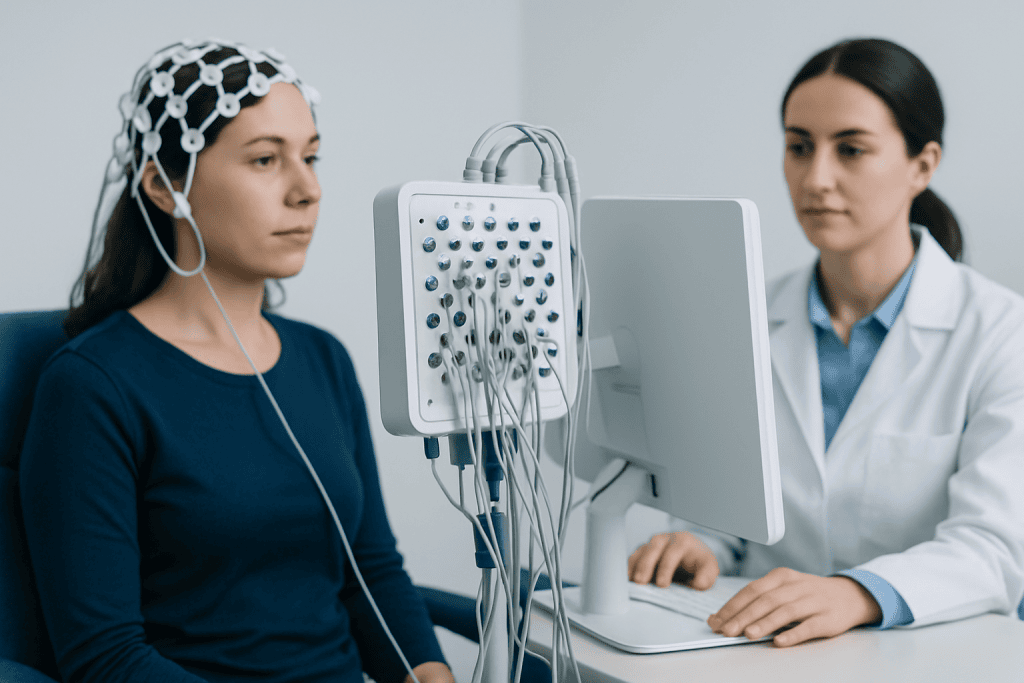
A neuropsychological evaluation often begins with a detailed interview. The clinician may ask about symptoms, medical history, education, work, language background, emotional health, sleep, medications, and changes noticed by the patient or family. This background helps place the test results in context.
The testing session itself may last a few hours or, in some cases, most of the day with breaks. The exact length depends on the reason for referral and the number of areas being assessed. Some people are tested in one session, while others complete testing over more than one visit.
Many patients worry that they will be judged or that they need to study beforehand. In reality, there is no traditional way to prepare academically. The best approach is to arrive as close to one’s usual state as possible. The clinician is trying to understand everyday functioning, not test how well someone can rehearse or memorize answers in advance.
After the session, the specialist reviews the results together with the clinical history and, when relevant, brain imaging or neurological findings. In some cases, a neuropsych evaluation is part of a broader work-up that may also include MRI scanning or a formal neurology consultation.
How to Prepare for Neuropsych Testing
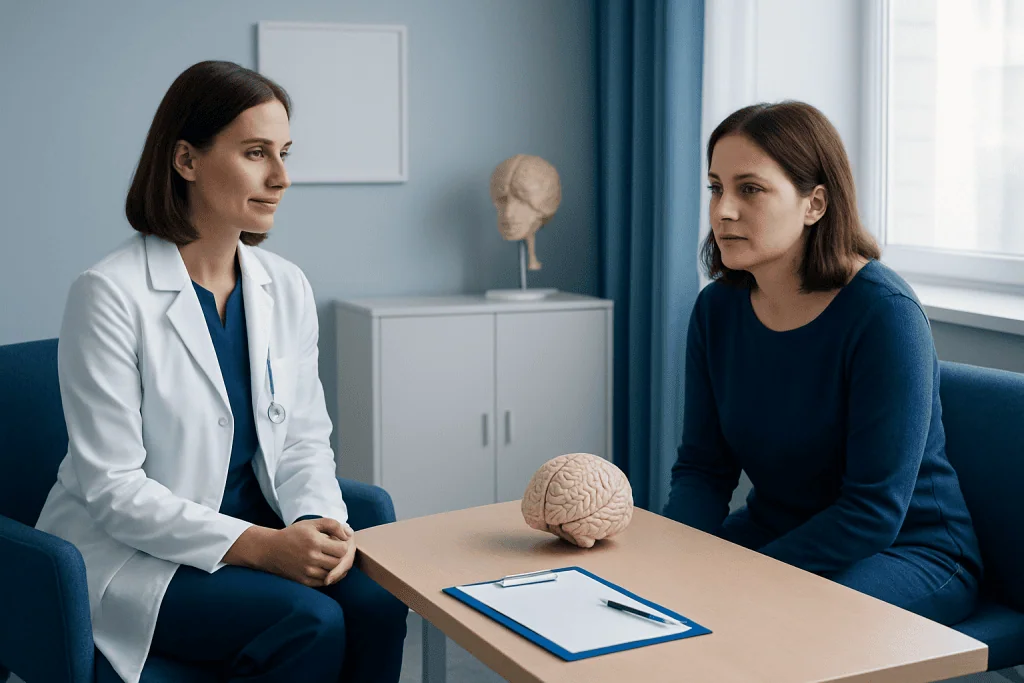
Preparation focuses on supporting a typical, steady level of functioning. Patients are often advised to get a good night’s sleep, eat regular meals, stay hydrated, and arrive on time. If the testing center gives specific instructions about caffeine, medications, or bringing a companion, those instructions should be followed carefully.
It is helpful to bring important medical information, including a medication list, previous test reports, referral notes, school records if relevant, and names of treating doctors. Wearing usual glasses, contact lenses, or hearing aids is important because untreated vision or hearing problems can lower performance on some tasks.
Comfort also matters. Choosing comfortable clothing, using the restroom before testing, and planning for transportation can reduce unnecessary stress. If the patient has a usual assistive device, such as a cane or hearing amplifier, it should be brought to the appointment.
In addition, patients should tell the clinic in advance if they have limited proficiency in the testing language, reading difficulties, severe anxiety, pain, migraine, or fatigue-related conditions. These details do not automatically prevent testing, but they help the team decide how to adapt the evaluation and interpret results more accurately.
What Can Affect Neuropsych Test Results
Many factors can influence performance on cognitive tests, sometimes temporarily. Poor sleep, high stress, depression, anxiety, pain, illness, dehydration, hunger, and fatigue are among the most common. A person may perform below their usual ability if they are exhausted, in pain, or emotionally distressed on the day of testing.
Medications and substances can also make a difference. Some prescription medicines, over-the-counter sleep aids, alcohol, recreational drugs, and even changes in routine caffeine use may affect attention, speed, alertness, or memory. Patients should never stop prescribed medicines on their own, but they should inform the clinician about what they take and ask in advance if any medicine instructions apply.
Sensory and communication factors are equally important. Hearing loss, uncorrected vision problems, language barriers, cultural differences, and limited educational opportunities can affect how a person understands instructions or completes tasks. For this reason, neuropsychologists interpret scores in the context of age, education, background, and functional history rather than relying on numbers alone.
Motivation and effort matter too. Neuropsych testing works best when the patient gives an honest, steady effort. Trying to appear better than usual or worse than usual can make results less reliable and less useful for care. The evaluation is designed to help the clinical team understand real-life functioning and, when needed, investigate concerns such as Alzheimer’s disease or the effects of stroke.
Common Reasons Doctors Order Neuropsych Testing
Doctors may recommend neuropsych testing when symptoms are difficult to explain or when a more detailed picture of cognition is needed. For example, a person may report memory lapses, slowed thinking, attention problems, word-finding difficulty, or changes in judgment, but the pattern is not yet clear from a routine clinic visit.
Testing can be useful after a neurological event or injury, such as concussion, brain surgery, epilepsy, multiple sclerosis, or stroke. It may also help in conditions that affect mood and thinking together, because anxiety, depression, sleep disorders, and medical illnesses can all influence concentration and memory.
In children, teenagers, and adults, neuropsych testing may guide school, work, and rehabilitation planning. It can help identify accommodations, strengths to build on, and areas that may need support. In older adults, it can help distinguish normal aging from mild cognitive changes or more significant cognitive disorders.
Sometimes the evaluation is paired with other assessments to build a fuller picture, such as EEG testing for seizure-related concerns or brain tumor care when cognitive changes are part of the overall evaluation.
Understanding the Results
Neuropsych test results are not based on a single score. The clinician looks at patterns across many tasks to see which abilities are stronger, which are weaker, and whether the pattern fits a known neurological, psychiatric, developmental, or medical condition. The results are interpreted in relation to the person’s age, education, language, culture, and life history.
It is common for people to have strengths in some areas and weaknesses in others. A lower score does not automatically mean a disease is present, and a normal score in one area does not rule out difficulty in another. This is why the written report and feedback session are so important. They explain what the findings may mean for daily life, work, school, driving, finances, or treatment planning.
The report may include recommendations such as follow-up with a neurologist, treatment for sleep or mood symptoms, rehabilitation therapies, lifestyle adjustments, or repeat testing later for comparison. In some situations, the results are used as a baseline to track change over time rather than to give a final diagnosis immediately.
For international patients seeking coordinated care, Acibadem International’s multidisciplinary specialists and JCI-accredited hospitals evaluate cognitive concerns as part of broader neurological assessment and treatment planning.
Practical Tips and When to Speak Up
Patients should contact the clinic before the appointment if they develop a fever, severe headache, vomiting, a major migraine, or any sudden medical problem that may affect testing. Rescheduling can sometimes be more useful than testing on a day when the results would not reflect typical functioning.
It is also important to speak up during the evaluation. If instructions are hard to hear, the print is blurry, pain is increasing, or a break is needed, the patient should tell the examiner. This is not viewed negatively; it helps the clinician understand the situation and document factors that may influence performance.
Family members can sometimes provide valuable background information, especially if there are memory concerns or noticeable changes in behavior. Whether a companion sits in the testing room depends on the clinic’s policy and the purpose of the evaluation, so it is best to ask in advance.
Medical review is especially important if cognitive symptoms are new, rapidly worsening, or accompanied by other neurological signs such as weakness, confusion, seizures, severe headaches, or sudden personality change. In those cases, prompt assessment by a qualified doctor is recommended rather than relying on testing preparation alone.
Frequently asked questions
Should a person study before neuropsych testing?
No special studying is usually recommended. The goal is to measure usual thinking skills, so getting rest, eating normally, and arriving prepared are more helpful than trying to practice test items.
Can anxiety affect neuropsych test results?
Yes. Anxiety can affect concentration, speed, and memory, especially if symptoms are strong on the day of testing. Patients should let the clinician know about significant stress or panic symptoms so results can be interpreted in context.
Should medications be stopped before a neuropsychological evaluation?
Medicines should not be stopped unless the prescribing doctor or testing team specifically advises it. However, the clinician should be informed about all prescription medicines, supplements, alcohol use, and sleep aids because they may affect performance.
How long does neuropsych testing take?
The length varies depending on the reason for referral and the number of cognitive areas being evaluated. Some assessments take a few hours, while more detailed evaluations may last most of a day or be split into more than one session.
What if the person has hearing, vision, or language difficulties?
These issues should be mentioned before the appointment whenever possible. Using glasses, hearing aids, and the most appropriate testing language can help make the assessment fairer and more accurate.
Does a low score mean dementia?
Not necessarily. Test scores are interpreted together with medical history, mood, education, language, and daily functioning. Sleep problems, depression, pain, medications, and many other factors can also affect results.
References
- American Psychological Association
- National Institute on Aging
- Centers for Disease Control and Prevention
- National Institute of Neurological Disorders and Stroke
- American Academy of Neurology
This article is for general information only and is not a substitute for professional medical advice. Please consult a qualified doctor about your individual situation.
Explore treatments in Turkey — costs, top hospitals & a free quote
JCI-accredited · board-certified surgeons · reply within 24h
Add us as a Preferred Source to see more of our trusted health content across Google Search, AI Overviews and Discover.

More from the Health Library



Related Specialists

Fzt. Ezgi Nur Çiçek
Physical Medicine & Rehabilitation
Dr. Gökan Güler
Emergency Service
Assoc. Prof. Dr. Kayahan Karaytuğ
Orthopedic Surgery & Traumatology
Prof. Dr. Ersin Erek
Cardiovascular Surgery