How to Sleep Comfortably After Knee Replacement

Back sleeping is usually the easiest and safest position early after knee replacement. Side sleeping may be possible with pillows between or around the legs, depending on comfort and medical advice.
Key Takeaways
- Back sleeping is usually the easiest and safest position early after knee replacement.
- Side sleeping may be possible with pillows between or around the legs, depending on comfort and medical advice.
- Pain, swelling, and stiffness often disturb sleep, especially in the first few weeks.
- Keeping the leg supported but not with a pillow directly under the knee can help maintain proper knee extension.
- Good sleep habits, ice, medication timing, and gentle daytime activity may improve nighttime comfort.
- New calf pain, chest symptoms, fever, or worsening swelling should be assessed by a doctor promptly.
Sleeping can be difficult in the first weeks after knee replacement, but the right position, pillow support, and pain control can make rest easier. Most people sleep best on their back or on their side with careful support and by following their surgeon’s aftercare instructions.
Overview
Many people wonder how to sleep comfortably after knee replacement because sleep often becomes harder before it gets better. Pain, swelling, changes in routine, and the challenge of finding a safe position can all disrupt rest in the early recovery period. This is common and usually improves gradually as healing progresses.
In general, the most comfortable sleeping position after knee replacement is on the back with the leg supported. Some people can also sleep on their side, especially after the first days or weeks, if they use pillows carefully and avoid twisting the knee. The exact timing depends on the type of surgery, the surgeon’s instructions, and the person’s overall recovery.
A key goal during recovery is to protect the new joint while also helping the knee regain movement, especially the ability to fully straighten. For that reason, patients are often advised not to keep a pillow directly under the knee for long periods, because this may encourage the joint to stay bent. Support is usually placed under the calf or ankle rather than under the knee itself.
Sleep problems after surgery can feel frustrating, but they are not unusual. Knowing which positions are typically recommended, how to reduce discomfort before bedtime, and when to ask for medical help can make the recovery period easier and more manageable.
Why Sleep Is Difficult After Knee Replacement
Several factors can interfere with sleep after knee replacement. The most common are pain, swelling, stiffness, and tenderness around the incision. These symptoms may become more noticeable at night, when there are fewer distractions and the body is at rest.
It is also common for people to change their usual sleeping habits after surgery. Someone who normally sleeps on their stomach, for example, may need to avoid that position for a while. Learning a new sleep posture can take time, and frequent movement during the night may wake the patient repeatedly.
Another reason sleep may be affected is the body’s response to surgery itself. Healing tissues, temporary inflammation, reduced activity during the day, and medications can all alter normal sleep patterns. Some pain medicines may cause drowsiness, while others may lead to vivid dreams, constipation, or restlessness, which can also affect quality of sleep.
Recovery after knee replacement surgery is individual. Some patients sleep better within a couple of weeks, while others need more time before nights become more comfortable. Patience, a consistent routine, and close follow-up with the care team are often helpful during this stage.
Best Sleeping Positions After Surgery
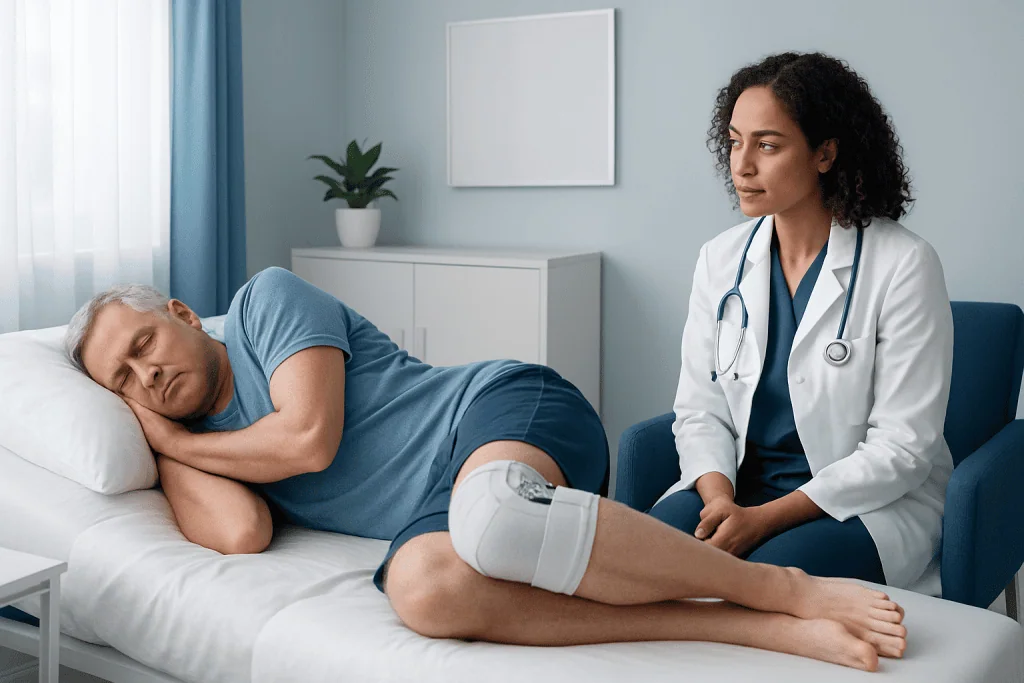
For most patients, sleeping on the back is the best position after knee replacement, especially early in recovery. This position allows the leg to stay in a more neutral alignment and makes it easier to support the operated limb with pillows. Many surgeons recommend placing a pillow under the lower leg, closer to the calf or ankle, rather than directly under the knee.
Side sleeping may also be possible if it is comfortable and approved by the surgeon. If sleeping on the non-operated side, placing a pillow between the knees or along the length of the legs can reduce pressure and help keep the new knee aligned. If sleeping on the operated side is allowed later in recovery, soft cushioning may improve comfort, though this is not tolerable for everyone at first.
Stomach sleeping is often the most difficult position after knee replacement. It may place strain on the knee, feel uncomfortable around the incision, and make it harder to keep the leg in a supported position. Many patients need to avoid it until healing is further along and their surgeon says it is reasonable.
Helpful positioning tips may include:
- Keep the leg straight and well supported.
- Avoid putting a pillow directly under the knee for long periods unless specifically instructed.
- Use pillows to prevent rolling into a painful position.
- Choose a firm, stable sleeping surface that makes getting in and out of bed easier.
- If needed, discuss recovery guidance with an orthopedic team experienced in knee replacement care.
How to Reduce Pain and Swelling at Night
Managing pain and swelling before bed can make a meaningful difference. Many patients sleep better when they follow the medication schedule recommended by their doctor instead of waiting until discomfort becomes severe. Taking prescribed medicine at the right time may help the body settle more comfortably for sleep.
Ice can also be helpful. Applying a cold pack before bedtime may reduce swelling and ease soreness around the joint. It is important to protect the skin with a cloth barrier and to follow medical advice about how long and how often to use ice. Some patients also benefit from mild elevation of the leg, as long as the knee is not left in a constantly bent position.
Gentle movement during the day often supports better sleep at night. Walking as advised, doing prescribed exercises, and avoiding very long periods of inactivity can reduce stiffness. At the same time, overexertion late in the day may increase pain and swelling, so a balanced approach is usually best.
Other simple steps can help create a calmer bedtime routine. A warm shower, loose clothing, and a tidy path to the bathroom may improve comfort and safety. If pain remains difficult to manage despite following instructions, patients should contact their surgeon or rehabilitation team rather than changing medications on their own.
Bed Setup, Pillows, and Safe Movement
A comfortable bed setup can make nights less stressful after surgery. The bed should be easy to get into and out of without deep bending or twisting. Some people temporarily prefer a higher bed, a firmer mattress, or a bedroom on the same floor as the bathroom to reduce effort and the risk of falls.
Pillows are often one of the most useful tools for sleep after knee replacement. They can support the lower leg, reduce pressure points, and help maintain position through the night. The key is placement: support under the calf and ankle may be useful, while prolonged support directly behind the knee is usually discouraged because it can encourage a bent posture.
Getting into bed safely is also important. Patients are commonly advised to sit first, then bring the legs onto the bed with control rather than twisting suddenly. When turning in bed, moving the whole body together instead of rotating the knee alone may feel more stable and more comfortable.
If mobility feels especially limited, rehabilitation guidance can be valuable. Structured aftercare and physical therapy and rehabilitation may help patients improve movement, strength, and confidence with everyday activities such as getting in and out of bed.
Sleep Hygiene and Recovery Habits
Good sleep habits can support healing after knee replacement. Going to bed and waking up at similar times each day helps regulate the body’s internal clock. A quiet, dark, cool bedroom and limiting screen use before bedtime may also improve the ability to fall asleep.
Daytime habits matter too. Regular light activity, as recommended by the care team, can reduce stiffness and improve overall recovery. Long daytime naps may make nighttime sleep harder for some people, so shorter rest periods are often better if naps are needed.
Caffeine late in the day, heavy evening meals, and alcohol may interfere with sleep or make nighttime bathroom trips more frequent. Relaxation methods such as calm breathing, listening to soft music, or guided relaxation can be helpful for patients who feel tense at bedtime. If snoring, breathing pauses, or severe insomnia are present, these issues should be discussed with a doctor.
Some people recovering from knee surgery also have other orthopedic concerns, such as osteoarthritis in the other knee or hip, which can affect comfort at night. Looking at the whole musculoskeletal picture can help the care team suggest more practical strategies for sleeping and positioning.
When to Call a Doctor
Most sleep disruption after knee replacement is expected and improves with time, but some symptoms should not be ignored. Patients should contact their doctor if pain suddenly becomes much worse, if the incision becomes increasingly red or draining, or if swelling rises sharply instead of gradually settling. A fever or feeling generally unwell may also need medical assessment.
Urgent medical attention is especially important for warning signs of a blood clot or lung problem. These may include new calf pain, marked one-sided swelling, warmth in the lower leg, sudden shortness of breath, or chest pain. Although such complications are not common, they require prompt evaluation.
Persistent trouble sleeping that continues beyond the early recovery period is also worth discussing. Sometimes pain control, exercise timing, medications, or another health issue may need to be reviewed. Patients should not feel they need to simply endure severe sleep loss without support.
For people seeking specialized postoperative care, Acibadem International’s multidisciplinary specialists in JCI-accredited hospitals diagnose and treat orthopedic conditions for international patients, including recovery after procedures such as robotic knee replacement.
Frequently asked questions
How long is it hard to sleep after knee replacement?
Sleep is often most difficult in the first few weeks after surgery because pain, swelling, and stiffness are still pronounced. Many people notice gradual improvement over several weeks, though full return to normal sleep can take longer.
Can someone sleep on their side after knee replacement?
Side sleeping is often possible, but the timing depends on comfort and the surgeon’s advice. Using pillows between the legs or to support the operated leg can help keep the knee aligned and reduce pressure.
Why should a pillow not be kept directly under the knee?
A pillow directly under the knee for long periods may encourage the joint to stay bent. After knee replacement, it is usually important to work toward full extension, so support is often placed under the calf or ankle instead.
Is it normal for knee pain to feel worse at night?
Yes, many patients notice more discomfort at night after surgery. This can happen because swelling becomes more noticeable at rest, stiffness builds up, and there are fewer distractions from pain.
What can help improve sleep after knee replacement?
Helpful steps may include using a recommended sleeping position, timing pain medicine properly, icing the knee before bed, doing prescribed exercises during the day, and keeping a regular bedtime routine. If sleep remains very poor, the patient should speak with their doctor.
When should sleep problems after knee replacement be discussed with a doctor?
A doctor should be contacted if sleep problems are severe, keep getting worse, or continue well beyond the early healing phase. Medical advice is also needed right away if poor sleep comes with fever, increasing redness, calf pain, chest pain, or shortness of breath.
References
- American Academy of Orthopaedic Surgeons
- National Institute for Health and Care Excellence
- National Health Service
- MedlinePlus
- Arthritis Foundation
This article is for general information only and is not a substitute for professional medical advice. Please consult a qualified doctor about your individual situation.
Joint and spine care in Turkey — expert assessment & treatment
JCI-accredited · board-certified surgeons · reply within 24h
Add us as a Preferred Source to see more of our trusted health content across Google Search, AI Overviews and Discover.

Orthopedics & Spine
Care for bones, joints and the musculoskeletal system, including joint replacement, sports injuries and trauma.
125 specialists in this unit