How to Strengthen Ankles? Here Is What the Evidence Says

Most ankle weakness improves with targeted exercises, balance work, and gradual activity progression. Strengthening should include the calf, shin, foot, and hip muscles—not just the ankle itself.
Key Takeaways
- Most ankle weakness improves with targeted exercises, balance work, and gradual activity progression.
- Strengthening should include the calf, shin, foot, and hip muscles—not just the ankle itself.
- Repeated sprains, persistent pain, instability, or inability to bear weight may point to a more significant injury.
- Doctors evaluate ankle problems with a history, physical examination, and sometimes imaging such as X-rays or MRI.
- Supportive shoes, smart training changes, and rehabilitation after a sprain help reduce future ankle problems.
How to strengthen ankles usually comes down to consistent balance training, calf and foot strengthening, and a gradual return to walking, running, or sport. In many people, ankle weakness is manageable with exercise and supportive habits, but pain, repeated sprains, major swelling, or trouble bearing weight should be assessed by a clinician.
Overview: what actually helps strengthen ankles
For most people, the answer to how to strengthen ankles is practical and reassuring: build strength gradually, improve balance, and restore confidence in movement. Ankles become more stable when the muscles of the lower leg and foot are trained regularly and when the body relearns how to control position during standing, walking, climbing stairs, and sport.
Simple evidence-based strategies include calf raises, resisted ankle movements, single-leg balance, heel-to-toe walking, and exercises that strengthen the small muscles of the feet. These are often paired with a gradual increase in daily activity rather than sudden jumps in exercise intensity. Progress tends to be steadier when movements are done several times a week, with attention to good form rather than speed.
Many cases of “weak ankles” are not dangerous. They often follow deconditioning, sitting for long periods, poorly supported footwear, or recovery from a mild sprain. However, when weakness comes with severe pain, marked swelling, a popping injury, deformity, repeated giving way, numbness, or an inability to take a few steps, medical review is important before starting self-directed exercise.
Signs that ankles may need strengthening
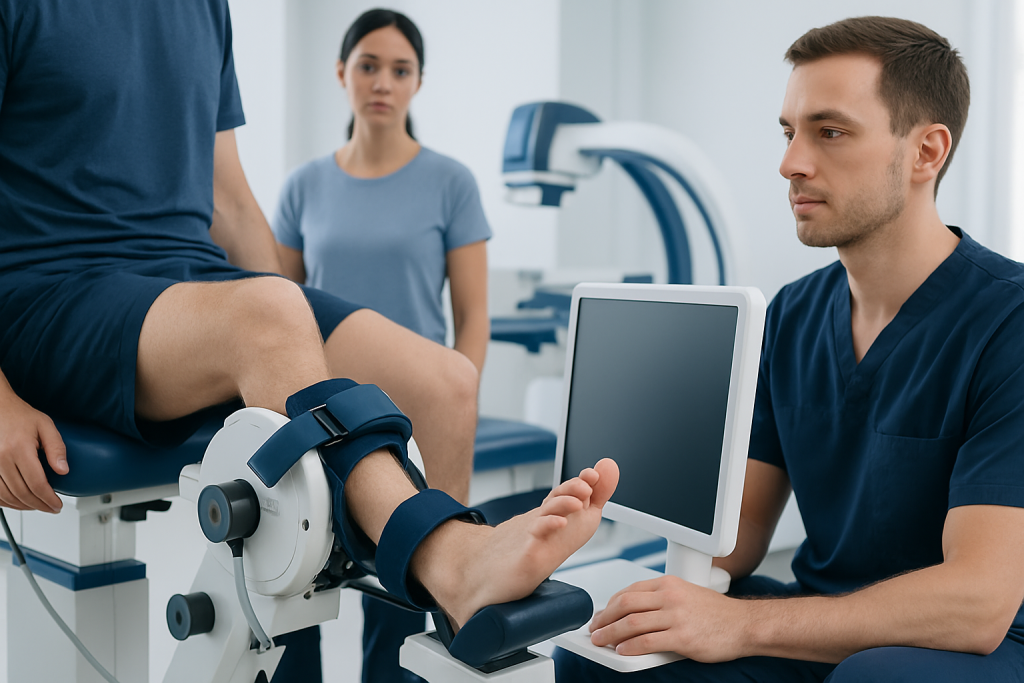
People usually notice ankle weakness as wobbliness, poor balance, or a feeling that the joint may roll unexpectedly on uneven ground. Some describe needing to “think” about each step, especially on stairs, trails, or when changing direction quickly. Others mainly notice fatigue in the feet and calves after standing or walking.
Common clues include frequent minor twists, a history of ankle sprains, stiffness after rest, or difficulty doing a single-leg heel raise. Athletes may notice slower cutting, jumping, or landing control. People who are returning to activity after an injury may feel physically recovered but still lack trust in the ankle.
Not all symptoms point to simple weakness. Persistent swelling, bruising, catching, locking, sharp pain, or ongoing instability may suggest a sprain that did not heal fully, tendon irritation, cartilage injury, or another structural problem. In some cases, symptoms can overlap with ankle sprain or foot alignment issues that need a more individualized rehabilitation plan.
Why ankles become weak or unstable
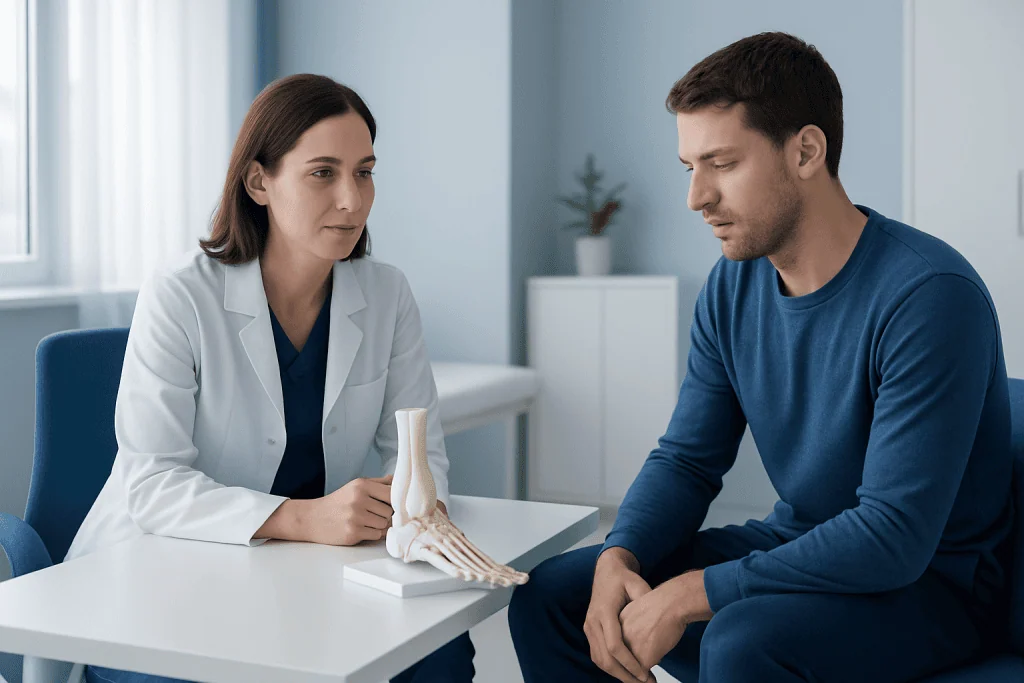
Ankle strength and stability depend on more than one muscle. The calf muscles help control push-off and support the Achilles tendon, while the muscles along the shin and outer lower leg help control foot position and reduce rolling. The small muscles of the foot contribute to arch support, and the hips help keep the leg aligned during walking and sport. If one part of this chain is underperforming, the ankle may compensate.
A previous sprain is one of the most common reasons for ongoing instability. After a sprain, the issue may not be strength alone. The body’s position sense, called proprioception, can also be affected, making the ankle slower to respond to uneven surfaces or quick movements. That is why balance training is often just as important as strengthening.
Other contributors include unsupportive footwear, sudden increases in training, weak calf muscles, tight calves, reduced mobility after immobilization, and low activity levels. Some people also have ligament laxity, flat feet, high arches, or conditions affecting nerves, joints, or tendons. If symptoms are persistent or recovery stalls, doctors may evaluate related problems such as Achilles tendon irritation or biomechanical factors higher up the leg.
Evidence-based exercises that help
The most effective ankle programs usually combine strengthening with balance and movement control. A simple starting point is a double-leg calf raise, progressing to a single-leg calf raise as tolerated. Resisted ankle movements using a band can train turning the foot inward and outward, lifting the foot up, and pressing it down. These exercises strengthen the muscles that help steady the ankle during daily activity.
Balance training has strong practical value, especially after a sprain. Standing on one leg near a wall or chair, then progressing to eyes closed or an unstable surface, challenges the ankle to make small corrections. Heel-to-toe walking, step-downs, and controlled mini-squats also improve coordination and lower-limb control. For some people, short-foot exercises or towel scrunches help activate the foot muscles that support stability.
Progressive loading matters. It is usually better to start with low pain and excellent form than to advance too quickly. A clinician or physical therapist may recommend physical therapy and rehabilitation when weakness follows injury, surgery, or repeated sprains. Supervised care can help tailor the program, correct movement patterns, and guide a safe return to sport.
- Begin with 2 to 3 sessions a week and add repetitions or difficulty gradually.
- Expect muscle effort, but stop if an exercise causes sharp pain or significant swelling.
- Train both sides, even if only one ankle feels weak.
- Include calf flexibility and hip strengthening for better overall control.
Daily habits that support stronger ankles
Exercise works best when combined with supportive everyday habits. Footwear is an important starting point. Shoes should fit well, match the activity, and provide a stable base. Worn-out soles or shoes that allow the foot to slide can make balance and control harder, especially during brisk walking or sport.
Training habits also matter. Ankles often become symptomatic when activity levels rise faster than the body can adapt. Gradual increases in walking distance, running volume, jump training, or court sport exposure can help tissues strengthen over time. Warm-ups that include ankle circles, marching, calf raises, and light balance tasks can prepare the joint for movement.
Surface choice may help too. Uneven ground challenges the ankle more than level surfaces, which can be useful later in rehabilitation but not always at the beginning. Some people temporarily benefit from taping, bracing, or shoe inserts while they rebuild strength and confidence. These supports do not replace exercise, but they can sometimes reduce excessive strain during recovery.
When to seek medical care and how doctors diagnose the cause
Most mild ankle weakness improves without urgent treatment, but certain symptoms should prompt medical review. A person should seek care if the ankle cannot bear weight, looks deformed, becomes very swollen quickly, or if pain is severe after a twist or fall. Assessment is also sensible when symptoms keep returning, interfere with work or sport, or do not improve after a few weeks of guided self-care.
Doctors start with a detailed history: when the problem began, whether there was a specific injury, what movements trigger symptoms, and whether there has been prior sprain, surgery, or numbness. The physical examination usually checks swelling, tenderness, ligament stability, range of motion, calf strength, walking pattern, and single-leg balance. The foot, knee, and hip may also be assessed because ankle control depends on the whole lower limb.
If a fracture or major injury is suspected, an X-ray may be recommended. Ultrasound or MRI can help when tendon, ligament, cartilage, or persistent soft-tissue problems are suspected. In selected cases, people may need orthopedic rehabilitation or review by specialists in orthopedics to clarify whether instability, tendon injury, or another condition is driving the symptoms.
Treatment options if exercise alone is not enough
When weakness is linked to an underlying problem, treatment focuses on the cause as well as the symptoms. A structured rehabilitation program is often the main treatment after sprains, tendon irritation, or prolonged inactivity. This may include progressive strengthening, balance retraining, gait work, flexibility, manual therapy, and a staged return to activity.
If swelling or pain is limiting progress, doctors may recommend temporary activity modification and supportive measures while the ankle settles. Bracing or taping can be used in some cases to reduce repeated rolling during rehabilitation. If there is a significant ligament tear, tendon injury, persistent instability, or an associated fracture, treatment may be more specialized and sometimes involve a surgical opinion.
People with repeated ankle injuries should not assume the problem is simply poor fitness. Ongoing instability can affect confidence, movement quality, and future injury risk. Near the end of the care pathway, some international patients choose assessment at centers such as Acibadem International, where multidisciplinary specialists in JCI-accredited hospitals diagnose and treat ankle injuries and rehabilitation needs in a coordinated way.
Frequently asked questions
How long does it take to strengthen weak ankles?
It varies with the cause, the starting fitness level, and how consistently exercises are done. Many people notice better balance and control within a few weeks, while fuller improvement after a sprain or period of inactivity may take longer. Progress is usually more reliable when exercises are continued regularly rather than stopped as soon as symptoms improve.
Can walking strengthen ankles?
Walking can help, especially after a period of low activity, because it gently loads the muscles and ligaments around the ankle. However, walking alone may not be enough if the goal is to improve balance, recover after a sprain, or prevent repeated rolling. Targeted strengthening and single-leg balance work are usually more effective additions.
Should ankle exercises hurt?
Exercises may create mild muscle effort or temporary fatigue, but they should not cause sharp pain, marked swelling, or a clear sense of the joint giving way. If symptoms worsen during or after exercise, the program may need to be modified. A clinician or physical therapist can help adjust the intensity and technique.
Do ankle braces make ankles weaker?
Using a brace for a limited time does not usually make the ankle weak on its own. Braces can be useful during recovery or return to sport, especially after a recent sprain. The key point is that bracing should support, not replace, an active rehabilitation plan.
What if ankles keep rolling even after exercise?
Repeated giving way may mean the ankle needs a more specific rehabilitation plan or that a ligament, tendon, or cartilage injury is present. It can also reflect poor proprioception, not just reduced strength. Persistent instability deserves medical assessment, especially if there is swelling, pain, or loss of confidence during normal activity.
Are weak ankles related to flat feet or hip weakness?
They can be. Foot shape, arch control, calf strength, and hip stability all influence how the ankle behaves during standing, walking, and sport. That is why effective programs often include the feet, calves, and hips instead of focusing only on the ankle joint.
References
- American Academy of Orthopaedic Surgeons
- National Institute for Health and Care Excellence
- American Physical Therapy Association
- National Library of Medicine
- Mayo Clinic
This article is for general information only and is not a substitute for professional medical advice. Please consult a qualified doctor about your individual situation.
Explore treatments in Turkey — costs, top hospitals & a free quote
JCI-accredited · board-certified surgeons · reply within 24h
Add us as a Preferred Source to see more of our trusted health content across Google Search, AI Overviews and Discover.