How to Treat a Burn? Causes, Explanations, and Next Steps

Cool a fresh burn under cool running water for about 20 minutes as soon as possible. Do not use ice, butter, toothpaste, or oily home remedies on a burn.
Key Takeaways
- Cool a fresh burn under cool running water for about 20 minutes as soon as possible.
- Do not use ice, butter, toothpaste, or oily home remedies on a burn.
- Cover the area with a clean, non-stick dressing and protect blisters from breaking.
- Seek medical care for large, deep, chemical, electrical, facial, hand, foot, genital, or joint burns.
- A doctor may assess burn depth, size, pain, circulation, and infection risk before recommending treatment.
Most small burns can be managed safely at home with prompt first aid, especially cooling the area under running water and protecting the skin. The key is knowing the warning signs of a deeper, larger, or more serious burn that needs medical attention.
Overview: What to Do First for a Burn
For many minor burns, the safest first step is simple: remove the heat source, cool the skin under cool running water for about 20 minutes, and then loosely cover the area with a clean, non-stick dressing. This approach helps limit skin damage, reduce pain, and lower the chance of complications.
Not every burn is an emergency, and many small superficial burns heal well with basic home care. However, medical review is important if the burn is large, very painful, looks deep, involves the face, hands, feet, genitals, or a major joint, or happened after electricity or chemicals.
Burns can happen from heat, hot liquids, steam, sun exposure, chemicals, friction, or electrical contact. The best treatment depends on how deep the burn is, how much skin is affected, and where it is located on the body.
A reassuring way to think about burn care is in three steps: immediate first aid, watch for red flags, and get a professional assessment when the injury may be more than minor. In some situations, related wound care or specialized wound care may be part of recovery.
How to Treat a Burn at Home
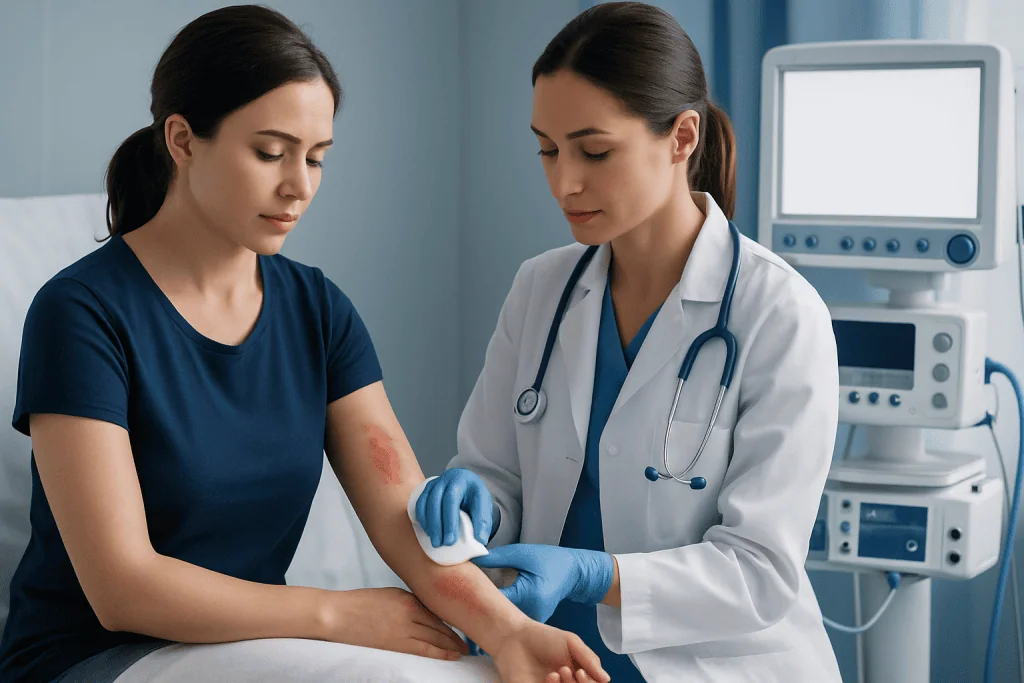
If the burn is small and appears mild, first move away from the source of heat and remove tight items such as rings, watches, or belts before swelling starts. If clothing is stuck to the skin, it should not be pulled away; instead, any loose clothing around the area can be gently removed.
Place the burned area under cool running water as soon as possible. Cool water is preferred over very cold water or ice, because ice can further injure the skin. If running water is not available, a cool, clean compress may help until proper cooling is possible.
After cooling, the area can be patted dry and loosely covered with a sterile non-stick dressing or clean cloth. Keeping the burn clean and protected is usually more helpful than applying home remedies. Fragrance-free moisturizer or burn gel may sometimes be used for very mild superficial burns if the skin is intact, but thick oils, butter, toothpaste, and similar products should be avoided.
- Do use cool running water.
- Do cover the burn loosely with a clean dressing.
- Do keep blisters intact if possible.
- Do not apply ice directly.
- Do not pop blisters.
- Do not use adhesive dressings directly on fragile burned skin.
Symptoms and Burn Severity: What the Skin May Look and Feel Like

Burns are often described by depth rather than by appearance alone. A superficial burn usually causes redness, tenderness, and pain without blistering, much like a mild sunburn. These burns typically heal within days and usually do not scar.
A partial-thickness burn often causes stronger pain, swelling, moisture, and blisters. The skin may look pink, red, or mottled. These burns can vary in severity and sometimes need medical assessment, especially if they are wide or located in sensitive areas.
A deeper full-thickness burn may look white, brown, charred, leathery, or dry. Some deep burns may hurt less than expected because nerve endings are damaged. This can be misleading, so a burn that looks pale, waxy, or unusually firm should be examined by a clinician.
Other symptoms can suggest a more serious injury. These include trouble breathing after smoke exposure, burns inside the mouth or nose, dizziness, significant swelling, fever, spreading redness, pus, or worsening pain after the first day or two. If redness and warmth continue to spread, a doctor may also consider conditions such as cellulitis.
Causes and Risk Factors
Burns have several common causes. Thermal burns come from flame, hot metal, hot appliances, steam, or scalding liquids. Scalds are especially common in kitchens and bathrooms and can happen quickly, particularly in children and older adults.
Chemical burns occur when the skin contacts acids, alkalis, or household and industrial cleaning products. Electrical burns may leave only a small skin mark while causing deeper tissue injury underneath. Friction burns can happen during sports or road accidents, and sunburn is caused by ultraviolet radiation.
Certain factors raise the risk of a more severe burn or slower healing. These include very young or older age, diabetes, poor circulation, reduced sensation, immune system problems, and delayed first aid. Burns over areas of thin or sensitive skin may also need closer attention.
Context matters too. A minor burn on the forearm may heal well with simple care, while a similar-looking burn on the hand, face, or over a joint can affect movement and function. When there is concern about the skin barrier or healing, doctors may assess for associated skin conditions that can complicate recovery.
When to Seek Medical Care
Medical care is recommended if a burn is larger than the injured person’s palm, looks deep, involves the face, eyes, ears, hands, feet, genitals, buttocks, or a major joint, or was caused by electricity, chemicals, or fire in an enclosed space. Immediate evaluation is also important after smoke inhalation or if there are breathing symptoms, hoarseness, or soot around the nose or mouth.
A doctor should also assess burns in infants, older adults, or people with diabetes or poor circulation. Care is important when pain is severe, blisters are extensive, the wound appears white or charred, or the burn does not begin improving within a few days. Any signs of infection, such as increasing redness, warmth, swelling, discharge, fever, or worsening tenderness, also deserve prompt attention.
Even when a burn seems small, medical review may help if it crosses a joint or interferes with everyday use of the hand, foot, or face. Burns on these areas can affect mobility, function, and scarring. Some patients may need plastic and reconstructive surgery support later if deeper injuries heal with contracture or noticeable scar formation.
How Doctors Diagnose and Assess a Burn
When a person seeks care, the medical team usually starts by asking how and when the burn happened, what first aid was given, and whether there are symptoms such as shortness of breath, numbness, or severe pain. They will examine the skin closely to estimate the burn’s depth, size, and exact location.
Doctors often describe burn size as a percentage of total body surface area. They also check blood flow, sensation, movement, and whether the burn circles a finger, arm, leg, or chest, which can create pressure as swelling develops. Burns from chemicals or electricity may need especially careful evaluation because deeper damage is not always visible right away.
Tests are not needed for every burn, but some patients may need blood tests, heart monitoring after electrical injury, imaging, or airway assessment after smoke exposure. If there is concern about infection, delayed healing, or an associated wound problem, clinicians may involve specialists in dermatology, surgery, or wound management.
For international patients needing advanced evaluation, Acibadem International’s multidisciplinary specialists in JCI-accredited hospitals diagnose and treat burn-related injuries and healing complications with coordinated care.
Treatment Options for Minor and More Serious Burns
Treatment depends on severity. Mild superficial burns usually need cooling, cleansing, pain relief, hydration, and simple dressings. A clinician may recommend a non-stick dressing and advice on changing it, showering, and protecting the skin while it heals.
Partial-thickness burns may require professional wound cleaning, debridement of loose dead tissue, blister management, and dressings that keep the wound moist while lowering infection risk. Pain control is an important part of treatment, because comfort can improve sleep, mobility, and daily function.
Deeper or more extensive burns may need hospital care, intravenous fluids, monitoring, infection prevention, and sometimes surgery. In selected cases, skin grafting may be used to help close deeper wounds and support healing. Rehabilitation can also matter, especially when the burn affects joints, hands, or the face.
After healing, some people develop thick or raised scars. These may improve with scar massage, silicone-based products, pressure therapy, or specialist review. If symptoms such as itching, color changes, or stiffness persist, a doctor can advise on longer-term skin and scar care.
Prevention and Self-care During Recovery
Burn prevention begins with everyday habits. In the kitchen, turning pot handles inward, checking bath water before use, keeping hot drinks away from edges, and using oven gloves can lower risk. Smoke alarms, safe electrical practices, and careful storage of chemicals are also important.
During recovery, the healing skin should be kept clean and protected from friction and sun exposure. Once the skin has closed, sunscreen and sun-protective clothing can help reduce long-lasting discoloration. It is usually best to avoid picking at peeling skin or breaking blisters.
Good general health supports wound healing. Adequate fluids, balanced nutrition, rest, and avoiding smoking can all help the body repair skin. If a burn is on a hand, elbow, knee, or other moving area, gentle movement as advised by a clinician may help prevent stiffness.
Parents and caregivers should watch children closely around hot liquids, irons, curling tools, fireplaces, and electrical cords. Prevention matters because even brief contact with heat can injure delicate skin.
Frequently asked questions
How long should a burn be cooled under water?
A fresh burn is usually cooled under cool running water for about 20 minutes. This is most helpful when done as soon as possible after the injury. Ice or very cold water should be avoided because they can worsen tissue damage.
Should blisters from a burn be popped?
In general, blisters should be left intact. The blister roof helps protect the skin underneath and may lower infection risk. If a blister is large, painful, or breaks on its own, a clinician can advise how to clean and dress it safely.
What should not be put on a burn?
Ice, butter, toothpaste, oils, and other home remedies are best avoided. These can irritate the skin, trap heat, or make the burn harder to assess and clean. A clean non-stick dressing after cooling is usually a safer choice.
When is a burn serious enough for urgent medical care?
Urgent care is important for burns that are large, deep, chemical, electrical, or involve the face, hands, feet, genitals, or major joints. Trouble breathing, smoke exposure, severe swelling, or signs of infection also need prompt assessment. Infants, older adults, and people with diabetes should seek advice sooner.
Can a minor burn heal on its own?
Yes, many small superficial burns heal well with home care. Cooling the area, keeping it clean, and protecting it with a dressing are often enough. If pain, redness, or swelling gets worse instead of better, a doctor should review it.
Will a burn leave a scar?
Very mild superficial burns often heal without scarring. Deeper burns, burns that take longer to heal, and burns that become infected are more likely to scar. Early wound care and sun protection can help improve the final appearance of the skin.
References
- American Burn Association
- Mayo Clinic
- MedlinePlus
- National Health Service
- World Health Organization
This article is for general information only and is not a substitute for professional medical advice. Please consult a qualified doctor about your individual situation.
Explore treatments in Turkey — costs, top hospitals & a free quote
JCI-accredited · board-certified surgeons · reply within 24h
Add us as a Preferred Source to see more of our trusted health content across Google Search, AI Overviews and Discover.