How Vascular Neurologists Diagnose TIA and Stroke: Tests You May Need

A transient ischemic attack (TIA) and a stroke are medical emergencies that need prompt evaluation. Vascular neurologists use symptoms, physical examination, brain scans, and blood vessel imaging to make a diagnosis.
Key Takeaways
- A transient ischemic attack (TIA) and a stroke are medical emergencies that need prompt evaluation.
- Vascular neurologists use symptoms, physical examination, brain scans, and blood vessel imaging to make a diagnosis.
- Tests also look for the cause, such as a blocked artery, heart rhythm problem, or blood clotting disorder.
- Not every patient needs every test; the plan depends on symptoms, timing, age, and medical history.
- Early diagnosis helps guide treatment and can reduce the risk of future stroke.
TIA and stroke diagnosis usually involves a fast medical assessment, brain imaging, blood vessel studies, and heart tests. These evaluations help confirm what happened, rule out other causes, and guide treatment to lower the risk of another event.
Overview
A transient ischemic attack, often called a TIA or “mini-stroke,” happens when blood flow to part of the brain is briefly reduced and symptoms resolve completely. A stroke happens when brain tissue is injured because blood flow is blocked or, less commonly, because a blood vessel bleeds. Although a TIA does not leave lasting symptoms, it is an important warning sign that a stroke could happen soon.
Because symptoms can overlap and may improve before medical help is reached, doctors rely on tests as well as the patient’s story. Vascular neurologists are doctors with specialized training in conditions that affect the brain’s blood vessels. Their goal is not only to confirm whether a person had a TIA or stroke, but also to identify the type, location, severity, and likely cause.
Testing is often done urgently, especially when symptoms are new or recent. This is because some treatments work best within a limited time window, and because the risk of another event may be highest soon after the first one. In many cases, evaluation begins in the emergency department and continues in the hospital or stroke clinic.
What a Vascular Neurologist Looks For First
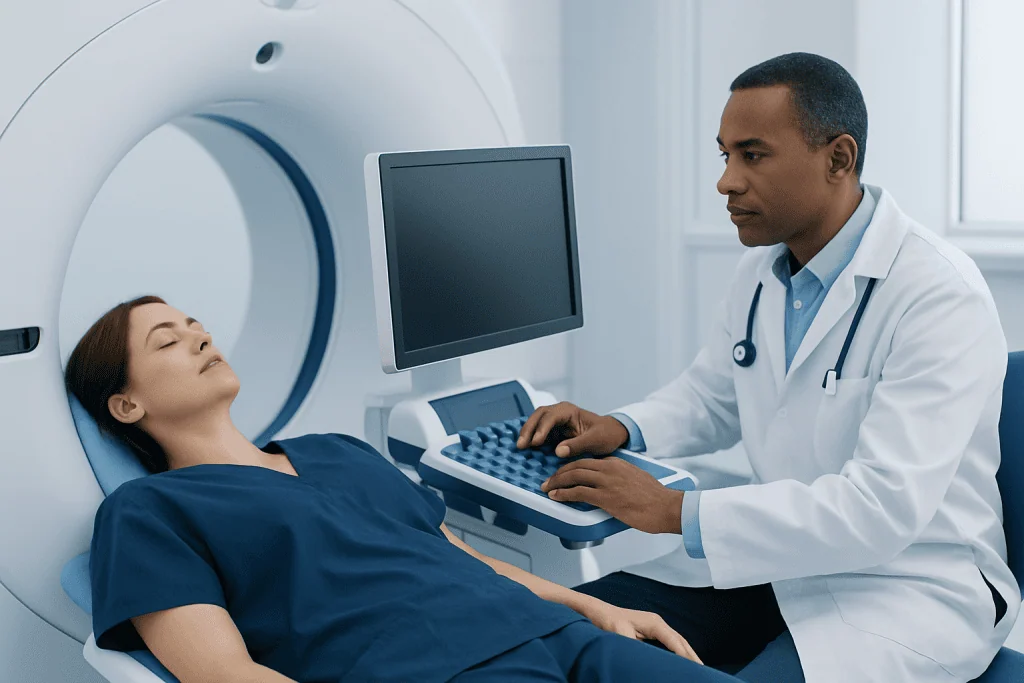
The first step in TIA and stroke diagnosis is a careful history and neurological examination. The doctor asks when symptoms started, what they felt like, how long they lasted, and whether they came on suddenly. Trouble speaking, facial drooping, weakness on one side, numbness, vision loss, severe dizziness, or trouble walking can all suggest a problem with blood flow to the brain.
The physical examination checks alertness, speech, eye movements, facial strength, arm and leg power, sensation, coordination, and balance. Vital signs are also important. Blood pressure, heart rate, oxygen level, temperature, and blood sugar can all affect symptoms or point to other explanations.
Doctors also consider “stroke mimics,” which are conditions that can look like stroke but have another cause. These may include seizures, migraine with aura, low blood sugar, inner ear disorders, infection, medication effects, or functional neurological symptoms. The examination and early tests help separate these from true TIA or stroke.
If symptoms are ongoing, a stroke severity scale may be used to standardize findings and guide decisions. Even when symptoms have already improved, evaluation is still important because a TIA may leave no abnormalities on examination by the time the patient is seen.
Brain Imaging Tests
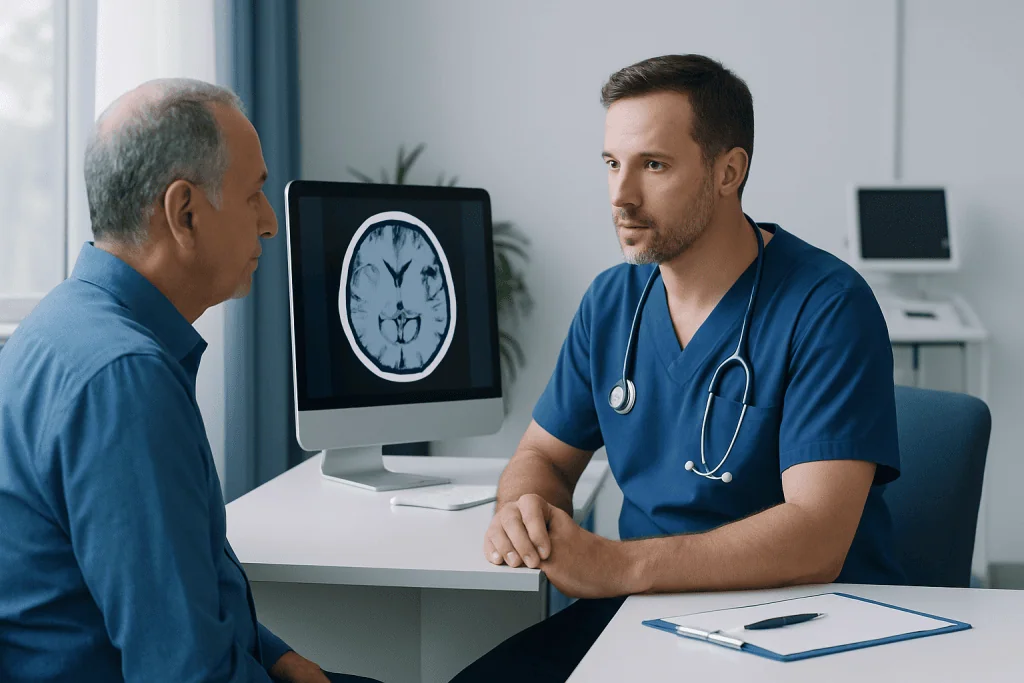
Brain imaging is central to TIA and stroke diagnosis. In emergency settings, a non-contrast CT scan of the head is often the first imaging test because it is fast and widely available. Its main early role is to look for bleeding in or around the brain, which changes treatment right away. A CT may also show signs of a larger stroke, although very early ischemic stroke can sometimes be difficult to see on the first scan.
MRI of the brain can provide more detail, especially diffusion-weighted imaging, which is very sensitive for detecting recent ischemic stroke. An MRI may help distinguish a TIA from a small completed stroke, identify the exact brain region affected, and sometimes suggest how old the injury is. However, MRI may not be immediately available in every setting, and some patients cannot have it because of certain implants or medical conditions.
In some cases, doctors order advanced imaging to look at blood flow within the brain. CT perfusion or MRI perfusion can help identify tissue that is at risk but not yet permanently injured. This information may support time-sensitive treatment decisions in selected patients.
The choice between CT, MRI, or both depends on the patient’s symptoms, timing, hospital resources, and whether treatment for acute stroke is being considered. If the event involves bleeding, the care pathway differs from an ischemic stroke caused by a blocked blood vessel, so imaging helps guide the next steps quickly.
Blood Vessel Imaging and Heart Tests
After confirming or strongly suspecting a TIA or stroke, doctors usually try to find where the blood flow problem started. Blood vessel imaging looks at the arteries in the neck and brain. Common tests include CT angiography (CTA), MR angiography (MRA), and carotid ultrasound. These tests can show narrowing, blockage, plaque buildup, or less common problems such as artery dissection.
Carotid ultrasound is painless and uses sound waves to assess the major neck arteries. CTA and MRA provide more detailed pictures and can also evaluate arteries inside the skull. If a large vessel blockage is present, urgent procedures may be considered in the right clinical situation, including mechanical thrombectomy for selected patients with ischemic stroke.
Because some strokes begin in the heart, cardiac testing is also common. An electrocardiogram (ECG) checks the heart rhythm and may detect atrial fibrillation or other abnormalities that raise stroke risk. Continuous heart rhythm monitoring during hospitalization or with an outpatient monitor may be recommended if an irregular rhythm is suspected but not seen right away.
An echocardiogram, which is an ultrasound of the heart, can look for possible sources of clots such as weak heart pumping, valve disease, enlarged chambers, or structural openings that may allow a clot to travel to the brain. Finding the cause matters because treatment for a clot from the heart may differ from treatment for narrowing in the neck arteries or small-vessel disease within the brain.
Blood Tests and Other Evaluations
Blood tests are part of the standard workup because they can reveal conditions that contribute to stroke risk or mimic stroke symptoms. Common tests include blood glucose, complete blood count, kidney function, electrolytes, and blood clotting studies. These tests help doctors identify problems such as low blood sugar, infection, anemia, dehydration, or clotting abnormalities.
Additional testing may look for underlying risk factors. Cholesterol testing helps assess long-term vascular risk, and hemoglobin A1c can show whether diabetes or poor blood sugar control may be contributing. In some patients, doctors may order tests for inflammation, autoimmune disease, or inherited clotting disorders, especially when stroke occurs at a younger age or without an obvious cause.
Not every patient needs an extensive laboratory panel. Testing is guided by age, personal and family history, medications, pregnancy status, recent infections, and whether the stroke pattern suggests an unusual cause. The aim is to balance a thorough search for answers with practical, evidence-based care.
Sometimes specialists from other fields are involved, especially if the diagnosis is uncertain or the cause appears complex. For example, a cardiologist may help evaluate rhythm or structural heart issues, while a neuroradiologist may help interpret more detailed brain and vessel imaging.
How Test Results Guide Treatment
The treatment plan depends on whether the event was a TIA, an ischemic stroke, or a hemorrhagic stroke. In ischemic stroke, care focuses on restoring or protecting blood flow and preventing another blockage. Depending on timing and eligibility, some patients may receive acute stroke treatment with clot-dissolving medicine or other urgent interventions. Others may need medicines that reduce future clot formation, treatment of blood pressure, cholesterol management, and control of diabetes.
If imaging shows significant carotid artery narrowing, a procedure to improve blood flow may be discussed for selected patients. When a heart rhythm problem such as atrial fibrillation is found, treatment often centers on reducing the risk of future clots. If a brain bleed is diagnosed, treatment follows a different path and may include blood pressure control, reversal of certain medications, close monitoring, or neurosurgical input.
For people with TIA, testing is especially important because symptoms may be gone by the time they are seen. A TIA still needs urgent attention because the cause may be treatable. In some cases, the evaluation uncovers carotid artery disease or another vascular problem that can be managed before a larger stroke occurs.
Rehabilitation planning may also begin early if a stroke has caused lasting symptoms. Speech, physical, and occupational therapy can all play a role. The care team may also discuss risk factors such as smoking, sleep apnea, obesity, inactivity, and high blood pressure, since reducing these risks is part of long-term stroke prevention.
What Patients Can Expect During the Process
Many patients and families feel overwhelmed by the speed of stroke evaluation. In the emergency setting, several tests may happen in a short time. Blood samples may be taken first, followed by a CT scan, ECG, and frequent neurological checks. If symptoms are severe or there is concern about a large vessel blockage, additional imaging may follow quickly.
Hospital admission is common after stroke and may also be recommended after a TIA, especially if symptoms were recent or risk appears high. During admission, the team may repeat examinations, review scans in detail, monitor heart rhythm, and arrange further studies such as MRI, carotid ultrasound, or echocardiography. Some patients with lower-risk presentations may complete part of the workup rapidly as outpatients in a dedicated clinic.
Patients can help by sharing accurate information about timing, medications, allergies, prior strokes, recent surgeries, bleeding history, and family history of stroke or clotting problems. If possible, a witness who saw the symptoms begin can be very helpful. This is especially important when speech or memory problems make it hard for the patient to describe what happened.
Near the end of care planning, doctors usually explain what type of event occurred, what tests showed, and why certain medicines or follow-up visits are recommended. For international patients who need specialized evaluation and treatment, Acibadem International’s multidisciplinary specialists in JCI-accredited hospitals provide care for stroke and related vascular neurological conditions.
When to Seek Urgent Medical Care
Any sudden symptoms that could suggest a TIA or stroke should be treated as an emergency, even if they improve quickly. Warning signs include facial drooping, arm or leg weakness, numbness on one side, slurred speech, trouble understanding language, sudden vision loss, double vision, severe imbalance, or a sudden unexplained severe headache. Immediate evaluation gives the best chance of identifying the cause and, when appropriate, starting time-sensitive treatment.
It is safest to call emergency services rather than drive if stroke is suspected. Emergency teams can begin assessment on the way and take the patient to a hospital equipped for acute stroke care. Delays can reduce treatment options and increase the chance of lasting brain injury.
People who have already had a TIA or stroke should also seek prompt care if new symptoms appear, medicines cause concerning side effects, or blood pressure becomes difficult to control. Follow-up matters because prevention is an ongoing process, not a single test or appointment.
Anyone with questions about personal risk should speak with a qualified doctor, especially if there is a history of high blood pressure, diabetes, smoking, high cholesterol, atrial fibrillation, or prior vascular disease. Early attention to these factors can make a meaningful difference over time.
Frequently asked questions
What is the difference between a TIA and a stroke?
A TIA causes stroke-like symptoms that go away completely because the blood flow problem is temporary. A stroke causes brain injury due to blocked blood flow or bleeding, and symptoms may last or lead to permanent changes. Both need urgent medical evaluation.
Why do doctors order a CT scan first for suspected stroke?
A CT scan is fast and is very useful for detecting bleeding in the brain. This is important because treatment differs greatly between bleeding and a blocked blood vessel. A CT may be followed by MRI or vessel imaging for more detail.
Can tests still show something if TIA symptoms are already gone?
Yes. Even when symptoms have resolved, doctors may still find clues on MRI, blood vessel imaging, heart monitoring, or other tests. These findings can help explain why the event happened and how to prevent another one.
Will every patient need an MRI, ultrasound, and heart tests?
Not always. The test plan depends on the symptoms, when they started, the patient’s age, medical history, and what early results show. Doctors choose the tests most likely to answer the important questions quickly and safely.
How do doctors know if symptoms are from stroke or another condition?
They combine the patient’s story, neurological examination, blood sugar check, brain imaging, and sometimes additional tests. Conditions such as migraine, seizure, or low blood sugar can mimic stroke, so ruling these out is part of the evaluation.
Why are heart rhythm tests important after a stroke or TIA?
An irregular heart rhythm, especially atrial fibrillation, can allow clots to form in the heart and travel to the brain. A routine ECG may detect this right away, but longer monitoring is sometimes needed because abnormal rhythms can come and go.
References
- American Heart Association
- American Stroke Association
- National Institute of Neurological Disorders and Stroke
- Centers for Disease Control and Prevention
- World Stroke Organization
This article is for general information only and is not a substitute for professional medical advice. Please consult a qualified doctor about your individual situation.
Explore treatments in Turkey — costs, top hospitals & a free quote
JCI-accredited · board-certified surgeons · reply within 24h
Add us as a Preferred Source to see more of our trusted health content across Google Search, AI Overviews and Discover.
Check your numbers in seconds
BMI, calories, due date, blood pressure and 30+ more clinical calculators — free, instant, doctor-reviewed ranges.