Hydrotherapy: An Evidence-Based Guide for Patients

Hydrotherapy includes a range of water-based approaches, from warm baths to supervised pool exercises. It can reduce joint loading, ease muscle tension, and support rehabilitation for selected conditions.
Key Takeaways
- Hydrotherapy includes a range of water-based approaches, from warm baths to supervised pool exercises.
- It can reduce joint loading, ease muscle tension, and support rehabilitation for selected conditions.
- Benefits vary by person, and hydrotherapy works best as part of a broader treatment plan rather than a standalone cure.
- Not everyone is a good candidate; open wounds, some heart conditions, infections, or uncontrolled symptoms may require caution.
- A medical assessment helps determine whether hydrotherapy is safe, appropriate, and likely to be useful.
Hydrotherapy is the therapeutic use of water to support comfort, movement, and recovery. It may help some people with pain, stiffness, stress, or rehabilitation goals, especially when it is tailored to an individual’s health needs and guided by a qualified professional.
What hydrotherapy is and what it can help with
Hydrotherapy is the use of water to support health, comfort, or physical recovery. In practice, it may include warm-water exercise, supervised pool-based rehabilitation, whirlpool therapy, contrast bathing, or simple soaking and movement in water. The main idea is that water’s temperature, buoyancy, and gentle resistance can be used in a therapeutic way.
For many patients, the most practical question is whether hydrotherapy works. The answer is that it can help with some symptoms and rehabilitation goals, particularly pain, stiffness, balance, mobility, and exercise tolerance. It is not a cure for disease, but it may be a useful supportive treatment for certain musculoskeletal, neurologic, and recovery-related needs.
Hydrotherapy is often considered when land-based exercise is difficult or uncomfortable. Because water supports part of the body’s weight, moving in a pool may feel easier for people with arthritis, back pain, weakness, or recovery after injury. Warm water may also promote relaxation and make stretching or strengthening more comfortable.
Healthcare teams may recommend hydrotherapy as part of broader rehabilitation rather than as a replacement for standard care. For example, it may be combined with physical therapy and rehabilitation to improve mobility, confidence, and daily function.
How hydrotherapy works in the body
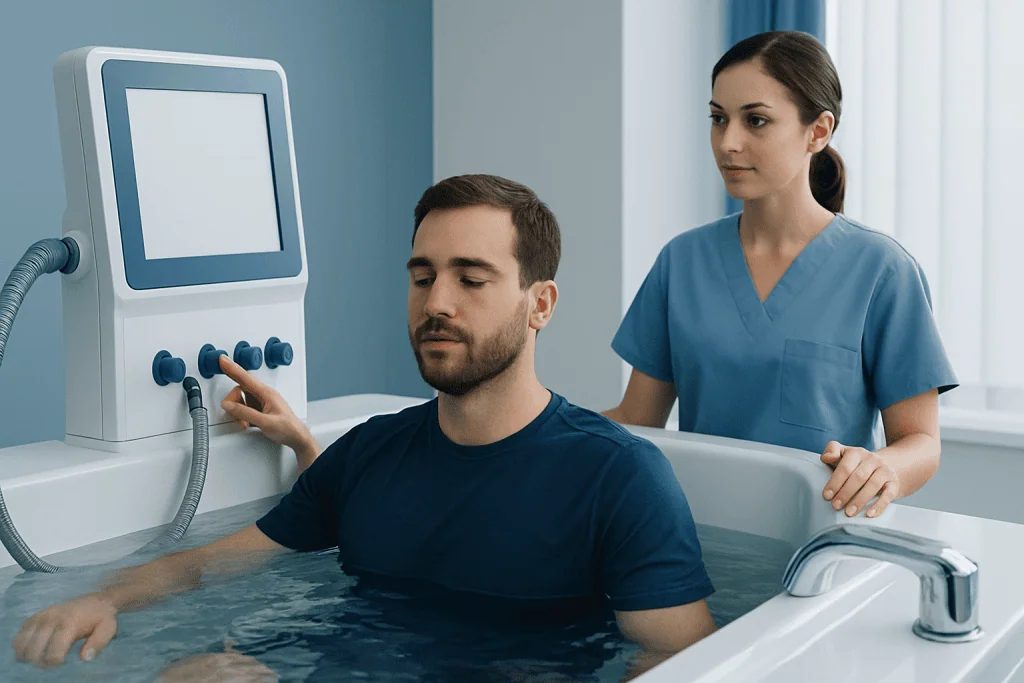
Hydrotherapy is not one single treatment. Its effects depend on several physical properties of water. Buoyancy reduces the amount of weight placed on joints and soft tissues, which can make walking, bending, and exercising less painful. This is one reason pool-based therapy is commonly used in rehabilitation settings.
Water also provides resistance in every direction. That means even simple movements can gently challenge muscles without the need for heavy weights or impact. As a result, hydrotherapy can help build strength, coordination, and endurance in a controlled way.
Temperature matters as well. Warm water may ease muscle tightness, improve comfort, and help some people relax enough to move more freely. In some settings, cooler water or alternating temperatures may be used for symptom relief, although these methods are not appropriate for everyone and should be guided by a professional when used for medical reasons.
Hydrotherapy can also have psychological benefits. Many patients report that warm water exercise feels less intimidating than exercise on land, especially after pain or injury. Feeling safer and more comfortable can make it easier to stay active, which is an important part of many treatment plans.
Who may benefit from hydrotherapy

Hydrotherapy may be helpful for a wide range of patients, but the strongest role is usually in symptom management and rehabilitation. People with joint pain, stiffness, limited mobility, muscle weakness, balance problems, or deconditioning may be considered for water-based therapy after medical review.
It is commonly used for conditions that affect movement, including osteoarthritis, chronic back pain, sports injuries, and recovery after orthopedic procedures. Patients living with arthritis may find that water makes exercise more tolerable by reducing pressure on painful joints while still allowing strengthening and flexibility work.
Hydrotherapy can also play a role in selected neurologic and post-injury rehabilitation programs. For example, gentle aquatic exercise may support balance and gait training in some people after a neurologic event or period of immobility. In carefully selected cases, a team may integrate water-based work into stroke rehabilitation or other recovery plans, depending on the person’s strength, safety, and functional goals.
Some people use hydrotherapy primarily for relaxation, stress reduction, or general wellness. That can be reasonable when it is done safely, but medical hydrotherapy should still be personalized. A treatment that helps one person may not suit another, particularly when there are heart, lung, skin, or balance concerns.
What the evidence says about hydrotherapy
Research suggests that hydrotherapy can improve pain, function, and quality of life for some patients, especially those with chronic musculoskeletal problems or those undergoing rehabilitation. Benefits are often modest to meaningful rather than dramatic, and they tend to be strongest when hydrotherapy is part of a structured program with clear goals.
For osteoarthritis and some chronic pain conditions, aquatic exercise may help people move more comfortably and stay active. It may also improve adherence for patients who struggle with land-based exercise because of pain, fear of falling, or fatigue. In rehabilitation, water-based therapy can support earlier or gentler movement while minimizing stress on healing tissues.
At the same time, hydrotherapy is not universally superior to standard exercise. In many studies, it performs similarly to other well-designed rehabilitation approaches, which means it is best viewed as an option rather than a miracle treatment. The right choice depends on the diagnosis, the patient’s safety profile, and what type of exercise they can sustain over time.
Evidence is also stronger for some uses than others. Claims that hydrotherapy can detoxify the body, cure chronic disease, or replace medical treatment are not supported by reliable evidence. Patients benefit most when hydrotherapy is chosen for realistic goals such as reducing discomfort, improving mobility, and supporting recovery.
Types of hydrotherapy and what a session may involve
Hydrotherapy can be delivered in different ways depending on the setting and goal. In rehabilitation centers, the most common form is aquatic therapy in a heated pool under the supervision of a physiotherapist or rehabilitation specialist. Sessions may include walking in water, balance tasks, range-of-motion exercises, stretching, or gentle strengthening.
Other forms include therapeutic baths, whirlpool use for selected soft-tissue needs, and contrast water applications. Some patients also use home-based approaches such as warm baths or simple exercises in a safe pool environment. These may be helpful for comfort, but they are not a substitute for professional assessment when there is significant pain, weakness, or a medical condition.
A typical supervised session starts with a review of symptoms and goals. The clinician then selects exercises based on pain level, mobility, cardiovascular tolerance, and balance. Progress is usually gradual, with attention to fatigue, breathing, movement quality, and safety getting in and out of the water.
When hydrotherapy is used after surgery or injury, timing matters. Starting too early or doing the wrong movements can interfere with healing. For that reason, patients recovering from orthopedic procedures may be advised to combine aquatic work with orthopedic rehabilitation so activity matches the stage of recovery.
Risks, precautions, and who may need to avoid it
Although hydrotherapy is often gentle, it is not risk-free. Warm water can affect heart rate and blood pressure, and wet surfaces increase the risk of slipping. Fatigue, dizziness, overheating, or symptom flare-ups can occur if a session is too intense or not suited to the person’s condition.
Some patients should avoid hydrotherapy until they have been medically evaluated. This includes people with open wounds, active skin infections, fever, contagious illness, uncontrolled seizures, severe balance impairment without supervision, or bowel or bladder incontinence that would make pool use unsafe. Certain heart and lung conditions may also require caution, especially in warm water.
People with diabetes, neuropathy, poor circulation, or reduced sensation may not feel water temperature accurately and can be at higher risk of burns or skin injury. Those with severe pain or unexplained swelling should not assume that water therapy is automatically safe. Persistent symptoms may need assessment for conditions such as herniated disc or other underlying problems.
Even when hydrotherapy is appropriate, it should be individualized. More treatment is not always better, and exercises that are helpful for one diagnosis may aggravate another. A clinician can help decide the right water temperature, intensity, duration, and level of supervision.
Hydrotherapy at home: practical self-care tips
Home hydrotherapy can be simple and supportive for some people. A warm bath, gentle stretching in water, or low-impact movement in a safe pool may help with temporary muscle tightness, stress, or mild stiffness. The goal should be comfort and gradual movement rather than pushing through pain.
Safety is important. Water should feel pleasantly warm, not hot enough to cause dizziness or skin irritation. The area around the bath or pool should be non-slip, and anyone with balance concerns should have assistance available. Patients should stop if they feel lightheaded, short of breath, weak, or if pain clearly worsens.
Hydration still matters during water-based activity, especially in warm environments. It is also sensible to keep sessions moderate at first and build up slowly. Gentle, regular activity is generally more helpful than occasional long sessions that lead to fatigue or soreness.
Home methods are best for mild symptoms and general wellness. If pain persists, movement is limited, or a person is recovering from surgery or a medical event, professional guidance is preferable. Near the end of a care journey, some international patients may choose evaluation at centers such as Acibadem International, where multidisciplinary specialists in JCI-accredited hospitals assess whether water-based therapy fits into a broader rehabilitation plan.
When to seek medical care
Medical advice is important before starting hydrotherapy if a person has a heart condition, breathing disorder, uncontrolled blood pressure, epilepsy, significant mobility impairment, recent surgery, or an active skin problem. A clinician can help determine whether water therapy is appropriate and which type is safest.
Prompt assessment is also needed when pain is severe, new, or associated with weakness, numbness, fever, redness, swelling, chest symptoms, or loss of bladder or bowel control. These features may point to a condition that needs diagnosis rather than self-care alone.
Patients should also seek review if hydrotherapy causes worsening pain, unusual fatigue, dizziness, shortness of breath, palpitations, or any new neurologic symptoms. Water-based therapy should feel manageable and purposeful; it should not leave someone consistently worse afterward.
In general, hydrotherapy works best when it is matched to a clear diagnosis and realistic goals. A doctor or rehabilitation professional can decide whether it should be used for symptom relief, exercise progression, recovery support, or not at all.
Frequently asked questions
What is the difference between hydrotherapy and aquatic therapy?
Hydrotherapy is a broad term for the therapeutic use of water in different forms, such as baths, pools, or whirlpools. Aquatic therapy usually refers more specifically to structured exercises in water led by a trained rehabilitation professional. In everyday use, the terms may overlap, but aquatic therapy is often the more formal clinical approach.
Does hydrotherapy really help with pain?
It can help some people, especially those with joint pain, stiffness, muscle tension, or difficulty exercising on land. Warm water and buoyancy may make movement more comfortable and reduce stress on painful areas. The degree of benefit varies, and it is usually one part of a broader treatment plan.
Is hydrotherapy safe for older adults?
It can be safe and useful for many older adults when the program is adapted to their balance, strength, heart health, and mobility. Water-based exercise may feel easier on joints and can support confidence with movement. However, medical review is sensible if there is a history of falls, dizziness, heart disease, or skin problems.
Can hydrotherapy replace physical therapy?
No, it usually does not replace physical therapy but may be included within a physical therapy program. Many patients do best with a combination of water-based and land-based exercises tailored to their goals. A rehabilitation professional can decide how to balance these approaches.
Who should not use hydrotherapy?
People with open wounds, active infections, fever, some uncontrolled heart or lung conditions, or severe instability may need to avoid it or use it only under medical supervision. Others may need extra caution, such as those with reduced sensation, uncontrolled seizures, or recent surgery. A clinician can help decide if hydrotherapy is safe.
How often should hydrotherapy be done?
The ideal schedule depends on the reason for treatment, general fitness, and medical history. Some people benefit from a few supervised sessions each week, while others use occasional water-based exercise alongside a home program. Frequency should be guided by symptom response and professional advice rather than a fixed rule.
This article is for general information only and is not a substitute for professional medical advice. Please consult a qualified doctor about your individual situation.
Explore treatments in Turkey — costs, top hospitals & a free quote
JCI-accredited · board-certified surgeons · reply within 24h
Add us as a Preferred Source to see more of our trusted health content across Google Search, AI Overviews and Discover.

More from the Health Library

Salvia: A Complete Medical Overview

Candida Glabrata: An Evidence-Based Guide for Patients

Retatrutide — Explained by Medical Evidence, Not Myths

Strength Workout for Weight Loss: A Complete Medical Overview

Rezurock: A Complete Medical Overview