Hyperextended Knee: A Complete Medical Overview

A hyperextended knee occurs when the knee bends backward beyond its normal range. Common symptoms include pain, swelling, stiffness, and a feeling that the knee may give way.
Key Takeaways
- A hyperextended knee occurs when the knee bends backward beyond its normal range.
- Common symptoms include pain, swelling, stiffness, and a feeling that the knee may give way.
- Some cases are mild, but others involve ligament, cartilage, or bone injury and need medical assessment.
- Early care often includes rest, ice, compression, elevation, and temporary activity changes.
- Prompt evaluation is important if there is severe pain, major swelling, instability, or trouble bearing weight.
A hyperextended knee happens when the knee is forced beyond its normal straight position. It can cause anything from a mild soft-tissue strain to a more significant ligament injury, so symptoms, stability, and recovery time can vary.
Overview: what a hyperextended knee means
A hyperextended knee is an injury in which the knee joint is pushed past its normal straightened position. This excessive backward movement can stretch or tear the soft tissues that support the joint, including ligaments, the joint capsule, tendons, and sometimes cartilage. In milder cases, the injury causes pain and swelling without major structural damage. In more serious cases, it can affect stability and walking.
The knee depends on a balance of bones, ligaments, muscles, and cartilage to move safely. When force drives the lower leg too far backward relative to the thigh, that balance is disrupted. Sports injuries, falls, awkward landings, and direct blows are common reasons this happens. The exact pattern of damage depends on how the injury occurred and how much force was involved.
A hyperextended knee is not a diagnosis by itself but rather a mechanism of injury. One person may have a simple strain that improves with conservative care, while another may have damage to structures such as the anterior cruciate ligament, posterior cruciate ligament, meniscus, or surrounding tissues. That is why symptoms and examination findings are important in deciding whether imaging or specialist care is needed.
Symptoms and how the injury may feel
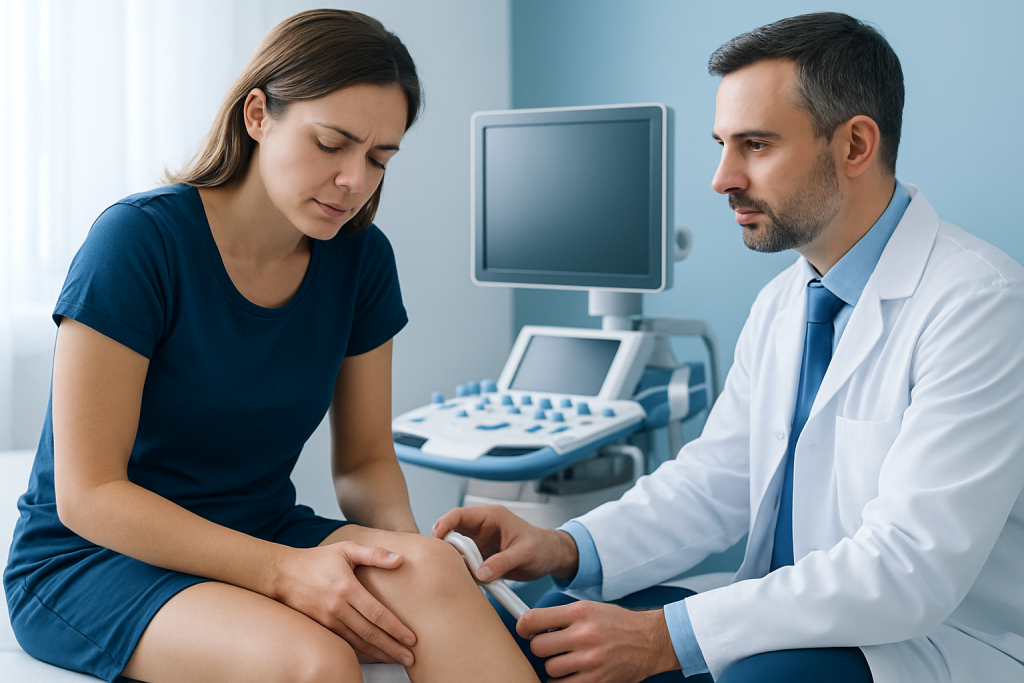
Symptoms of a hyperextended knee can begin immediately after the injury or become clearer over the next several hours. Pain is common, especially at the front, back, or sides of the knee depending on the tissues involved. Swelling may appear quickly or gradually, and stiffness can make bending or straightening the knee uncomfortable.
Some people notice bruising, tenderness to touch, or a sense of pressure within the joint. Others describe a popping sensation at the time of injury. If ligaments are affected, the knee may feel unstable, weak, or as if it might buckle. Walking, climbing stairs, turning, or trying to return to sports may be difficult.
Symptoms can range from mild to more concerning. Signs that suggest a more significant injury include severe swelling, inability to bear weight, obvious deformity, locking of the knee, repeated giving way, or pain that does not improve with rest. These features can point to ligament tears, meniscus injury, or associated bone injury.
- Pain during standing, walking, or pivoting
- Swelling and stiffness
- Bruising around the knee
- Instability or buckling
- Reduced range of motion
- A popping feeling at the time of injury
Causes and risk factors
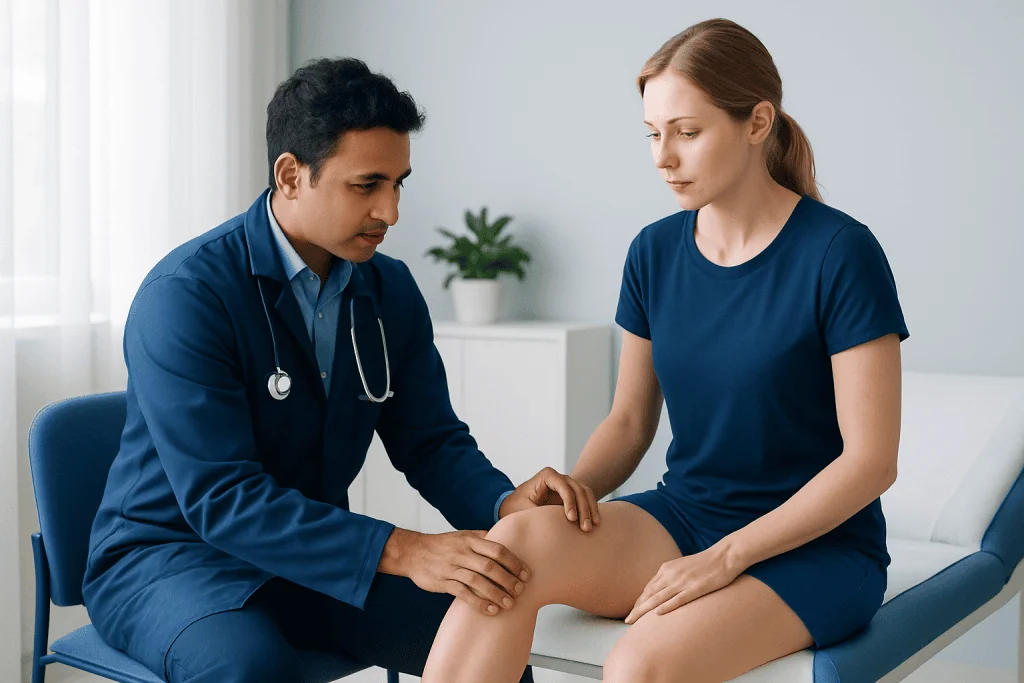
A hyperextended knee typically occurs when a force drives the knee backward beyond its normal limit. This often happens in contact sports, jumping sports, and activities that involve sudden stopping or changes in direction. A direct hit to the front of the knee, landing awkwardly after a jump, slipping on a wet surface, or stepping into a hole can all produce the injury.
Certain people may be at higher risk. Athletes who play football, basketball, soccer, gymnastics, or skiing are more exposed because of cutting, pivoting, and high-impact movements. Poor muscle control, fatigue, previous knee injury, and inadequate warm-up can also increase vulnerability. Some individuals naturally have more joint laxity, which may allow greater movement at the knee.
A hyperextension event may injure different structures depending on the direction and strength of the force. The ligaments are common targets because they are responsible for controlling joint motion. In some cases, the mechanism overlaps with injuries such as an ACL tear or damage to the meniscus. Muscle strains and bone bruises can occur at the same time, adding to pain and recovery time.
How doctors diagnose a hyperextended knee
Diagnosis begins with a careful history and physical examination. A doctor will ask how the injury happened, whether there was a pop, how quickly swelling appeared, and whether the knee feels unstable. These details help distinguish a mild strain from a more complex ligament or cartilage injury. The pattern of symptoms often provides important clues even before imaging is considered.
During the examination, the clinician checks swelling, tenderness, range of motion, alignment, and walking ability. Specific stability tests may be used to assess the major ligaments and to look for signs of meniscus damage. Because pain and swelling can limit the examination in the first few days, some findings may be reassessed after initial rest and swelling control.
Imaging is not always needed for minor injuries, but it may be recommended if symptoms are severe, weight-bearing is difficult, or a structural injury is suspected. X-rays can help rule out fracture or joint alignment problems. MRI is particularly useful for evaluating ligaments, cartilage, and menisci, and it may be advised when surgery is being considered or when recovery is not following the expected course. In some cases, assessment is coordinated with orthopedic care or MRI imaging to clarify the extent of injury.
Treatment options and recovery
Treatment depends on the severity of the injury and which structures are involved. Many mild hyperextension injuries improve with conservative care. The early goal is to reduce pain and swelling, protect the knee, and avoid movements that worsen the injury. Rest, ice, compression, and elevation are often recommended in the first phase, along with temporary reduction of sports or heavy activity.
Supportive devices may be helpful for some patients. A knee brace can improve comfort and control while the tissues heal, and crutches may be used for a short time if walking is painful. Pain relief may involve commonly used nonprescription or prescribed medicines, depending on individual needs and medical history. A doctor can advise what is appropriate and safe.
Physical therapy is a central part of recovery for many people. Exercises usually focus on restoring range of motion, improving quadriceps and hamstring strength, rebuilding balance, and helping the person return safely to normal activities. If a major ligament tear, significant instability, or combined injury is present, surgical treatment may sometimes be considered. This can include evaluation by a specialist in knee surgery or a structured physical therapy and rehabilitation program as recovery progresses.
Healing time varies. Mild injuries may improve over a few weeks, while more severe injuries can take much longer, especially if multiple tissues are affected. Returning to exercise too soon may increase the risk of ongoing pain or reinjury, so return to sport is usually based on strength, stability, swelling, and function rather than the calendar alone.
Prevention and self-care after injury
Not every hyperextended knee can be prevented, but some steps can reduce risk. Good lower-body strength helps control the knee during landing, cutting, and sudden changes in direction. Conditioning that includes the quadriceps, hamstrings, gluteal muscles, and core can improve joint support. Balance and movement training also help athletes and active adults maintain safer mechanics.
Warm-up routines matter. Gradually preparing the muscles and joints for activity may improve coordination and reduce the chance of awkward movement patterns. Proper footwear, appropriate training surfaces, and sport-specific technique can also play a role. People returning from a previous knee injury should progress gradually and follow rehabilitation guidance closely.
After a hyperextended knee, self-care focuses on protecting healing tissues while maintaining safe movement. Activities that provoke pain, swelling, or instability should be reduced. Gentle exercises may be introduced as advised by a clinician or physiotherapist. Any increase in swelling, locking, or giving way should prompt re-evaluation rather than pushing through symptoms.
When to seek medical care
Medical evaluation is a good idea if knee pain and swelling are significant, if walking is difficult, or if the knee feels unstable after a hyperextension injury. Prompt assessment is especially important when there is a loud pop, rapid swelling, visible deformity, numbness, or inability to fully bend or straighten the joint. These features may indicate a more serious ligament, cartilage, or bone injury.
Emergency care may be needed if the person cannot bear weight at all, the knee looks out of place, there is severe pain after trauma, or there are signs of poor circulation such as a cold foot, color change, or loss of sensation. Even without emergency signs, symptoms that do not improve over several days deserve medical attention.
Follow-up care helps guide a safe return to normal activity and reduce the risk of chronic instability or repeated injury. In specialist centers, including Acibadem International, multidisciplinary teams in JCI-accredited hospitals evaluate knee injuries and create treatment plans for international patients when needed.
Frequently asked questions
How do you know if a hyperextended knee is serious?
A hyperextended knee may be more serious if there is major swelling, inability to bear weight, repeated buckling, locking, or a clear feeling of instability. A popping sensation at the time of injury can also suggest ligament damage. A medical examination helps determine whether the injury is mild or involves important structures inside the joint.
Can a hyperextended knee heal on its own?
Mild cases often improve with rest, activity modification, and supportive care. However, not every hyperextended knee heals well without assessment, especially if ligaments or cartilage are injured. If symptoms are strong or do not improve as expected, a doctor should evaluate the knee.
What should someone do right after hyperextending the knee?
Early care usually includes stopping the activity, resting the leg, applying ice, using light compression if appropriate, and elevating the knee. Avoiding painful twisting, jumping, or running is important. If there is severe pain, obvious swelling, or trouble walking, medical care should be sought promptly.
How long does recovery from a hyperextended knee take?
Recovery time depends on how much damage occurred. Mild soft-tissue injuries may improve within a few weeks, while more significant ligament or cartilage injuries can take much longer. The safest return to activity is based on pain, swelling, strength, and stability rather than a fixed timeline.
Is walking good for a hyperextended knee?
Gentle walking may be reasonable in some mild cases if it does not worsen pain or swelling. However, walking through instability or significant pain can aggravate the injury. A clinician can advise when weight-bearing is safe and whether a brace or crutches are needed.
Can a hyperextended knee cause long-term problems?
It can, especially if important ligament or cartilage injuries are missed or if the person returns to activity too early. Ongoing instability, repeated injury, pain, and reduced function are possible in some cases. Proper diagnosis, rehabilitation, and follow-up lower the chance of long-term issues.
References
- American Academy of Orthopaedic Surgeons
- National Institute of Arthritis and Musculoskeletal and Skin Diseases
- American College of Sports Medicine
- Mayo Clinic
- MedlinePlus
This article is for general information only and is not a substitute for professional medical advice. Please consult a qualified doctor about your individual situation.
Joint and spine care in Turkey — expert assessment & treatment
JCI-accredited · board-certified surgeons · reply within 24h
Add us as a Preferred Source to see more of our trusted health content across Google Search, AI Overviews and Discover.

More from the Health Library

Stroke Test: What Patients Need to Know

Aspartame Free Gum — Explained by Medical Evidence, Not Myths
Deltoid Ligament: What Patients Need to Know

Beef Tallow: A Complete Medical Overview

Inflamed Gums: An Evidence-Based Guide for Patients

Topical Creams for Scabies: What Patients Need to Know
Physical Medicine & Rehabilitation Specialists at Acibadem

Dr. Aykut Türken
Orthopedic Surgery & Traumatology
Fzt. Aylin Kurt
Physical Medicine & Rehabilitation
Dr. Aynur Göksel
Physical Medicine & Rehabilitation
Dr. Ayşe Esra Sırmagül
Physical Medicine & Rehabilitation