Hypermetropia Treatment: How It Works, Results and What to Expect

Hypermetropia, also called farsightedness, occurs when light focuses behind the retina rather than directly on it. Glasses and contact lenses provide effective, reversible vision correction for most people.
Key Takeaways
- Hypermetropia, also called farsightedness, occurs when light focuses behind the retina rather than directly on it.
- Glasses and contact lenses provide effective, reversible vision correction for most people.
- Laser refractive surgery and lens-based procedures can reduce dependence on corrective lenses in suitable adults.
- A comprehensive eye examination is essential before choosing any hypermetropia treatment.
- Farsightedness may become more noticeable with age, particularly as near focusing ability declines.
Hypermetropia treatment usually begins with glasses or contact lenses, while laser vision correction or lens-based surgery may be appropriate for selected adults. The best option depends on the degree of farsightedness, age, eye health, visual needs and examination findings.
Hypermetropia Treatment: How It Works
Hypermetropia treatment corrects the way light enters the eye so that it focuses clearly on the retina, the light-sensitive tissue at the back of the eye. In hypermetropia, also known as farsightedness, the eye may be shorter than average or the cornea may have too little focusing power. This can make nearby objects blurry and may also affect distance vision when the refractive error is greater.
Most people are treated successfully with prescription glasses or contact lenses. These lenses add focusing power and are adjusted according to the person’s prescription and visual needs. For adults with stable vision and healthy eyes, refractive surgery may be considered to reshape the cornea or, in some cases, replace the eye’s natural lens with an artificial intraocular lens.
Treatment does not always need to begin immediately for very mild hypermetropia. However, correction may be helpful when there are symptoms such as eyestrain, headaches with close work, blurred vision, difficulty reading or reduced concentration. Children require particular attention because uncorrected refractive errors can sometimes affect visual development.
How Do People With Hypermetropia See?
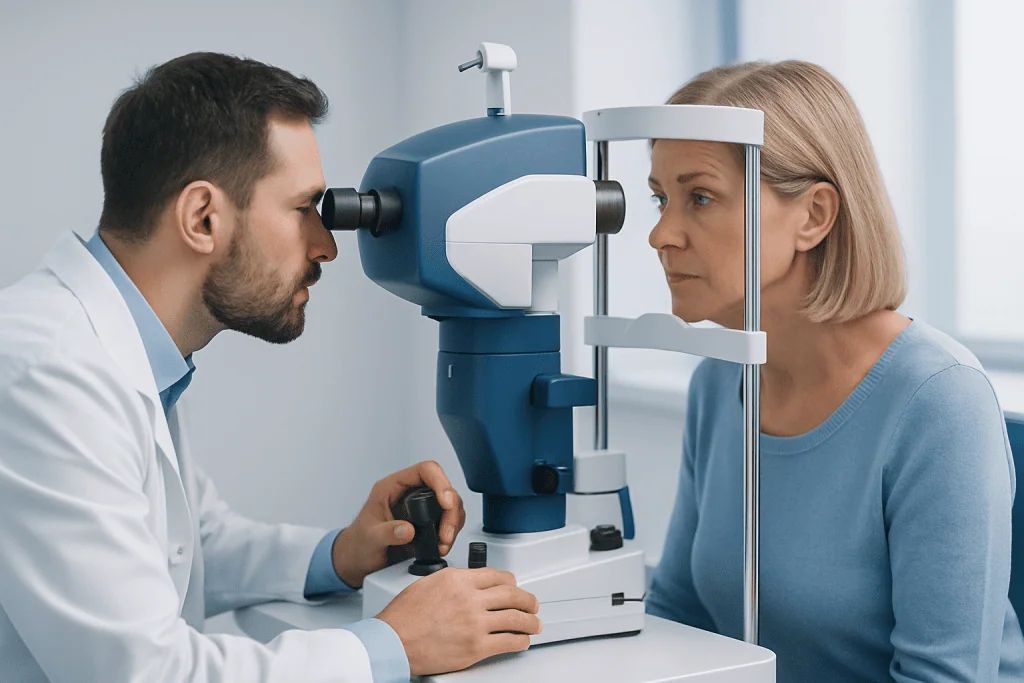
People with hypermetropia often see distant objects more clearly than nearby objects, especially when the refractive error is mild. The eyes can sometimes compensate by increasing their natural focusing effort, a process called accommodation. This may allow clear vision for a time, particularly in younger people, but it can also cause tired or uncomfortable eyes.
Near tasks such as reading, computer work, sewing or using a phone may bring on blur, headaches or aching around the eyes. With higher levels of hypermetropia, both near and distance vision can become unclear. Symptoms vary widely because age, focusing ability and the amount of farsightedness all influence how a person sees.
In babies and young children, hypermetropia is relatively common because their eyes are still developing. Many children have small amounts that reduce as the eyes grow. An eye professional can determine whether a child’s refractive error needs monitoring or correction, particularly if there is eye turning, frequent rubbing of the eyes, reading difficulty or concern about vision development.
What Is the Best Treatment for Hypermetropia?
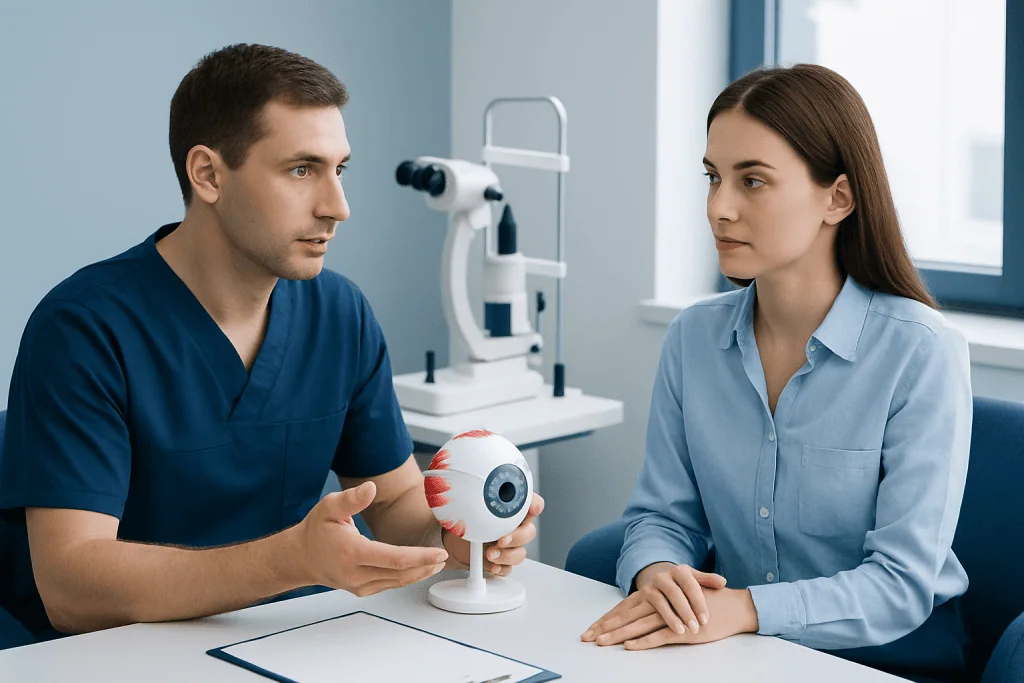
There is no single best treatment for hypermetropia for everyone. Prescription glasses are often the simplest and safest option because they are non-invasive, easily updated and suitable for people of almost all ages. Contact lenses can be a practical alternative for people who prefer not to wear glasses, provided they can use and care for lenses safely.
For some adults, laser refractive surgery may reduce the need for glasses or contact lenses by reshaping the cornea. Procedures such as LASIK, PRK and other laser approaches are assessed individually; suitability depends on corneal thickness and shape, prescription stability, dry-eye symptoms, general eye health and personal expectations. A detailed evaluation is needed before considering laser eye surgery.
Lens-based procedures may be considered when laser surgery is unsuitable, when farsightedness is high, or when age-related changes in the natural lens are also relevant. The decision should be made with an ophthalmologist after discussing expected benefits, alternatives, recovery and possible complications. Treatment aims to improve functional vision, not to promise perfect vision in every situation.
Candidacy and Assessment Before Corrective Procedures
Before a surgical hypermetropia treatment, an ophthalmologist carries out a comprehensive examination. This commonly includes measurement of the prescription, corneal mapping, corneal thickness testing, assessment of tear film and dry-eye symptoms, pupil evaluation, eye pressure measurement and a detailed examination of the retina and optic nerve.
Good candidates for laser vision correction are generally adults whose prescription has remained stable and who have healthy corneas and no untreated eye disease. Pregnancy and breastfeeding can temporarily alter refraction, so elective refractive surgery is commonly postponed. Certain conditions, including keratoconus, significant dry eye, uncontrolled diabetes or some autoimmune disorders, may affect eligibility or require additional consideration.
Expectations are an important part of candidacy. Surgery can reduce reliance on corrective lenses, but some people may still need glasses for specific activities. Adults approaching or experiencing presbyopia, the normal age-related loss of near focusing ability, may need reading glasses even after successful distance-vision correction.
- Glasses may be best for flexible, non-surgical correction.
- Contact lenses may suit active lifestyles when used with appropriate hygiene.
- Laser procedures may suit selected adults with stable prescriptions.
- Lens procedures may be discussed for selected patients with higher prescriptions or lens-related changes.
What Happens During Hypermetropia Surgery?
The exact steps depend on the procedure selected. Laser corneal procedures are usually performed as outpatient treatments. Numbing eye drops are used, and the person remains awake. The eyelids are held gently open while the surgeon uses a laser to reshape the cornea, improving the eye’s focusing power.
In LASIK, a very thin corneal flap is created, the underlying tissue is reshaped with an excimer laser and the flap is repositioned. In surface laser procedures such as PRK, the surface cell layer is moved or removed before reshaping, and it then heals over the treated area. The appropriate technique is based on eye measurements rather than personal preference alone.
Lens-based surgery involves removing the natural lens and inserting an artificial lens selected to meet the person’s visual needs. This is similar in principle to cataract surgery, although it may be performed for refractive reasons in selected cases. The ophthalmology team explains preparation, expected sensations, medication use and follow-up arrangements before any procedure.
Recovery, Results, Benefits and Risks
Recovery varies by procedure. Vision after LASIK often improves relatively quickly, although it may fluctuate initially. Surface laser procedures generally involve more discomfort during the first few days and vision may take longer to stabilize. After lens-based surgery, many people notice improved vision within days, but healing and prescription stabilization continue over the following weeks.
Patients are usually advised to use prescribed eye drops, avoid rubbing the eyes, protect the eyes from water and dust as directed, and attend scheduled follow-up visits. Driving, return to work, exercise and swimming should follow the ophthalmologist’s specific advice. Artificial tears may be recommended when dryness occurs during healing.
Potential benefits include clearer vision and less dependence on glasses or contact lenses. Possible risks include temporary dry eye, glare, halos around lights, night-vision changes, undercorrection or overcorrection, infection, inflammation and a need for further treatment or glasses. Serious complications are uncommon but possible, which is why careful assessment and follow-up are essential.
Acibadem International’s multidisciplinary eye specialists and JCI-accredited hospitals assess and treat refractive conditions for international patients, with treatment plans based on individual eye health and visual goals.
Does Hypermetropia Get Worse With Age?
Hypermetropia itself may change over time, but the experience of it often becomes more noticeable with age. Younger eyes have greater ability to accommodate, or increase their focusing power, which can partly compensate for mild farsightedness. This ability gradually declines, usually beginning in mid-adulthood.
As near focusing becomes less flexible, a person may notice more difficulty reading small print, using screens or doing detailed work. This age-related change is called presbyopia. It can occur whether or not someone has hypermetropia, but people with farsightedness may notice near-vision symptoms earlier or more strongly.
Regular eye examinations help identify changing prescriptions and screen for other eye conditions that become more common with age. Sudden changes in vision should not be assumed to be a routine prescription change and should be assessed promptly by an eye professional.
Do You Need Glasses for Hypermetropia? When to Seek Medical Care
Glasses are not always required for mild hypermetropia without symptoms, particularly in younger people who can focus comfortably. However, glasses may be recommended when there is blurred vision, headaches, eyestrain, difficulty with reading or screen work, reduced visual function, or a prescription that could affect a child’s vision development. An optometrist or ophthalmologist can determine whether correction is needed.
Contact lenses offer another non-surgical option, but they need careful fitting, cleaning and replacement. Sleeping in lenses or using them longer than advised can increase the risk of eye infection. People who develop redness, pain, light sensitivity, discharge or reduced vision while wearing contact lenses should remove them and seek prompt eye care.
Medical assessment is also important for sudden vision loss, new flashes of light, a sudden increase in floaters, a curtain-like shadow, severe eye pain, injury to the eye or a painful red eye. These symptoms can have causes other than hypermetropia and should be evaluated urgently. Routine eye checks are especially valuable for children, people with diabetes and adults with a family history of glaucoma or other eye disease.
Frequently asked questions
Can hypermetropia be cured naturally?
There is no proven exercise, supplement or natural remedy that changes the eye’s shape enough to correct hypermetropia. Glasses, contact lenses and selected refractive procedures are established methods for improving vision. A qualified eye professional can recommend the most appropriate option.
Is hypermetropia the same as presbyopia?
No. Hypermetropia is a refractive error related to the eye’s length or corneal focusing power. Presbyopia is the age-related loss of the eye’s ability to focus at near distances, and it commonly develops from mid-adulthood onward.
Can children outgrow hypermetropia?
Some children have mild farsightedness that decreases as their eyes grow. However, moderate or high hypermetropia may persist and can require glasses, especially if it affects visual development or contributes to eye misalignment. Regular professional assessment is important.
How long do hypermetropia laser surgery results last?
Laser surgery permanently reshapes corneal tissue, so the treatment effect is generally long-lasting. However, the eyes and visual needs can still change with age, and presbyopia may lead to a future need for reading glasses. Some people may also have residual or recurrent refractive error.
Can hypermetropia cause headaches?
Yes. The extra focusing effort needed to compensate for hypermetropia can contribute to eyestrain and headaches, particularly after reading, screen use or other close work. Headaches have many possible causes, so persistent or severe symptoms should be discussed with a clinician.
Can contact lenses correct hypermetropia?
Yes. Soft and rigid contact lenses can be prescribed to correct hypermetropia by adding focusing power to the eye. Proper fitting, hygiene and follow-up are important to maintain comfort and reduce the risk of infection.
References
- American Academy of Ophthalmology
- National Eye Institute
- Mayo Clinic
- Royal College of Ophthalmologists
- World Health Organization
This article is for general information only and is not a substitute for professional medical advice. Please consult a qualified doctor about your individual situation.
Explore treatments in Turkey — costs, top hospitals & a free quote
JCI-accredited · board-certified surgeons · reply within 24h
Add us as a Preferred Source to see more of our trusted health content across Google Search, AI Overviews and Discover.