Icu nurse: Symptoms, Causes, and Treatment — Complete Patient Guide

An ICU nurse provides close, around-the-clock care for critically ill patients. ICU nurses monitor vital signs, respond quickly to changes, and coordinate with the wider medical team.
Key Takeaways
- An ICU nurse provides close, around-the-clock care for critically ill patients.
- ICU nurses monitor vital signs, respond quickly to changes, and coordinate with the wider medical team.
- Patients in intensive care may need breathing support, IV medicines, or advanced monitoring.
- Family communication, comfort care, and safety are important parts of ICU nursing.
- The need for an ICU nurse depends on a patient’s condition rather than a single disease.
An ICU nurse is a registered nurse specially trained to care for people with life-threatening or unstable medical conditions in an intensive care unit. These nurses continuously assess patients, use advanced monitoring equipment, give treatments ordered by doctors, and help families understand what is happening during critical illness.
Overview: what an ICU nurse does
An ICU nurse, also called an intensive care or critical care nurse, is a registered nurse who cares for patients with severe illness, serious injury, or unstable vital signs. These patients need frequent assessment and close observation because their condition can change quickly. ICU nurses work in specialized hospital units designed for advanced monitoring and life-support treatment.
Rather than treating one specific disease, an ICU nurse supports patients with many different conditions, such as severe infection, major surgery recovery, breathing failure, heart problems, stroke, trauma, or complications of chronic illness. In this setting, the nurse is often one of the healthcare professionals who spends the most time at the bedside, watching for subtle changes and helping the team respond early.
ICU nurses do much more than check blood pressure or give medicines. They interpret monitors, assess pain and comfort, manage intravenous lines and medical devices, document changes, prevent complications, and communicate updates to doctors and families. Their role combines technical skill, careful observation, and compassionate support during a stressful time.
When a patient may need ICU nursing care
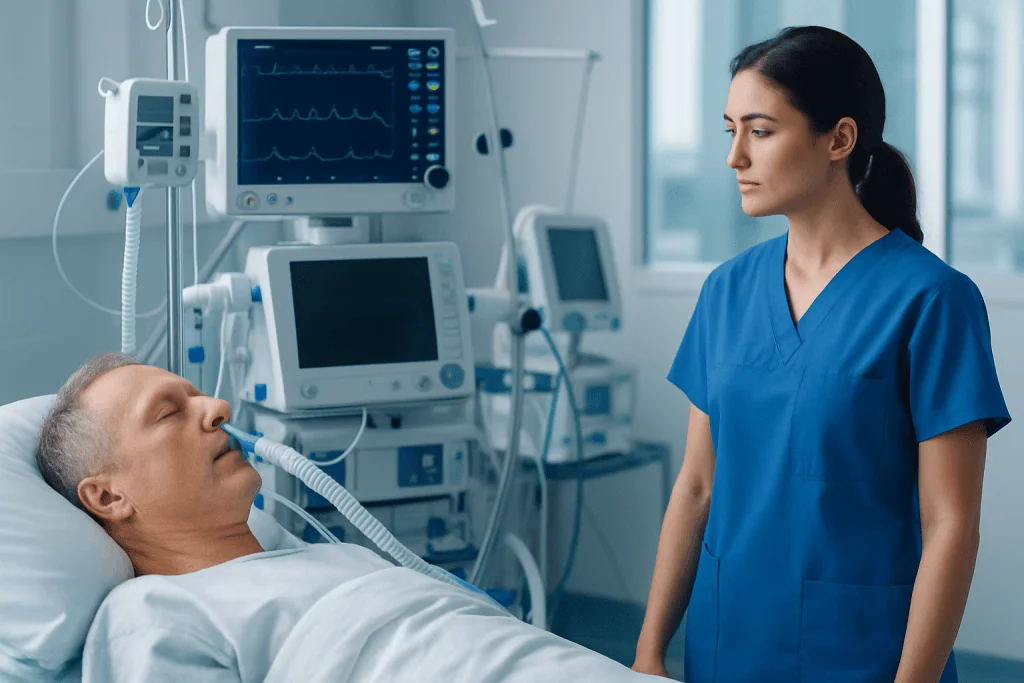
Patients are admitted to intensive care when they need a higher level of monitoring or treatment than can safely be provided on a standard hospital ward. This may happen suddenly in an emergency, or after planned major surgery when doctors expect close observation will be needed for a period of time.
Common reasons include severe pneumonia, sepsis, shock, serious injuries, heart attack, significant breathing problems, major bleeding, complex neurological conditions, or organ failure. Some people need help from a ventilator to breathe, while others need medications that affect blood pressure, heart rhythm, or sedation. ICU nurses are trained to care for these complex needs hour by hour.
In many cases, ICU care is temporary. As a patient becomes more stable, they may be transferred to a step-down unit or a general hospital floor. The goal of ICU nursing is to support recovery, identify problems early, and help the medical team deliver safe and timely care.
Core responsibilities and daily tasks

The daily work of an ICU nurse centers on detailed assessment and rapid response. Nurses regularly check vital signs, oxygen levels, urine output, mental status, skin condition, and signs of pain or distress. They also review monitor readings, laboratory results, and changes in a patient’s breathing or circulation.
ICU nurses give medications, manage IV fluids, assist with feeding support, care for wounds, and help prevent complications such as pressure injuries, blood clots, and hospital-acquired infections. They may care for patients with devices such as ventilators, feeding tubes, urinary catheters, arterial lines, or central venous catheters. Their observations help doctors adjust treatment plans in real time.
Another important responsibility is communication. ICU nurses explain routine care, answer questions as clearly as possible, and update family members within hospital policies and the patient’s medical situation. They also help coordinate with specialists involved in related conditions such as stroke, severe respiratory illness, or sepsis.
- Continuous monitoring and reassessment
- Medication administration and safety checks
- Management of lines, drains, and life-support equipment
- Prevention of complications and support for comfort
- Clear communication with the ICU team and family
Skills, training, and the ICU care team
ICU nurses are registered nurses who receive additional training and supervised experience in critical care. They learn how to recognize life-threatening changes, use complex monitoring systems, and care for patients who need advanced support. Many also pursue professional certifications in critical care nursing depending on local regulations and practice standards.
Critical care is team-based. An ICU nurse works closely with intensivists, surgeons, internists, respiratory therapists, pharmacists, dietitians, physiotherapists, and other specialists. This collaboration is important because ICU patients often have several problems at once, such as infection, low blood pressure, kidney strain, and breathing difficulty.
In some hospitals, treatment may include advanced respiratory support, close cardiac monitoring, or recovery after complex operations. Depending on the patient’s needs, the care plan may involve intensive care unit support, mechanical ventilation, or specialist evaluation after major cardiac surgery. The nurse plays a central role in helping these treatments run safely and effectively.
What patients and families can expect in the ICU
For patients and loved ones, the ICU can feel unfamiliar because of the equipment, alarms, and frequent staff activity. Many patients are connected to monitors, oxygen devices, or IV pumps. Some may feel confused, weak, sleepy, or unable to speak normally, especially if they are receiving sedation or breathing support. ICU nurses help interpret what families are seeing and explain the purpose of each part of care.
Family members may notice that the nurse checks the patient often, even overnight. This is normal in intensive care. Regular assessment allows the team to identify early warning signs such as changes in blood pressure, breathing, urine output, or mental state. Small changes can be clinically important in a critically ill person.
Comfort and dignity remain important even during high-technology care. ICU nurses help with positioning, mouth care, hygiene, pain relief, sleep support, and emotional reassurance whenever possible. They may also guide families on visitation rules, infection precautions, and how to participate in supportive care safely.
How ICU care supports treatment and recovery
The ICU does not replace diagnosis and treatment by doctors, but it provides the environment where those treatments can be delivered safely to very ill patients. This may include oxygen therapy, IV antibiotics, blood pressure support, dialysis, nutrition support, or close monitoring after high-risk surgery. ICU nurses help carry out these plans and watch for benefits, side effects, and new complications.
Recovery in the ICU is often gradual. Some patients improve quickly, while others need longer support and rehabilitation. During this time, nurses help protect mobility, skin health, breathing function, and mental well-being as much as the condition allows. Early movement, breathing exercises, and careful nutrition may be introduced when appropriate.
After discharge from the ICU, some people feel weak, tired, or emotionally affected by the experience. Ongoing hospital care, rehabilitation, and follow-up may be needed depending on the illness. At Acibadem International, multidisciplinary specialists in JCI-accredited hospitals diagnose and treat critically ill international patients and coordinate intensive care when needed.
When to seek medical care
People do not usually decide on their own that they need an ICU nurse. Intensive care is recommended by doctors when a person becomes critically ill or unstable. However, urgent medical evaluation is important if someone develops warning signs such as severe shortness of breath, chest pain, confusion, fainting, bluish lips, seizures, sudden weakness, uncontrolled bleeding, or signs of severe infection.
Families should also tell medical staff promptly if a hospitalized patient seems suddenly more confused, much harder to wake, significantly more breathless, or markedly different from their usual condition. These changes do not always mean ICU admission is needed, but they deserve immediate attention.
If a person has a serious illness or recent surgery and symptoms are rapidly worsening, emergency care is the safest next step. Early medical treatment can improve stability and help the team decide whether standard hospital care, close monitoring, or intensive care is most appropriate.
Common questions about ICU nursing and patient support
Many people wonder whether an ICU nurse only works with patients on life support. In reality, ICU nursing includes a broad range of serious conditions, from close observation after major surgery to active treatment of organ failure. Not every ICU patient is unconscious or on a ventilator, but all need a high level of monitoring.
Another common question is whether one nurse cares for many patients at once. In most ICUs, nurse-to-patient ratios are kept lower than on general wards because each patient requires more attention. The exact ratio varies by hospital policy, patient complexity, and the treatments being used.
Families often feel reassured when they understand that ICU nurses are continuously assessing, documenting, and communicating changes. Their role is not limited to bedside tasks; they are a key part of how critical illness is recognized, treated, and safely managed from hour to hour.
Frequently asked questions
Is an ICU nurse the same as a regular hospital nurse?
An ICU nurse is a registered nurse, but with additional training and experience in caring for critically ill patients. The role involves more advanced monitoring, faster response to sudden changes, and familiarity with life-support equipment and complex treatments.
Does being in the ICU always mean the condition is life-threatening?
Not always, but it does mean the patient needs very close observation or advanced treatment. Some people stay in the ICU after major surgery as a precaution, while others need it because their condition is unstable or severe.
Can family members talk to the ICU nurse about the patient’s condition?
Yes, ICU nurses often help explain daily care, monitoring, and general changes in condition. Detailed medical decisions may also involve the doctor, and information sharing follows patient privacy rules and hospital policies.
What kinds of equipment does an ICU nurse use?
ICU nurses commonly use heart and oxygen monitors, IV pumps, infusion devices, and equipment related to breathing support. Depending on the patient’s needs, they may also manage arterial lines, central lines, feeding tubes, or urinary catheters.
How long does a patient usually stay under ICU nursing care?
The length of stay varies widely and depends on the illness, treatment response, and any complications. Some patients stay for a short period after surgery, while others need several days or longer for close monitoring and support.
Can a patient recover fully after ICU care?
Many patients do recover well after ICU treatment, especially when the underlying problem improves and complications are avoided. Recovery may still take time, and some people need rehabilitation, follow-up care, or emotional support after a critical illness.
References
- Society of Critical Care Medicine
- American Association of Critical-Care Nurses
- MedlinePlus
- National Institute for Health and Care Excellence
- World Health Organization
This article is for general information only and is not a substitute for professional medical advice. Please consult a qualified doctor about your individual situation.
Explore treatments in Turkey — costs, top hospitals & a free quote
JCI-accredited · board-certified surgeons · reply within 24h
Add us as a Preferred Source to see more of our trusted health content across Google Search, AI Overviews and Discover.
Check your numbers in seconds
BMI, calories, due date, blood pressure and 30+ more clinical calculators — free, instant, doctor-reviewed ranges.