Ileostomy — Explained by Medical Evidence, Not Myths

An ileostomy diverts stool from the small intestine through a stoma on the abdomen into an external pouch. It may be temporary or permanent, depending on the reason for surgery and the health of the bowel.
Key Takeaways
- An ileostomy diverts stool from the small intestine through a stoma on the abdomen into an external pouch.
- It may be temporary or permanent, depending on the reason for surgery and the health of the bowel.
- Output is usually looser and more frequent than normal bowel movements, so hydration and skin care are especially important.
- Common reasons for ileostomy include inflammatory bowel disease, bowel cancer, bowel injury, obstruction, or complications after colorectal surgery.
- Patients should seek medical advice promptly for severe dehydration, no stoma output, persistent vomiting, major skin damage, or a stoma that changes color.
An ileostomy is a surgically created opening that allows waste to leave the body through the abdominal wall when the colon, rectum, or anus needs to heal or can no longer be used safely. It can be temporary or permanent, and with good education and support, many people return to daily activities, work, and travel.
Overview: what an ileostomy is and why it is done
An ileostomy is an operation that brings the end or loop of the small intestine, called the ileum, to an opening on the surface of the abdomen. This opening is called a stoma. Stool then leaves the body through the stoma and is collected in a special pouch, instead of passing through the colon and rectum in the usual way.
An ileostomy is not a disease itself. It is a surgical solution used when part of the digestive tract needs to rest, heal, or be bypassed, or when the colon or rectum has been removed. Depending on the situation, the ileostomy may be temporary and later reversed, or permanent if reconnection is not possible or not safe.
This surgery is often discussed in connection with conditions such as colon cancer or severe inflammatory bowel disease. It may also be part of treatment after major colorectal surgery, emergency bowel surgery, or trauma. The goal is to protect health, reduce complications, and help the bowel function in the safest possible way.
How an ileostomy works in daily life
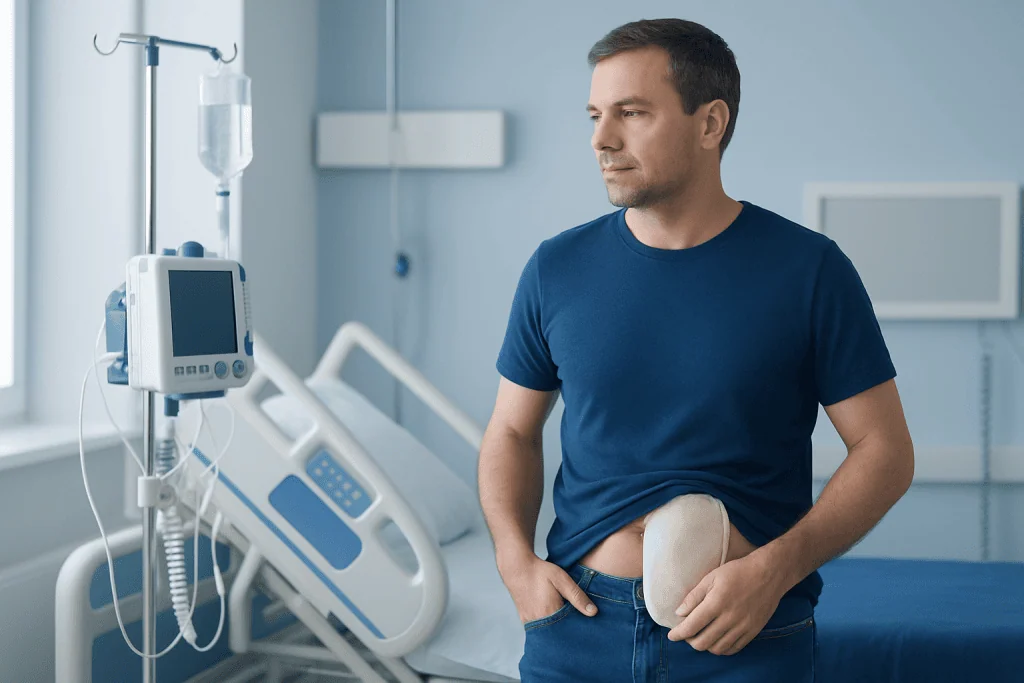
The stoma has no sphincter muscle, so a person cannot control when stool or gas passes out. Output from an ileostomy is usually more liquid than regular bowel movements because it bypasses most or all of the colon, where water is normally absorbed. Over time, output may become somewhat thicker depending on diet, hydration, medicines, and the length of bowel remaining.
There are different types of ileostomy. An end ileostomy uses the end of the ileum to form the stoma, often after removal of the colon or rectum. A loop ileostomy uses a loop of small bowel and is commonly created temporarily to protect a healing bowel connection after surgery. Some patients may hear about related procedures affecting the large bowel, such as colectomy surgery, because ileostomy planning is often tied to the amount of bowel removed.
Learning to live with an ileostomy usually includes understanding pouch changes, skin care, hydration, food choices, and signs of problems. A stoma nurse plays a central role in this education. Many people resume normal routines gradually, including walking, working, intimacy, exercise, and travel, after proper recovery and support.
Reasons an ileostomy may be needed
An ileostomy may be recommended for several medical reasons. One common reason is inflammatory bowel disease, especially ulcerative colitis, when the colon is severely inflamed, bleeding, or no longer responding adequately to treatment. In some cases of Crohn’s disease, diversion may also help protect healing tissue or manage complications, although surgical planning is individualized because Crohn’s can affect different parts of the bowel.
Another major reason is colorectal cancer or precancerous disease involving the colon or rectum. If part of the bowel must be removed, a surgeon may create an ileostomy temporarily to protect a new bowel connection, or permanently if the rectum and anus are removed. It can also be used in emergencies such as bowel obstruction, perforation, severe infection, trauma, or poor blood supply to the intestine.
Some patients need an ileostomy after surgery to treat complications such as a bowel leak or to allow the bowel to heal before reconnection. In complex cases, surgeons may combine bowel surgery with other approaches, including colon cancer treatment planning or robotic surgery where appropriate and available. The exact approach depends on the underlying diagnosis, anatomy, and overall health.
Symptoms, expected changes, and possible complications
After an ileostomy, patients can expect stool to pass into the pouch several times a day rather than as a formed bowel movement. The output may be thin or pasty and can vary with meals, infection, medicines, and fluid intake. Gas is also normal. In the early recovery period, swelling around the stoma is common, and the stoma usually becomes smaller over several weeks.
Most people adapt well, but practical issues can occur. These include leakage from the pouch, skin irritation around the stoma, noisy gas, changes in body image, and anxiety about eating or going out. These concerns are common and often improve with stoma education, the right pouching system, and follow-up with a nurse or doctor.
Complications that need medical attention can include dehydration, blockage, retraction of the stoma below skin level, prolapse where the stoma protrudes more than usual, narrowing, bleeding that does not stop, or skin ulceration. Output that is suddenly very high may lead to dizziness, weakness, thirst, reduced urine, and electrolyte imbalance. A healthy stoma is usually pink to red and moist; a pale, dark, or black color change should be assessed urgently.
Diagnosis, surgical planning, and what happens before the operation
The decision to create an ileostomy is based on the underlying condition rather than on the stoma alone. Doctors first diagnose and stage the bowel problem using a combination of medical history, physical examination, blood tests, stool tests when needed, and imaging. Colonoscopy, CT scans, MRI, and biopsy may be part of the workup, especially when inflammatory bowel disease or cancer is suspected.
Before surgery, the team reviews nutrition, current medicines, heart and lung health, and any infection risks. Patients often meet with a stoma care nurse who marks the best place on the abdomen for the stoma. This step matters because a well-positioned stoma can improve comfort, reduce leakage, and make self-care easier under clothing and during movement.
Surgical planning also includes discussion about whether the ileostomy is likely to be temporary or permanent, what recovery may involve, and whether additional procedures are needed. For example, some patients who need surgery for ulcerative colitis may later be considered for restorative operations, while others are best served by a permanent stoma. Clear preoperative counseling can reduce uncertainty and support better adjustment after surgery.
Treatment, recovery, and living with an ileostomy
Treatment begins with the operation itself and continues with postoperative care, education, and follow-up. In the hospital, the team monitors pain control, bowel function, wound healing, and stoma output. Patients are usually guided to start moving early, increase fluids as advised, and learn how to empty and change the pouch before going home.
At home, recovery focuses on protecting the skin around the stoma, finding the correct pouch fit, and preventing dehydration. Many patients are advised to drink regularly and pay attention to how foods affect output. Some foods may thicken output, while others may increase gas or odor. Because every person responds differently, changes are usually made gradually and with clinical advice when needed.
Emotional adjustment is an important part of treatment too. Concerns about appearance, relationships, exercise, or work are understandable. Support from stoma nurses, surgeons, dietitians, and patient groups can be very helpful. Near the end of recovery, if the ileostomy was intended to be temporary, the surgical team may assess whether reversal is safe based on healing, imaging, and overall health. For international patients, Acibadem International’s multidisciplinary specialists and JCI-accredited hospitals diagnose and treat conditions that may require ileostomy, with coordinated surgical and aftercare support.
Prevention, self-care, and when to seek medical care
An ileostomy itself is not usually something a person can prevent, because it is a treatment for another bowel problem. However, good self-care can reduce complications. Useful habits include measuring output when advised, drinking enough fluids, protecting the skin around the stoma, chewing food well, introducing higher-fiber foods carefully, and following pouch-change instructions. Heavy lifting may need to be limited during early recovery to lower the risk of hernia around the stoma.
Patients should also know that medicines may behave differently after bowel surgery. Some tablets may not absorb well, and laxatives or anti-diarrheal medicines should only be used as advised by a clinician. Follow-up appointments are important because the pouch system, diet plan, and hydration strategy often need adjustment over time.
Medical care should be sought promptly if there is no stoma output for several hours together with cramping, swelling, or vomiting; if output becomes very high and causes dizziness or reduced urine; if the stoma turns dark, pale, or black; if there is severe bleeding, fever, worsening abdominal pain, or separation of the skin around the stoma. New or persistent leakage, painful skin damage, or a bulge around the stoma are also good reasons to contact a doctor or stoma nurse early.
Frequently asked questions
Is an ileostomy always permanent?
No. An ileostomy can be temporary or permanent depending on the reason for surgery. A temporary ileostomy is often used to protect a healing bowel connection, while a permanent ileostomy may be needed if the colon, rectum, or anus has been removed or cannot function safely.
What does stool look like with an ileostomy?
Output is usually looser and more frequent than a regular bowel movement because it comes from the small intestine. Its consistency can vary from watery to paste-like depending on diet, hydration, illness, and medicines.
Can a person eat normally after ileostomy surgery?
Many people return to a broad diet over time, but food is often reintroduced gradually after surgery. It is usually helpful to chew well, stay hydrated, and notice which foods cause blockage, gas, or very high output.
How often does the ileostomy pouch need to be emptied or changed?
The pouch is typically emptied several times a day when it is partly full. The full pouching system is changed on a schedule recommended by a stoma nurse, which depends on the type of appliance, skin condition, and personal routine.
What are the warning signs of dehydration with an ileostomy?
Common warning signs include thirst, dry mouth, dizziness, weakness, reduced urine, dark urine, and feeling faint. Very high stoma output can lead to fluid and salt losses, so medical advice is important if these symptoms appear.
Can someone exercise or travel with an ileostomy?
Yes, many people can return to exercise and travel after they recover and learn their stoma routine. It is sensible to start gradually, protect the stoma area, carry extra supplies, and ask a clinician about any activity restrictions after surgery.
This article is for general information only and is not a substitute for professional medical advice. Please consult a qualified doctor about your individual situation.
Persistent digestive symptoms? Get evaluated in Turkey
JCI-accredited · board-certified surgeons · reply within 24h
Add us as a Preferred Source to see more of our trusted health content across Google Search, AI Overviews and Discover.

More from the Health Library

Dermatophytes: What Patients Need to Know

Posterior Communicating Artery: An Evidence-Based Guide for Patients

And Hygiene — Explained by Medical Evidence, Not Myths

Stomach Rumbling: An Evidence-Based Guide for Patients

Throat lozenges: Symptoms, Causes, and Treatment — Complete Patient Guide