Implanted Sleep Apnea: Candidacy, Procedure Steps, and Recovery Timeline

An implanted sleep apnea device is intended for obstructive sleep apnea, not every type of sleep-disordered breathing. It works by stimulating the hypoglossal nerve so the tongue is less likely to block the airway during sleep.
Key Takeaways
- An implanted sleep apnea device is intended for obstructive sleep apnea, not every type of sleep-disordered breathing.
- It works by stimulating the hypoglossal nerve so the tongue is less likely to block the airway during sleep.
- Candidates usually need a confirmed diagnosis, difficulty using CPAP, and a detailed airway assessment.
- The procedure involves placing a small generator and leads under the skin; the device is typically activated after healing.
- Recovery is usually gradual, with device adjustment and follow-up sleep testing helping tailor treatment.
- Surgery has potential benefits and risks, which should be reviewed with a sleep specialist and surgeon.
Implanted sleep apnea treatment, also called hypoglossal nerve stimulation, is a surgical option for selected adults with obstructive sleep apnea who cannot use or benefit sufficiently from CPAP. The device stimulates a tongue-controlling nerve during sleep to help keep the upper airway open, but careful sleep and airway assessment is essential before surgery.
Overview: What Is Implanted Sleep Apnea Treatment?
Implanted sleep apnea treatment usually refers to hypoglossal nerve stimulation, sometimes called upper airway stimulation. It is a treatment for selected people with obstructive sleep apnea (OSA), a condition in which throat tissues repeatedly narrow or close the airway during sleep. Rather than delivering air pressure through a mask, the implanted system helps support the airway from within the body.
The system includes a small pulse generator placed beneath the skin of the upper chest, a stimulation lead connected to the hypoglossal nerve in the neck, and, in many systems, a sensing lead that detects breathing effort. When the person turns the device on before sleep, it coordinates gentle stimulation with breathing. This moves the tongue forward or improves tongue muscle tone, helping reduce airway blockage.
This approach is not a universal replacement for continuous positive airway pressure (CPAP). CPAP remains a highly effective first-line treatment for many people with OSA when it is used consistently. An implant may be considered when CPAP has not been tolerated or has not provided adequate benefit despite appropriate support and troubleshooting.
How the Device Helps Keep the Airway Open
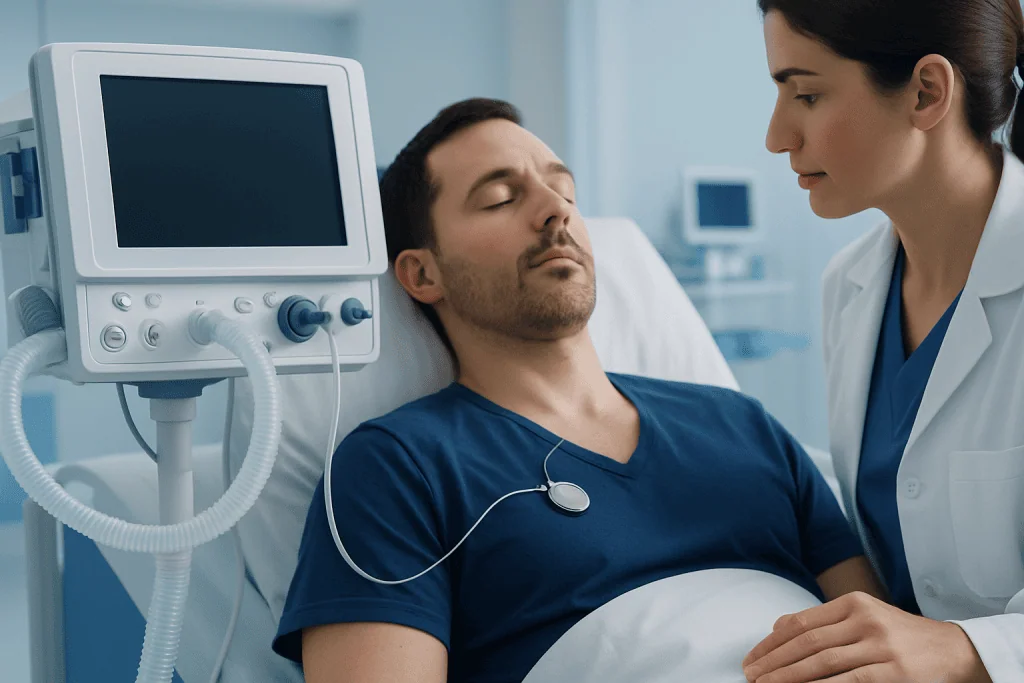
In obstructive sleep apnea, the problem is physical narrowing or collapse of the upper airway. During sleep, muscles in the throat relax. In some people, the tongue and soft tissues can move backward enough to restrict airflow. Breathing may then pause or become shallow until the brain briefly arouses the person to restore the airway.
The hypoglossal nerve controls several muscles of the tongue. An implanted stimulation system sends carefully timed electrical pulses to selected branches of this nerve. The stimulation is designed to occur as the person breathes in, helping the tongue move forward and reducing the likelihood of obstruction. Most people use a handheld remote or app-based controller to turn the system on at bedtime and off after waking.
The stimulation level is adjusted gradually after surgery. The aim is to find a setting that improves breathing while remaining comfortable. Follow-up care commonly includes symptom review, device programming, and a sleep study or home sleep test to assess how well treatment is controlling OSA.
Who May Be a Candidate?
Candidacy for an implanted sleep apnea device is based on several findings rather than symptoms alone. A person generally needs a sleep study confirming moderate to severe obstructive sleep apnea. They should also have attempted CPAP treatment and be unable to use it consistently or obtain sufficient benefit despite practical measures such as mask refitting, humidification, pressure adjustments, or coaching.
Specialists also consider body weight, the severity and pattern of apnea events, other medical conditions, and prior throat or neck surgery. Criteria vary by device, country, and clinical guidance. Importantly, the implant is not usually suitable for people whose sleep apnea is primarily central sleep apnea, where the brain does not reliably signal the body to breathe.
A key part of assessment is often drug-induced sleep endoscopy. During this procedure, medication produces a sleep-like state while a clinician examines the airway with a flexible camera. The examination identifies where and how the airway collapses. Some patterns of complete collapse at the soft palate may make hypoglossal nerve stimulation less appropriate.
Evaluation is normally shared between a sleep medicine clinician and an ear, nose, and throat or sleep surgeon. They may also assess nasal blockage, enlarged tonsils, jaw structure, insomnia, alcohol use, medicines that cause sedation, and other factors that can affect sleep apnea treatment success.
Procedure Steps: What Happens During Surgery
Implantation is planned after the candidacy assessment is complete. Before surgery, the care team reviews medical history, medications, allergies, anesthesia considerations, and any need for preoperative testing. People may be asked to temporarily stop or adjust certain medicines, but this should only be done according to the surgical team’s instructions.
The procedure is performed under general anesthesia. The surgeon makes a small incision in the upper chest to place the pulse generator beneath the skin. Another incision in the neck allows the surgeon to identify and connect a stimulation lead to the appropriate hypoglossal nerve branches. In systems that use a breathing sensor, a separate small incision is made near the rib cage to position the sensing lead.
The leads are tunneled under the skin and connected to the generator. The surgeon tests the system during the operation to confirm appropriate tongue movement and device function, then closes the incisions. The exact technique and number of incisions depend on the device being used and the person’s anatomy.
Most patients remain under observation after anesthesia and may go home the same day or after an overnight stay, depending on their overall health and the care team’s advice. The device is generally not turned on immediately, because the incisions and tissues need time to heal first.
Recovery Timeline and Follow-Up
During the first few days after surgery, temporary soreness, swelling, bruising, or tightness around the chest, neck, or side of the rib cage can occur. Clinicians provide individualized guidance on wound care, bathing, pain relief, sleeping position, and activity. It is usually sensible to avoid strenuous exercise, heavy lifting, and movements that place tension on the healing incisions until the surgeon confirms it is safe.
Many people return to light daily activities within days to a couple of weeks, although recovery varies. Follow-up visits allow the team to inspect incisions, check healing, and address concerns such as discomfort, redness, drainage, or changes in swallowing or speech. The timing of driving, returning to work, and resuming sport should be based on the person’s recovery and occupational demands.
Activation commonly takes place several weeks after implantation, once healing is adequate. At this appointment, a clinician programs the device and explains how to use the controller. The stimulation may begin at a low level and be increased step by step over time. This gradual process helps the person adapt comfortably.
A later sleep study is often used to optimize settings and measure treatment response. Even after successful implantation, ongoing sleep medicine follow-up matters. Healthy sleep habits, weight management where relevant, and treatment of nasal or other medical conditions can continue to support better sleep and overall health.
Potential Benefits, Risks, and Limitations
For appropriately selected adults, hypoglossal nerve stimulation can reduce breathing disruptions, improve oxygen levels during sleep, and lessen symptoms such as loud snoring or daytime sleepiness. It may offer a practical alternative for people who find a CPAP mask difficult to tolerate. However, individual results differ, and an implant does not guarantee complete elimination of sleep apnea.
As with any surgery, potential risks include bleeding, infection, pain, fluid collection, scarring, anesthesia-related complications, and the need for further procedures. Device-specific concerns can include discomfort from stimulation, tongue weakness or altered tongue movement, changes in speech or swallowing, lead or generator problems, and skin irritation. Most postoperative symptoms are temporary, but persistent or concerning symptoms require medical review.
The device requires long-term follow-up. The battery or generator will eventually need replacement through another procedure, and settings may need adjustment if symptoms or health circumstances change. People should tell healthcare professionals that they have an implanted device before imaging, surgery, or other procedures, because safety guidance can differ by device model.
Implant treatment does not address every contributor to poor sleep. Insomnia, restless legs syndrome, anxiety, chronic pain, nasal obstruction, and insufficient sleep time may still need separate care. A comprehensive plan should focus on the person’s symptoms, sleep study findings, health history, and treatment preferences.
When to Seek Medical Care
A medical assessment is appropriate for persistent loud snoring, witnessed pauses in breathing, choking or gasping during sleep, unrefreshing sleep, morning headaches, or excessive daytime sleepiness. These symptoms do not always mean OSA, but they warrant discussion with a qualified clinician. Untreated OSA can affect daily function and may be associated with other health concerns, so an accurate diagnosis is important.
People who already use CPAP should speak with their sleep team before deciding it has failed. Many barriers can be improved through mask changes, pressure adjustments, humidification, treatment for nasal symptoms, or additional support. An implant evaluation is most useful after a documented attempt to use CPAP and an updated sleep assessment when needed.
After implant surgery, urgent medical advice is needed for breathing difficulty, rapidly increasing neck or chest swelling, fever, worsening redness, pus-like wound drainage, severe uncontrolled pain, or new significant problems with speaking or swallowing. Routine follow-up should also be arranged if snoring, sleepiness, or witnessed breathing pauses persist after activation and adjustment.
Acibadem International’s multidisciplinary sleep, ENT, and surgical specialists in JCI-accredited hospitals can assess obstructive sleep apnea and discuss appropriate treatment pathways for international patients.
Frequently asked questions
Is implanted sleep apnea treatment the same as a CPAP machine?
No. CPAP delivers pressurized air through a mask to prevent airway collapse, while an implant stimulates a nerve that helps position the tongue during sleep. Both treatments are used for obstructive sleep apnea, but they work differently. CPAP is commonly tried first because it does not require surgery.
Who is not usually suitable for a sleep apnea implant?
People with predominantly central sleep apnea are generally not candidates because the treatment is designed for physical upper-airway blockage. Certain airway collapse patterns, medical conditions, weight-related factors, or an inability to undergo surgery may also affect eligibility. A sleep study and specialist assessment are needed to determine suitability.
How long does recovery take after sleep apnea implant surgery?
Early wound healing generally takes several weeks, while return to light activities may happen sooner depending on the individual and the type of work involved. The device is commonly activated only after the surgical areas have healed. Finding the most effective and comfortable settings may take additional weeks or months of follow-up.
Can a sleep apnea implant cure obstructive sleep apnea?
An implant can substantially improve obstructive sleep apnea for some appropriately selected people, but it is not considered a guaranteed cure. Follow-up sleep testing helps show how much the condition has improved. Some people may still need additional measures to manage residual symptoms or apnea events.
Will the device be felt during sleep?
When activated, the device creates a mild tongue movement or stimulation sensation that many people become accustomed to over time. Settings are adjusted to balance comfort with treatment effectiveness. If stimulation is uncomfortable or disrupts sleep, the care team can review the programming.
Can someone have an MRI with a sleep apnea implant?
MRI compatibility depends on the specific implanted system and its components. Some devices may allow certain MRI scans under defined conditions, while others may have restrictions. The person should always inform the imaging center and follow the device manufacturer's and implant team's instructions before any scan.
References
- American Academy of Sleep Medicine
- U.S. Food and Drug Administration
- National Heart, Lung, and Blood Institute
- American Academy of Otolaryngology–Head and Neck Surgery
- Mayo Clinic
This article is for general information only and is not a substitute for professional medical advice. Please consult a qualified doctor about your individual situation.
Sleep Apnea in Turkey — costs, top hospitals & a free quote
JCI-accredited · board-certified surgeons · reply within 24h
Add us as a Preferred Source to see more of our trusted health content across Google Search, AI Overviews and Discover.

Otorhinolaryngology (ENT)
Care for ear, nose, throat and head-and-neck conditions, including hearing and balance disorders.
126 specialists in this unit