Inner Thigh Stretches — Explained by Medical Evidence, Not Myths

Inner thigh stretches should create mild tension, not sharp, burning, or worsening pain. A brief dynamic warm-up is usually more suitable before exercise, while longer static stretches may suit after activity or separate flexibility sessions.
Key Takeaways
- Inner thigh stretches should create mild tension, not sharp, burning, or worsening pain.
- A brief dynamic warm-up is usually more suitable before exercise, while longer static stretches may suit after activity or separate flexibility sessions.
- Research does not show that stretching alone reliably prevents sports injuries; strength, training load, recovery, and technique also matter.
- Persistent inner-thigh or groin pain may be caused by more than muscle tightness and deserves clinical assessment.
- People should avoid forceful bouncing, deep positions beyond their control, and stretching through an acute injury.
Inner thigh stretches target the hip adductor muscles, which help bring the legs toward the body and support hip and pelvic movement. When performed gradually and without pain, they may improve short-term range of motion and relieve a feeling of tightness, but they are not a cure for groin pain or a guaranteed way to prevent injury.
Overview: What Inner Thigh Stretches Do
Inner thigh stretches are movements designed to lengthen the adductor muscle group on the inside of the hip and thigh. These muscles include the adductor longus, brevis, and magnus, as well as the gracilis and pectineus. They help draw the leg inward, stabilize the pelvis during walking and running, and contribute to movements such as changing direction, kicking, squatting, and getting in and out of a car.
For most people, the main evidence-based role of stretching is to produce a temporary improvement in joint range of motion and, in some cases, a short-lived reduction in the sensation of stiffness. This can be useful for people who want to move more comfortably in particular positions. A stretch does not need to be intense to be effective; slow, controlled movement within a comfortable range is generally the safer approach.
It is important to separate flexibility from injury treatment. Inner-thigh discomfort can arise from an adductor strain, tendon problem, hip joint condition, hernia, nerve irritation, pelvic condition, or another cause. Although a gentle stretch may feel relieving for simple muscle tightness, it cannot establish the cause of pain or replace an individualized rehabilitation plan.
Evidence and Myths About Stretching the Inner Thigh
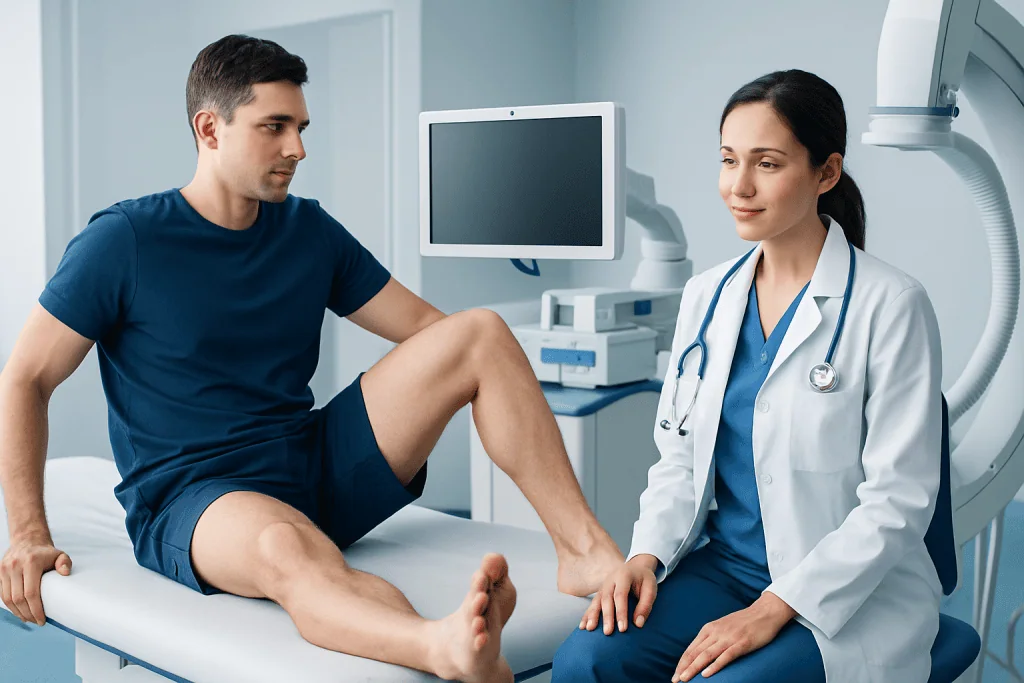
Myth: stretching before activity prevents all muscle injuries. Current evidence does not support static stretching alone as a reliable method of preventing sports injuries. Injury risk is influenced by many factors, including previous injury, muscle strength, sudden changes in training volume, sleep, recovery, footwear, movement technique, and the demands of a sport. For field and court sports, progressive adductor-strengthening programs are often more relevant to reducing adductor-related injury risk than stretching alone.
Myth: a stronger stretch produces a better result. Pushing deeply into a stretch can trigger guarding, discomfort, or irritation, particularly when the muscle or tendon is already sensitive. A mild to moderate pulling sensation is generally sufficient. Sharp pain, pinching in the front of the hip, tingling, numbness, or pain that increases afterward are signs to stop rather than push further.
Myth: tightness always means the muscle needs lengthening. A feeling of tightness may reflect fatigue, muscle soreness, reduced strength or control, stress, prolonged sitting, or sensitivity after an injury. Some people feel better after stretching, while others benefit more from gradual strengthening, regular movement breaks, or changes to training load. The most helpful plan depends on the person and their symptoms.
Static stretching means holding a position, usually after the body is warm. Dynamic mobility uses controlled movement through a comfortable range. Before exercise, a general warm-up followed by dynamic movements is often preferred because prolonged static stretching immediately before power-based activity may temporarily reduce peak force in some settings. This effect is usually small and depends on how long and intensely a person stretches, but it supports choosing the method to fit the activity.
How to Perform Inner Thigh Stretches Safely
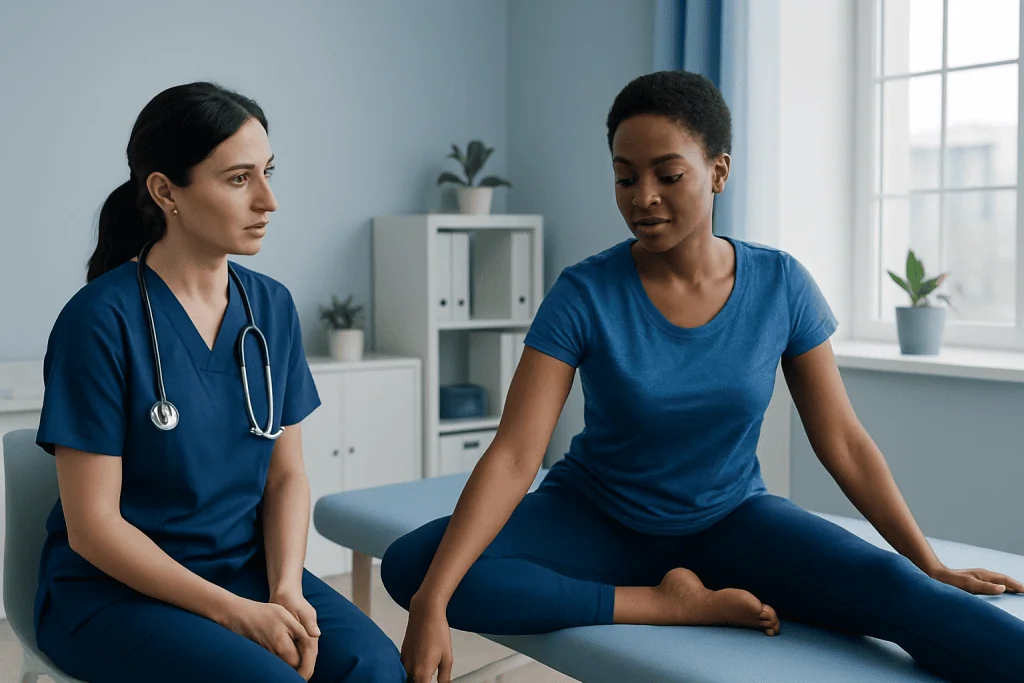
Before stretching, it is sensible to warm the body with a few minutes of easy walking, cycling, or another light activity. The goal is not to exhaust the muscles, but to increase circulation and make movement feel easier. People should breathe normally, keep the pelvis and spine in a comfortable position, and avoid using momentum to force a greater range.
A seated butterfly stretch is one common option. Sitting tall, the person brings the soles of the feet together and allows the knees to move outward only as far as comfortable. Rather than pressing the knees toward the floor, they can hinge slightly forward from the hips until a gentle inner-thigh sensation is felt. This position may not suit people with certain hip problems or knee discomfort, so it should be modified or skipped if it pinches or hurts.
A supported side-lunge stretch is another option. With the feet placed comfortably wide apart, the person bends one knee while keeping the other leg relatively straight, shifting body weight slowly toward the bent side. Holding onto a stable surface can improve balance and control. The pelvis should remain comfortable rather than being forced low, and the straight leg does not need to be completely locked.
A third option is a lying adductor stretch. Lying on the back with the legs raised against a wall or supported on a chair, the person slowly lets the legs move apart under control. This can be a gentler choice for people who find standing positions difficult. In any version, a short hold repeated a few times may be enough; there is no need for an exact universal duration or daily target.
A Practical Routine for Flexibility and Movement
A simple routine can be matched to the time of day and the person’s goal. Before a walk, run, gym session, or sport, a few minutes of gentle whole-body warming followed by controlled hip movements may be more useful than long held stretches. Examples include easy leg swings while holding support, shallow side-to-side weight shifts, or slow bodyweight squats within a comfortable range.
After activity, or during a separate mobility session, some people choose static inner thigh stretches because the muscles are already warm. They can move into a comfortable position, hold without straining, then return slowly to neutral. Regular, moderate practice is generally more useful than an occasional forceful attempt to become very flexible.
Flexibility works best as one part of a broader movement plan. For active people, gradual strengthening of the hip adductors, gluteal muscles, trunk, and legs can support hip control and tolerance for sport. Exercises such as modified side-lying adduction, controlled squats, step-ups, and sport-specific drills may be appropriate, but the right progression depends on fitness, injury history, and symptoms.
People who sit for long periods may find that brief, frequent movement breaks are more practical than one long stretching session. Standing up, walking for a few minutes, changing position, and gently moving the hips can reduce the feeling of stiffness associated with inactivity. Stretching should feel like a choice that supports comfortable movement, not a test of discipline or pain tolerance.
When Stretching May Not Be Appropriate
Inner thigh stretching should be avoided or significantly modified immediately after a suspected acute groin strain. A strain may cause sudden pain during a sprint, kick, slip, or quick change of direction, sometimes with swelling, bruising, weakness, or difficulty walking. In the early phase, forcefully lengthening the injured tissue can worsen symptoms. Relative rest and advice from a qualified clinician can help guide a safe return to activity.
People with known <a href="https://acibademinternational.com/diseases/hip-osteoarthritis/”>hip osteoarthritis, femoroacetabular impingement, recent hip surgery, a joint replacement, significant low-back symptoms, pelvic pain, or hypermobility may need individualized guidance. A stretch that looks simple can place the hip in a position that is not well tolerated. Painful pinching deep in the groin or front of the hip is not something to stretch through.
Pregnancy can also change pelvic and hip comfort. Gentle movement may be beneficial for many pregnant people, but range of motion varies, and the aim should be comfort and stability rather than achieving a wider stretch. A maternity care professional or physiotherapist can advise on appropriate activity when there is pelvic girdle pain, complications, or uncertainty.
Medication, neurological conditions, and reduced balance can also affect safety. Anyone at risk of falling should use a stable support for standing stretches or choose a seated or lying alternative. A physiotherapist can help identify whether flexibility, strength, balance, or movement control is the most important starting point.
When to Seek Medical Care
Medical assessment is appropriate for groin or inner-thigh pain that is severe, follows a fall or significant injury, causes an inability to bear weight, or is accompanied by major swelling, bruising, deformity, fever, or feeling unwell. Urgent care is also important for sudden testicular pain or swelling, a new groin lump, abdominal pain with vomiting, or leg swelling, warmth, redness, or shortness of breath. These symptoms are not typical signs of simple muscle tightness.
A doctor or physiotherapist should evaluate pain that lasts beyond a reasonable period of self-care, repeatedly returns with activity, limits walking or sport, occurs at night, or does not improve after reducing aggravating movements. Assessment may include questions about the onset and location of symptoms, examination of the hip and pelvis, and, when clinically indicated, imaging or other tests.
Acibadem International’s multidisciplinary specialists and JCI-accredited hospitals assess hip, groin, and musculoskeletal concerns for international patients. An evaluation can help distinguish a straightforward muscle issue from conditions that require a different approach, allowing rehabilitation advice to be matched to the diagnosis.
Making Stretching Part of a Sustainable Plan
The safest and most useful inner thigh stretching routine is one a person can perform consistently without pain or anxiety. It should fit their normal movement demands: an office worker may prioritize breaks from sitting, while a football player may need a structured program that combines warm-up drills, adductor strength, workload management, and recovery.
Tracking the response to activity can be helpful. If a gentle stretch leaves the area feeling comfortable and does not increase symptoms later that day or the following morning, it may be a reasonable part of a routine. If symptoms consistently worsen, the range, frequency, or type of exercise may need to change. Restoring confidence in movement often involves gradual exposure rather than complete avoidance of all activity.
There is no ideal degree of flexibility that everyone must reach. Anatomy, age, sport, and prior injuries all influence range of motion. The practical aim is comfortable, functional movement for the individual—not forcing the knees to the floor in a butterfly stretch or comparing flexibility with someone else.
Frequently asked questions
Do inner thigh stretches really work?
Inner thigh stretches can temporarily improve flexibility and may reduce the feeling of muscle stiffness for some people. Their effects are usually most useful when they are gentle and practiced regularly. They do not reliably prevent all injuries or treat the underlying cause of ongoing groin pain.
How often should someone do inner thigh stretches?
Frequency depends on comfort, activity level, and goals. Many people can include gentle mobility work on most days or after exercise, provided it does not aggravate symptoms. A clinician can give more specific guidance after an injury or surgery.
Should inner thigh stretches hurt?
No. A mild pulling sensation in the inner thigh can be normal, but sharp pain, pinching, burning, numbness, or pain that lingers afterward is not a goal. The person should ease out of the position and seek advice if symptoms continue.
Is it better to stretch before or after exercise?
Before exercise, a light warm-up and dynamic movements are often more appropriate than prolonged static holds. Static stretches can be used after activity or in a separate flexibility session if they feel comfortable. The best choice also depends on the type of exercise planned.
Can stretching heal a groin strain?
Stretching alone does not heal a groin strain and may aggravate a recent injury if done too early or too forcefully. Recovery commonly involves an appropriate period of relative rest followed by gradual rehabilitation, including strengthening and a progressive return to activity. A clinician can help determine the stage of recovery.
Why do the inner thighs feel tight after sitting?
Long periods in one position can create a temporary sense of stiffness in the hips and thighs. This does not necessarily mean the muscles have become structurally shortened. Regular position changes, short walks, and comfortable hip movement may help.
This article is for general information only and is not a substitute for professional medical advice. Please consult a qualified doctor about your individual situation.
Explore treatments in Turkey — costs, top hospitals & a free quote
JCI-accredited · board-certified surgeons · reply within 24h
Add us as a Preferred Source to see more of our trusted health content across Google Search, AI Overviews and Discover.

More from the Health Library

Macrosomia: An Evidence-Based Guide for Patients

Eucalyptus in Shower: What Patients Need to Know

Brachioradial Pruritus: An Evidence-Based Guide for Patients

Allostatic Load: What Patients Need to Know

Spine — Explained by Medical Evidence, Not Myths