Vulvar Anatomy: Is an “Innie” Appearance Normal?

An “innie” appearance is a common, normal variation of vulvar anatomy. What it means, and when changes warrant a medical check.
“Innie” is a nonmedical term often used to describe a vulva in which the inner labia are mostly covered by the outer labia. In most cases, this is simply one normal variation of vulvar anatomy, and appearance alone does not indicate a health problem.
What an “innie” appearance means medically
“Innie” is a nonmedical, informal word people may use to describe a vulva in which the labia minora, or inner lips, are not very visible beyond the labia majora, or outer lips. From a medical point of view, this usually represents a normal anatomical variation. It is not a disease, diagnosis, or sign of sexual function, fertility, or hygiene.
The more medically accurate term for the outside genital area is the vulva. The vulva includes the labia majora, labia minora, clitoris, urethral opening, and vaginal opening. Just as faces and body shapes differ from person to person, vulvas also differ naturally in size, color, symmetry, and contour.
Many people worry because online images and social media often present a narrow idea of what is “normal.” In reality, there is a wide range of healthy vulvar appearance. An “innie” appearance is one normal pattern, just as more visible inner labia are another normal pattern.
Normal vulvar variation: what can differ from person to person
No two vulvas look exactly the same. The inner and outer labia may be smaller or larger, smooth or folded, symmetrical or slightly uneven. Skin tone may range from pink to brown or deeper shades, and it is common for the vulva to be darker than nearby skin.
The labia can also change over time. Puberty, hormonal shifts, pregnancy, childbirth, menopause, weight changes, and aging may all affect the appearance of the vulva. These changes do not automatically signal a medical problem.
Common normal differences include:
- Inner labia mostly hidden by outer labia
- Inner labia extending beyond outer labia
- One side longer or fuller than the other
- Wrinkled, smooth, or folded tissue
- Variation in pigmentation
Because normal variation is so broad, appearance should be assessed in context. What matters most clinically is whether there are symptoms such as irritation, pain, discharge, sores, or a new lump.
What affects vulvar appearance

Genetics play a major role in vulvar anatomy. A person may naturally have fuller outer labia, less prominent inner labia, or a particular skin tone and texture. These inherited features are often present long before any medical issue would develop.
Hormones are another important influence. During puberty, the vulva matures and may change noticeably. In pregnancy, increased blood flow and hormonal effects can alter size or color. Later in life, especially after menopause, tissues may become thinner, drier, or less elastic.
Body composition and life events can also contribute. Weight loss or gain may change how prominent the outer labia appear. Childbirth, exercise friction, and aging can all affect tissue contour. None of these automatically indicate disease, but symptoms should still be checked if they arise.
When appearance may be linked to a health issue
Most concerns about an “innie” vulva are about appearance rather than disease. However, some symptoms involving the vulva can point to an underlying condition. Examples include persistent itching, burning, pain with sex, swelling, ulcers, unusual discharge, bleeding unrelated to menstruation, or a new growth.
Skin conditions, infections, cysts, hormonal changes, allergic irritation, and inflammatory disorders can all affect the vulva. For example, yeast infections may cause itching and discharge, while irritation from soaps, pads, or tight clothing may lead to redness and discomfort. Vulvar pain may also occur with conditions such as vaginismus or other pelvic floor problems, although appearance itself does not diagnose these issues.
In some cases, people seek care because the labia cause rubbing, discomfort during exercise, or difficulty with certain clothing. When symptoms are physical rather than cosmetic, evaluation can help identify whether there is irritation, a benign structural issue, or another condition that needs treatment.
How doctors evaluate vulvar concerns
A gynecologist usually begins with a discussion of symptoms, menstrual history, sexual health, hygiene products, medications, and any recent changes. Many patients feel embarrassed talking about vulvar appearance, but these conversations are routine in gynecologic care and can be handled respectfully and privately.
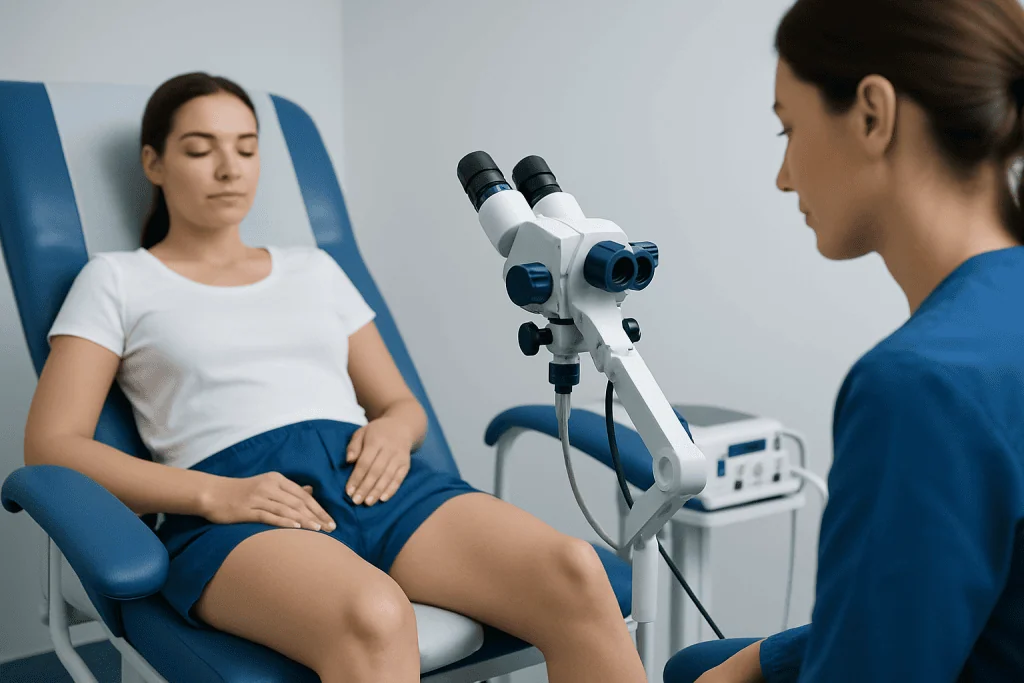
The physical exam focuses on the vulva and, when appropriate, the vagina and cervix. The doctor checks for skin changes, swelling, tenderness, discharge, cysts, or lesions. If the main concern is simply whether the anatomy is normal, the exam often provides reassurance.
Additional tests are only used when symptoms suggest a specific problem. These may include a swab for infection, testing for sexually transmitted infections, a biopsy of an unusual skin lesion, or imaging if a deeper mass is suspected. The goal is to evaluate symptoms, not to judge natural appearance.
If discomfort, structural concerns, or pelvic symptoms are present, some patients may benefit from broader gynecologic assessment or gynecology care to review treatment options in a medically appropriate way.
Treatment options: often reassurance, sometimes targeted care
When an ““innie” vulva” appearance reflects normal anatomy, no treatment is needed. Reassurance and education are often the most helpful response. Patients may benefit from understanding that vulvas vary widely and that visual differences do not predict cleanliness, sexual satisfaction, or reproductive health.
If symptoms are present, treatment depends on the cause. Infections may require antifungal, antibiotic, or antiviral treatment. Skin irritation may improve by avoiding fragranced washes, switching menstrual products, or wearing looser clothing. Hormonal dryness may be managed with clinician-guided therapies, depending on age and medical history.
For people with pain related to muscle tension or penetration difficulties, treatment may involve pelvic floor therapy or evaluation for conditions affecting sexual function. In selected cases, a doctor may recommend pelvic floor rehabilitation as part of symptom management.
Surgery is not routinely indicated for normal anatomy. However, if there is persistent functional discomfort, tissue injury, or a clearly defined medical reason, a specialist may discuss options. Concerns about appearance alone should be approached carefully, with attention to expectations, body image, and the risks and benefits of any procedure.
Self-care, body image, and healthy vulvar habits
Simple vulvar care can reduce irritation and support comfort. In general, the vulva should be washed gently with water or a mild, unscented cleanser if needed. Douching, perfumed products, harsh scrubs, and deodorizing sprays are usually unnecessary and may disrupt the natural balance of the area.
Helpful self-care steps include:
- Wear breathable cotton underwear when possible
- Avoid prolonged moisture from wet swimsuits or sweaty exercise clothes
- Choose gentle menstrual and hygiene products
- Use lubrication during sex if dryness or friction is a problem
- Do not compare anatomy to edited images online
Body image concerns are common, especially in adolescence and young adulthood. Many patients are reassured by learning that asymmetry and variation are expected. If worry about appearance causes significant distress, a clinician can help separate normal anatomy from symptoms that truly need medical attention.
For patients who need specialist assessment, Acibadem International’s multidisciplinary teams at JCI-accredited hospitals evaluate gynecologic symptoms and related concerns for international patients in a patient-centered way.
When to seek medical care
Medical care is appropriate if vulvar symptoms are new, persistent, painful, or getting worse. It is also important to seek care for a lump, ulcer, severe itching, unusual discharge, bleeding unrelated to menstruation, or pain with urination or sex. Appearance alone is rarely urgent, but symptoms deserve proper evaluation.
Prompt assessment is especially important if there is fever, rapidly increasing swelling, severe pain, or a sore that does not heal. These signs can indicate infection or another condition that needs treatment. A doctor can also help if a patient is unsure whether what they are seeing is simply a normal anatomical variant.
Regular gynecologic care can be useful for ongoing questions about vulvar health, sexual pain, infections, or menstrual concerns. In some cases, related evaluation may overlap with services such as obstetrics and gynecology support or assessment for conditions involving vaginal discomfort, including vaginal infections.
Frequently asked questions
Is an “innie” vulva normal?
Yes. This term usually describes a normal vulvar appearance in which the inner labia are less visible than the outer labia. It is not a medical diagnosis and does not by itself suggest a health problem.
Does vulva appearance affect sexual function or fertility?
In most cases, no. The way the labia look does not determine fertility, virginity, sexual desire, or sexual satisfaction. Symptoms such as pain or dryness are more medically relevant than appearance alone.
Can vulvar appearance change with age?
Yes. Puberty, pregnancy, childbirth, hormonal changes, menopause, and aging can all affect vulvar size, color, and tissue texture. These changes are often normal, although troubling symptoms should still be assessed.
Should one labia side be exactly the same as the other?
No. Mild asymmetry is very common and is usually a normal part of anatomy. A sudden new swelling or one-sided painful lump, however, should be checked by a doctor.
When is vulvar itching or pain not normal?
Itching, burning, pain, sores, or persistent irritation are not explained by anatomy alone. These symptoms can be related to infection, skin irritation, hormonal changes, or other gynecologic conditions. A clinician can examine the area and recommend the right treatment.
Do people need surgery for this?
Usually not. If the appearance is simply a normal variation and there are no functional symptoms, treatment is not necessary. Surgery may only be discussed in selected cases where there is ongoing physical discomfort or another clear medical indication.
References
- American College of Obstetricians and Gynecologists
- Royal College of Obstetricians and Gynaecologists
- NHS
- Mayo Clinic
- World Health Organization
This article is for general information only and is not a substitute for professional medical advice. Please consult a qualified doctor about your individual situation.
IVF & fertility treatment in Turkey — success rates and costs
JCI-accredited · board-certified surgeons · reply within 24h
Add us as a Preferred Source to see more of our trusted health content across Google Search, AI Overviews and Discover.