Insomnia With Neurological Symptoms: When Sleep Problems Need a Brain Evaluation

Most insomnia is not caused by a serious neurological disease, but certain associated symptoms deserve medical attention. Warning signs include weakness, numbness, severe headaches, confusion, seizures, balance problems, tremor, or unusual nighttime behaviors.
Key Takeaways
- Most insomnia is not caused by a serious neurological disease, but certain associated symptoms deserve medical attention.
- Warning signs include weakness, numbness, severe headaches, confusion, seizures, balance problems, tremor, or unusual nighttime behaviors.
- Evaluation may include a neurological exam, sleep history, blood tests, brain imaging, or a sleep study depending on the symptoms.
- Treatment focuses on the underlying cause as well as improving sleep habits and managing insomnia safely.
- Urgent care is important if insomnia occurs with sudden neurological symptoms such as stroke-like signs, severe confusion, or seizures.
Insomnia is common, but it sometimes occurs alongside symptoms that suggest a problem involving the brain, nerves, or sleep-wake regulation. When sleep difficulty is paired with headaches, weakness, unusual movements, memory changes, or other neurological signs, a medical evaluation may help identify the cause and guide treatment.
Overview
Insomnia means ongoing difficulty falling asleep, staying asleep, or waking too early and not being able to return to sleep. It can also describe sleep that feels unrefreshing even when enough time is spent in bed. Stress, irregular schedules, pain, medications, anxiety, and many everyday health issues can contribute to insomnia.
Sometimes, however, insomnia appears together with symptoms that point toward the nervous system. These may include persistent headaches, dizziness, numbness, weakness, tremor, unusual movements during sleep, memory problems, changes in behavior, or episodes of confusion. In these situations, the sleep problem may be part of a broader neurological condition rather than an isolated sleep complaint.
A brain evaluation does not automatically mean that a serious disease is present. In many people, testing is done to rule out important causes and provide reassurance. The goal is to understand whether the sleep difficulty is related to a disorder such as migraine, epilepsy, Parkinsonian syndromes, neuropathy, circadian rhythm disruption, or another condition affecting the brain and nerves.
Symptoms That May Suggest a Neurological Cause
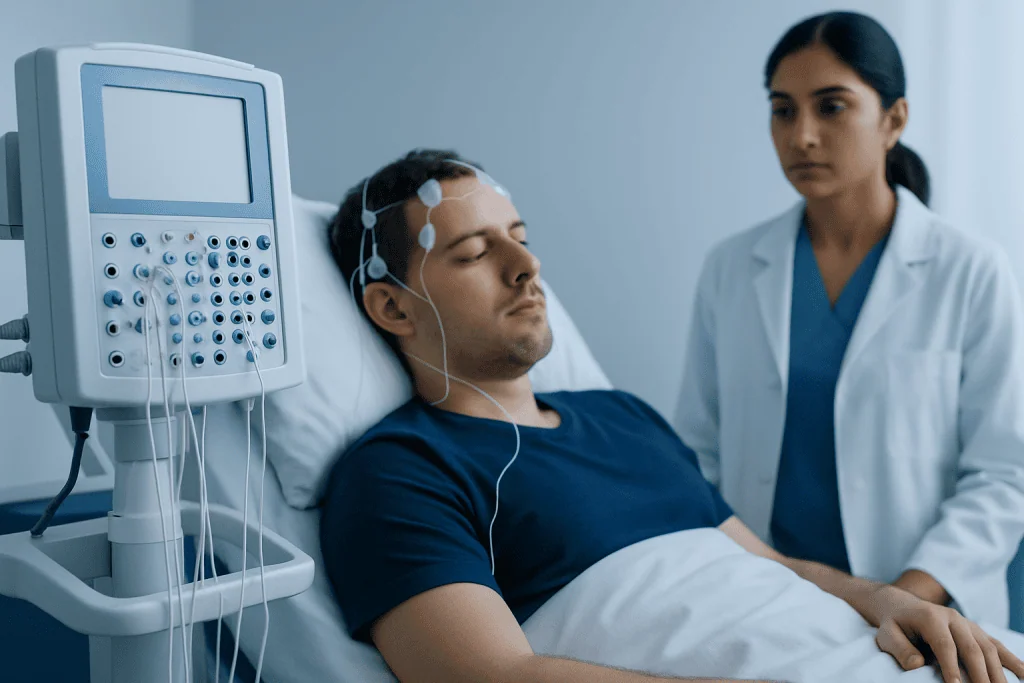
Insomnia itself can cause daytime tiredness, irritability, poor concentration, and a lower stress threshold. These effects are common and do not necessarily indicate a neurological illness. The concern is higher when insomnia is accompanied by symptoms that are focal, progressive, unusual, or sudden in onset.
Examples of symptoms that may justify a closer neurological review include recurrent severe headaches, weakness on one side of the body, numbness, tingling, tremor, changes in walking or balance, fainting spells, seizures, memory loss, speech difficulty, double vision, or confusion. Abnormal behaviors during sleep, such as acting out dreams, sudden jerking, nocturnal wandering, or episodes of unresponsiveness, can also suggest a disorder that involves the brain or sleep regulation.
Family members may notice clues that the affected person does not remember. These can include pauses in breathing, unusual vocalizations, violent movements, repeated awakenings, staring episodes, or major personality changes linked to poor sleep. A symptom diary can be very helpful because it allows patterns to be reviewed over time.
- Insomnia with new tremor or stiffness
- Sleep difficulty with repeated nighttime confusion
- Frequent headaches that wake a person from sleep
- Loss of coordination, falls, or balance changes
- Dream enactment, nighttime jerking, or suspected seizures
Possible Causes and Risk Factors

Neurological causes of insomnia are varied. Some conditions directly disrupt the brain systems that regulate sleep and wakefulness. Others lead to pain, discomfort, abnormal movements, breathing changes, or nighttime arousal that make normal sleep difficult. This is why the same symptom of insomnia can have very different explanations from one person to another.
Conditions that may be considered include epilepsy, migraine, neurodegenerative disorders such as Parkinsonian conditions, multiple sclerosis, stroke-related effects, traumatic brain injury, neuropathic pain, and certain inflammatory or autoimmune neurological disorders. Disturbed sleep may also occur with parasomnias, circadian rhythm disorders, restless legs syndrome, or sleep apnea, which can overlap with neurological symptoms such as morning headaches, impaired concentration, and daytime sleepiness.
Risk factors for neurological sleep disruption include older age, a history of head injury, chronic migraines, movement symptoms, known nerve disease, family history of neurological disorders, heavy alcohol use, and medications that affect the brain. Mental health conditions, especially anxiety and depression, can coexist with neurological complaints and may intensify insomnia. Because these issues often overlap, a careful assessment is more useful than trying to guess the cause based on one symptom alone.
How Doctors Evaluate Insomnia With Neurological Symptoms
Assessment usually begins with a detailed medical history. The doctor asks when the insomnia started, whether the problem is difficulty falling asleep or staying asleep, and how often it occurs. They also ask about headaches, dizziness, weakness, memory changes, snoring, breathing pauses, unusual movements, medications, caffeine, alcohol, shift work, mood symptoms, and any recent infections or injuries.
A neurological examination helps look for signs involving strength, sensation, reflexes, coordination, eye movements, speech, and walking. Depending on what is found, additional testing may be recommended. This can include blood tests, sleep questionnaires, cognitive screening, or a referral to a sleep neurology specialist.
When clinically indicated, a doctor may order brain imaging such as MRI or another imaging study to look for structural causes. Overnight testing may include a sleep study if sleep apnea, unusual nighttime behaviors, or seizure-like events are suspected. In select cases, an EEG may be used to evaluate possible seizure activity or abnormal brain-wave patterns linked to nighttime episodes.
The purpose of testing is to match the evaluation to the symptoms. Not every person with insomnia needs extensive neurological testing. A focused, step-by-step approach helps identify who needs more investigation and who may be managed with conservative care and follow-up.
Treatment Options
Treatment depends on the cause. If a neurological disorder is identified, managing that condition is often the most important step toward improving sleep. For example, better control of seizures, neuropathic pain, movement symptoms, migraine, or breathing-related sleep problems can reduce nighttime awakenings and improve sleep quality.
At the same time, insomnia itself may need direct treatment. Doctors often recommend behavioral strategies first, including regular sleep and wake times, limiting late caffeine, reducing evening screen exposure, and keeping the bedroom quiet and comfortable. Cognitive behavioral therapy for insomnia is widely used because it helps address the habits and thought patterns that keep insomnia going.
Medication may sometimes be considered, but the choice should be individualized. In people with neurological symptoms, sedating drugs can occasionally worsen confusion, falls, breathing problems, or abnormal sleep behaviors. That is why treatment is safest when guided by a qualified clinician who understands both sleep and neurology.
If care needs are complex, a multidisciplinary team may be helpful. Near the end of the care pathway, some patients seek assessment at specialized centers; Acibadem International’s multidisciplinary specialists and JCI-accredited hospitals evaluate and treat neurological and sleep-related conditions for international patients.
Self-care and Prevention
Good sleep habits are useful even when an underlying neurological issue is being evaluated. A consistent routine supports the body’s natural sleep-wake rhythm and may reduce the severity of insomnia. Going to bed and waking up at the same time daily, getting daylight exposure in the morning, and avoiding long or late naps can all help.
Simple lifestyle steps may also reduce triggers that worsen both sleep and neurological symptoms. These include limiting caffeine late in the day, avoiding alcohol close to bedtime, staying physically active within one’s abilities, and managing stress with relaxation techniques. People with headaches, tremor, pain, or dream enactment symptoms may benefit from tracking when these problems happen and what seems to trigger them.
Safety matters as well. If there are episodes of confusion, falls, nighttime wandering, or violent movements during sleep, it may help to remove sharp objects, pad nearby furniture, and ensure easy access to help. Self-care is supportive, but it should not replace medical review when warning signs are present.
When to See a Doctor
Medical advice is appropriate when insomnia lasts for weeks, affects daily life, or keeps returning. A doctor should also be consulted if poor sleep is linked with persistent headaches, numbness, weakness, memory changes, tremor, unusual behaviors during sleep, major mood changes, or unexplained daytime sleepiness.
Urgent evaluation is needed if insomnia occurs with sudden neurological symptoms. These include trouble speaking, facial drooping, one-sided weakness, severe new headache, seizures, fainting, chest pain, or severe confusion. These symptoms may reflect a time-sensitive condition and should not be watched at home without guidance.
Even when symptoms are not urgent, it is reasonable to seek a specialist opinion if the picture is complex or unclear. Sleep medicine, neurology, neurophysiology, and mental health professionals may all contribute depending on the symptoms. Early evaluation can help rule out serious causes, relieve uncertainty, and lead to more effective treatment.
Frequently asked questions
Does insomnia always mean there is a neurological problem?
No. Most insomnia is related to stress, lifestyle factors, medications, pain, mood symptoms, or other non-neurological causes. A neurological cause becomes more likely when sleep trouble occurs alongside symptoms such as weakness, tremor, seizures, confusion, or abnormal nighttime behaviors.
What neurological symptoms are most concerning with insomnia?
Symptoms that deserve prompt medical attention include one-sided weakness, speech difficulty, severe new headaches, seizures, fainting, significant confusion, or a sudden change in walking or balance. Nighttime episodes of violence, dream enactment, or unresponsiveness should also be assessed.
Will everyone with insomnia and headaches need brain imaging?
Not necessarily. Doctors decide about imaging based on the pattern of headaches, the neurological examination, age, and any additional warning signs. Many headaches are not caused by structural brain disease, but imaging may be appropriate in selected cases.
Can seizures happen during sleep and look like insomnia?
Yes, in some cases nighttime seizures can fragment sleep and leave a person feeling as if they barely slept. Clues may include jerking, tongue biting, bedwetting, confusion on waking, or witnessed episodes of staring or unresponsiveness.
How is insomnia with neurological symptoms treated?
Treatment focuses on the cause and on sleep itself. This may include managing a neurological disorder, improving sleep habits, using behavioral therapy for insomnia, and carefully selecting medications when needed.
When should someone go to the emergency department instead of waiting for an appointment?
Emergency care is important if there are sudden stroke-like symptoms, seizures, severe confusion, collapse, or the worst headache of a person’s life. These symptoms need urgent evaluation and should not be attributed to lack of sleep alone.
References
- American Academy of Sleep Medicine
- National Institute of Neurological Disorders and Stroke
- National Institute for Health and Care Excellence
- Mayo Clinic
- World Health Organization
This article is for general information only and is not a substitute for professional medical advice. Please consult a qualified doctor about your individual situation.
Insomnia in Turkey — costs, top hospitals & a free quote
JCI-accredited · board-certified surgeons · reply within 24h
Add us as a Preferred Source to see more of our trusted health content across Google Search, AI Overviews and Discover.

Neurology
Diagnosis and treatment of disorders of the brain, spinal cord, nerves and muscles.
51 specialists in this unit