Intellectual Age Test: An Evidence-Based Guide for Patients

An intellectual age test estimates how some cognitive abilities compare with typical performance at different ages. Online intellectual age tests may be entertaining, but they are not the same as validated medical or psychological assessments.
Key Takeaways
- An intellectual age test estimates how some cognitive abilities compare with typical performance at different ages.
- Online intellectual age tests may be entertaining, but they are not the same as validated medical or psychological assessments.
- A formal evaluation may include IQ testing, developmental screening, and neuropsychological assessment depending on age and symptoms.
- Test results should always be interpreted in context, including education, language, culture, health, and emotional well-being.
- Sudden changes in thinking, memory, or behavior should be assessed by a qualified doctor rather than by self-testing alone.
An intellectual age test is a broad term often used for quizzes or formal assessments that compare certain thinking skills with age-based expectations. It can offer limited insight into cognition, but it does not define overall intelligence, and medical concerns about memory, learning, or development require a proper clinical evaluation.
Overview: What an Intellectual Age Test Really Means
An intellectual age test is usually described as a tool that compares a person’s performance on certain thinking tasks with what is typical for different age groups. In everyday use, the phrase may refer to anything from a simple online quiz to a formal psychological assessment. The key point is that these tests do not measure the whole person, and they do not provide a complete picture of intelligence, ability, or future potential.
Historically, the idea of “mental age” came from early intelligence testing. Modern medicine and psychology are more careful in how they use such concepts. Today, specialists are more likely to talk about cognitive abilities, developmental level, IQ scores, executive function, language, attention, memory, or adaptive skills rather than assigning a single “intellectual age.”
For patients and families, this distinction matters. A score from an online intellectual age test may be interesting, but it is not enough to diagnose a learning difference, developmental disorder, memory condition, or mental health problem. When there is a real concern, a structured assessment by a psychologist, psychiatrist, pediatrician, neurologist, or other trained clinician is the safer and more accurate path.
What These Tests Can and Cannot Tell You
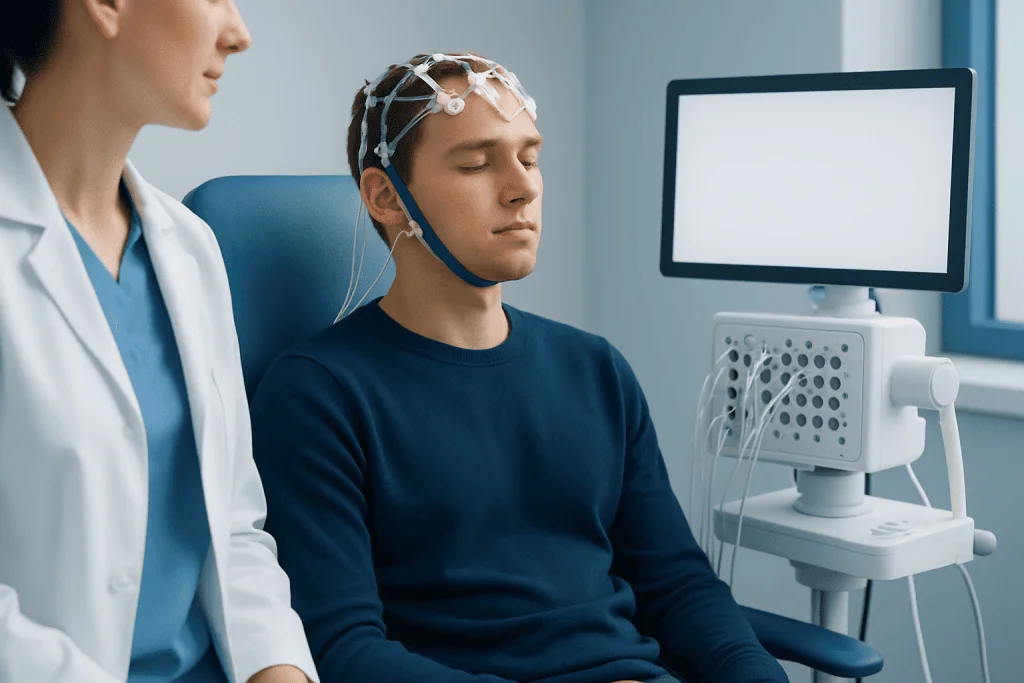
An intellectual age test may give a rough estimate of how a person performs on selected tasks such as reasoning, vocabulary, pattern recognition, working memory, or problem-solving. In some settings, especially in child development, age-based comparison can help clinicians understand whether a child is progressing as expected or may need further support.
However, these tests have clear limits. Intelligence is not a single trait, and performance can be affected by many factors beyond underlying ability. Sleep, anxiety, stress, depression, pain, medications, hearing or vision problems, cultural background, language fluency, educational opportunity, and familiarity with test formats can all influence results.
Most importantly, an intellectual age test cannot diagnose a condition by itself. It cannot confirm autism, attention-deficit/hyperactivity disorder, dementia, a learning disorder, or a neurological illness without a broader assessment. If there are concerns about concentration, development, school performance, memory, or behavior, clinicians may look at related areas and sometimes evaluate for conditions such as autism or Alzheimer’s disease when appropriate to age and symptoms.
Online Quizzes vs. Clinical Cognitive Assessments

Many online intellectual age tests are designed for curiosity or entertainment. They may ask a small number of questions and produce a fast result, but they often do not use validated methods, standard scoring, or controlled testing conditions. This means the score may change widely from one site to another and should not be treated as a medical finding.
Clinical assessments are very different. Formal cognitive or neuropsychological tests are standardized, carefully administered, and interpreted by trained professionals. They compare results with large reference groups and consider the person’s age, education, language, and medical background. This makes the results far more reliable and useful than a brief online quiz.
In practice, doctors choose the type of assessment based on the concern. A child with language delay may need developmental testing, while an adult with memory complaints may need a more detailed neuropsychological evaluation. In some cases, clinicians may also recommend brain MRI or other investigations if symptoms suggest an underlying neurological problem.
When Testing May Be Helpful
An intellectual age test or formal cognitive assessment may be helpful when a person seems to be struggling in school, at work, or in daily life and the reason is unclear. In children, families may notice delays in speech, learning, problem-solving, play, or social development. In adults, common concerns include forgetfulness, slower thinking, trouble organizing tasks, language difficulties, or changes in judgment.
Testing can help answer practical questions. It may show whether someone needs educational support, speech and language assessment, behavioral strategies, occupational therapy, or further medical review. It may also help distinguish between long-standing learning differences and newer problems caused by illness, injury, emotional distress, or aging.
That said, testing is only one piece of the picture. Doctors also consider medical history, developmental milestones, medications, family history, mood, sleep, and daily functioning. A useful evaluation brings these pieces together rather than relying on one score alone.
- Children with developmental or school concerns
- Teenagers with attention, learning, or emotional difficulties
- Adults with memory or concentration complaints
- Older adults with changes in thinking or daily function
- People recovering from brain injury, stroke, or neurological illness
How Doctors Evaluate Cognitive or Developmental Concerns
When someone seeks help for cognitive or developmental concerns, the evaluation usually begins with a detailed conversation. The clinician asks about symptoms, when they began, whether they are getting worse, and how they affect school, work, relationships, or self-care. In children, parents may be asked about pregnancy history, early development, language milestones, and behavior at home and school.
The next step may include physical and neurological examination, hearing and vision review, and screening for mood or sleep problems. Depending on the person’s age and symptoms, testing may look at memory, attention, language, executive skills, visual-spatial abilities, academic achievement, and adaptive function. Some patients also benefit from neurology consultation if there are signs of seizures, movement changes, headaches, weakness, or other neurological symptoms.
Additional tests are used only when clinically needed. Doctors may order blood tests to check for reversible causes such as thyroid problems, vitamin deficiencies, or infection. In selected cases, brain imaging or specialist referral is appropriate. The goal is not simply to assign a label, but to understand the cause and guide treatment and support.
What Results Mean and How They Are Used
Results from an intellectual age test or formal assessment are most useful when they are interpreted carefully. A clinician looks for patterns, such as strengths in verbal reasoning but challenges in working memory, or strong nonverbal skills with language delays. These patterns often provide more helpful information than a single number.
For children, results may support classroom accommodations, targeted therapies, or follow-up testing over time. For adults, they may help explain work-related difficulties, guide rehabilitation, or support planning for daily living. In older adults, cognitive testing can help distinguish normal aging from more significant memory disorders, although diagnosis always depends on the full clinical picture.
Families are often reassured to learn that lower performance in one area does not define a person’s worth or long-term outlook. Many people have uneven cognitive profiles, and support can make a meaningful difference. A good assessment aims to identify needs and strengths, not to reduce a person to a score.
Self-Care, Support, and When to Seek Medical Care
For anyone concerned about thinking, learning, or memory, simple self-care steps can help overall brain function. These include regular sleep, physical activity, balanced nutrition, social connection, stress management, hearing and vision correction when needed, and keeping chronic conditions such as diabetes or high blood pressure under good control. For children, consistent routines and close communication with teachers can be especially helpful.
It is sensible to seek medical care if there is a sudden change in memory, confusion, speech, behavior, school performance, or daily function. Prompt assessment is also important when symptoms are progressive, interfere with independence, follow a head injury, or are accompanied by seizures, weakness, severe headaches, or personality change. In children, parents should seek advice if developmental milestones seem delayed or if teachers consistently report learning or attention concerns.
An online intellectual age test should not replace a professional opinion. If a result causes worry, the best next step is to discuss it with a qualified clinician who can decide whether formal testing is needed. For international patients who need assessment and coordinated care, Acibadem International’s multidisciplinary specialists in JCI-accredited hospitals evaluate cognitive, developmental, and neurological concerns with individualized planning.
Frequently asked questions
Is an intellectual age test the same as an IQ test?
Not exactly. An intellectual age test is a broad term often used loosely, while an IQ test is a standardized assessment designed to measure specific cognitive abilities and compare results with age-based norms. Modern clinicians usually rely on validated tests rather than informal “mental age” labels.
Can an online intellectual age test diagnose a medical condition?
No. Online tests cannot diagnose developmental, psychological, or neurological conditions because they do not include a full medical history, examination, or validated clinical interpretation. If symptoms are affecting daily life, a doctor or psychologist should assess them properly.
What does it mean if my score seems lower than expected?
A lower score does not automatically mean there is an intellectual disability or serious disorder. Test performance can be influenced by sleep, stress, mood, language, education, pain, and many other factors. If there is a real concern, a formal assessment can clarify what the result may mean.
Are intellectual age tests useful for children?
They can be useful when they are part of a structured developmental or psychological evaluation. In children, age-based comparisons may help identify areas where extra support is needed. However, interpretation should always be done by trained professionals and in the context of the child's overall development.
When should an adult seek evaluation for memory or thinking changes?
Adults should seek evaluation if memory, attention, language, planning, or judgment problems are new, worsening, or affecting work and daily function. Medical review is especially important if symptoms appear suddenly or are linked with confusion, weakness, head injury, or behavioral change.
Can test results improve with treatment or support?
Sometimes, yes. If problems are related to treatable issues such as poor sleep, depression, anxiety, hearing loss, medication effects, or uncontrolled medical conditions, cognitive performance may improve when those issues are addressed. Even when a condition is long-term, support strategies and therapies can still help daily functioning.
References
- World Health Organization
- American Psychological Association
- National Institute on Aging
- Centers for Disease Control and Prevention
- American Academy of Pediatrics
This article is for general information only and is not a substitute for professional medical advice. Please consult a qualified doctor about your individual situation.
Explore treatments in Turkey — costs, top hospitals & a free quote
JCI-accredited · board-certified surgeons · reply within 24h
Add us as a Preferred Source to see more of our trusted health content across Google Search, AI Overviews and Discover.