Is Difficulty Swallowing a Sign of Cancer?

Difficulty swallowing does not automatically mean cancer. Common non-cancer causes include acid reflux, inflammation, infections, and motility disorders.
Key Takeaways
- Difficulty swallowing does not automatically mean cancer.
- Common non-cancer causes include acid reflux, inflammation, infections, and motility disorders.
- Cancer may be more likely if swallowing problems are progressive, painful, or linked with weight loss.
- Evaluation may include a physical exam, endoscopy, imaging, and swallowing tests.
- Early medical assessment can help identify the cause and guide effective treatment.
Difficulty swallowing, also called dysphagia, is common and often linked to non-cancer causes such as reflux, infection, or muscle problems. However, persistent, worsening, or unexplained swallowing difficulty should be evaluated by a doctor because it can sometimes be a sign of cancer.
Overview: Is difficulty swallowing a sign of cancer?
Difficulty swallowing, known medically as dysphagia, means food, liquids, or even saliva do not move from the mouth to the stomach as easily as they should. Some people feel that food gets stuck in the throat or chest. Others notice coughing, choking, pain, or a need to swallow several times.
On its own, difficulty swallowing is not a diagnosis and does not automatically point to cancer. In fact, many cases are caused by conditions such as acid reflux, throat irritation, infections, anxiety, or problems with the muscles and nerves involved in swallowing. Temporary swallowing discomfort can also happen after a sore throat or when eating too quickly.
Even so, swallowing problems should not be ignored if they continue, get worse, or occur with other concerning symptoms. Cancers affecting the mouth, throat, voice box, esophagus, or nearby structures can interfere with swallowing. Because the symptom can have many possible explanations, a medical evaluation is the best way to understand the cause and decide whether treatment is needed.
Symptoms that may occur with swallowing difficulty
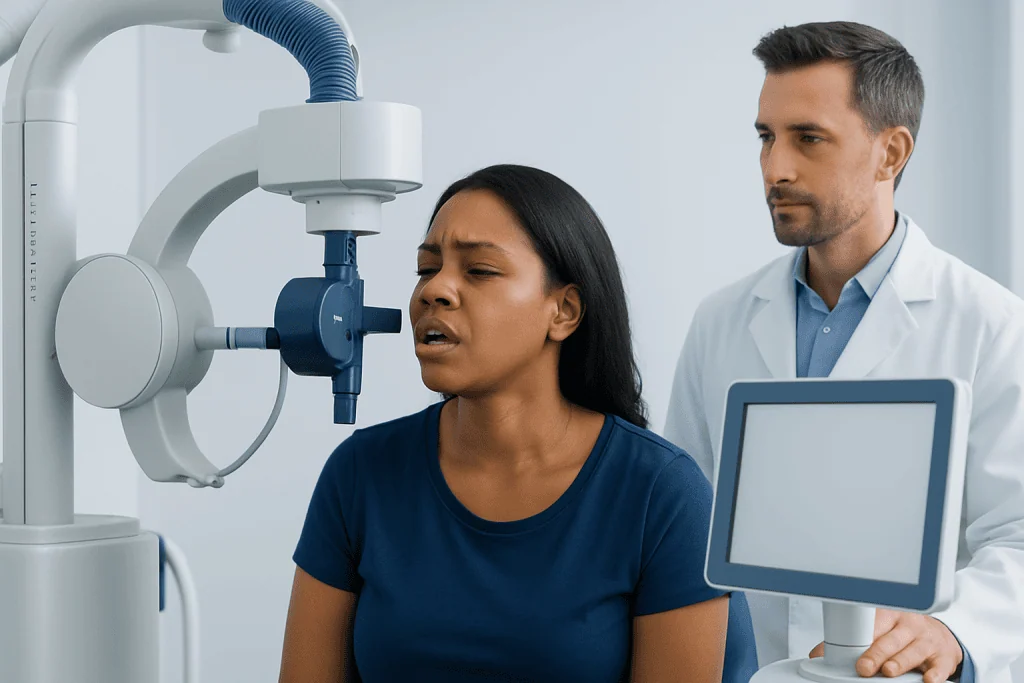
Difficulty swallowing can feel different from person to person. Some people have trouble starting a swallow, while others feel food sticking after it has been swallowed. The pattern can help doctors decide whether the problem is in the mouth and throat, or lower down in the esophagus.
Symptoms that may occur together with dysphagia include:
- A sensation of food sticking in the throat or chest
- Pain when swallowing
- Coughing or choking during meals
- Hoarseness or voice changes
- Regurgitation of food or sour liquid
- Unexplained weight loss
- Frequent heartburn or chest discomfort
- Drooling or trouble managing saliva
Cancer is usually not the first explanation, but certain patterns may be more concerning. For example, a progressive problem that starts with solid foods and later affects liquids can suggest a blockage in the esophagus. Swallowing difficulty combined with weight loss, persistent hoarseness, a neck lump, or coughing up blood deserves prompt medical attention.
In some cases, people adapt by eating slowly, avoiding certain foods, or drinking extra water, which can delay diagnosis. If these changes become necessary on a regular basis, it is important to discuss them with a doctor rather than assuming the problem is minor.
Common causes besides cancer

Many non-cancer conditions can cause swallowing problems. One of the most common is gastroesophageal reflux disease, in which stomach acid irritates the esophagus. Over time, chronic inflammation can lead to narrowing or scarring that makes swallowing difficult. Another possibility is esophagitis, which can result from reflux, certain medicines, allergies, or infections.
Muscle and nerve disorders can also interfere with swallowing. Examples include stroke, Parkinson’s disease, multiple sclerosis, and disorders of esophageal movement such as achalasia. These conditions may affect the coordination needed to move food safely from the mouth to the stomach.
Structural problems are another important group of causes. These include benign strictures, rings, webs, enlarged thyroid gland, and inflammation in the mouth or throat. Some people also develop swallowing difficulty after surgery or radiation therapy to the head, neck, or chest. In children and older adults, aspiration risk may be especially important.
Because the symptom has such a wide range of causes, it helps to think of dysphagia as a sign that needs explanation rather than proof of any one disease. A careful history and appropriate tests can often distinguish between common benign causes and more serious conditions such as esophageal cancer.
When cancer may be considered
Doctors may consider cancer as a possible cause when swallowing difficulty is persistent, progressive, or associated with certain red flags. Cancers of the mouth, tongue, throat, larynx, thyroid, and esophagus can interfere with normal swallowing by creating a mass, narrowing a passage, or affecting nearby nerves and muscles.
Some signs can increase suspicion. These include unexplained weight loss, ongoing pain with swallowing, blood in saliva, persistent hoarseness, an unexplained lump in the neck, repeated food sticking, or a long history of smoking and heavy alcohol use. Older age can also increase risk for some cancers, although swallowing difficulty can occur at any age for many reasons.
Esophageal cancer may cause the classic pattern of trouble swallowing solids first and then liquids as the passage narrows. Head and neck cancers may be more likely when symptoms include mouth sores that do not heal, ear pain, chronic sore throat, or voice changes. Longstanding reflux can increase the risk of changes in the lower esophagus, which is one reason chronic reflux symptoms should be discussed with a doctor.
It is important to remember that red flags do not confirm cancer. They simply mean the symptom should be evaluated without delay so that serious causes can be ruled out or identified early, when treatment tends to be more manageable and more options may be available.
How doctors diagnose the cause
Diagnosis begins with a detailed medical history. A doctor will usually ask when the symptom began, whether it affects solids, liquids, or both, whether it is getting worse, and whether there are related symptoms such as reflux, coughing, weight loss, or pain. A physical examination may include the mouth, throat, neck, and sometimes a neurological assessment.
One of the most useful tests is an upper endoscopy, in which a flexible camera is used to look at the esophagus and stomach. This test can identify inflammation, narrowing, ulcers, or suspicious growths, and it allows tissue samples to be taken if needed. In some situations, doctors may recommend endoscopy early, especially when symptoms are persistent or accompanied by alarm features.
Other tests may include a barium swallow, where X-ray images are taken while the person swallows contrast material, or manometry, which measures pressure and movement in the esophagus. Imaging such as CT, MRI, or PET-CT may be used when cancer is suspected or when doctors need to understand the extent of a problem more clearly.
If an abnormal area is found, a biopsy is needed to confirm whether cancer is present. Biopsy results guide the next steps. Depending on the findings, the care team may include gastroenterology, ENT, oncology, radiology, speech and swallowing specialists, and nutrition professionals.
Treatment options depend on the cause
Treatment for difficulty swallowing is not one-size-fits-all. The best approach depends entirely on the cause. For reflux-related irritation, treatment may include lifestyle changes, medication, and management of triggers. Infections and inflammatory conditions are treated according to the underlying reason. Motility disorders may require specialized medicines, dilation, or other procedures.
If there is a narrowing in the esophagus, doctors may recommend stretching the area during endoscopy. Speech and swallowing therapy can help when the problem relates to muscle coordination or neurological disease. Nutrition support may also be important if swallowing difficulty has led to dehydration, weight loss, or avoidance of many foods.
If cancer is diagnosed, treatment may involve one or more methods such as chemotherapy, radiation therapy, surgery, or targeted approaches depending on the cancer type and stage. In some cases, a stent or feeding support may be used to improve swallowing and maintain nutrition during treatment. Care is usually tailored by a multidisciplinary team.
Near the end of the diagnostic journey, some patients seek coordinated specialist care. Acibadem International’s multidisciplinary specialists and JCI-accredited hospitals diagnose and treat swallowing-related cancers and non-cancer conditions for international patients, with treatment planning based on individual clinical findings.
Self-care, prevention, and practical steps
Self-care cannot replace medical evaluation when swallowing difficulty is ongoing, but it can help reduce discomfort in some situations. People may find it easier to eat slowly, take smaller bites, chew thoroughly, and sip water between mouthfuls. Softer foods may be better tolerated while waiting for assessment, especially if solid foods are sticking.
If reflux is suspected, measures such as avoiding late meals, limiting trigger foods, maintaining a healthy weight, and following a doctor’s advice on reflux treatment may help. Avoiding tobacco and limiting alcohol are important for overall throat and esophageal health and can reduce risk factors associated with several cancers.
Good oral hygiene and prompt treatment of throat or dental problems can also support swallowing comfort. Anyone who has had previous treatment to the head, neck, or chest may benefit from regular follow-up, especially if new symptoms appear. People with neurological conditions should ask whether swallowing therapy or diet adjustment could improve safety.
Difficulty swallowing should never be managed only with repeated dietary restriction if the symptom is worsening. Needing to avoid meat, bread, or pills, or relying only on liquids, is a signal to arrange medical review rather than trying to work around the problem indefinitely.
When to see a doctor
A doctor should be consulted if difficulty swallowing lasts more than a short time, keeps returning, or begins to interfere with meals and hydration. The need for evaluation is greater if the symptom is new, worsening, or unexplained. Even when cancer is not the cause, swallowing problems can lead to poor nutrition, dehydration, or aspiration into the lungs.
Medical assessment is especially important if any of the following are present:
- Unexplained weight loss
- Pain when swallowing
- Food repeatedly getting stuck
- Persistent hoarseness or sore throat
- Vomiting, regurgitation, or coughing during meals
- Blood in saliva or vomit
- A lump in the neck
- History of smoking, heavy alcohol use, or longstanding reflux
Emergency care may be needed if someone cannot swallow at all, is drooling continuously, has severe chest pain, is choking, or has trouble breathing. These symptoms can indicate a blockage or aspiration and should not be delayed.
Most cases of difficulty swallowing are not caused by cancer, but persistent symptoms deserve attention. Early evaluation can bring reassurance, identify treatable causes, and support the best possible outcome if a more serious condition is found.
Frequently asked questions
Does difficulty swallowing always mean cancer?
No. Difficulty swallowing is often caused by non-cancer conditions such as acid reflux, inflammation, infections, or swallowing muscle disorders. However, if it is persistent, progressive, or associated with weight loss or pain, it should be checked by a doctor.
What type of cancer can cause difficulty swallowing?
Cancers of the esophagus, throat, mouth, larynx, and sometimes the thyroid can affect swallowing. These cancers may narrow the swallowing passage or affect nearby muscles and nerves. A doctor uses examination and tests to determine whether cancer is involved.
What are the warning signs that swallowing problems may be serious?
Warning signs include worsening trouble swallowing, pain when swallowing, unexplained weight loss, hoarseness, blood in saliva, and food getting stuck repeatedly. A neck lump or persistent sore throat should also be assessed. These symptoms do not prove cancer, but they do need prompt evaluation.
How is difficulty swallowing tested?
Testing often starts with a medical history and physical examination. Doctors may then use endoscopy, a barium swallow, imaging scans, or pressure tests of the esophagus. If an abnormal area is seen, a biopsy may be taken to confirm the diagnosis.
Can acid reflux cause difficulty swallowing?
Yes. Chronic acid reflux can irritate the esophagus and may lead to inflammation or narrowing that makes swallowing harder. Because reflux and cancer can sometimes share symptoms, persistent swallowing difficulty should still be evaluated.
When should someone seek urgent care for swallowing difficulty?
Urgent help is needed if a person cannot swallow at all, is choking, has trouble breathing, is drooling continuously, or has severe chest pain. These symptoms may suggest a blockage or aspiration. Immediate medical care is the safest response.
References
- World Health Organization
- National Cancer Institute
- American Cancer Society
- National Institute on Deafness and Other Communication Disorders
- American Society for Gastrointestinal Endoscopy
This article is for general information only and is not a substitute for professional medical advice. Please consult a qualified doctor about your individual situation.
Persistent digestive symptoms? Get evaluated in Turkey
JCI-accredited · board-certified surgeons · reply within 24h
Add us as a Preferred Source to see more of our trusted health content across Google Search, AI Overviews and Discover.

More from the Health Library



Related Specialists

Prof. Dr. Dilaver Erşanlı
Ophthalmology
Dr. Nargiz Ibrahimli
Aesthetic Plastic & Reconstructive Surgery
Dr. Sabuha Kara
Emergency Service
Prof. Dr. Turgay Çelikel
Pulmonology