Is Shingles Herpes? A Doctor-Reviewed Answer

Shingles is caused by varicella-zoster virus, a member of the herpesvirus family. The virus that causes shingles is different from herpes simplex virus, which causes oral or genital herpes.
Key Takeaways
- Shingles is caused by varicella-zoster virus, a member of the herpesvirus family.
- The virus that causes shingles is different from herpes simplex virus, which causes oral or genital herpes.
- Most cases affect one side of the body and improve with timely medical care.
- A shingles rash near the eye, widespread rash, severe pain, fever, or symptoms in a person with reduced immunity need prompt assessment.
- Antiviral treatment works best when started early, usually within the first few days of a rash.
- Vaccination can reduce the risk of shingles and complications in eligible adults.
Yes, shingles is a herpesvirus infection: it occurs when the varicella-zoster virus, which causes chickenpox, becomes active again later in life. It is not the same as genital herpes and is not considered a sexually transmitted infection.
Is shingles herpes? The short answer
Yes. Shingles is caused by a herpesvirus called the varicella-zoster virus (VZV). This is the same virus that causes chickenpox. After a person recovers from chickenpox, the virus can remain inactive in nerve tissue for many years. If it becomes active again, it can cause shingles, also called herpes zoster.
Although shingles belongs to the herpesvirus family, it is not the same condition as oral or genital herpes. Those infections are usually caused by herpes simplex virus type 1 or type 2 (HSV-1 and HSV-2). Shingles is not generally considered a sexually transmitted infection, and having shingles does not mean a person has genital herpes.
For many otherwise healthy people, shingles is uncomfortable but manageable and clears with appropriate care. Prompt medical review remains important because antiviral medicines may shorten the illness and reduce the chance of complications, especially when started early.
How shingles differs from oral and genital herpes
The word “herpes” describes a family of related viruses rather than one single disease. Varicella-zoster virus causes chickenpox and shingles. Herpes simplex viruses commonly cause cold sores around the mouth or painful blisters in the genital area. These viruses can produce blister-like rashes, but they behave differently and are managed in different clinical contexts.
Shingles typically develops along the path of a nerve. It usually causes pain, tingling, burning, or sensitivity on one side of the body, followed by a grouped blistering rash in the same area. In contrast, herpes simplex may recur in or around the mouth or genital region and does not usually follow a broad band on one side of the chest, back, face, or abdomen.
A person cannot “catch shingles” from someone else in the usual sense. However, fluid from active shingles blisters can pass varicella-zoster virus to a person who has never had chickenpox or chickenpox vaccination. That person would develop chickenpox, not shingles. Covering the rash and avoiding direct contact with blisters lowers this risk.
What shingles can feel and look like
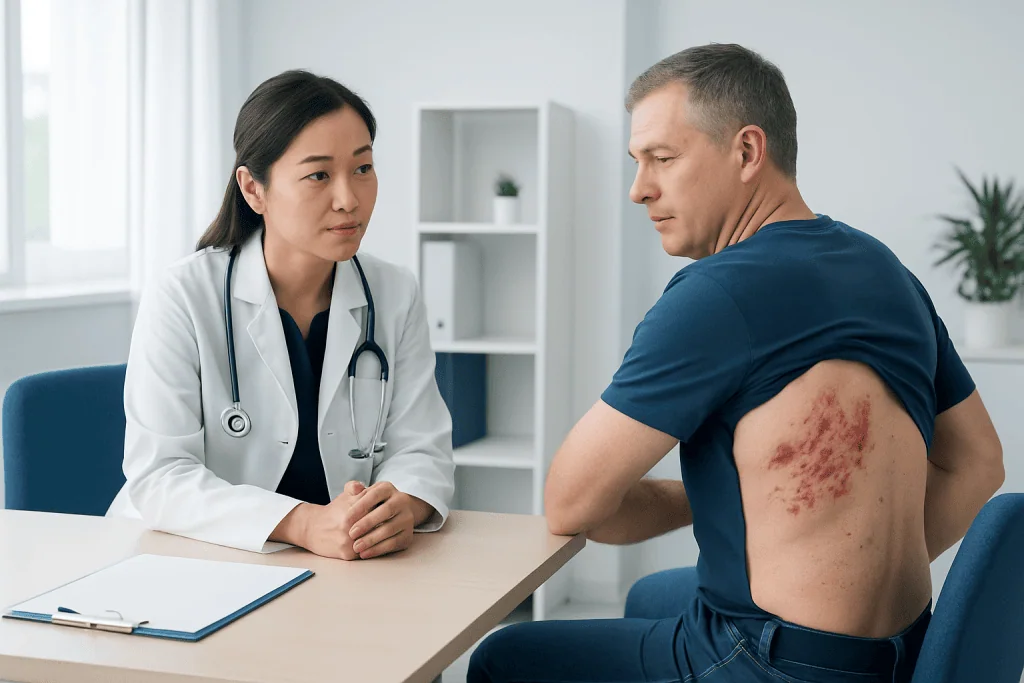
Shingles often starts before a rash is visible. A person may notice localized burning, itching, tingling, stabbing pain, or skin sensitivity. Some people also feel tired, unwell, or develop a mild headache. Because these early symptoms can resemble other conditions, the diagnosis may not be clear until the rash appears.
Within several days, clusters of fluid-filled blisters commonly emerge on red or darker-looking skin. The rash usually forms a strip or patch on one side of the torso, but it can occur on the face, neck, scalp, arm, or leg. New blisters may continue to appear for a few days, then dry and crust over. Healing commonly takes several weeks.
Pain varies considerably. Some people have mild discomfort, while others have significant pain even from light clothing or touch. Older age, a severe initial rash, and reduced immune function can increase the likelihood of more intense symptoms or longer-lasting nerve pain after the rash heals.
- One-sided pain, tingling, or burning
- A band-like cluster of blisters that does not usually cross the body’s midline
- Itching and tenderness around the rash
- Fever, fatigue, or headache in some people
- Crusting of blisters as the skin heals
Why the virus reactivates and who is at risk
Anyone who has had chickenpox can potentially develop shingles because the varicella-zoster virus can remain dormant in the body. Reactivation is more common as people get older, partly because immune responses naturally change over time. However, shingles can occur in younger adults and, less often, in children.
A weakened immune system can raise the risk. This may occur with certain cancers, HIV infection, organ transplantation, immune-suppressing medicines, or treatments such as chemotherapy. Physical illness, major stress, and inadequate sleep are often discussed as possible contributors, but they do not explain every case and should not be seen as a personal failing.
Having had chickenpox does not mean a person will definitely develop shingles. Likewise, a first episode does not mean the condition will necessarily return. A clinician can help assess individual risk factors and discuss prevention, including vaccination, based on age, health conditions, and local recommendations.
How a doctor diagnoses shingles
Doctors can often diagnose shingles by asking about symptoms and examining the rash. The location, one-sided pattern, nerve-like pain, and appearance of grouped blisters are useful clues. A clinician will also ask when symptoms began, whether there has been chickenpox or vaccination in the past, and whether the person takes medicines that affect immunity.
Laboratory testing is not always needed. If the rash is unusual, widespread, very mild, or difficult to distinguish from other skin conditions, a doctor may take a swab from a blister for testing. This can identify varicella-zoster virus and help distinguish it from herpes simplex virus.
Assessment is especially important when a rash affects the face, nose, or eye area; when it is widespread; or when the person is pregnant, immunocompromised, or very unwell. The clinician may examine the eyes, ears, nervous system, or skin more closely depending on the symptoms. Testing may also be considered when another diagnosis could better explain the rash.
Treatment and comfort measures
Antiviral medicines are commonly used for shingles. They work by limiting viral replication and may reduce the duration and severity of symptoms. They are most effective when started as soon as possible, ideally within the first few days after the rash appears, but a doctor may still recommend treatment later in some circumstances, such as ongoing new blisters, severe illness, eye involvement, or reduced immunity.
Pain management is also an important part of care. Depending on the severity and an individual’s medical history, a clinician may recommend simple pain-relief medicines or treatments specifically used for nerve pain. A person should speak with a pharmacist or doctor before using new medicines, particularly if they have kidney disease, liver disease, stomach ulcers, are pregnant, or take regular prescription medicines.
At home, the rash should be kept clean and dry. Loose, soft clothing and cool compresses may help relieve discomfort. Scratching should be avoided because it can damage the skin and increase the risk of bacterial infection. Blisters should be covered when possible, and hands should be washed after touching the affected area.
Most people recover without serious problems. However, some develop postherpetic neuralgia, which is nerve pain that continues after the rash has resolved. Early clinical assessment and individualized symptom management can be helpful, particularly for people with persistent pain.
Prevention, infection control and everyday self-care
Vaccination is the most effective available way to reduce the risk of shingles and related complications in eligible people. Recommendations vary by country and may depend on age and immune status. A doctor or vaccination provider can advise whether shingles vaccination is appropriate, including for people who have had shingles before or who previously received chickenpox vaccination.
During an active shingles episode, people should avoid direct skin contact between the rash and those who may be vulnerable to chickenpox. This includes pregnant people without known immunity to chickenpox, newborn babies, and people with significantly weakened immune systems. The risk is much lower once all blisters have crusted over.
Normal routines can often continue if symptoms allow, but rest and adequate fluids may support recovery. It is sensible to avoid sharing towels, clothing, or bedding that could come into contact with blister fluid. Shingles does not result from poor hygiene, and people with the condition should not feel embarrassed about seeking care.
When to seek medical care
A person should contact a doctor promptly if they think they may have shingles, particularly if the rash or pain began within the past few days. Early assessment allows a clinician to confirm the likely cause and discuss whether antiviral treatment is suitable. This is especially relevant for adults aged 50 or older and for anyone with a weakened immune system.
Urgent medical evaluation is needed for a rash around the eye, on the tip or side of the nose, or with eye pain, redness, blurred vision, or sensitivity to light. Shingles involving the eye can affect vision if not treated quickly. Prompt assessment is also important for facial weakness, ear pain with blisters, dizziness, hearing changes, confusion, severe headache, neck stiffness, or difficulty walking.
Medical advice should also be sought if the rash is widespread, develops signs of skin infection such as increasing warmth, swelling, pus, or worsening redness, or if fever and illness are significant. Acibadem International’s multidisciplinary specialists and JCI-accredited hospitals can assess shingles and related complications for international patients when specialist care is needed.
Frequently asked questions
Is shingles a sexually transmitted disease?
No. Shingles is not generally considered a sexually transmitted infection. It results from reactivation of varicella-zoster virus already present in the body after chickenpox, rather than from sexual transmission.
Can someone with shingles give another person herpes?
A person with active shingles can pass varicella-zoster virus through direct contact with blister fluid. Someone without immunity may develop chickenpox, not genital herpes or shingles. Keeping the rash covered and avoiding direct contact with vulnerable people reduces the risk.
Can shingles occur without a rash?
Rarely, a person may have shingles-related nerve pain without a visible rash, sometimes called zoster sine herpete. This can be difficult to diagnose because other conditions can cause similar pain. A doctor may use the symptom pattern, examination, and selected tests to investigate.
How long is shingles contagious?
Shingles can spread varicella-zoster virus while blisters are present and have not fully crusted over. The risk is mainly from direct contact with blister fluid, rather than casual contact. Once all lesions are crusted, transmission is generally no longer a concern.
Can shingles come back after it heals?
Yes, shingles can recur, although many people have only one episode. Recurrence may be more likely in people with reduced immunity or increasing age. A clinician can discuss vaccination and other preventive considerations after recovery.
Should a person see a doctor for a mild shingles rash?
Yes, it is advisable to contact a doctor promptly even if the rash seems mild. Antiviral treatment is most useful when started early, and a clinician can check for features that need closer follow-up. Immediate assessment is particularly important if the rash is near the eye or if the person has reduced immunity.
References
- Centers for Disease Control and Prevention
- World Health Organization
- National Institute of Allergy and Infectious Diseases
- National Health Service
- American Academy of Dermatology Association
This article is for general information only and is not a substitute for professional medical advice. Please consult a qualified doctor about your individual situation.
Shingles in Turkey — costs, top hospitals & a free quote
JCI-accredited · board-certified surgeons · reply within 24h
Add us as a Preferred Source to see more of our trusted health content across Google Search, AI Overviews and Discover.