IV Intravenous Therapy: How It Works, Results and What to Expect

IV intravenous therapy provides a controlled route for fluids and prescribed treatments to enter the bloodstream. The right type of IV infusion depends on the cause of symptoms, medical history and laboratory findings when needed.
Key Takeaways
- IV intravenous therapy provides a controlled route for fluids and prescribed treatments to enter the bloodstream.
- The right type of IV infusion depends on the cause of symptoms, medical history and laboratory findings when needed.
- Some people feel better quickly after fluids, especially if dehydration contributed to their symptoms; others improve more gradually.
- Most IVs are brief and well tolerated, but bruising, vein irritation, infection and fluid overload are possible risks.
- Persistent vomiting, fainting, confusion, chest symptoms or signs of severe dehydration require prompt medical assessment.
IV intravenous therapy delivers fluids, medications, blood products or selected nutrients directly into a vein. It can restore fluid balance or treat a medical condition efficiently when prescribed for an appropriate clinical reason, but it is not a substitute for evaluating ongoing symptoms or maintaining regular hydration and nutrition.
Overview: what is IV intravenous therapy?
IV intravenous therapy is a medical method of delivering fluids, medications, electrolytes, blood products or nutrition directly into a vein. A small plastic tube called a cannula is usually placed in a vein in the hand or arm, then connected to tubing and a prescribed infusion. Because the treatment enters the bloodstream directly, clinicians can provide a measured amount and monitor the person’s response.
Its purpose varies widely. In hospitals and clinics, IV therapy may be used for dehydration, severe nausea or vomiting, infection, pain control, surgery, anemia treatment, cancer care, or when a person cannot safely take enough fluid or medicine by mouth. The contents of an IV and the rate of delivery should be selected by a qualified clinician rather than chosen as a general wellness product.
A hydration IV may help when fluid loss or reduced intake is the main issue, but it does not diagnose the reason someone became unwell. Fatigue, dizziness, headache and weakness can also have causes such as infection, anemia, blood sugar changes, heart conditions or medication effects. A clinical assessment helps determine whether IV treatment is useful and whether another treatment is needed.
How IV therapy works and who may benefit
The circulatory system carries blood through the body, so treatment infused into a vein becomes available without needing to pass through the stomach and intestines first. This route can be particularly useful when absorption by mouth may be unreliable, when symptoms make drinking difficult, or when a medicine needs to work promptly under medical supervision.
People who may be considered for IV therapy include those with clinically significant dehydration from vomiting, diarrhea, heat exposure or illness; people needing intravenous antibiotics, pain medicines or chemotherapy; and patients receiving certain iron, electrolyte or nutrition treatments. The decision is individualized. A clinician considers symptoms, vital signs, examination findings, kidney and heart function, allergies, current medicines and, where appropriate, blood or urine test results.
Not everyone who feels tired, has exercised intensely or has had alcohol needs an IV. For many mild cases of thirst or temporary fatigue, drinking fluids, eating regular meals and resting are sufficient. People with heart failure, kidney disease, liver disease, uncontrolled high blood pressure or a history of fluid retention need especially careful assessment because extra fluid can be harmful.
- IV fluids can support treatment when dehydration or fluid loss is confirmed or strongly suspected.
- IV medications are used when a specific diagnosis and prescription support their use.
- IV vitamins or nutrients should be used only when there is a documented or clinically likely need and an appropriate treatment plan.
What happens during an IV infusion?

Before an infusion, a healthcare professional reviews the reason for treatment, medical history, allergies and current medications. They may measure temperature, pulse, blood pressure and oxygen level, and may request tests when symptoms suggest an electrolyte problem, infection, anemia or another underlying condition. The person should mention pregnancy, kidney or heart disease, previous reactions to infusions and any difficult vein access.
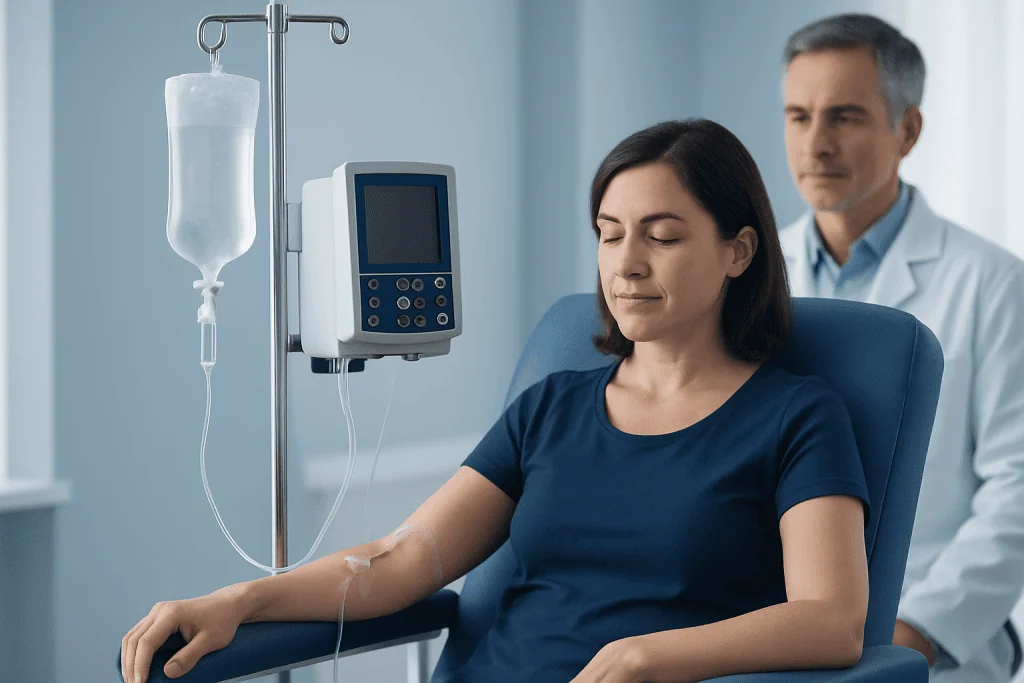
A clinician cleans the skin with antiseptic and inserts a sterile cannula into a suitable vein, most often in the hand or forearm. There may be a brief pinch or pressure. Once the cannula is secured, the prescribed fluid or medication flows through tubing at a controlled rate. The person is usually able to sit or recline comfortably while staff check the infusion site and monitor for symptoms such as pain, swelling, itching, shortness of breath or lightheadedness.
Infusion length depends on what is being given, the amount required and the person’s health. Some simple fluid infusions are completed within a relatively short visit, while medications, iron infusions, chemotherapy and nutrition may take longer and require additional observation. At the end, the cannula is removed and a small dressing is placed over the site.
In a hospital setting, IV therapy is often one part of a broader care plan. For example, a person with persistent vomiting may also need anti-nausea medication and testing for the cause, while someone with an infection may need prescribed antibiotics and follow-up. The goal is not only to replace fluids but also to address the condition creating the need for treatment.
Why do I feel so good after an IV infusion?
Some people feel noticeably better after an IV infusion because dehydration, low circulating fluid volume or an electrolyte imbalance was contributing to symptoms. When medically appropriate fluids are replaced, headache, dry mouth, dizziness, fast heartbeat, weakness and reduced concentration may improve. Relief may also result from treating nausea, pain or another symptom at the same visit.
However, an immediate sense of improvement does not always prove that an IV was necessary or that it resolved the underlying problem. Resting in a calm clinical environment, receiving reassurance and recovering naturally over time can also contribute. If symptoms return quickly, worsen or occur repeatedly, medical assessment is more important than repeated unsupervised infusions.
The response also depends on what was infused. A prescribed medicine may act at a different speed than fluids, and certain treatments require time before their full effect is felt. For example, treatment for an underlying nutritional deficiency or infection may improve symptoms over days to weeks rather than immediately.
How long after an IV infusion will I feel better?
Timing varies according to the reason for the infusion. When mild-to-moderate dehydration is the main cause of symptoms, some people notice improvement during the infusion or within several hours. It may still take a day or longer to feel fully recovered, particularly after a stomach illness, heat exposure, poor sleep or prolonged reduced food intake.
For treatments directed at an underlying condition, the timeline can be longer. Intravenous antibiotics, iron, anti-inflammatory medicines, chemotherapy and nutritional support each have different expected effects. The treating team should explain what changes to expect, how to continue care at home and which symptoms should prompt contact with the clinic.
If there is no improvement after an infusion, that does not necessarily mean the treatment failed. It may indicate that dehydration was not the main issue, that the body needs more time to recover, or that further evaluation is needed. New severe symptoms, ongoing vomiting, inability to drink, worsening weakness or reduced urination should not be managed by simply seeking another hydration infusion.
Benefits, risks and what not to do after getting an IV
A key benefit of IV therapy is reliable delivery when oral intake is not possible or is insufficient. Clinicians can tailor the fluid type, amount and infusion rate, administer needed medications and observe the person for a response. In the right setting, it can help stabilize dehydration and support treatment of many acute and chronic medical conditions.
Risks are usually minor but should be understood. Temporary bruising, tenderness or a small amount of bleeding at the insertion site are common. Less commonly, the vein can become inflamed, fluid can leak into surrounding tissue, or infection can occur. Allergic or medication reactions are possible. Receiving too much fluid, or fluid too quickly, can be dangerous for people with certain heart, kidney or liver conditions.
What not to do after getting an IV depends partly on why it was given. In general, people should avoid removing the dressing too soon, heavy lifting with the affected arm for several hours if the site is sore, and drinking alcohol if they are recovering from dehydration, illness, or have received medication that may interact with alcohol. They should follow any specific instructions about driving, exercise, medicines and food.
It is sensible to continue drinking fluids normally unless a clinician has advised fluid restriction. The IV site should be kept clean and observed for increasing redness, warmth, pain, swelling, pus or persistent bleeding. A small bruise may be expected, but spreading swelling, severe pain, numbness or color changes in the hand or arm should be assessed promptly.
Is getting a hydration IV worth it?
A hydration IV can be worthwhile when a clinician identifies dehydration that is significant enough to need intravenous fluids, or when a person cannot drink or keep fluids down. In these circumstances, it may correct fluid loss efficiently while the care team evaluates and treats the cause. It is commonly used in emergency and hospital care for selected patients.
For otherwise healthy people with mild dehydration, routine hydration IVs are often unnecessary. Oral rehydration, water, soups and other suitable drinks are usually effective, less invasive and allow the body to regulate intake gradually. Oral rehydration solutions may be especially useful after diarrhea or vomiting because they contain a balanced amount of glucose and electrolytes.
Value should be judged by medical need rather than by a promise of enhanced energy, immunity or detoxification. Evidence does not support using IV fluids as a universal solution for tiredness or as a replacement for sleep, balanced nutrition and assessment of persistent symptoms. A doctor can help distinguish temporary dehydration from a condition that requires a different approach.
When to seek medical care
Urgent medical care is appropriate for confusion, fainting, chest pain, severe shortness of breath, a seizure, severe or worsening abdominal pain, blue lips, or symptoms of a serious allergic reaction such as facial swelling, wheezing or widespread hives. These symptoms need immediate evaluation rather than an elective IV infusion.
A person should also contact a doctor promptly for repeated vomiting or diarrhea, inability to keep liquids down, very little urine, blood in vomit or stool, high fever, severe headache, marked weakness, or dehydration symptoms in an infant, older adult, pregnant person or someone with a serious chronic illness. Assessment may include tests and treatment beyond fluids.
After IV therapy, medical advice is needed if the insertion site becomes increasingly painful, red, swollen or warm, or if fever, rash, breathing problems or new symptoms develop. Acibadem International’s multidisciplinary specialists and JCI-accredited hospitals provide assessment and medically supervised treatment for international patients when IV therapy is indicated.
Frequently asked questions
Does IV therapy work faster than drinking water?
IV fluids enter the bloodstream directly, so they can be useful when a person is significantly dehydrated or cannot drink enough. For mild dehydration in a healthy person, drinking appropriate fluids is usually effective and is generally preferred. The best option depends on symptoms and the underlying cause.
Can IV fluids give a person more energy?
If dehydration or low fluid intake is contributing to fatigue, correcting it may improve energy and concentration. IV fluids do not reliably treat fatigue caused by poor sleep, anemia, thyroid conditions, infection, depression or other medical issues. Ongoing fatigue should be discussed with a qualified clinician.
Is it normal to have a bruise after an IV?
A small bruise or mild tenderness around the insertion site can occur and often improves over several days. Applying gentle pressure immediately after removal can help limit bruising. Increasing pain, redness, warmth, swelling, drainage or numbness should be assessed by a healthcare professional.
Can someone eat before an IV infusion?
For many routine fluid infusions, eating normally is acceptable and may help prevent lightheadedness. However, some procedures, medications and tests have specific fasting instructions. The treating team’s instructions should always be followed.
How often can a person have hydration IV therapy?
There is no standard schedule because IV fluids should be based on a medical indication, fluid balance and individual health conditions. Frequent need for hydration IVs may signal an untreated problem such as gastrointestinal illness, medication effects, endocrine conditions or kidney issues. A doctor should evaluate recurrent symptoms rather than relying on repeated infusions.
Who should be cautious about IV fluids?
People with heart failure, kidney disease, liver disease, significant swelling, uncontrolled blood pressure or a history of fluid overload need individualized medical advice before receiving IV fluids. The fluid type and volume may need adjustment, and monitoring may be necessary. Anyone with previous infusion reactions should also inform the care team.
References
- World Health Organization
- Centers for Disease Control and Prevention
- National Health Service
- MedlinePlus, U.S. National Library of Medicine
- National Institute of Diabetes and Digestive and Kidney Diseases
This article is for general information only and is not a substitute for professional medical advice. Please consult a qualified doctor about your individual situation.
Explore treatments in Turkey — costs, top hospitals & a free quote
JCI-accredited · board-certified surgeons · reply within 24h
Add us as a Preferred Source to see more of our trusted health content across Google Search, AI Overviews and Discover.
Check your numbers in seconds
BMI, calories, due date, blood pressure and 30+ more clinical calculators — free, instant, doctor-reviewed ranges.