Joint Anatomy Explained: Structures, Functions, and Why Joints Matter

Joints connect bones and help the body move, balance, and bear weight. A joint includes several structures, such as cartilage, ligaments, tendons, synovial membrane, and joint fluid.
Key Takeaways
- Joints connect bones and help the body move, balance, and bear weight.
- A joint includes several structures, such as cartilage, ligaments, tendons, synovial membrane, and joint fluid.
- Different types of joints allow different ranges of motion, from no movement to very flexible movement.
- Healthy muscles, regular activity, and injury prevention all help support joint function.
- Pain, swelling, stiffness, or reduced movement can be signs that a joint needs medical attention.
Joints are the places where bones meet, making movement, stability, and shock absorption possible throughout the body. Understanding joint anatomy can help people protect their mobility, recognize symptoms early, and support long-term bone and muscle health.
Overview: What Joints Are and Why They Matter
Joints are the points where two or more bones meet. They play a central role in everyday life by allowing movement, supporting posture, and helping the body absorb force during activities such as walking, lifting, turning, or reaching. Without joints, the skeleton would provide structure but very little useful motion.
Joint anatomy is more than just bones touching each other. Each joint is a carefully organized system of tissues that work together to provide both mobility and stability. Depending on the location, a joint may need to be highly flexible, such as the shoulder, or strong and steady, such as parts of the spine and pelvis.
Joints also help distribute body weight and reduce stress on bones. Structures such as cartilage and synovial fluid act like protective cushions, helping the joint move smoothly. When these structures are healthy, motion is comfortable and efficient. When they are irritated, injured, or worn down, pain and stiffness can develop.
Learning how joints are built can make it easier to understand common problems such as sprains, overuse injuries, and arthritis. It also helps explain why exercise, body mechanics, and timely medical care are so important for lifelong mobility.
Main Parts of a Joint
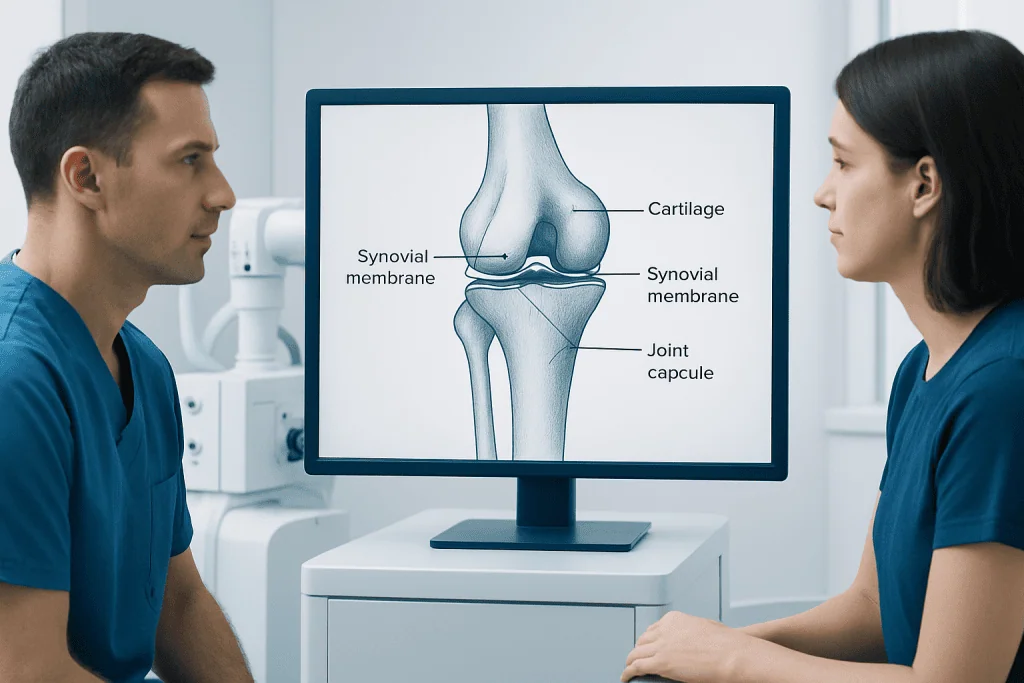
Most movable joints, also called synovial joints, share the same basic components. The ends of the bones are covered with articular cartilage, a smooth and resilient tissue that helps reduce friction. This cartilage allows bones to glide against each other more easily and also helps absorb shock.
Surrounding the joint is a capsule made of strong connective tissue. The inner lining of this capsule is called the synovial membrane. It produces synovial fluid, a slippery liquid that lubricates the joint and helps nourish the cartilage. This is especially important because cartilage does not have its own direct blood supply.
Ligaments connect bone to bone and help keep the joint stable. Tendons connect muscle to bone and allow muscles to move the joint when they contract. Muscles around a joint are essential partners in joint health because they support alignment, control movement, and reduce strain on passive structures.
Some joints also include additional features such as bursae, menisci, or labrum. Bursae are small fluid-filled sacs that reduce friction between tissues. Menisci in the knee help distribute weight and improve stability. The labrum in the shoulder and hip deepens the socket and supports smoother movement.
Types of Joints and How They Move
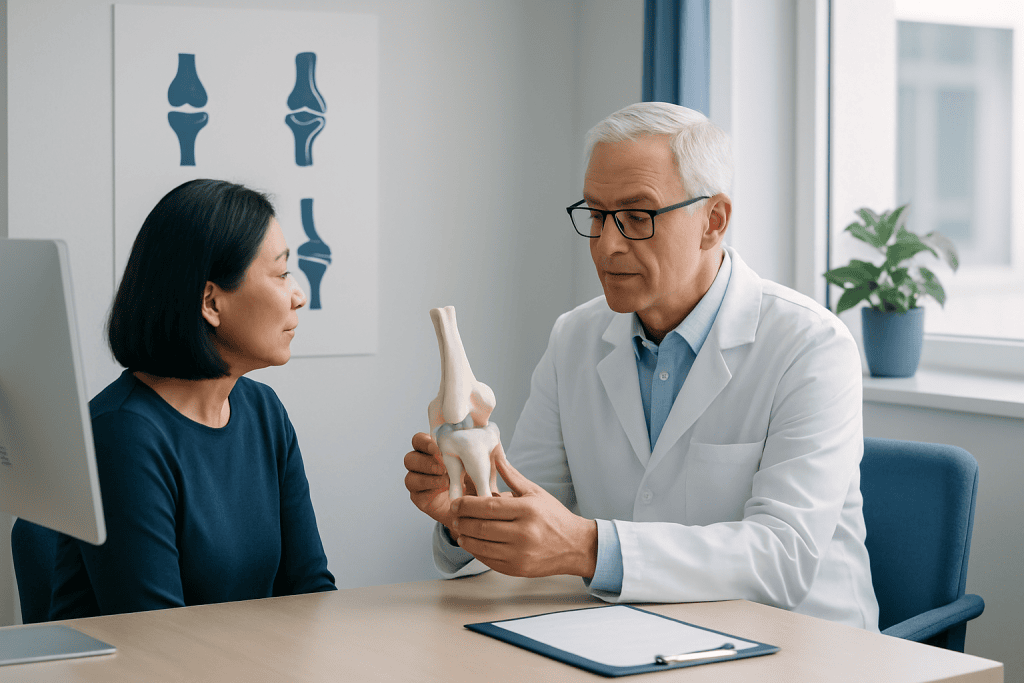
Joints can be classified by how much movement they allow. Fibrous joints allow little or no movement. Examples include the sutures of the skull, where bones fit tightly together to protect the brain. Cartilaginous joints allow limited movement, such as the joints between vertebrae, which provide both support and flexibility.
Synovial joints are the most movable and most familiar type. These include the shoulder, hip, knee, elbow, wrist, ankle, and finger joints. Their design allows a wide range of motion while also protecting the bones from excessive wear.
There are several subtypes of synovial joints. Ball-and-socket joints, such as the shoulder and hip, allow movement in many directions, including rotation. Hinge joints, such as the knee and elbow, mainly allow bending and straightening. Pivot joints allow rotation, while saddle, condyloid, and gliding joints support more specialized motions.
Each joint type is adapted to its role in the body. A hand needs flexibility for fine tasks, while the knee must handle repeated bending under body weight. This balance between movement and support is one reason joint anatomy is so important in overall physical function.
How Joints Work Together With Muscles and Bones
Joints do not work alone. They depend on bones for structure, muscles for power, tendons for force transfer, and nerves for coordination. When a person walks, stands, climbs stairs, or lifts an object, many joints and muscle groups work together in a precise sequence.
Muscles help stabilize joints dynamically. For example, strong thigh muscles can support the knee, while the muscles around the shoulder help keep the arm centered in the socket. If muscles are weak, tight, or poorly coordinated, extra stress may be placed on ligaments, tendons, and cartilage.
Posture and alignment also affect joint function. When movement patterns are balanced, forces are spread more evenly across the body. But poor mechanics, repetitive strain, or prolonged inactivity can gradually increase pressure on certain joints. Over time, this may contribute to discomfort, inflammation, or injury.
This close relationship between muscles, bones, and joints is one reason treatment often goes beyond one structure alone. In some cases, evaluation by specialists in physical therapy and rehabilitation can help improve movement patterns, flexibility, and strength in a joint-friendly way.
Common Joint Problems and Why They Happen
Joint problems can result from injury, overuse, aging, inflammation, or underlying medical conditions. A sudden twist or fall may stretch or tear ligaments, causing a sprain. Repetitive motions in work, sports, or daily activity can irritate tendons or joint surfaces over time.
One of the most common long-term joint conditions is osteoarthritis, in which cartilage gradually breaks down and joints may become painful or stiff. Other conditions, such as inflammatory arthritis, can affect the joint lining and cause swelling, warmth, and reduced movement. Joint symptoms can also be related to old injuries, excess weight, or muscle weakness.
People may notice pain, stiffness in the morning or after inactivity, swelling, clicking, locking, or a feeling that the joint is unstable. Not every sound or sensation means there is a serious problem, but symptoms that persist, worsen, or limit daily activities deserve attention.
Because many different tissues are involved in joint health, similar symptoms can have different causes. For example, knee pain may come from cartilage wear, a ligament injury, tendon irritation, or the kneecap not tracking smoothly. A proper medical assessment can help clarify what is happening and guide treatment.
How Joint Conditions Are Diagnosed
Diagnosis usually begins with a medical history and physical examination. A doctor may ask when symptoms started, whether there was an injury, what movements trigger discomfort, and how the problem affects walking, work, sleep, or exercise. The examination may include checking range of motion, swelling, tenderness, alignment, and joint stability.
Imaging tests are often helpful when symptoms do not improve, when injury is suspected, or when surgery is being considered. X-rays can show bone shape, joint spacing, and some signs of arthritis. Ultrasound can be useful for evaluating soft tissues in certain areas. MRI is especially valuable for looking at cartilage, ligaments, tendons, and other structures inside or around the joint.
In some cases, blood tests may be recommended if an inflammatory or autoimmune condition is suspected. If a joint is significantly swollen, a doctor may remove a small sample of joint fluid for testing. This can help identify inflammation, crystals, or infection.
Accurate diagnosis matters because treatment depends on the cause. Joint stiffness from overuse, for example, is managed differently from symptoms caused by inflammatory disease or a structural injury such as a cartilage tear.
Treatment Options and Supporting Joint Health
Treatment depends on the joint involved, the underlying cause, and how severe the symptoms are. Many people improve with conservative care, including activity modification, guided exercise, weight management, supportive footwear, heat or cold therapy, and nonprescription pain relief when appropriate. A doctor can advise which options are suitable for the individual.
Physical therapy is often a key part of care. It can help improve strength, flexibility, balance, and joint mechanics while reducing strain on painful tissues. Braces or supports may be useful in selected cases. For inflammatory conditions, prescription medications may be needed to calm joint inflammation and protect long-term function.
When symptoms are persistent or the joint is significantly damaged, more advanced treatment may be considered. Depending on the problem, this can include injections, minimally invasive procedures, or surgery. People with severe structural damage in large joints may be evaluated in services such as orthopedics and traumatology, where specialists assess the full range of options. In carefully selected situations, procedures like knee replacement may help restore comfort and mobility.
Treatment goals are usually to reduce pain, improve function, protect the joint, and support daily life. A personalized plan is often the most effective approach, especially when lifestyle factors, exercise habits, and other health conditions are also addressed.
Prevention, Self-care, and When to See a Doctor
Many joint problems cannot be prevented completely, but healthy habits can lower risk and support long-term function. Regular low-impact activity, such as walking, cycling, or swimming, helps keep joints moving and muscles strong. Stretching and strengthening exercises can also improve flexibility and stability. It is usually best to increase activity gradually rather than suddenly doing too much.
Maintaining a healthy body weight can reduce stress on weight-bearing joints such as the hips, knees, and ankles. Good posture, proper lifting technique, supportive footwear, and sport-specific warm-ups may also help prevent avoidable strain. Rest and recovery are important, especially after repetitive activity.
A person should consider medical evaluation if a joint is painful, swollen, red, unstable, difficult to move, or not improving after rest. Sudden severe pain, obvious deformity, inability to bear weight, fever with joint swelling, or symptoms after an injury should be assessed promptly. Early attention may help prevent ongoing damage and speed recovery.
For people seeking coordinated care, Acibadem International’s multidisciplinary specialists in JCI-accredited hospitals diagnose and treat joint conditions for international patients. Whether symptoms are new or long-standing, a qualified doctor can help explain the cause and recommend the most appropriate next steps.
Frequently asked questions
What is a joint in the human body?
A joint is the place where two or more bones meet. Joints help the body move, bear weight, and maintain stability, depending on their type and location.
What structures make up a typical movable joint?
A typical movable joint includes bone ends covered with cartilage, a joint capsule, synovial membrane, synovial fluid, ligaments, tendons, and surrounding muscles. Some joints also have structures such as menisci, bursae, or a labrum for added cushioning or stability.
What is the difference between ligaments and tendons?
Ligaments connect bone to bone and help stabilize a joint. Tendons connect muscle to bone and allow movement by transmitting the force created by muscles.
Why do joints become stiff or painful?
Joints can become stiff or painful because of injury, overuse, inflammation, cartilage wear, or muscle imbalance around the joint. Sometimes symptoms are temporary, but ongoing pain or swelling should be checked by a doctor.
Can exercise help protect joints?
Yes, regular exercise can support joint health by strengthening muscles, improving flexibility, and helping with weight control. Low-impact activities are often especially helpful because they encourage movement without placing excessive strain on the joints.
Are cracking or popping joints always a sign of damage?
Not always. Joint sounds can happen for harmless reasons, such as gas bubbles moving in the joint fluid or tendons shifting slightly during motion. If the sounds are accompanied by pain, swelling, or limited movement, medical advice is a good idea.
When should someone see a doctor for joint symptoms?
A person should seek medical care if joint pain is severe, persistent, getting worse, or interfering with normal activities. Prompt evaluation is also important after an injury, if the joint looks deformed, or if swelling is associated with redness, warmth, or fever.
References
- World Health Organization
- MedlinePlus
- National Institute of Arthritis and Musculoskeletal and Skin Diseases
- American Academy of Orthopaedic Surgeons
- NHS
This article is for general information only and is not a substitute for professional medical advice. Please consult a qualified doctor about your individual situation.
Joint and spine care in Turkey — expert assessment & treatment
JCI-accredited · board-certified surgeons · reply within 24h
Add us as a Preferred Source to see more of our trusted health content across Google Search, AI Overviews and Discover.