Joint Effusion: What Patients Need to Know

Joint effusion is a buildup of excess fluid in a joint, not a disease by itself. Common causes include injury, osteoarthritis, inflammatory arthritis, gout, and infection.
Key Takeaways
- Joint effusion is a buildup of excess fluid in a joint, not a disease by itself.
- Common causes include injury, osteoarthritis, inflammatory arthritis, gout, and infection.
- Symptoms often include swelling, pain, stiffness, warmth, and limited range of motion.
- Diagnosis may involve a physical exam, imaging, and sometimes joint fluid analysis.
- Treatment depends on the cause and may include rest, medicines, aspiration, physical therapy, or specialist care.
- Urgent medical attention is important if a swollen joint is very painful, red, hot, or accompanied by fever.
Joint effusion means extra fluid has built up in or around a joint, leading to swelling, stiffness, discomfort, and sometimes warmth or reduced movement. It is a sign of an underlying problem—such as injury, arthritis, crystal disease, or infection—so evaluation focuses on finding and treating the cause.
Overview: what joint effusion means
Joint effusion is the medical term for excess fluid collecting in or around a joint. Many people describe it as “water on the knee,” but it can affect other joints too, including the ankle, hip, shoulder, elbow, wrist, or small joints of the hands and feet. The extra fluid may come from irritation of the joint lining, bleeding after an injury, inflammation from arthritis, or infection.
A joint normally contains a small amount of lubricating fluid that helps movement happen smoothly. When the joint is injured or inflamed, the lining can produce more fluid than usual. This can make the joint look swollen and feel tight, painful, warm, or difficult to move.
Joint effusion is not a diagnosis by itself. It is a sign that something is affecting the joint. The most helpful next step is to identify the cause, because treatment for a sports injury is different from treatment for osteoarthritis, inflammatory arthritis, or an infected joint.
Symptoms and how it may feel
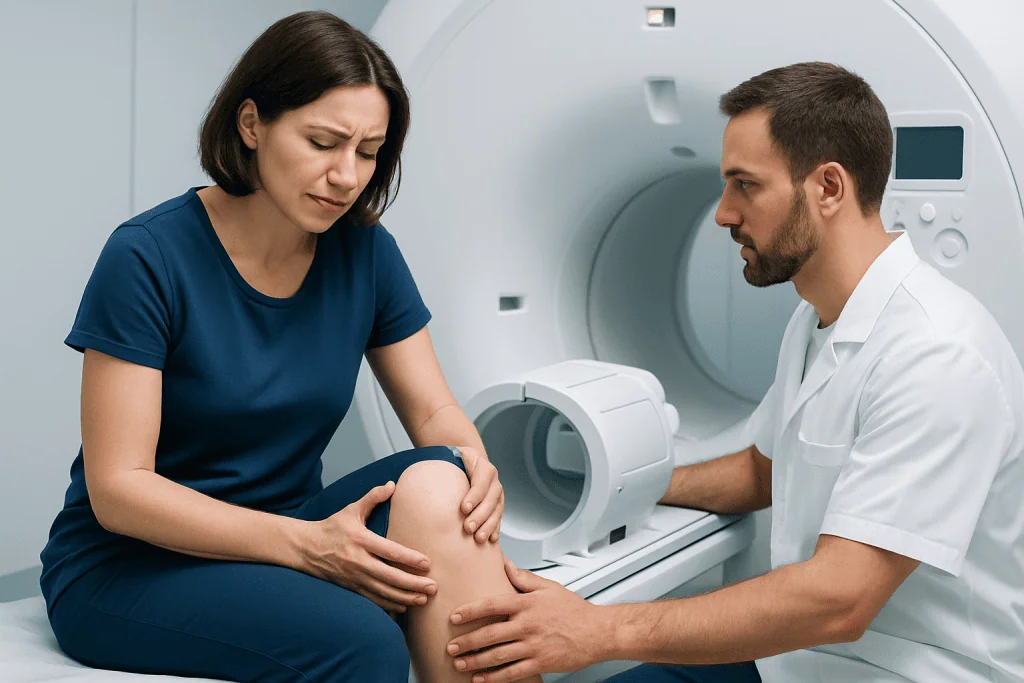
The most noticeable symptom is swelling around the joint. Some people feel a visible fullness or puffiness, while others notice that the joint looks larger than the same joint on the other side. Swelling may appear suddenly after an injury or develop more gradually over days to weeks.
Joint effusion often causes stiffness and a reduced range of motion. The joint may feel tight, especially after resting, and bending or straightening it can become difficult. Pain can range from mild soreness to more marked discomfort, depending on the underlying problem and how much fluid has collected.
Other symptoms may include warmth, redness, tenderness, clicking, or a feeling that the joint is unstable. With knee effusion, walking, climbing stairs, kneeling, or fully straightening the leg may become uncomfortable. If the cause is infection or a strong inflammatory flare, symptoms are often more intense and can be accompanied by fever or feeling unwell.
- Swelling or visible enlargement of a joint
- Pain with movement or at rest
- Stiffness and reduced flexibility
- Warmth or redness over the joint
- Difficulty bearing weight or using the limb normally
Common causes and risk factors
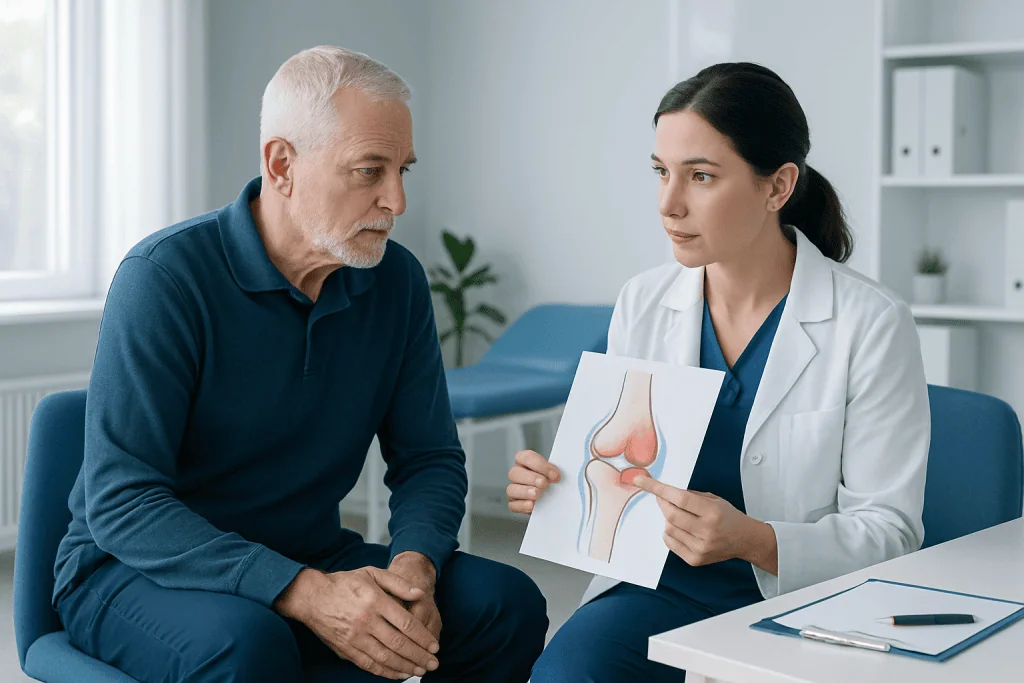
Joint effusion can develop for several reasons. One common cause is injury, such as a ligament sprain, meniscus tear, cartilage damage, dislocation, or fracture near the joint. In these situations, fluid may build up quickly, and sometimes blood enters the joint space after trauma.
Arthritis is another frequent cause. Wear-and-tear changes from osteoarthritis can lead to recurrent fluid buildup, especially in the knees. Inflammatory conditions such as rheumatoid arthritis or psoriatic arthritis can also trigger effusions because the immune system causes ongoing joint lining inflammation. Crystal-related conditions, including gout, may cause sudden painful swelling when crystals collect in the joint.
Less commonly, infection can cause a swollen joint. This is called septic arthritis and needs urgent treatment because infection can damage the joint quickly. Risk factors for joint effusion vary by cause but may include older age, repetitive joint stress, obesity, prior joint injury, autoimmune disease, certain metabolic conditions, and a history of gout or previous joint disease.
How doctors diagnose joint effusion
Diagnosis starts with a medical history and physical examination. A doctor will ask when the swelling began, whether there was an injury, which movements make symptoms worse, and whether there are signs of infection or inflammatory disease. Comparing the affected joint with the other side often helps assess swelling, warmth, tenderness, and range of motion.
Imaging may be used to look for the source of the problem. X-rays can show fractures, joint space narrowing, or other bony changes. Ultrasound can confirm the presence of fluid and may help guide a needle if fluid removal is needed. In some cases, MRI gives more detail about soft tissues such as ligaments, cartilage, tendons, or the meniscus, especially after injury.
When the cause is unclear, or when infection, gout, or inflammatory arthritis is suspected, doctors may remove a sample of joint fluid with a thin needle. This is called arthrocentesis or joint aspiration. The fluid can be checked for crystals, blood, bacteria, and inflammatory cells. Blood tests may also be ordered to look for infection, autoimmune disease, or inflammation elsewhere in the body. If advanced imaging or image-guided evaluation is needed, MRI or ultrasound may form part of the assessment.
Treatment options depend on the cause
Treatment is directed at the underlying reason for the fluid buildup. For mild symptoms after overuse or a minor injury, short-term rest, activity modification, elevation, and cold packs may help reduce swelling. A clinician may also recommend pain-relieving or anti-inflammatory medicines when appropriate for the individual’s health history.
If there is significant pressure in the joint, a doctor may remove fluid with aspiration to reduce discomfort and help identify the cause. Some people also benefit from physical therapy to restore movement, improve muscle support, and reduce the chance of recurring strain. Knee braces or other supports may sometimes be useful during recovery.
When joint effusion is related to arthritis, treatment may focus on longer-term control of inflammation or joint degeneration. This can involve medicines, exercise planning, weight management, and specialist follow-up. If a structural problem such as advanced cartilage wear or serious injury is present, orthopedic evaluation may be needed, and some patients may be assessed for knee replacement or another procedure depending on the joint involved.
If infection is suspected, treatment should not be delayed. Septic arthritis often requires urgent drainage and antibiotics, usually under specialist care. For patients who need coordinated evaluation of injuries, arthritis, or complex swelling, orthopedics and traumatology teams can help guide treatment choices.
Prevention and self-care
Not every case of joint effusion can be prevented, but certain habits may reduce the risk of repeat episodes. Protecting the joints during sports and exercise, warming up properly, and building strength around major joints can improve stability and lower strain. Using correct technique for lifting, running, or high-impact activity also matters.
Weight management can be especially helpful for knee, hip, and ankle joints because excess body weight increases mechanical stress. For people with osteoarthritis, regular low-impact exercise such as walking, swimming, or cycling may help maintain movement and muscle support without overloading the joint.
People who live with gout or inflammatory arthritis may reduce flares by following their treatment plan and attending regular medical reviews. At home, it is generally reasonable to rest an acutely swollen joint, avoid activities that worsen pain, use ice for short periods, and seek medical advice if swelling persists, keeps returning, or interferes with daily life.
When to seek medical care
A doctor should assess joint effusion if swelling appears without a clear reason, follows an injury, keeps coming back, or limits normal movement. Medical review is also important when pain is worsening, the joint feels unstable, or home care has not helped over several days.
Urgent care is needed if the joint is very red, hot, or severely painful, especially if there is fever, chills, or a general sense of illness. These features can suggest infection, which should be treated quickly to protect the joint. Sudden inability to bear weight, deformity, or swelling after a major injury also needs prompt assessment.
For international patients who need further evaluation, Acibadem International’s multidisciplinary specialists and JCI-accredited hospitals diagnose and treat joint conditions, including complex causes of recurrent joint swelling.
Frequently asked questions
Is joint effusion the same as arthritis?
No. Joint effusion means there is extra fluid in a joint, while arthritis refers to a group of conditions that affect the joints. Arthritis can cause joint effusion, but injury, infection, and gout can also lead to fluid buildup.
Can joint effusion go away on its own?
Sometimes it can, especially if it is related to mild overuse or a minor injury. However, persistent, recurrent, or painful swelling should be checked by a doctor so the underlying cause is not missed.
Which joints are most commonly affected?
The knee is one of the most common sites, which is why people often use the phrase “water on the knee.” Still, joint effusion can also affect the ankle, hip, shoulder, elbow, wrist, and smaller joints.
How is fluid removed from a swollen joint?
A doctor can remove fluid using a sterile needle in a procedure called joint aspiration or arthrocentesis. This may help relieve pressure and can provide a sample for testing to look for infection, crystals, or inflammation.
Is a swollen joint always an emergency?
Not always, but some situations are urgent. A hot, red, very painful swollen joint, especially with fever or feeling unwell, needs prompt medical attention because infection is possible.
What is the difference between gout and joint effusion?
Gout is a specific condition caused by uric acid crystal deposits in a joint. Joint effusion is the fluid buildup that may happen during a gout flare or from many other causes.
References
- American Academy of Orthopaedic Surgeons
- National Institute of Arthritis and Musculoskeletal and Skin Diseases
- MedlinePlus
- Mayo Clinic
- Centers for Disease Control and Prevention
This article is for general information only and is not a substitute for professional medical advice. Please consult a qualified doctor about your individual situation.
Joint and spine care in Turkey — expert assessment & treatment
JCI-accredited · board-certified surgeons · reply within 24h
Add us as a Preferred Source to see more of our trusted health content across Google Search, AI Overviews and Discover.

More from the Health Library



Related Specialists

Prof. Dr. Gülsan Sucak
Hematology
Dr. Evren Baca
Ophthalmology
Prof. Dr. Mehmet Temel Yılmaz
Endocrinology
Dr. Sedenay Oskeroğlu Kaplan
Radiation Oncology