

Jones Fracture: An Evidence-Based Guide for Patients

A Jones fracture affects the base of the fifth metatarsal on the outer side of the foot. Pain, swelling, and difficulty bearing weight are common symptoms after a twist, fall, or sports injury.
Key Takeaways
- A Jones fracture affects the base of the fifth metatarsal on the outer side of the foot.
- Pain, swelling, and difficulty bearing weight are common symptoms after a twist, fall, or sports injury.
- This fracture can heal more slowly than some other foot breaks because blood flow in this area is limited.
- Treatment may include rest, immobilization, avoiding weight-bearing, and in some cases surgery.
- Early medical assessment helps distinguish a Jones fracture from other fifth metatarsal injuries and guides recovery.
A Jones fracture is a break in the fifth metatarsal, the long bone on the outer side of the foot, near an area with relatively limited blood supply. Because healing can be slower than with some other foot fractures, timely diagnosis and the right treatment plan are important.
Overview
A jones fracture is a specific type of broken foot that occurs in the fifth metatarsal, the long bone that connects to the little toe. The break happens close to the base of this bone, in a zone where blood supply is less robust than in nearby areas. This matters because blood flow helps bone heal, so a Jones fracture may take longer to recover than other foot fractures.
People often use the term loosely to describe any fracture on the outer side of the foot, but not every fifth metatarsal fracture is a true Jones fracture. Doctors distinguish it from avulsion fractures and stress-related injuries because the location, expected healing pattern, and treatment approach can differ.
A Jones fracture can happen suddenly after an ankle twist, awkward landing, or direct impact. It may also develop over time from repeated stress, especially in athletes and active adults. Recognizing the difference between normal post-injury soreness and a fracture is important, particularly if walking remains painful.
Symptoms and how it may feel
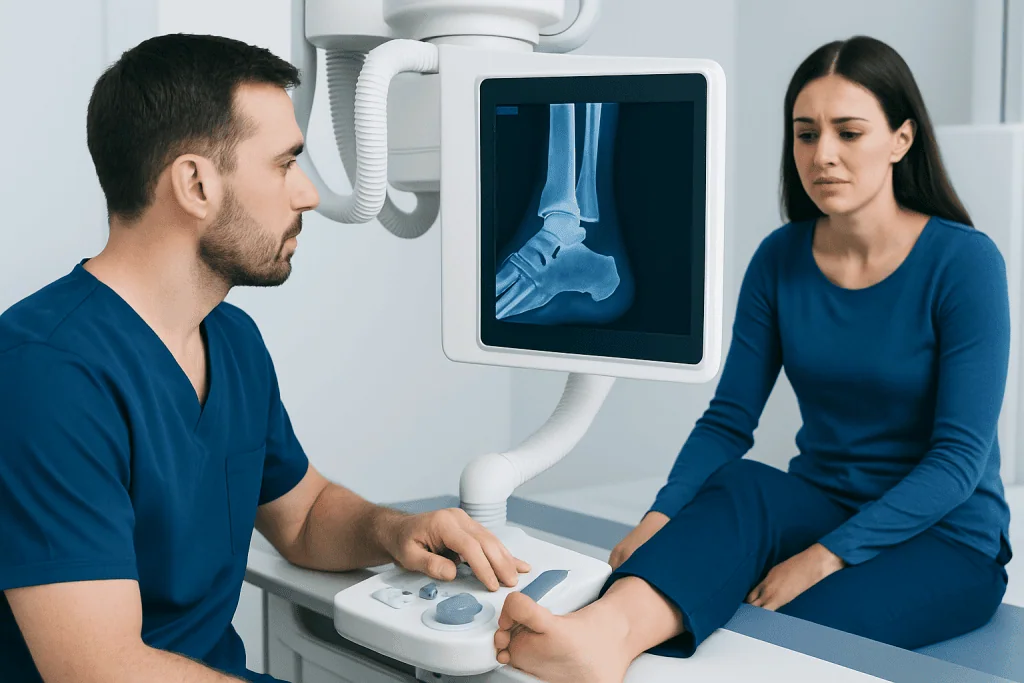
The most common symptom of a Jones fracture is pain along the outer side of the midfoot, often near the base of the little toe. The pain may begin suddenly after an injury or build gradually if the fracture is related to repetitive stress. Swelling and tenderness in one specific spot are also common.
Many people have difficulty putting weight on the foot. Walking may feel sharp, unstable, or simply too painful to continue normally. Bruising can occur, but it is not always present. Some people assume they only have a sprain, especially if the foot is not visibly deformed.
Symptoms that may suggest this type of fracture include:
- Pain on the outer edge of the foot
- Swelling around the base of the fifth metatarsal
- Tenderness to touch in one localized area
- Pain that worsens with standing or walking
- Difficulty bearing weight after a twist or fall
Because symptoms can overlap with a severe sprain or other foot fracture, imaging is usually needed to confirm the diagnosis. Self-diagnosing can delay proper treatment and increase the chance of prolonged healing.
What causes a Jones fracture and who is at risk?

A Jones fracture may happen with an acute injury or from overuse. A sudden fracture often occurs when the heel lifts and the foot twists inward while body weight shifts to the outer side of the foot. This can happen during sports, stepping awkwardly off a curb, or landing from a jump.
Stress-related Jones fractures develop when repeated force is placed on the fifth metatarsal over time. Running, cutting, jumping, and rapid direction changes can all contribute. The bone may weaken gradually before a complete fracture becomes apparent.
Risk factors include:
- Participation in sports such as basketball, soccer, tennis, or dance
- Sudden increases in training intensity or duration
- Previous foot injuries
- Foot structure that places more stress on the outer edge of the foot
- Reduced bone strength or low bone density
- Improper footwear or worn-out athletic shoes
Doctors also consider whether the injury is truly a Jones fracture or another condition affecting the same region, such as an avulsion injury or a repetitive-load injury like a stress fracture. This distinction can influence both treatment and expectations for healing.
How doctors diagnose it
Diagnosis begins with a medical history and physical examination. A doctor will ask how the injury happened, whether the pain started suddenly or gradually, and whether the person can bear weight. During the exam, they check for swelling, pinpoint tenderness, bruising, and signs of ankle or ligament injury.
X-rays are usually the first imaging test. They help locate the exact break and show whether the fracture is displaced, meaning the bone pieces have shifted. However, very early stress fractures may be subtle on initial X-rays, so repeat imaging may sometimes be needed if symptoms continue.
In more complex cases, doctors may use advanced imaging. MRI scans can be useful when a stress-related fracture is suspected or when X-rays do not fully explain ongoing pain. CT imaging may help assess fracture detail, healing progress, or surgical planning.
An accurate diagnosis is important because treatment differs from that for a simple sprain or a different fifth metatarsal fracture. The doctor may also evaluate overall bone health and biomechanics if fractures are recurrent or healing is delayed.
Treatment options
Treatment depends on the exact location of the fracture, whether the bone has moved out of position, the person’s activity level, and whether the injury is acute or stress-related. Many Jones fractures are treated initially by protecting the foot, limiting weight-bearing, and using immobilization such as a cast or walking boot. Rest is essential because continuing to walk on the fracture can interfere with healing.
Because this area has relatively limited blood supply, some fractures heal slowly or do not fully unite without additional treatment. Follow-up visits and repeat imaging help the doctor assess whether the bone is healing as expected. A person may need to avoid sports and high-impact activity for a period that matches the healing process rather than a fixed timeline.
Surgery may be considered for displaced fractures, fractures in competitive athletes, delayed healing, or nonunion. Surgical treatment often involves stabilizing the bone with internal fixation. In selected cases, an orthopedic specialist may discuss orthopedic surgery to improve alignment and support healing.
After the bone begins to heal, rehabilitation becomes important. Gentle range-of-motion work, strengthening, and gradual return to activity may be guided through physical therapy and rehabilitation. The goal is to restore foot function while reducing the risk of re-injury.
Recovery, self-care, and preventing re-injury
Recovery after a Jones fracture varies. Some people heal with conservative treatment and a gradual return to normal activity, while others need a longer recovery or surgery. Healing can take more time than expected compared with other minor foot fractures, so patience and follow-up are important.
Self-care during recovery usually includes keeping weight off the foot as instructed, elevating the foot to reduce swelling, and using cold packs during the early phase if recommended by a clinician. It is also important to keep immobilization devices on as directed and not return to sports too soon.
Prevention focuses on reducing repeated stress on the outer foot and supporting bone health. Helpful steps may include:
- Wearing well-fitting, activity-appropriate shoes
- Increasing training intensity gradually
- Addressing foot mechanics or gait issues
- Strengthening the lower leg and foot muscles
- Maintaining good nutrition and discussing bone health when appropriate
People with recurrent foot pain, a history of stress injuries, or delayed healing may benefit from a broader assessment of training patterns, footwear, and underlying bone health. Long-term prevention is often most effective when it addresses both mechanics and overall health.
When to seek medical care
Medical assessment is recommended promptly if there is significant pain on the outer side of the foot after a twist, fall, or sports injury, especially when walking is difficult. It is also wise to seek care if swelling and tenderness remain focused in one spot or if pain does not improve with rest over a short period.
Urgent evaluation is important if the person cannot bear weight at all, if the foot looks deformed, if pain is severe, or if there is numbness, color change, or an open wound. These signs may suggest a more serious injury or complications that need immediate attention.
Near the end of the care pathway, some patients may need coordinated evaluation from orthopedics, imaging specialists, and rehabilitation professionals. Acibadem International’s multidisciplinary specialists and JCI-accredited hospitals diagnose and treat foot injuries for international patients when more advanced assessment or management is needed.
Frequently asked questions
What is the difference between a Jones fracture and an avulsion fracture?
A Jones fracture occurs in a specific area of the fifth metatarsal slightly farther from the tip of the bone’s base. An avulsion fracture happens when a tendon or ligament pulls off a small piece of bone closer to the tuberosity. The difference matters because a Jones fracture often has a higher risk of slower healing.
Can a Jones fracture heal without surgery?
Yes, some Jones fractures can heal without surgery, especially when the bone is well aligned and the person can follow a strict period of protection and limited weight-bearing. However, healing may take time, and regular follow-up is important. Surgery may be recommended if healing is delayed or the fracture is unstable.
How long does Jones fracture recovery usually take?
Recovery time varies depending on the exact fracture pattern, whether it is stress-related or acute, and the treatment used. Because this area has relatively limited blood supply, healing may be slower than with other foot fractures. A doctor can give the most accurate timeline based on repeat examination and imaging.
Is it safe to walk on a Jones fracture?
Walking on a Jones fracture is usually not advised unless a clinician has specifically allowed protected weight-bearing. Putting stress on the fracture too early can delay healing or worsen the injury. Following the treatment plan closely is one of the most important parts of recovery.
Do I always need a cast or boot for a Jones fracture?
Many patients do need immobilization with a cast or walking boot, especially in the early stages of treatment. The exact type of support depends on the fracture and the doctor’s assessment. Some cases also require crutches or a period of non-weight-bearing.
Why does a Jones fracture sometimes heal slowly?
This fracture occurs in a part of the fifth metatarsal with less reliable blood supply than nearby bone. Since good blood flow supports bone repair, healing can be slower or less predictable. Continued stress on the foot can also contribute to delayed union or nonunion.
This article is for general information only and is not a substitute for professional medical advice. Please consult a qualified doctor about your individual situation.
Joint and spine care in Turkey — expert assessment & treatment
JCI-accredited · board-certified surgeons · reply within 24h
Add us as a Preferred Source to see more of our trusted health content across Google Search, AI Overviews and Discover.

More from the Health Library

Coconut Milk Substitute: What Patients Need to Know

Eyes Dilated: What Patients Need to Know

Room Hot Tub Hotels — Explained by Medical Evidence, Not Myths

Jealous: What Patients Need to Know

Epley Maneuver — Explained by Medical Evidence, Not Myths

Medulla Kidney: A Complete Medical Overview
Orthopedic Surgery & Traumatology Specialists at Acibadem

Dr. Coşkun Akalın
Physical Medicine & Rehabilitation
Fzt. A.Sercan Soyarslan
Physical Medicine & Rehabilitation
Dr. Abdullah Yener İnce
Orthopedic Surgery & Traumatology
Dr. Adnan Abbasoğlu
Orthopedic Surgery & Traumatology