Kidney Cancer Treatment in Oxford: How It Works, Results and What to Expect

Treatment is individualized and often involves urologists, oncologists, radiologists, pathologists and specialist nurses. For many small, localized kidney cancers, partial nephrectomy can remove the tumor while preserving as much kidney tissue as possible.
Key Takeaways
- Treatment is individualized and often involves urologists, oncologists, radiologists, pathologists and specialist nurses.
- For many small, localized kidney cancers, partial nephrectomy can remove the tumor while preserving as much kidney tissue as possible.
- Some small or slow-growing tumors may be monitored carefully with active surveillance rather than treated immediately.
- Advanced kidney cancer can often be managed with systemic treatments such as immunotherapy and targeted therapy.
- Follow-up imaging and kidney-function tests remain important after treatment, even when cancer has been removed.
Kidney cancer treatment in Oxford is planned around the size and stage of the tumor, whether it has spread, the health of both kidneys, and the person’s overall health. Options may include active surveillance, kidney-sparing surgery, removal of the kidney, ablation therapies, immunotherapy, targeted medicines, or a combination of approaches.
Kidney Cancer Treatment in Oxford: How It Works
Kidney cancer treatment in Oxford begins with confirming the diagnosis and determining how far the cancer has grown or spread. The care team reviews imaging scans, blood and urine tests, medical history, kidney function, and sometimes a biopsy to recommend the most appropriate option. The aim may be to cure localized cancer, control more advanced disease, protect kidney function, and support quality of life.
The most common form of kidney cancer in adults is renal cell carcinoma. Small tumors confined to the kidney are often treated with surgery or, in selected circumstances, ablation. Larger tumors or those extending beyond the kidney may require surgery combined with additional treatment, while cancer that has spread to distant organs is usually treated with medicines that work throughout the body.
A multidisciplinary review is valuable because kidney cancer decisions can be complex. Urologic surgeons, medical oncologists, radiologists, radiation specialists, nephrologists, pathologists, anesthesiologists, and specialist nurses may contribute to a plan that reflects the individual’s diagnosis and priorities.
How Treatment Choices Are Made

Doctors use staging to describe the extent of kidney cancer. They consider the tumor’s size and location, whether it has entered nearby veins or lymph nodes, and whether scans show spread to organs such as the lungs, bones, liver, or brain. The grade and subtype of the cancer, if known, can also help estimate how the tumor may behave.
Candidacy for a particular treatment depends on more than stage. Important factors include age, general fitness, other health conditions, the function of the other kidney, whether there is one kidney or tumors in both kidneys, inherited cancer syndromes, and personal preferences. A person with a very small tumor and significant health concerns may reasonably be offered surveillance, while a fit person with a localized tumor may be advised to have curative surgery.
Before a procedure, the team may arrange CT or MRI scans, chest imaging, blood tests to assess kidney function and blood counts, and a review of medicines. People should tell their care team about blood thinners, diabetes medicines, allergies, previous surgery, and any history of heart, lung, or kidney disease.
- Active surveillance: scheduled scans and appointments for selected small tumors.
- Local treatment: partial nephrectomy, radical nephrectomy, or tumor ablation.
- Systemic treatment: immunotherapy, targeted therapy, and occasionally other medicines for advanced disease.
- Supportive care: management of pain, fatigue, nutrition, emotional wellbeing, and treatment side effects at every stage.
Procedures and Treatments: Step by Step
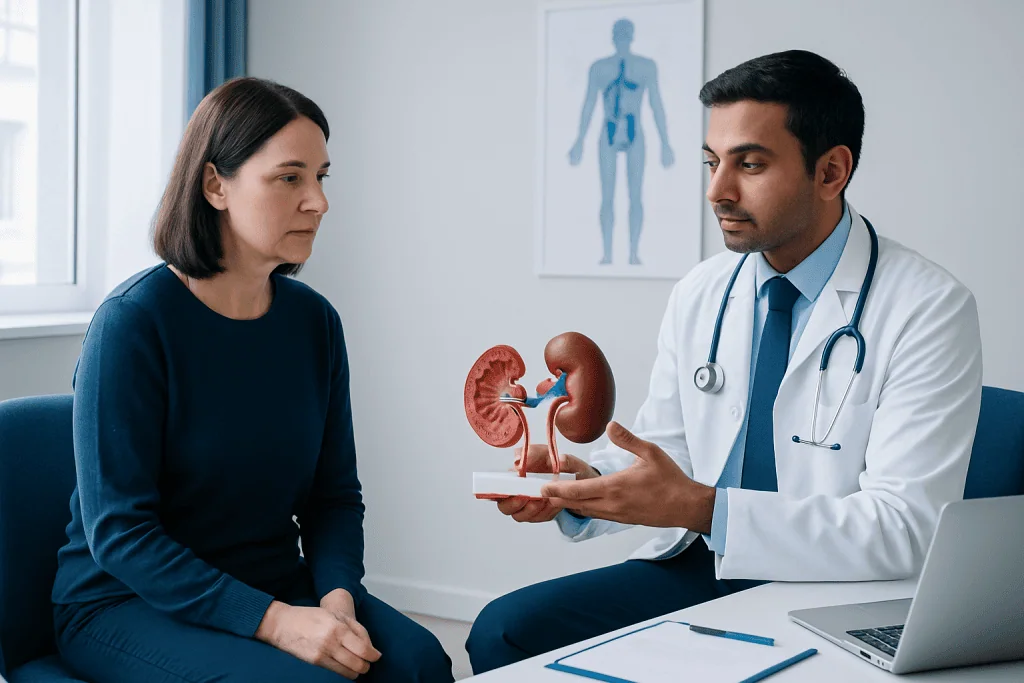
For localized kidney cancer, surgery is often the main treatment. A partial nephrectomy removes the tumor with a small rim of surrounding tissue while leaving the rest of the kidney in place. It may be performed through open, laparoscopic, or robot-assisted techniques, depending on the tumor’s position, complexity, and the surgeon’s assessment. Preserving kidney tissue is particularly important for people with reduced kidney function, one kidney, or tumors affecting both kidneys.
A radical nephrectomy removes the entire affected kidney and sometimes nearby tissue when clinically necessary. Many people can live well with one functioning kidney, but kidney function is checked carefully before and after surgery. The operation may be minimally invasive or open; the approach is chosen for safety and cancer control rather than convenience alone.
Thermal ablation, such as cryoablation or radiofrequency/microwave ablation, destroys tumor tissue using extreme cold or heat. It is generally considered for selected small tumors, particularly when surgery would carry higher risk. It is often performed by an interventional radiologist using imaging guidance and may require ongoing scans because treated tissue remains visible after the procedure.
When kidney cancer has spread or is at high risk of returning after surgery, a medical oncologist may discuss immunotherapy, targeted therapy, or a combination. These treatments do not suit every patient and can cause side effects, so monitoring through examinations, blood tests, and scans is an essential part of care.
Recovery, Benefits and Possible Risks
Recovery differs by treatment type and by the person’s general health. After minimally invasive kidney surgery, some people leave hospital within a few days and gradually resume lighter activities over the following weeks. Open surgery can involve a longer stay and recovery period. The surgical team gives individualized guidance about wound care, pain relief, driving, work, exercise, lifting, and follow-up appointments.
The potential benefit of local treatment is complete removal or destruction of a cancer that has not spread. Partial nephrectomy may preserve more kidney function than removal of the whole kidney, although it is not technically suitable for every tumor. Active surveillance can avoid or delay treatment-related risks for selected people, while still allowing intervention if the cancer grows or changes.
All procedures have possible risks. Surgery can involve bleeding, infection, blood clots, injury to nearby structures, urine leakage after partial nephrectomy, changes in kidney function, and anesthesia-related complications. Ablation can cause bleeding, pain, damage to surrounding organs, or incomplete tumor destruction. Systemic treatments may cause fatigue, skin changes, diarrhea, high blood pressure, inflammation in organs, or other effects that require prompt assessment.
Follow-up commonly includes imaging to look for recurrence or progression, as well as tests for kidney function and blood pressure. People should keep all scheduled reviews, even if they feel well, because kidney cancer follow-up is designed to identify changes early.
What Is the Success Rate of Kidney Cancer Treatment?
There is no single success rate for kidney cancer treatment because outcomes depend strongly on the cancer stage, tumor biology, treatment type, kidney function, and overall health. In general, kidney cancers found while confined to the kidney have a more favorable outlook than cancers that have spread to distant parts of the body. Treating a localized tumor with surgery or another local therapy may be intended to cure the cancer.
For advanced kidney cancer, modern systemic treatments can control disease for meaningful periods in many people, but responses vary. Some cancers shrink, some remain stable, and others require a change in treatment. An oncologist can discuss the most relevant outlook using the person’s scan findings, pathology report, and response to treatment rather than relying on broad averages.
It is helpful to ask the care team what the goal of treatment is: cure, reduction of recurrence risk, control of cancer growth, symptom relief, or a combination of these. Clear discussions about expected benefits, uncertainties, and side effects support informed decision-making.
How Fast Does Kidney Cancer Spread?
Kidney cancer does not grow or spread at the same pace in every person. Some small kidney tumors grow slowly over years and can be monitored safely for a period, while others behave more aggressively. Tumor subtype, grade, size, spread into blood vessels or lymph nodes, and findings on repeated scans can help doctors assess the likely behavior.
Because symptoms may be absent in early stages, kidney cancer is sometimes found incidentally during imaging performed for another reason. Once a suspicious mass is identified, timely assessment is important. This does not mean every tumor needs immediate treatment, but it allows the team to distinguish between a lesion that can be watched carefully and one that needs more active management.
People on active surveillance have planned imaging at intervals recommended by their specialist. A change in tumor size, appearance, symptoms, or overall health may lead the team to recommend biopsy or treatment. New persistent symptoms should not wait until the next routine scan.
Can You Live a Long Life After Kidney Cancer?
Many people live a long life after kidney cancer, especially when the cancer is diagnosed at an early stage and treated effectively. After removal of a localized kidney tumor, regular monitoring helps detect any recurrence or new concerns. Maintaining blood pressure, avoiding tobacco, managing diabetes when present, and protecting remaining kidney function are useful long-term health measures.
Living with one kidney is often compatible with an active life, although the individual may need periodic blood and urine tests. The care team may advise avoiding unnecessary medicines that can affect the kidneys, particularly some anti-inflammatory pain medicines, unless a clinician confirms they are appropriate. Hydration needs, diet, and activity guidance should be personalized rather than based on strict universal rules.
For people living with advanced disease, treatment has continued to evolve. A long-term plan may include periods of systemic therapy, monitoring, management of side effects, and supportive care. Emotional support, rehabilitation, and practical support for work and family life can be important parts of recovery and ongoing care.
What Not to Do When You Have Kidney Cancer
People with kidney cancer should avoid delaying recommended appointments, scans, or discussions about new symptoms. They should not stop prescribed medicines, start supplements marketed as cancer cures, or use unproven alternative treatments in place of medical care. Some herbal products and over-the-counter medicines can interfere with treatment or strain the kidneys, so all products should be discussed with a clinician.
Smoking should be avoided, as it can affect general health, blood vessels, wound healing, and kidney function. Heavy alcohol use is also best avoided. People should seek professional advice before making major dietary restrictions, fasting plans, or intense exercise changes, particularly around surgery or while taking systemic treatment.
It is also important not to assume that a lack of pain means cancer cannot change. Follow-up is based on clinical review and imaging, not symptoms alone. At the same time, people should avoid carrying the burden alone; asking questions and accepting support from family, specialist nurses, counselors, or patient groups can make treatment more manageable.
When to Seek Medical Care
Medical review is advised for blood in the urine, persistent pain in the side or back below the ribs, an unexplained lump in the abdomen or side, ongoing unexplained fever, or unintentional weight loss. These symptoms can have many causes and do not necessarily mean kidney cancer, but they should be assessed by a qualified clinician.
People already diagnosed with kidney cancer should contact their team promptly for worsening pain, fever after a procedure, wound redness or drainage, shortness of breath, chest pain, heavy bleeding in the urine, inability to pass urine, severe vomiting, or symptoms that may be a treatment reaction. Urgent or emergency care may be needed depending on the severity of symptoms.
Acibadem International’s multidisciplinary specialists and JCI-accredited hospitals diagnose and treat kidney cancer for international patients, with care plans guided by tumor characteristics, kidney health, and individual treatment goals.
Frequently asked questions
What is the first treatment for kidney cancer?
For many localized kidney cancers, surgery is the first treatment considered. Partial nephrectomy is often preferred when it can safely remove the tumor while preserving kidney tissue. However, active surveillance or ablation may be more suitable for certain small tumors or for people who are not good candidates for surgery.
Is a biopsy always needed before kidney cancer treatment?
No. Imaging can sometimes provide enough information to proceed with surgery for a suspicious kidney mass. A biopsy may be recommended when the result would change the treatment plan, such as before ablation, systemic treatment, or active surveillance.
Can kidney cancer be treated without removing the whole kidney?
Yes. Partial nephrectomy removes only the tumor and a small margin of tissue, preserving the rest of the kidney. Ablation can also be an option for selected small tumors. The best approach depends on tumor size, location, kidney function, and surgical complexity.
How often are scans needed after kidney cancer treatment?
The schedule depends on the stage, treatment received, pathology findings, and risk of recurrence. Follow-up commonly includes periodic CT, MRI, ultrasound, or chest imaging along with kidney-function tests. The treating team provides a personalized surveillance plan.
Does kidney cancer always cause blood in the urine?
No. Many kidney cancers do not cause symptoms, particularly when they are small. Blood in the urine is one possible symptom, but it can also result from infections, stones, or other urinary conditions and should be medically assessed.
Can diet cure kidney cancer?
No diet has been proven to cure kidney cancer. Nutritious eating can support general health, recovery, and kidney function, but it should complement—not replace—evidence-based medical treatment. A dietitian can provide tailored advice, especially for people with reduced kidney function or treatment-related appetite changes.
References
- National Cancer Institute
- European Association of Urology
- American Cancer Society
- National Health Service
- Kidney Cancer Association
This article is for general information only and is not a substitute for professional medical advice. Please consult a qualified doctor about your individual situation.
Kidney Cancer in Turkey — costs, top hospitals & a free quote
JCI-accredited · board-certified surgeons · reply within 24h
Add us as a Preferred Source to see more of our trusted health content across Google Search, AI Overviews and Discover.

Medical Oncology Department
Medical treatment of cancer with chemotherapy, immunotherapy and targeted therapies under a multidisciplinary tumor board.
60 specialists in this unit