Kidney Stones: Symptoms, Imaging Tests, and Treatment Options
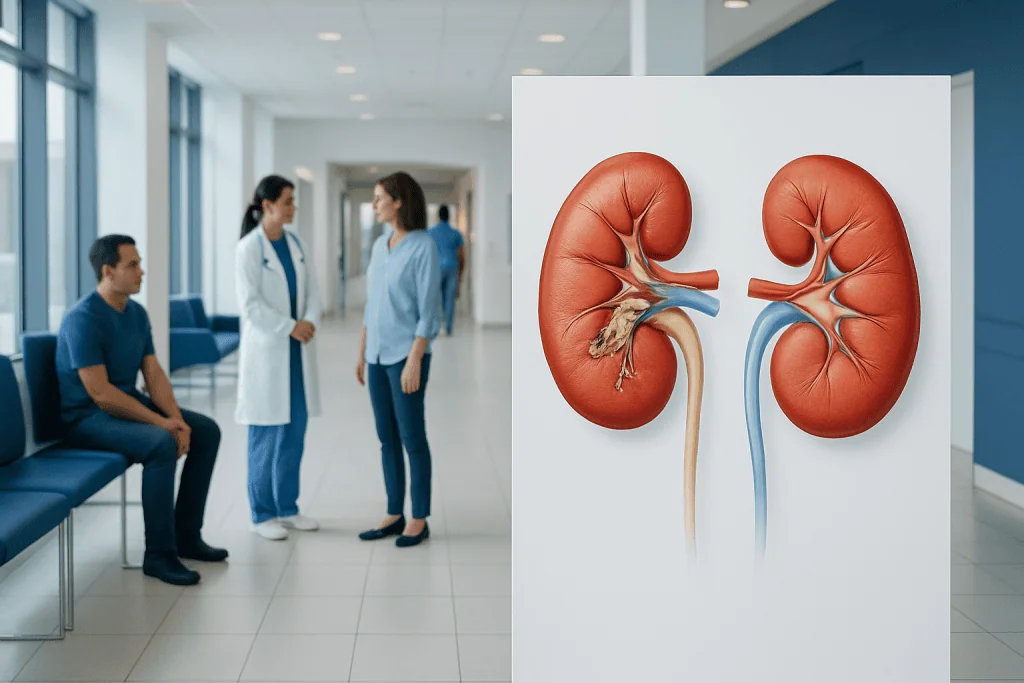
Kidney stones can cause sudden flank pain, nausea, blood in the urine, and urinary urgency. Ultrasound and CT scans are common imaging tests used to confirm a stone and check for blockage.
Key Takeaways
- Kidney stones can cause sudden flank pain, nausea, blood in the urine, and urinary urgency.
- Ultrasound and CT scans are common imaging tests used to confirm a stone and check for blockage.
- Small stones may pass with fluids, pain relief, and close follow-up, while larger stones may need procedures.
- Prevention often includes better hydration and, in some people, dietary changes or medication.
- Fever, chills, severe vomiting, or inability to urinate require urgent medical attention.
Kidney stones are hard mineral deposits that form in the urinary tract and may cause sudden pain, blood in the urine, or trouble passing urine. Most stones can be diagnosed with urine tests and imaging, and treatment depends on the stone’s size, location, symptoms, and whether infection or blockage is present.
Overview of kidney stones
Kidney stones are hard deposits made of minerals and salts that form in the kidneys and can move anywhere along the urinary tract. They develop when urine becomes concentrated, allowing certain substances such as calcium, oxalate, or uric acid to crystallize and stick together. Some stones remain in the kidney and cause no symptoms, while others travel into the ureter, the tube that carries urine from the kidney to the bladder.
The symptoms and urgency of treatment depend on the stone’s size, shape, and location. A very small stone may pass on its own, sometimes without being noticed. A larger stone can block the flow of urine, stretch the urinary tract, and trigger intense pain known as renal colic.
Kidney stones are common and can affect adults of many ages. They often return in people who have had them before, which is why identifying the stone type and reviewing prevention strategies are important parts of care. With appropriate evaluation and follow-up, most people can be treated effectively and guided on how to reduce the chance of future stones.
Symptoms of kidney stones
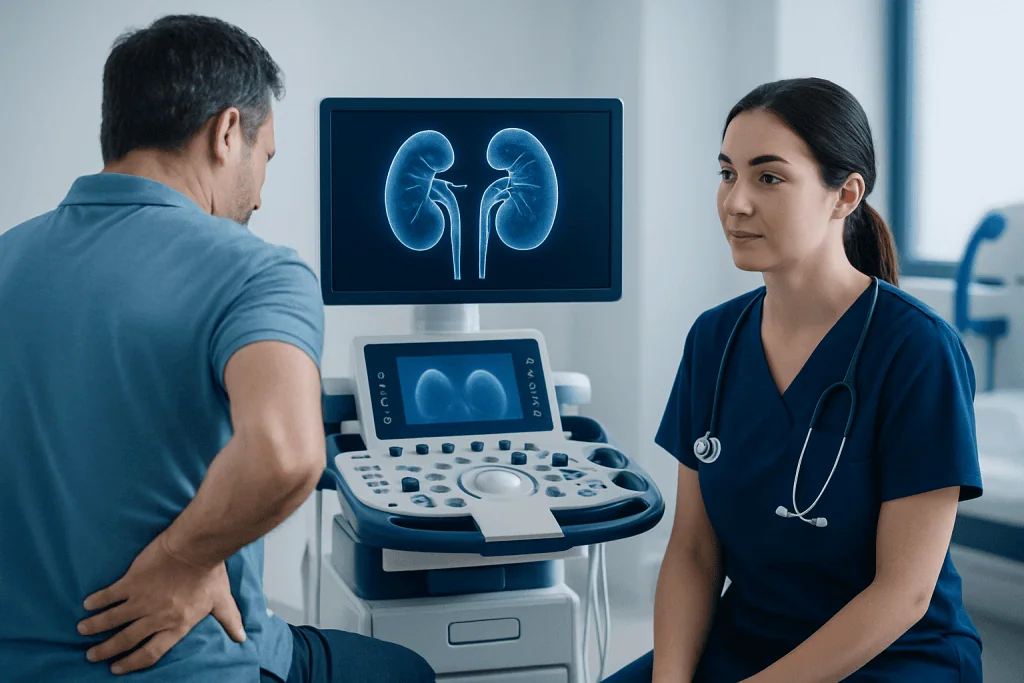
The most typical symptom of kidney stones is sudden, severe pain in the side or back, often just below the ribs. This pain may move toward the lower abdomen or groin as the stone travels. It often comes in waves, becoming stronger and then easing, because the ureter tightens around the stone.
Other common symptoms include blood in the urine, cloudy or foul-smelling urine, nausea, and vomiting. Some people feel a strong urge to urinate, need to pass urine more often, or feel burning when urinating, especially if the stone is near the bladder. Small amounts of urine may be passed at a time if a stone is causing irritation.
Symptoms can change as the stone moves. Some stones cause only mild discomfort, while others lead to severe pain that makes it hard to sit still. If an infection is present along with a blocked urinary tract, fever and chills can occur; this situation needs urgent medical care.
- Sharp pain in the back, side, lower abdomen, or groin
- Blood in the urine
- Nausea and vomiting
- Burning or urgency with urination
- Cloudy or foul-smelling urine
- Fever or chills if infection is present
Causes and risk factors
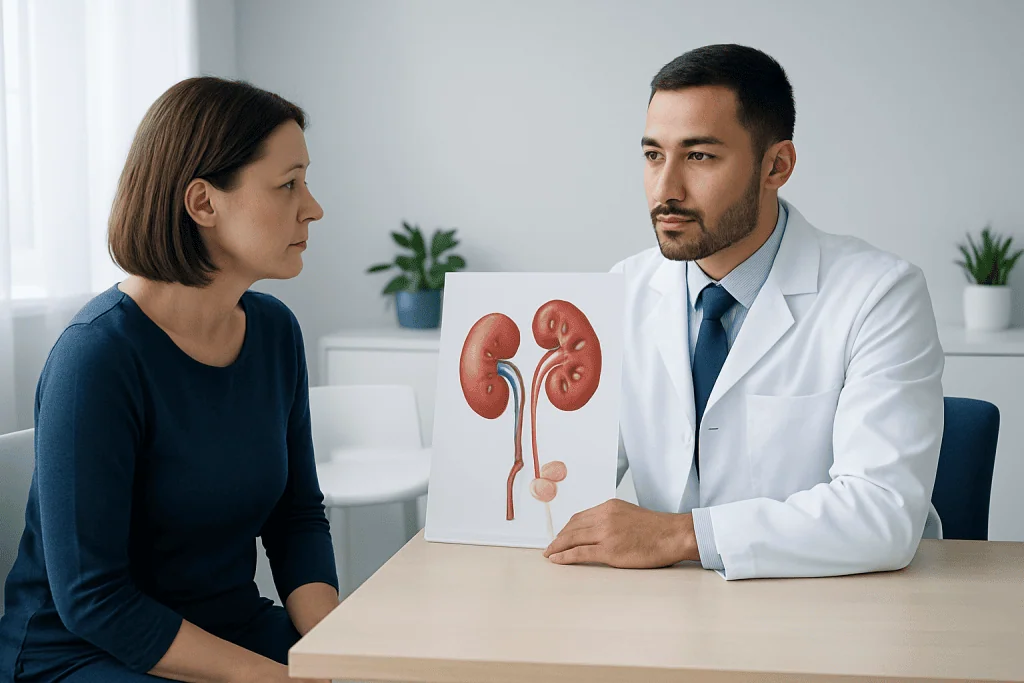
Kidney stones do not have a single cause. They usually form when the balance of water, minerals, and waste products in the urine changes in a way that encourages crystals to form. Low fluid intake is one of the most important risk factors because concentrated urine makes crystal formation more likely.
Different types of stones have different triggers. Calcium stones are the most common and often involve calcium oxalate. Uric acid stones may be more likely in people with high uric acid levels, gout, or very acidic urine. Struvite stones can form after certain urinary tract infections, and cystine stones are linked to a rare inherited condition.
Several factors can increase risk, including a family history of stones, previous stones, obesity, certain digestive conditions, and some medications or supplements. Diet can also play a role, especially if it is very high in salt, animal protein, or oxalate-rich foods in susceptible people. A doctor may also consider whether an underlying metabolic problem or another kidney condition could be contributing to symptoms or findings on imaging.
How kidney stones are diagnosed
Diagnosis starts with a medical history, symptom review, and physical examination. A doctor asks where the pain began, whether it comes in waves, and whether there are symptoms such as blood in the urine, fever, or difficulty passing urine. These details help distinguish kidney stones from other causes of abdominal or back pain.
Urine and blood tests are often the first laboratory checks. A urinalysis may show blood, crystals, or signs of infection. Blood tests can help assess kidney function and look for factors such as elevated calcium or uric acid. If a stone is passed, it may be collected and analyzed to identify its type.
Imaging tests are central to diagnosis because they can confirm the stone’s presence, show its size and location, and reveal whether the kidney is swollen from a blockage. Ultrasound is often used first in many settings, especially when avoiding radiation is desirable. Non-contrast CT scanning is highly detailed and can detect even small stones, making it one of the most accurate tests for urgent evaluation.
Additional imaging may sometimes be used depending on the person’s age, pregnancy status, kidney function, and prior stone history. In selected cases, clinicians may use advanced imaging or combine tests to clarify the diagnosis, but standard assessment for stones most often relies on ultrasound and CT rather than MRI.
Imaging tests used for kidney stones
Ultrasound is a widely used imaging test because it is quick, does not use radiation, and can show signs of blockage in the kidney. It is especially helpful for children, pregnant patients, and people who need repeated follow-up. However, very small stones or stones in certain parts of the ureter may be harder to see with ultrasound alone.
Non-contrast CT is often considered the most informative imaging test when the diagnosis is uncertain or symptoms are severe. It can identify the stone, estimate its size, and detect other conditions that may mimic a stone. This level of detail helps guide treatment decisions, especially when a stone is unlikely to pass on its own.
Plain abdominal X-rays may be used in some cases to follow stones that are visible on X-ray, but not all stones can be seen this way. Imaging may also be repeated after treatment to confirm that the stone has passed or that the urinary tract is no longer blocked. In hospitals with broad radiology services, CT scanning and ultrasound evaluation help doctors choose the safest and most effective management plan.
Treatment options for kidney stones
Treatment depends on whether the stone is likely to pass on its own, how much pain it causes, whether there is infection, and whether the kidney is being damaged by obstruction. Small stones often pass with time, fluids, pain control, and careful monitoring. Doctors may also prescribe medication to relax the ureter in selected cases, which can make passage easier.
When a stone is larger, very painful, unlikely to pass, or causing persistent blockage, a procedure may be recommended. Common options include shock wave treatment to break the stone into smaller pieces, endoscopic removal through the urinary tract, or less commonly a minimally invasive surgical approach for large or complex stones. The best method depends on the stone’s size, location, and composition, as well as the patient’s anatomy and overall health.
If fever, chills, or signs of infection are present together with blockage, urgent drainage of the urinary tract may be needed before definitive stone treatment. This is because infected urine trapped behind an obstruction can become serious quickly. In that setting, prompt hospital care is important.
Some people need a broader evaluation if stones keep coming back. This may include 24-hour urine testing and blood tests to find patterns that can be corrected. Near the end of the care journey, some international patients choose centers such as Acibadem International, where multidisciplinary specialists in JCI-accredited hospitals diagnose and treat kidney stones with individualized planning.
Prevention and self-care
Prevention usually begins with hydration. Drinking enough fluids helps keep urine less concentrated, lowering the chance that crystals will form. The exact amount varies by climate, activity level, and health conditions, so a doctor may advise a personalized target based on stone history and test results.
Dietary changes depend on the type of stone. In general, limiting excess salt can be helpful because high sodium intake can increase calcium in the urine. A balanced intake of dietary calcium is usually preferred over cutting calcium dramatically, since very low calcium intake may actually raise the risk of some stones. Some people may also benefit from moderating animal protein or reducing high-oxalate foods if recommended by their clinician.
It can be useful to stay active, maintain a healthy weight, and review medications or supplements with a doctor if stones recur. People who repeatedly form stones may be offered preventive medication based on stone analysis and urine chemistry. Self-care is important, but prevention works best when it is tailored to the individual rather than based on a one-size-fits-all diet.
When to see a doctor
Any severe side or back pain that does not improve, especially when paired with nausea, vomiting, or blood in the urine, should be evaluated by a doctor. Although kidney stones are a common cause of these symptoms, other urgent conditions can look similar, so proper diagnosis matters.
Urgent medical attention is needed if there is fever, chills, marked weakness, inability to keep fluids down, reduced urine output, or trouble urinating. These symptoms may suggest infection, dehydration, or significant blockage. People with a single kidney, chronic kidney disease, or pregnancy should seek prompt assessment because they may need closer monitoring.
Follow-up is also important after the immediate episode. Even after a stone passes, a doctor may recommend imaging or lab tests to make sure the urinary tract has cleared and to help prevent recurrence. Early assessment and individualized treatment can protect kidney health and reduce the risk of future episodes.
Frequently asked questions
What does kidney stone pain feel like?
Kidney stone pain is often described as sudden, intense pain in the side or back that may move toward the groin. It commonly comes in waves and may be accompanied by nausea, restlessness, or blood in the urine.
Can kidney stones go away on their own?
Yes, many small kidney stones can pass on their own with fluids, pain management, and monitoring. Whether this is likely depends mainly on the stone’s size and where it is located in the urinary tract.
Which imaging test is best for kidney stones?
The best test depends on the situation. Ultrasound is useful and avoids radiation, while non-contrast CT is often the most accurate when the diagnosis is unclear or a detailed assessment is needed.
Do all kidney stones need surgery?
No, not all kidney stones need surgery or a procedure. Small stones may pass naturally, but larger stones, ongoing severe pain, blockage, or infection may require active treatment.
Can dehydration cause kidney stones?
Dehydration is a major risk factor because it makes urine more concentrated. Concentrated urine allows minerals and salts to crystallize more easily, which can lead to stone formation.
How can someone reduce the chance of getting kidney stones again?
Prevention often includes drinking enough fluids and reducing excess salt intake. Depending on the stone type, a doctor may also suggest dietary adjustments, urine testing, or medication to lower the risk of recurrence.
References
- National Institute of Diabetes and Digestive and Kidney Diseases
- American Urological Association
- European Association of Urology
- National Kidney Foundation
- Radiological Society of North America
This article is for general information only and is not a substitute for professional medical advice. Please consult a qualified doctor about your individual situation.
Explore treatments in Turkey — costs, top hospitals & a free quote
JCI-accredited · board-certified surgeons · reply within 24h
Add us as a Preferred Source to see more of our trusted health content across Google Search, AI Overviews and Discover.