Kirkland Minoxidil: What Patients Need to Know

Kirkland minoxidil is a brand of topical minoxidil commonly used for pattern hair loss. It may help maintain existing hair and promote some regrowth, but it does not work for every cause of hair loss.
Key Takeaways
- Kirkland minoxidil is a brand of topical minoxidil commonly used for pattern hair loss.
- It may help maintain existing hair and promote some regrowth, but it does not work for every cause of hair loss.
- Visible improvement often takes several months of consistent use.
- Scalp irritation, shedding early in treatment, and unwanted facial hair growth can occur.
- A medical evaluation is important if hair loss is sudden, patchy, painful, or associated with other symptoms.
Kirkland minoxidil is an over-the-counter topical treatment used to help slow hair loss and support hair regrowth in some people, especially in androgenetic alopecia. Patients usually need regular, long-term use to maintain results, and a doctor can help confirm whether it is the right option for the type of hair loss involved.
Overview: what Kirkland minoxidil is and what it does
Kirkland minoxidil is a topical hair-loss treatment that contains minoxidil, an ingredient commonly used to help slow hair thinning and encourage hair regrowth in certain types of hair loss. It is most often used for pattern hair loss, also called androgenetic alopecia, in which hair gradually becomes thinner over time. For many patients, the main goal is not dramatic regrowth but preserving existing hair and improving density.
Minoxidil is applied directly to the scalp, usually as a liquid or foam depending on the product format. It does not cure the underlying tendency toward pattern hair loss, so results generally depend on ongoing use. If treatment is stopped, any benefit that developed over time may gradually fade.
Patients often ask whether a store-brand or private-label product works differently from other minoxidil products. In general, the active ingredient is the same when the concentration and formulation are equivalent, but individual experience may differ because of scalp sensitivity, the product base, and how consistently it is used. The most important questions are whether the diagnosis is correct and whether minoxidil is suitable for that person’s scalp and health situation.
Who may benefit from topical minoxidil
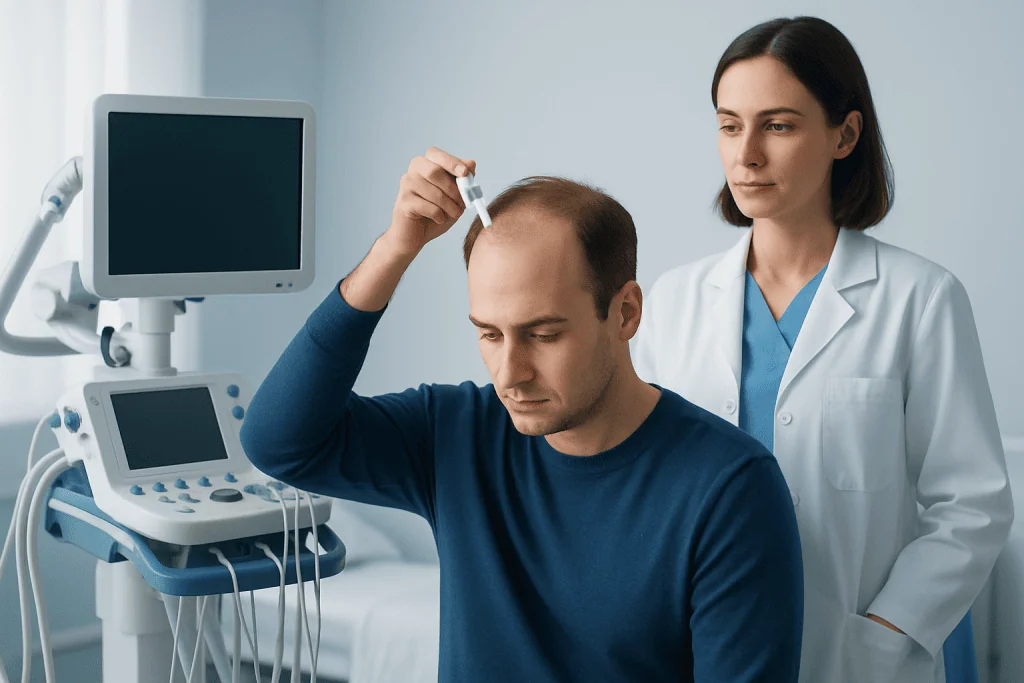
Topical minoxidil is usually considered for adults with gradual thinning on the scalp, especially at the crown or along a widening part line. It is best known for use in hair loss related to androgenetic alopecia. Some clinicians may also consider it in selected cases of other non-scarring hair disorders, but suitability depends on the exact diagnosis.
It is less likely to help if hair loss is caused by scarring conditions, untreated hormonal or nutritional problems, certain medications, or active inflammatory scalp disease. In these situations, treating the underlying cause is more important than relying on minoxidil alone. A dermatologist or hair specialist can distinguish between pattern hair loss and disorders that need a different approach.
Patients should also understand that individual response varies. Some people notice reduced shedding and modest thickening, while others see little visible change despite proper use. Age, duration of hair loss, family history, scalp health, and the extent of miniaturized hair follicles can all influence how well treatment works.
How it works and when to expect results

Minoxidil is thought to prolong the growth phase of the hair cycle and support hair follicles that have become smaller over time. Although its exact mechanism in hair growth is not fully understood, it appears to improve the environment around follicles in a way that can help produce thicker, longer hairs in some patients.
Results take time. Many people need at least 3 to 6 months of consistent use before improvement becomes noticeable, and full assessment may take longer. During the early weeks, some users experience increased shedding. This can be concerning, but it may reflect older hairs being replaced as follicles shift into a new growth cycle.
Because hair growth is gradual, progress is often easiest to judge with monthly photographs taken in the same lighting and angle. If there is no meaningful improvement after several months, a clinician may reassess the diagnosis, technique of application, or whether another strategy such as hair transplant treatment or other medical therapies should be discussed.
Possible side effects and safety considerations
Most side effects from topical minoxidil are local rather than systemic. The most common are scalp itching, dryness, flaking, redness, and irritation. Sometimes these symptoms are related not only to minoxidil itself but also to ingredients in the solution base. If irritation persists, a clinician may suggest a different formulation or advise stopping use.
Another issue patients notice is unwanted hair growth in nearby areas, such as the forehead or face, especially if the product spreads beyond the scalp or transfers to bedding or hands. Careful application and handwashing after use can help reduce this risk. Some people also find that the texture of their hair or scalp feels different while using the product.
Systemic side effects are uncommon with proper topical use, but patients should be cautious if they have underlying heart disease, blood pressure problems, or scalp skin that is broken or severely inflamed. Symptoms such as dizziness, rapid heartbeat, chest discomfort, swelling, or shortness of breath should prompt medical advice. Pregnant or breastfeeding patients should consult a doctor before using minoxidil, as suitability depends on individual circumstances.
How doctors evaluate hair loss before recommending treatment
Before starting long-term treatment, it helps to confirm the cause of hair loss. A doctor will usually ask when the shedding or thinning began, whether it is diffuse or patchy, whether there is itching or pain, and whether there have been recent illnesses, stress, weight changes, hormonal symptoms, or medication changes. Family history is also useful, since pattern hair loss often runs in families.
The examination focuses on the scalp, hair density, hair shaft quality, and signs of inflammation or scarring. In some cases, blood tests may be recommended to look for iron deficiency, thyroid disease, nutritional deficiencies, or hormone-related conditions. This step is especially important when the pattern of hair loss is atypical or when other symptoms suggest a broader health issue.
If the diagnosis is uncertain, a dermatologist may use dermoscopy or arrange further testing. This helps separate androgenetic alopecia from conditions such as telogen effluvium, alopecia areata, fungal infection, or scarring alopecia. In selected patients, comprehensive dermatology evaluation and care can guide whether minoxidil should be used alone or as part of a broader treatment plan.
Using Kirkland minoxidil effectively
For best results, minoxidil should be used exactly as directed on the product label or by the prescribing clinician. It is applied to the scalp rather than the hair, typically on a dry scalp, and hands should be washed afterward. Using more than recommended does not usually improve results and may increase irritation or the chance of side effects.
Consistency matters more than occasional heavy use. Patients who miss applications frequently may feel the treatment is not working when the main issue is irregular use. It is also wise to give the product enough time to dry and to avoid transferring it to the face or pillowcases.
Supportive habits can also make a difference. Gentle hair care, avoiding harsh chemical treatments on an irritated scalp, addressing nutritional deficiencies if present, and managing scalp disorders such as dandruff or dermatitis can improve comfort and adherence. Some patients eventually combine minoxidil with other evidence-based approaches under medical guidance, and in advanced hair thinning a specialist may discuss surgical hair restoration as an option.
When to seek medical care
Medical advice is important if hair loss is sudden, rapidly worsening, patchy, painful, or associated with redness, scaling, or scarring. These features are less typical of simple pattern hair loss and may point to inflammation, infection, autoimmune disease, or another condition that needs prompt attention. A clinician can also help if there is significant emotional distress related to hair changes.
Patients should also seek care if they develop troublesome side effects while using minoxidil, such as severe scalp irritation, persistent rash, swelling, dizziness, palpitations, or chest discomfort. If there is no clear benefit after several months of correct use, a review is worthwhile rather than continuing indefinitely without reassessment.
For people who want a formal diagnosis and a personalized treatment plan, specialist assessment can be helpful. Near the end of the care pathway, it may be relevant to know that Acibadem International’s multidisciplinary specialists and JCI-accredited hospitals evaluate and treat hair and scalp conditions for international patients, including non-surgical options and hair transplant procedures when appropriate.
Frequently asked questions
Does Kirkland minoxidil really work?
It can help some patients with pattern hair loss maintain existing hair and achieve modest regrowth. Results vary from person to person, and it tends to work best when the cause of hair loss is androgenetic alopecia and the treatment is used consistently over time.
How long does it take to see results from Kirkland minoxidil?
Many people need at least 3 to 6 months before they notice visible improvement. Hair grows slowly, so treatment usually needs patience and regular use, and a longer trial may be needed before deciding whether it is helping.
Can Kirkland minoxidil make hair shedding worse at first?
Some users notice temporary increased shedding early in treatment. This can happen as hairs shift through the growth cycle, but persistent or severe shedding should be discussed with a doctor to make sure another cause is not being missed.
What side effects can happen with topical minoxidil?
The most common side effects are scalp irritation, dryness, itching, flaking, and redness. Less commonly, users may notice unwanted facial hair growth or symptoms that suggest the body is absorbing too much, such as dizziness or palpitations, which need medical advice.
Is Kirkland minoxidil suitable for every type of hair loss?
No. It is mainly used for pattern hair loss and is not equally effective for all causes of thinning or shedding. Sudden, patchy, scar-related, or inflamed hair loss should be medically assessed before treatment is chosen.
What happens if someone stops using Kirkland minoxidil?
Any benefits gained from treatment usually depend on continued use. If the product is stopped, hair often gradually returns to its previous state over the following months.
References
- American Academy of Dermatology
- National Institute of Arthritis and Musculoskeletal and Skin Diseases
- Mayo Clinic
- MedlinePlus
- National Health Service
This article is for general information only and is not a substitute for professional medical advice. Please consult a qualified doctor about your individual situation.
Hair transplant in Turkey — costs, graft counts & a free assessment
JCI-accredited · board-certified surgeons · reply within 24h
Add us as a Preferred Source to see more of our trusted health content across Google Search, AI Overviews and Discover.

More from the Health Library

Phalen Test: A Complete Medical Overview

Biohacking: A Complete Medical Overview

Decidual Cast — Explained by Medical Evidence, Not Myths

Luteal Phase: What Patients Need to Know

Terpenes — Explained by Medical Evidence, Not Myths