Kissing Bug Bite Mark: An Evidence-Based Guide for Patients

A kissing bug bite mark commonly appears as a small itchy or painless red bump and can resemble many other insect bites. The mark alone does not diagnose a kissing bug bite; timing, location, the insect itself, and travel or housing exposure all matter.
Key Takeaways
- A kissing bug bite mark commonly appears as a small itchy or painless red bump and can resemble many other insect bites.
- The mark alone does not diagnose a kissing bug bite; timing, location, the insect itself, and travel or housing exposure all matter.
- The main health concern is potential exposure to the parasite Trypanosoma cruzi, which can cause Chagas disease.
- Most simple bite marks improve with gentle skin care, cold compresses, and avoiding scratching.
- Medical care is important after severe allergic symptoms, signs of infection, eye swelling, or possible exposure in an at-risk area.
A kissing bug bite mark is usually a small red bump or welt that may look like other insect bites, so the mark alone cannot confirm the cause. What makes kissing bugs important is not the skin reaction itself, but the small possibility of exposure to the parasite that can cause Chagas disease in some regions.
Overview: What a Kissing Bug Bite Mark Means
A kissing bug bite mark is usually described as a small red bump, welt, or mildly swollen area that appears after a nocturnal insect bite. It may itch, sting slightly, or go unnoticed at first. Because many insect bites look similar, the appearance of the mark by itself cannot reliably identify a kissing bug.
Kissing bugs, also called triatomine bugs, are blood-feeding insects found in parts of the Americas. They often bite exposed skin on the face, arms, legs, or trunk while a person is sleeping. Their common name comes from their tendency to bite near the mouth or eyes, but bites can occur elsewhere on the body.
For patients, the key point is that the skin mark is usually not the main medical concern. Instead, clinicians focus on whether there may have been exposure to Trypanosoma cruzi, the parasite linked to Chagas disease. This parasite is not transmitted through the bite itself in the way some mosquito-borne infections spread; transmission may occur when infected bug feces enter the body through broken skin, the bite site, or mucous membranes.
How to Recognize a Kissing Bug Bite Mark
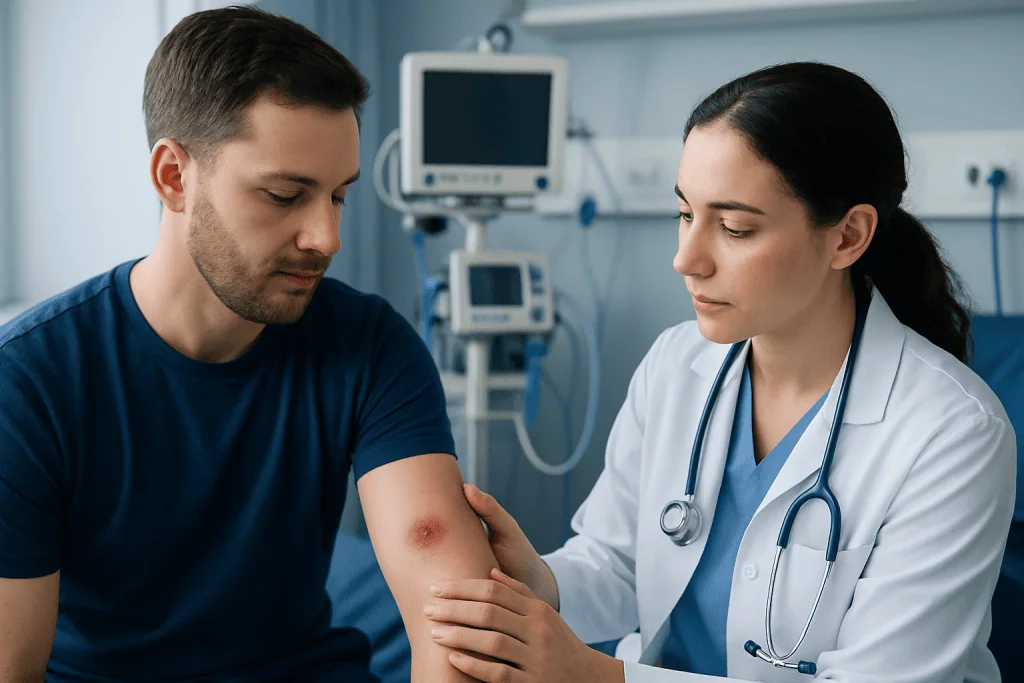
A kissing bug bite mark often looks like a small, round, red papule or welt. Some people develop mild swelling around the area, while others have very little visible reaction. Itching is common, but some bites are painless and are discovered only after waking up.
The mark can occur alone or in a small cluster if the insect fed more than once. Since kissing bugs are active at night, people may notice the lesion in the morning on skin that was uncovered during sleep. The bite does not have a unique pattern that clearly separates it from mosquito, flea, bed bug, or other arthropod bites.
Features that may make a kissing bug bite more suspicious include noticing a large dark insect in the sleeping area, finding the mark after sleeping in an at-risk environment, or having swelling near the eye after possible contact with bug waste. In some cases, a person may confuse the bite with a common rash, acne-like bump, or a simple irritated spot.
- Typical appearance: small red bump, welt, or localized swelling
- Common symptoms: itching, mild burning, tenderness, or no symptoms
- Common locations: face, neck, arms, hands, legs, and other exposed skin
- Important limitation: the mark alone cannot confirm the insect species
Symptoms Beyond the Mark
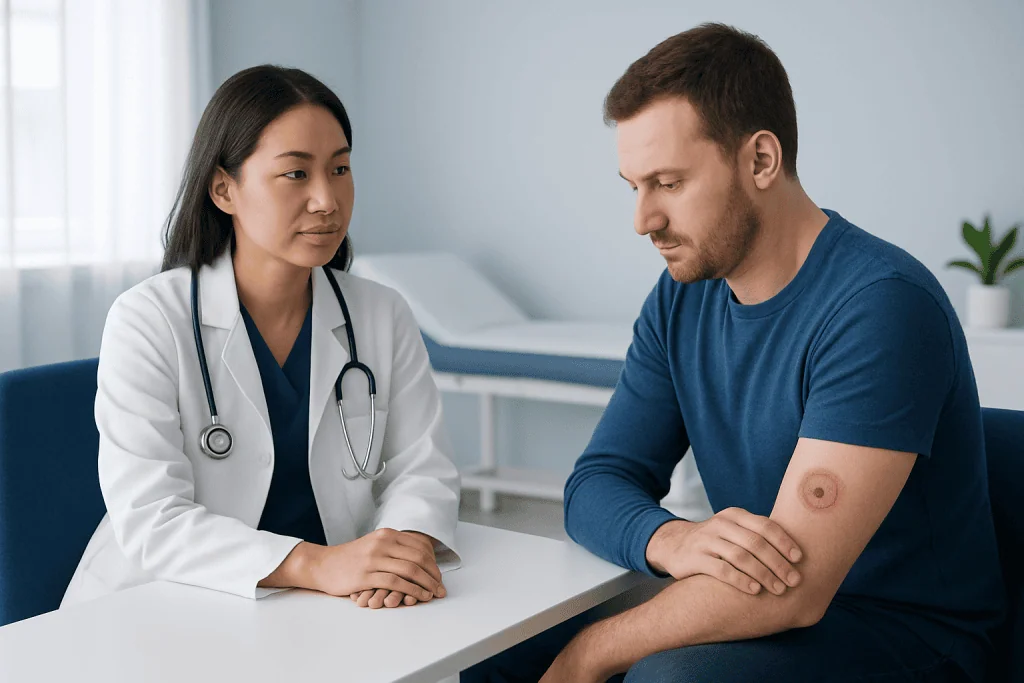
Most people who develop a kissing bug bite mark have only a local skin reaction. This may include redness, itching, mild warmth, and temporary swelling. Scratching can worsen irritation and may raise the risk of a secondary skin infection.
Some people have stronger reactions, including larger areas of swelling, hives, or signs of allergy. Rarely, an insect bite can trigger severe allergic symptoms such as trouble breathing, widespread rash, dizziness, or swelling of the lips and tongue. Those symptoms need urgent medical attention.
If parasite transmission occurs, symptoms related to acute Chagas disease may appear days to weeks later in some patients, although many people remain symptom-free. Possible early features can include fever, tiredness, body aches, swollen lymph nodes, swelling at the entry site, or swelling around one eye if contaminated material reached the eye. These symptoms are nonspecific, which is why exposure history matters.
Long-term complications, when they occur, are related to the infection rather than the bite mark. Chagas disease can affect the heart or digestive system years later in some people, making early recognition and proper follow-up important when there is meaningful exposure concern.
Where Kissing Bugs Are Found and Who May Be at Risk
Kissing bugs are most relevant in parts of Latin America, where Chagas disease is endemic, but some species are also present in the southern United States. A person is more likely to ask about a kissing bug bite mark after camping, sleeping in rustic housing, living in areas where triatomine insects are known to exist, or noticing insects indoors near beds or lights.
Risk depends not only on geography but also on housing and environmental conditions. Cracks in walls, thatched roofs, cluttered sleeping spaces, nearby animal nests, and outdoor lights that attract insects may increase exposure. Pets and wild animals can also be part of the insect’s surrounding habitat.
It is also important to understand that seeing a bug or having a suspicious bite does not automatically mean infection risk is high. Not every triatomine bug carries T. cruzi, and even when the parasite is present, transmission requires specific contact with contaminated insect waste. This is one reason doctors assess the whole situation rather than making conclusions based on the mark alone.
Patients who are already being evaluated for unexplained fever, persistent fatigue, or potential tropical infections may be referred for specialist assessment in infectious diseases care when the history suggests possible exposure.
Diagnosis: How Doctors Evaluate a Suspected Kissing Bug Bite
Diagnosis starts with a careful history. A doctor may ask when the bite appeared, what the mark looked like, whether the patient saw the insect, where they slept, whether they recently traveled, and whether any symptoms developed afterward. If the insect was safely collected, experts may sometimes help identify it, but patients should avoid handling insects with bare hands.
Physical examination focuses on the skin lesion and any signs of allergy or infection. The clinician may look for warmth, spreading redness, drainage, or significant swelling. They may also ask about fever, eye swelling, palpitations, abdominal symptoms, or fatigue if Chagas disease is a concern.
Testing is not needed for every uncomplicated bug bite mark. However, if there is meaningful exposure risk or symptoms suggestive of infection, blood tests may be recommended based on the timing of exposure and local practice. In selected cases, doctors may use laboratory tests to look for evidence of Chagas disease or to monitor heart involvement. Depending on symptoms, assessment may include cardiology evaluation or a broader medical check-up.
Because many skin lesions mimic one another, clinicians may also consider other causes such as mosquito bites, bed bugs, fleas, allergic contact reactions, folliculitis, or skin infections. A careful differential diagnosis helps avoid unnecessary worry while still identifying the few patients who need further evaluation.
Treatment and Home Care for the Bite Mark
For a simple kissing bug bite mark, treatment is usually supportive. Gentle washing with soap and water, a cool compress, and avoiding scratching are sensible first steps. If itching is bothersome, a doctor or pharmacist may suggest a suitable over-the-counter anti-itch approach, provided it is appropriate for the person’s age, skin condition, and medical history.
Patients should keep the area clean and watch for signs of worsening irritation. Scratching can break the skin and allow bacteria to enter, which may lead to redness, crusting, tenderness, or drainage. If that happens, a clinician may need to assess whether a skin infection is developing.
When there is concern for allergic reaction, doctors may recommend treatment based on the severity of symptoms. Severe reactions require urgent care. If testing confirms Chagas disease, treatment focuses on the infection itself rather than the bite mark, and management is guided by clinicians familiar with parasitic disease.
For patients who develop persistent rash-like changes or diagnostic uncertainty, assessment by dermatology specialists may help clarify whether the lesion is an insect bite or another skin condition.
Prevention and Self-Care After Possible Exposure
Prevention centers on reducing contact with triatomine insects. When sleeping in areas where kissing bugs may be present, people can use intact window screens, bed nets when appropriate, and keep sleeping spaces away from cracks, clutter, and animal nesting areas. Outdoor lights near entry points may attract insects, so minimizing this can also help in some settings.
At home, sealing gaps around doors, windows, roofs, and walls may reduce indoor insect access. Regular cleaning, checking pet sleeping areas, and addressing rodent or wildlife nesting near the home can be useful environmental measures. If an insect is found, it should be handled carefully and preferably identified by local public health or pest control guidance.
After a suspicious bite, washing the area and hands is a reasonable first step. If a person touched insect material and then rubbed the eyes, nose, or broken skin, they should mention this to a doctor because it may change the level of concern. It is usually helpful to take a clear photo of the mark and note the date, location, and any new symptoms.
Prevention also includes perspective: most insect bites are minor, and most suspicious marks are not dangerous. Careful observation and timely medical advice, rather than panic, are the most useful responses.
When to Seek Medical Care
Medical care is appropriate if a kissing bug bite mark is followed by fever, unusual fatigue, swollen lymph nodes, one-sided swelling around the eye, or other symptoms that suggest more than a local skin reaction. Evaluation is also important if the bite occurred in an area where Chagas disease exposure is possible or if the insect was identified as a triatomine bug.
Urgent care is needed for trouble breathing, faintness, widespread hives, or swelling of the lips, tongue, or throat after any insect bite. Patients should also seek care if the skin lesion becomes increasingly painful, hot, drains pus, or continues to worsen instead of improving over several days.
It is reasonable to contact a clinician even when symptoms are mild if the person is pregnant, immunocompromised, has significant heart disease, or is caring for a young child with a suspicious bite. In these situations, individualized advice can be especially helpful.
Acibadem International’s multidisciplinary specialists and JCI-accredited hospitals evaluate and treat international patients with suspected infectious and dermatologic conditions when further assessment is needed.
Frequently asked questions
What does a kissing bug bite mark look like?
It often looks like a small red bump, welt, or mildly swollen area. It may itch, burn slightly, or cause no symptoms at all. Because many insect bites look similar, the mark alone cannot confirm that a kissing bug caused it.
Is every kissing bug bite dangerous?
No. Many bites cause only a local skin reaction and heal with basic care. The main concern is possible exposure to the parasite that causes Chagas disease, which depends on the insect, the setting, and how contact occurred.
Can a doctor diagnose a kissing bug bite just by looking at the mark?
Usually not. Doctors use the appearance of the mark together with travel history, where the person slept, whether the insect was seen, and whether other symptoms developed. Testing may be considered only when exposure risk or symptoms make it necessary.
How long does a kissing bug bite mark last?
A mild bite mark may improve within a few days, though itching or redness can last longer in some people. Scratching can delay healing and increase irritation. If the lesion keeps worsening or shows signs of infection, medical review is recommended.
When should someone worry about Chagas disease after a suspicious bite?
Concern is greater when the bite happened in an at-risk region, the insect is suspected to be a triatomine bug, or symptoms such as fever, fatigue, or eye swelling appear afterward. The bite mark itself is not enough to diagnose Chagas disease. A qualified doctor can decide whether testing or follow-up is appropriate.
What should someone do right after finding a suspicious bite mark?
They can wash the area gently with soap and water, avoid scratching, and apply a cool compress if needed. Taking a photo of the mark and noting the date and place can be useful. If severe allergy symptoms, eye involvement, or concerning general symptoms develop, they should seek medical care promptly.
This article is for general information only and is not a substitute for professional medical advice. Please consult a qualified doctor about your individual situation.
Explore treatments in Turkey — costs, top hospitals & a free quote
JCI-accredited · board-certified surgeons · reply within 24h
Add us as a Preferred Source to see more of our trusted health content across Google Search, AI Overviews and Discover.

More from the Health Library

Popped Blood Vessel in Eye: A Complete Medical Overview

Coconut: An Evidence-Based Guide for Patients

Paxil: An Evidence-Based Guide for Patients

Absolute lymphocytes high: Symptoms, Causes, and Treatment — Complete Patient Guide

Puffy Face: An Evidence-Based Guide for Patients