Knee Replacement Surgery: Candidacy, Procedure, and Rehabilitation

Knee replacement surgery is usually considered when knee pain, stiffness, and loss of function persist despite appropriate non-surgical treatments. The operation replaces damaged joint surfaces with artificial components designed to allow smoother knee movement.
Key Takeaways
- Knee replacement surgery is usually considered when knee pain, stiffness, and loss of function persist despite appropriate non-surgical treatments.
- The operation replaces damaged joint surfaces with artificial components designed to allow smoother knee movement.
- Recovery depends on active rehabilitation, pain control, wound care, and gradual return to daily activities.
- Most patients need several weeks to resume basic routines and several months to regain strength, balance, and endurance.
- A qualified orthopedic surgeon can explain individual benefits, risks, implant options, and realistic expectations.
Knee replacement surgery can help reduce pain and improve mobility when severe knee arthritis or joint damage no longer responds to non-surgical care. Understanding candidacy, the operation, and rehabilitation helps patients prepare for a safer and more confident recovery.
Overview
Knee replacement surgery, also called knee arthroplasty, is a procedure in which damaged parts of the knee joint are removed and replaced with artificial components. It is most often performed for advanced osteoarthritis, but it may also be considered for rheumatoid arthritis, post-traumatic arthritis, certain deformities, or severe joint damage that limits daily life.
The goal is not to create a brand-new knee, but to reduce pain, improve alignment, and help the joint move more smoothly. For many people, this can make walking, climbing stairs, sleeping, and participating in low-impact activities easier. The result depends on the person’s overall health, the condition of the knee, the surgical plan, and commitment to rehabilitation.
Knee replacement may involve the whole knee or only one compartment of the joint. A total knee replacement treats the main weight-bearing surfaces of the femur, tibia, and sometimes the underside of the kneecap. A partial knee replacement may be suitable when damage is limited to one area and the ligaments and remaining joint surfaces are healthy.
Who May Be a Candidate?
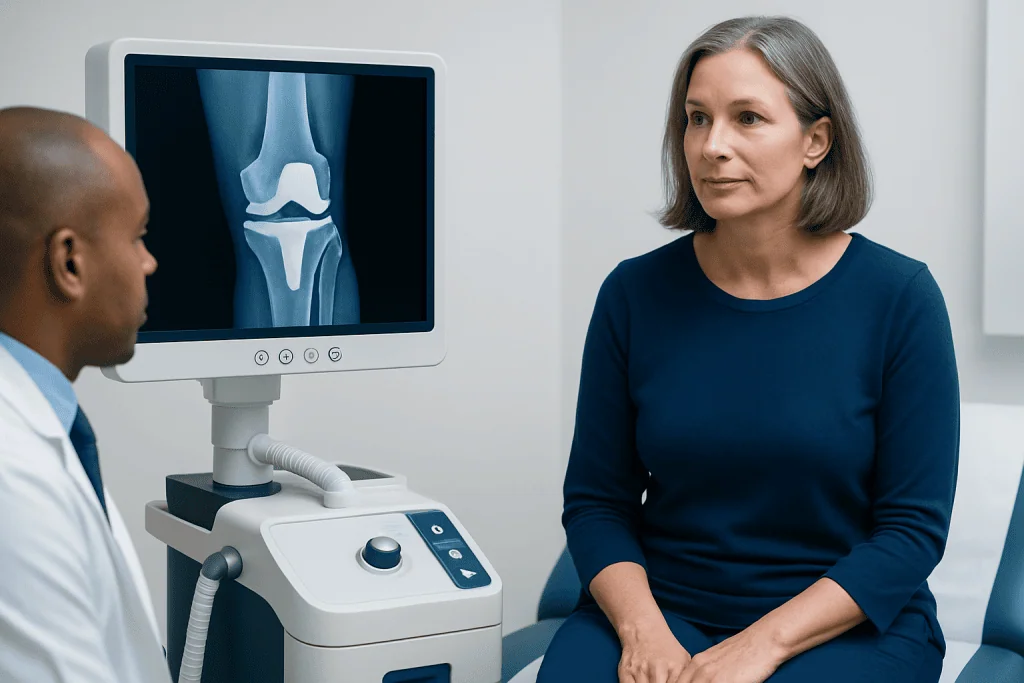
Candidacy is based on symptoms, examination findings, imaging results, and the effect of knee disease on quality of life. Surgery is usually considered after appropriate non-surgical options have been tried, such as weight management, physical therapy, activity modification, anti-inflammatory medicines when appropriate, injections, bracing, or assistive devices.
Common reasons to discuss knee replacement with an orthopedic surgeon include persistent pain during walking or at rest, stiffness that limits bending or straightening, knee deformity, swelling that does not improve, and difficulty performing daily tasks. X-rays often show advanced cartilage loss, bone changes, or joint narrowing that matches the symptoms.
Some factors may need to be optimized before surgery. These include uncontrolled diabetes, active infection, significant skin problems near the knee, severe vascular disease, smoking, obesity, anemia, poor dental or urinary infection control, and certain heart or lung conditions. Optimization does not always mean a person cannot have surgery; it means the care team may recommend steps to reduce risk before scheduling the procedure.
Types of Knee Replacement
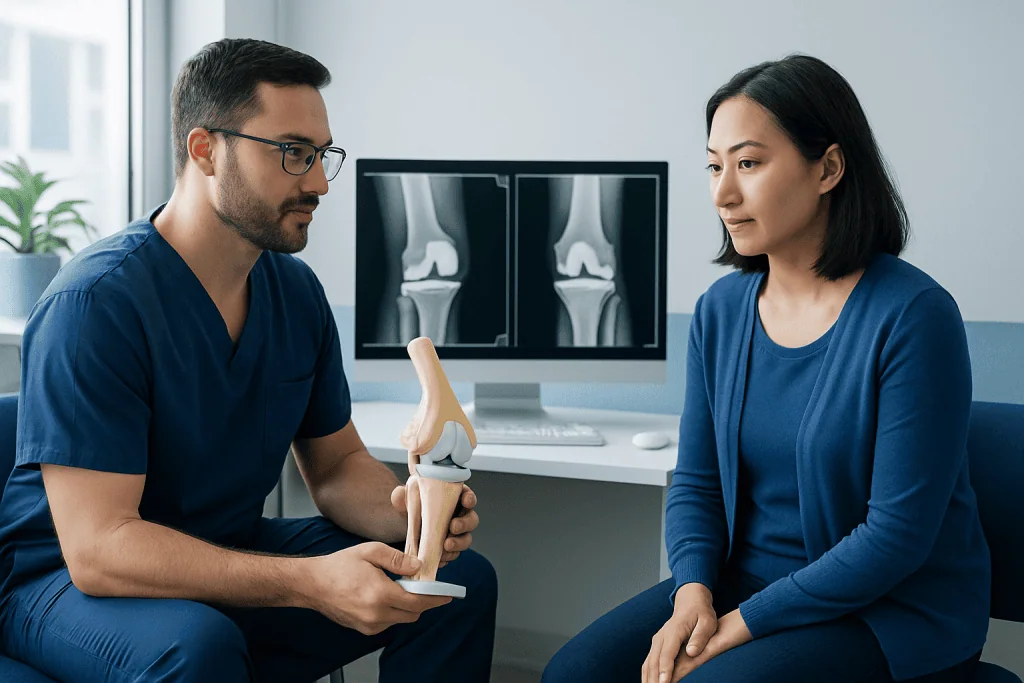
The main types are total knee replacement, partial knee replacement, and revision knee replacement. In a total knee replacement, the surgeon resurfaces the damaged ends of the thigh bone and shin bone with metal components and places a medical-grade plastic spacer between them. The kneecap surface may also be resurfaced depending on the patient’s anatomy and surgeon’s assessment.
Partial knee replacement, also called unicompartmental knee replacement, replaces only the damaged compartment of the knee. It may involve a smaller incision and a more natural knee feel for selected patients, but it is not appropriate when arthritis affects multiple compartments or when ligament stability is inadequate. Careful imaging and physical examination are essential for selection.
Revision knee replacement is performed when a previous implant needs to be repaired or replaced. Reasons may include implant loosening, wear, instability, infection, stiffness, fracture around the implant, or persistent symptoms. Revision surgery is usually more complex than a first knee replacement and requires detailed planning.
What Happens During the Procedure?
Before surgery, patients typically have a preoperative assessment that may include blood tests, an electrocardiogram, imaging, medication review, and anesthesia evaluation. The care team discusses whether spinal, regional, or general anesthesia is most suitable. Patients are also instructed about fasting, medicines to stop or continue, and how to prepare the home for recovery.
During the operation, the surgeon makes an incision at the front of the knee, moves soft tissues aside, and removes the damaged cartilage and a small amount of underlying bone. The bone surfaces are shaped to fit the implant components. Trial components may be used to check alignment, stability, and range of motion before the final components are fixed in place.
Modern knee replacement may use different implant designs and fixation methods. Some components are cemented to the bone, while others are designed for bone to grow onto the surface. Computer navigation, patient-specific planning, or robotic-assisted techniques may be used in some centers to support precision, but the most important factors remain appropriate patient selection, surgical expertise, and rehabilitation.
After the implant is placed, the incision is closed and a dressing is applied. Patients are monitored in the recovery area, with attention to pain control, circulation, breathing, and early movement. Many care pathways encourage standing and walking with assistance on the day of surgery or soon afterward, depending on the patient’s condition and the hospital protocol.
Recovery and Rehabilitation
Rehabilitation begins early and is a central part of knee replacement recovery. The first goals are to control swelling, protect the incision, prevent complications, and regain safe mobility. A physiotherapist teaches exercises for knee bending and straightening, ankle pumping, walking with a walker or crutches, and safe transfers in and out of bed or a chair.
Recovery timelines vary. Some patients return home within a short hospital stay, while others may need more supervised rehabilitation. In the first few weeks, it is common to focus on walking short distances, using stairs safely, managing pain medicines as prescribed, and increasing knee motion. Driving, work, and travel should be discussed with the surgeon, especially if the right knee was operated on or if strong pain medicines are still being used.
Rehabilitation often includes:
- Range-of-motion exercises to improve bending and straightening.
- Strengthening exercises for the quadriceps, hamstrings, hips, and calf muscles.
- Balance and walking training to improve confidence and reduce fall risk.
- Swelling control with elevation, cold therapy if recommended, and appropriate activity pacing.
- Gradual return to low-impact activities such as walking, cycling, and swimming after medical clearance.
Progress is usually measured over months, not days. Some stiffness, warmth, swelling, and fatigue can occur during healing, especially after increased activity. Patients should follow their rehabilitation plan closely and report concerns promptly rather than pushing through unusual pain or sudden changes.
Benefits, Risks, and Realistic Expectations
The expected benefits of knee replacement include reduced arthritis pain, improved walking ability, better knee alignment, and greater independence in daily activities. Many patients are able to return to low-impact exercise and routine social activities. However, an artificial knee may not feel exactly like a natural knee, and some people continue to notice mild stiffness, clicking, numbness near the incision, or kneeling discomfort.
As with any operation, knee replacement has potential risks. These include infection, blood clots, bleeding, stiffness, implant loosening or wear over time, persistent pain, instability, fracture, wound healing problems, and rare injury to nerves or blood vessels. The surgical team uses preventive measures such as sterile technique, antibiotics when indicated, blood clot prevention strategies, and early mobilization to reduce risk.
Implant longevity varies depending on activity level, body weight, bone quality, alignment, and other individual factors. High-impact running, jumping, and heavy repetitive loading are usually discouraged because they may increase wear. Patients should discuss appropriate activities with their surgeon and physiotherapist so expectations are safe and realistic.
Prevention, Self-Care, and When to See a Doctor
Not every painful knee needs surgery. Joint-friendly self-care may help delay or avoid knee replacement in earlier disease. Helpful measures include maintaining a healthy weight, strengthening the thigh and hip muscles, choosing low-impact exercise, wearing supportive footwear, managing inflammatory conditions, and using medicines only as advised by a qualified clinician.
After knee replacement, self-care includes keeping the wound clean and dry as instructed, taking medicines exactly as prescribed, attending follow-up visits, and continuing exercises even after early improvements. Patients should also inform dentists and other doctors that they have a joint replacement, as medical teams may consider this information when planning certain procedures.
Medical advice should be sought promptly for increasing redness, drainage, fever, worsening calf swelling, chest discomfort, shortness of breath, sudden severe pain, new inability to bear weight, or a wound that opens. For patients considering care abroad, coordination before and after surgery is especially important. Acibadem International’s multidisciplinary specialists and JCI-accredited hospitals diagnose and treat knee conditions for international patients, including evaluation, surgery when appropriate, and rehabilitation planning.
Frequently asked questions
When is knee replacement surgery recommended?
It is usually recommended when severe knee pain and stiffness continue despite non-surgical treatment and significantly limit daily life. The decision is based on symptoms, physical examination, imaging, general health, and personal goals. An orthopedic surgeon can help determine whether surgery is appropriate or whether more conservative care should continue.
Is total knee replacement better than partial knee replacement?
Neither option is automatically better for everyone. Total knee replacement is used when arthritis or damage affects most of the knee, while partial knee replacement may be suitable when disease is limited to one compartment. The best choice depends on joint damage, ligament stability, alignment, age, activity level, and surgeon assessment.
How painful is recovery after knee replacement?
Pain and swelling are expected after surgery, especially during the first weeks, but they are managed with a planned approach that may include medicines, ice or cold therapy, elevation, and physical therapy. Pain typically improves gradually as tissues heal and strength returns. Patients should tell their care team if pain is not controlled or suddenly worsens.
How long does rehabilitation take?
Basic walking and daily activities often improve within weeks, but strength, balance, and endurance may continue to improve for several months. Rehabilitation time varies by age, fitness, preoperative knee stiffness, other medical conditions, and consistency with exercises. Follow-up appointments help track progress and adjust the plan.
Can a person climb stairs after knee replacement?
Most patients learn to climb stairs safely during rehabilitation, often using a handrail and assistive device at first. Technique and confidence improve as knee motion, strength, and balance return. A physiotherapist provides individualized guidance on when and how to progress.
How long do knee implants last?
Knee implants are designed to be durable, but they can wear or loosen over time. Longevity depends on factors such as body weight, activity level, implant position, bone quality, and overall health. Patients should attend follow-up visits and avoid high-impact activities unless specifically cleared by their surgeon.
References
- American Academy of Orthopaedic Surgeons
- National Institute for Health and Care Excellence
- Mayo Clinic
- OrthoInfo
- World Health Organization
This article is for general information only and is not a substitute for professional medical advice. Please consult a qualified doctor about your individual situation.
Joint and spine care in Turkey — expert assessment & treatment
JCI-accredited · board-certified surgeons · reply within 24h
Add us as a Preferred Source to see more of our trusted health content across Google Search, AI Overviews and Discover.

Orthopedics & Spine
Care for bones, joints and the musculoskeletal system, including joint replacement, sports injuries and trauma.
125 specialists in this unitMore from the Health Library



Related Specialists

Prof. Dr. Arel Gereli
Orthopedic Surgery & Traumatology
Dr. Gülşen Küçükdemirbaş
Physical Medicine & Rehabilitation
Dr. Birgül Karakoç
Gynecology & Obstetrics
Dr. Rana Özgüven
Emergency Service