Laser Dentistry: An Evidence-Based Guide for Patients
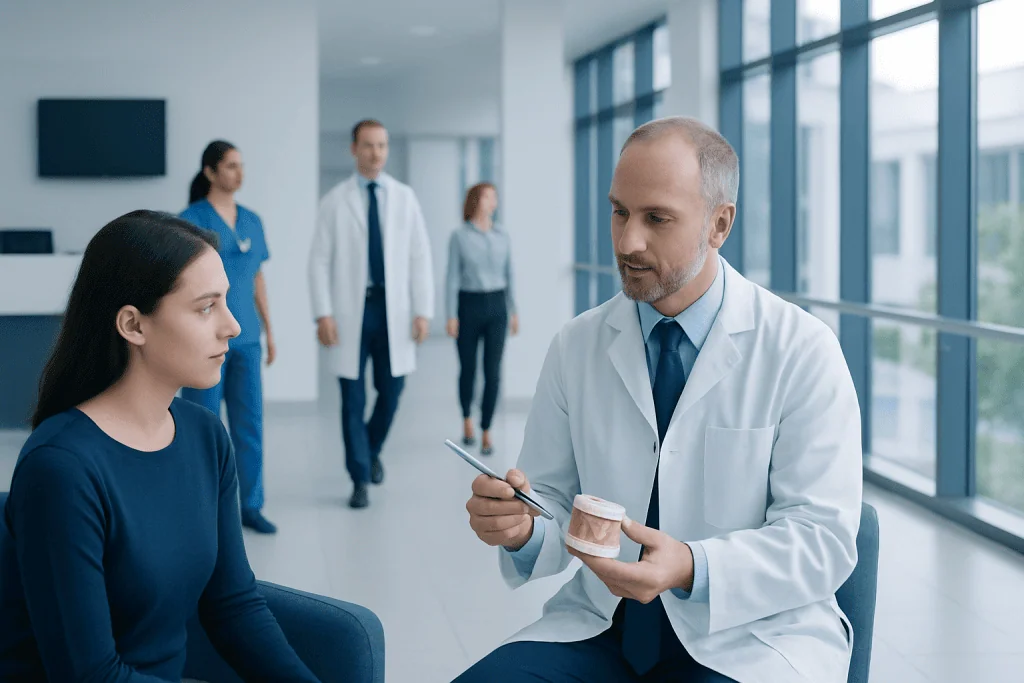
Laser dentistry can be used for certain gum, soft-tissue, and some hard-tissue dental procedures. It may reduce bleeding, vibration, and the need for stitches in selected treatments.
Key Takeaways
- Laser dentistry can be used for certain gum, soft-tissue, and some hard-tissue dental procedures.
- It may reduce bleeding, vibration, and the need for stitches in selected treatments.
- Not every cavity, gum problem, or dental emergency can be treated with a laser.
- Safety depends on proper training, careful case selection, and use of protective eyewear.
- A dentist will choose between laser and conventional tools based on diagnosis, goals, and available evidence.
Laser dentistry uses focused light energy to perform selected dental procedures on teeth and gums. For the right problem and the right patient, it can be a precise, evidence-based option that may improve comfort and healing, but it does not replace every conventional dental treatment.
Overview: what laser dentistry is and when it is used
Laser dentistry is the use of concentrated light energy to diagnose or treat certain problems affecting the teeth, gums, and other tissues in the mouth. Different lasers are designed for different purposes. Some are used mainly on soft tissues such as gums, while others are used on hard tissues such as enamel and dentin.
For patients, the main question is usually simple: does it work, and is it safe? In appropriately selected cases, laser dentistry is an evidence-based option that can help with precision, tissue control, and comfort. It may reduce bleeding in soft-tissue procedures, make some treatments feel less invasive, and support faster recovery in some situations.
At the same time, laser dentistry is not a universal replacement for traditional dental tools. Drills, hand instruments, local anesthesia, and standard surgical techniques are still necessary in many situations. A careful dental examination is needed to decide whether a laser is likely to offer a meaningful benefit for the specific condition being treated.
How dental lasers work
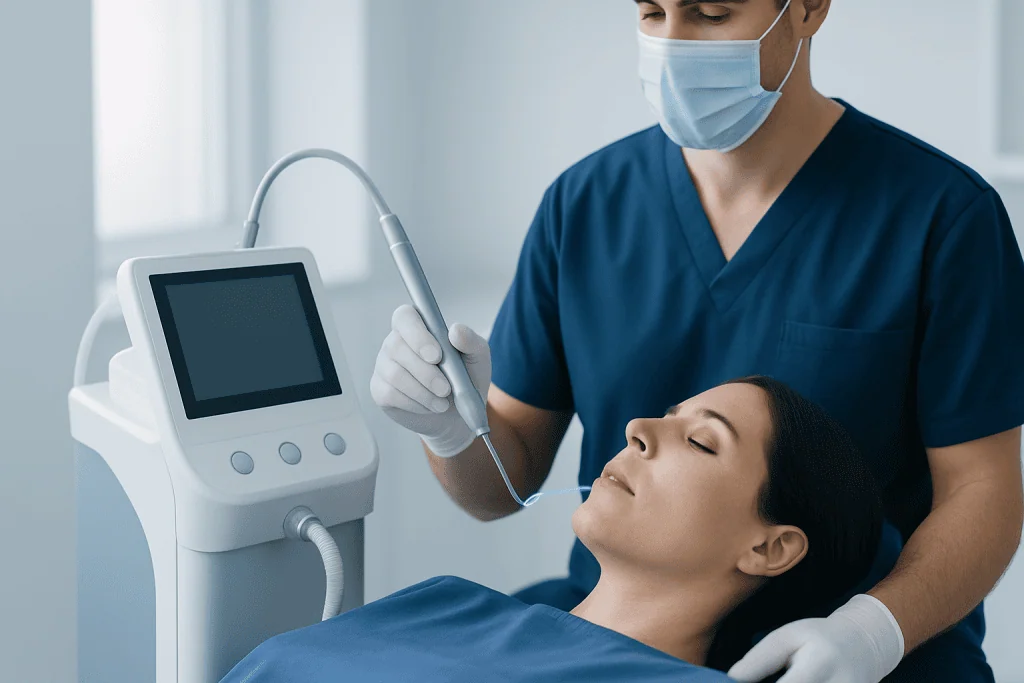
A dental laser produces a focused beam of light at a specific wavelength. That wavelength determines how the laser interacts with tissue. Some wavelengths are absorbed mainly by water and soft tissue, while others interact more with mineralized tooth structure or pigmented tissues.
When the laser energy reaches the target area, it can cut, vaporize, reshape, or disinfect tissue with a high level of control. In soft-tissue care, this may help seal small blood vessels and reduce bleeding. In some procedures, it may also limit swelling and reduce the need for sutures.
Dental lasers are commonly grouped into soft-tissue and hard-tissue systems. Soft-tissue lasers may be used for gum contouring, treating certain gum pockets, or releasing a tongue-tie in selected patients. Hard-tissue lasers may be used for some cavity preparation, tooth sensitivity treatment, or removal of small amounts of decayed tissue. Each system has limits, so the dentist must match the device to the clinical problem.
Common uses of laser dentistry
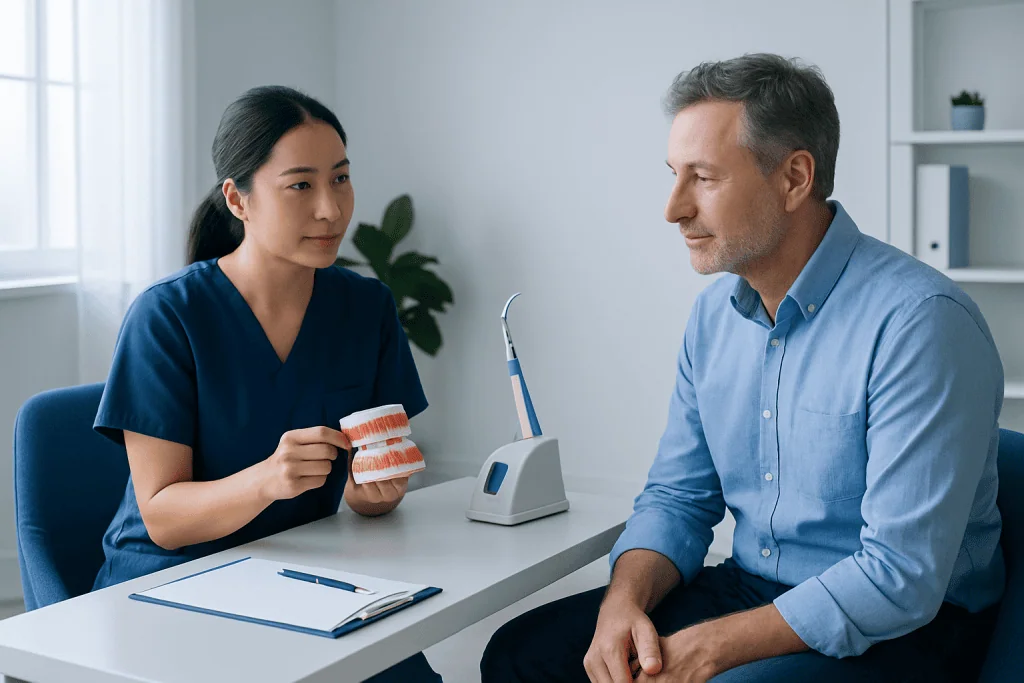
Laser dentistry is used across several areas of dental care, but its role is often most useful in selected procedures rather than routine treatment of every problem. In gum care, lasers may be used to reshape excess gum tissue, manage inflamed soft tissue, or support treatment plans for periodontal disease. Patients with gum disease may hear about lasers as part of a broader periodontal approach, though cleaning below the gumline and ongoing hygiene remain essential.
In restorative dentistry, some lasers can help remove small areas of tooth decay, prepare parts of a tooth for a filling, or reduce tooth sensitivity. However, many cavities still require conventional drilling, especially if decay is large, deep, or located between teeth in ways that are difficult for the laser to reach.
Lasers may also be used for soft-tissue procedures such as exposing a partially erupted tooth, managing a thick frenum, treating some mouth sores, or improving the fit of a denture by adjusting small tissue areas. In cosmetic or supportive care, a dentist might combine laser techniques with teeth whitening or other aesthetic treatments when appropriate. For patients already exploring broader dental treatment options, it helps to ask whether laser use would change outcomes, comfort, or healing in a meaningful way.
- Gum reshaping and soft-tissue contouring
- Supportive treatment for some periodontal conditions
- Removal of small areas of decay in selected cases
- Treatment of tooth sensitivity
- Management of some oral lesions or ulcers
- Frenectomy or soft-tissue release procedures in selected patients
Potential benefits and realistic limitations
The possible benefits of laser dentistry depend on the procedure. Soft-tissue lasers may reduce bleeding because they help seal small blood vessels as they work. Some patients report less vibration, less pressure, and less discomfort compared with certain conventional methods. In selected procedures, there may also be less swelling and a shorter recovery period.
Precision is another important advantage. A laser can target a defined area and preserve more surrounding tissue in some situations. This can be useful when reshaping gums around teeth, treating localized soft-tissue problems, or disinfecting areas that are difficult to access with instruments alone.
Still, the limitations matter just as much. Laser dentistry does not remove the need for diagnosis, X-rays when indicated, anesthesia in many cases, or established treatment planning. It may not be suitable for metal restorations, deep cavities close to the pulp, heavily damaged teeth, or conditions requiring traditional surgery. A laser is a tool, not a guarantee of a better outcome. The skill of the dentist, the type of device, and the nature of the problem all influence results.
Safety, side effects, and who may be a good candidate
When performed by a trained dental professional using the correct settings and eye protection, laser dentistry is generally considered safe. Dental teams use protective eyewear matched to the laser wavelength, and the device is selected based on whether the treatment involves soft tissue, hard tissue, or both.
Possible side effects depend on the procedure but can include temporary soreness, sensitivity, mild swelling, or delayed healing if the area becomes irritated afterward. As with any dental treatment, there can also be a risk of incomplete treatment if the problem is more extensive than it first appears. Incorrect use of a laser can damage nearby tissue, which is why clinician training and case selection are so important.
A good candidate is someone whose dental issue matches what the laser can reliably treat. Patients with mild to moderate soft-tissue problems, localized gum overgrowth, selected mouth sores, or certain small cavities may benefit. People with more advanced disease, complex restorations, or urgent infections may still need conventional care, combined treatment, or referral. A dentist may also recommend laser support in the context of dental implant care or other specialized procedures when it is clinically appropriate.
What to expect before, during, and after treatment
Before laser treatment, the dentist examines the mouth, reviews symptoms, and may take dental X-rays or photographs. The key step is not the laser itself but the diagnosis. The dentist needs to understand whether the issue is decay, gum inflammation, trauma, infection, or another problem that might respond better to a different treatment method.
During the procedure, patients usually wear special protective glasses. Depending on the treatment, local anesthesia may or may not be needed. Some soft-tissue procedures are quick and involve little pressure or vibration. Hard-tissue procedures can feel different from drilling, but they are not always completely sensation-free, especially if the area is sensitive or close to the inner tooth.
Afterward, recovery instructions vary. Patients may be advised to avoid very hot, spicy, or rough foods for a short time if soft tissue was treated. Good brushing, flossing, and follow-up visits remain important because the underlying dental condition still needs long-term management. If there is worsening pain, fever, persistent bleeding, or increasing swelling, the dental team should be contacted promptly.
When to seek medical care
Laser dentistry can help with some oral problems, but it is not a substitute for urgent evaluation when symptoms suggest infection, injury, or a deeper dental disease. A person should seek dental care soon if there is ongoing tooth pain, swelling of the gums or face, bleeding that does not stop, pus, a bad taste that persists, or difficulty chewing.
Prompt assessment is also important for ulcers or sores that do not heal within two weeks, a loose tooth, sudden sensitivity that is worsening, or a new lump or patch in the mouth. These problems may require careful diagnosis rather than immediate laser treatment. Conditions such as tooth decay and periodontal disease can progress silently, so regular checkups are valuable even when symptoms are mild.
If breathing or swallowing becomes difficult, or if there is severe facial swelling, high fever, or trauma to the jaw or teeth, urgent medical attention is needed. Near the end of a treatment journey, some patients may also wish to discuss options with a center experienced in multidisciplinary oral care. Acibadem International’s multidisciplinary specialists in JCI-accredited hospitals diagnose and treat dental and oral conditions for international patients when specialist evaluation is needed.
Frequently asked questions
Is laser dentistry safe?
Yes, laser dentistry is generally safe when it is performed by a properly trained dental professional using the correct device and protective measures. Safety depends on accurate diagnosis, correct laser settings, and eye protection for the patient and dental team.
Does laser dentistry hurt less than regular dental treatment?
Some patients find laser treatment more comfortable, especially for selected soft-tissue procedures, because there may be less vibration, pressure, and bleeding. However, comfort varies by procedure, and some treatments still require local anesthesia.
Can laser dentistry replace the dental drill?
Not completely. Some lasers can treat small areas of decay or prepare parts of a tooth, but many cavities and restorative procedures still need conventional drilling or other standard tools.
Is laser dentistry better for gum disease?
Laser treatment may be helpful in selected periodontal cases, especially as part of a broader treatment plan. It does not replace professional cleaning, plaque control, and regular follow-up, which remain central to gum disease care.
Who is a good candidate for laser dentistry?
A good candidate is someone whose dental condition matches the strengths of laser treatment, such as selected gum procedures, certain soft-tissue concerns, or some small areas of decay. The best way to know is through a dental examination and treatment planning discussion.
What are the downsides of laser dentistry?
The main limitations are that not every dental problem can be treated with a laser and the result depends heavily on the dentist’s training and the type of laser used. In some cases, conventional tools may be more effective, more predictable, or necessary to complete treatment.
This article is for general information only and is not a substitute for professional medical advice. Please consult a qualified doctor about your individual situation.
Laser Dentistry in Turkey — costs, top hospitals & a free quote
JCI-accredited · board-certified surgeons · reply within 24h
Add us as a Preferred Source to see more of our trusted health content across Google Search, AI Overviews and Discover.

More from the Health Library

Alkaline Water: A Complete Medical Overview

Tapeworms in Humans: What Patients Need to Know

Cooper’s Ligament — Explained by Medical Evidence, Not Myths

Avoid Reflux: What Patients Need to Know

Symbicort Generic: An Evidence-Based Guide for Patients