Leg Curl Alternative: What Patients Need to Know

A leg curl alternative can target the hamstrings with bodyweight, bands, free weights, or cable-based exercises. Different exercises load the hamstrings in different ways, so the best option depends on comfort, mobility, and training goals.
Key Takeaways
- A leg curl alternative can target the hamstrings with bodyweight, bands, free weights, or cable-based exercises.
- Different exercises load the hamstrings in different ways, so the best option depends on comfort, mobility, and training goals.
- Pain during exercise is not normal; people with knee, hip, or back symptoms may need medical advice before starting or changing a routine.
- Good technique, gradual progression, and recovery are important for safe hamstring strengthening.
- Some alternatives may be more suitable than machine leg curls for home exercise, rehabilitation, or knee-sensitive training.
A leg curl alternative is any exercise that strengthens the hamstrings without using a leg curl machine, such as bridges, hip hinges, sliders, or resistance-band movements. The best choice depends on a person’s goals, knee comfort, lower back health, training level, and whether they are recovering from an injury.
Overview: what a leg curl alternative means
A leg curl alternative is an exercise used in place of a machine leg curl to strengthen the hamstring muscles at the back of the thigh. In practice, this can include bodyweight movements such as bridges, sliding curls, or hip hinges, as well as resistance-band, dumbbell, barbell, or cable exercises. For many people, these options are practical because they can be done at home, in a gym without specialized equipment, or as part of a rehabilitation plan.
The hamstrings help bend the knee, extend the hip, and support walking, stair climbing, running, and balance. Because they work together with the gluteal muscles, calf muscles, and core, hamstring training does not need to rely on one machine. A well-chosen leg curl alternative can improve strength and function while also training coordination and movement control.
Not every alternative is appropriate for every person. Some people want a machine-free exercise for convenience, while others are looking for a more knee-friendly option or a way to return to activity after strain or surgery. People with ongoing pain, instability, or swelling should not assume one exercise fits all and may benefit from assessment for conditions such as knee pain or other musculoskeletal concerns.
Common reasons patients look for an alternative
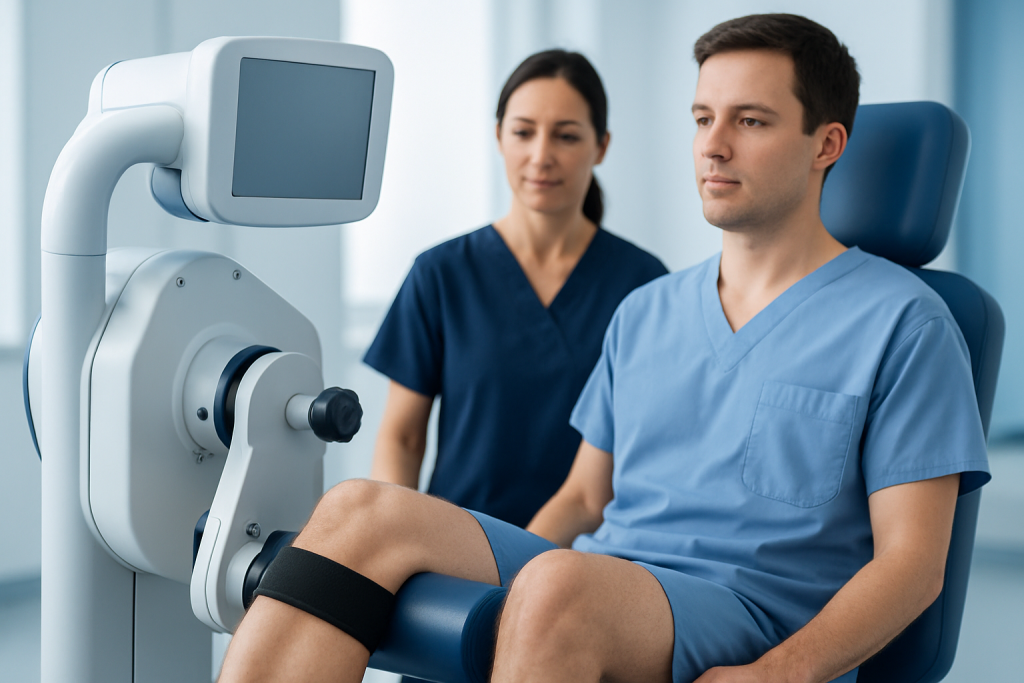
People look for a leg curl alternative for several different reasons. Some do not have access to a leg curl machine. Others find that the machine position feels uncomfortable on the knees, hips, or lower back. In rehabilitation, a clinician may also choose an alternative that better matches a person’s current stage of recovery and allows more control over range of motion and resistance.
Another reason is that machine leg curls mainly isolate the hamstrings through knee flexion, while many daily activities require the hamstrings to work with the hips and trunk. Exercises such as Romanian deadlifts, hip bridges, and step-based movements can strengthen the posterior chain more functionally. This may be helpful for people who want to improve lifting mechanics, walking efficiency, or sports performance.
Some alternatives are also easier to scale. A beginner may start with a double-leg bridge or light resistance band, then progress to single-leg versions, sliding curls, or weighted hip-hinge exercises. This stepwise approach can be useful for older adults, people returning to exercise, or anyone who needs to build confidence gradually.
Examples of leg curl alternatives
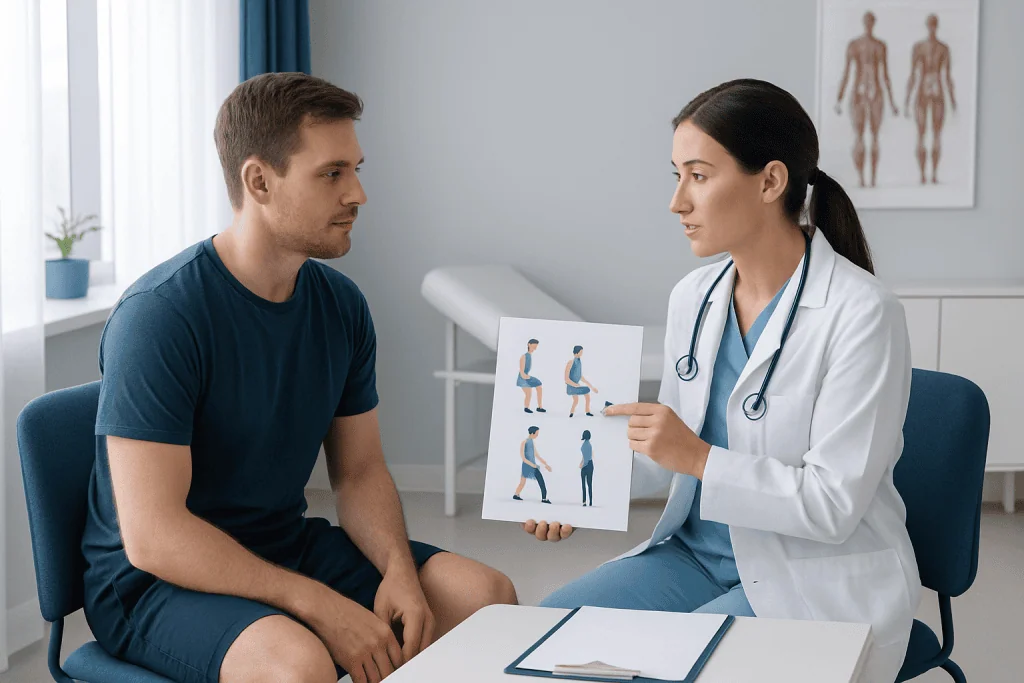
Several exercises can serve as an effective leg curl alternative, but they challenge the hamstrings in different ways. Some focus more on knee flexion, like a machine leg curl does, while others emphasize hip extension and the broader posterior chain. The most suitable choice depends on movement quality, strength, balance, and symptom history.
Common options include:
- Glute bridge or hip bridge: A simple starting exercise that strengthens the hamstrings and gluteal muscles with low equipment needs.
- Single-leg bridge: Increases demand on each leg and challenges pelvic stability.
- Sliding hamstring curl: Performed with towels, sliders, or socks on a smooth surface, this closely mimics a curl pattern and can be demanding.
- Resistance-band hamstring curl: A flexible option at home or in clinic settings, with resistance adjusted by band strength and setup.
- Romanian deadlift: A hip-hinge movement that loads the hamstrings through lengthening and strengthens the gluteal muscles and lower back muscles when performed correctly.
- Kettlebell or dumbbell deadlift: Useful for beginners learning hip hinge mechanics.
- Cable hamstring curl: Offers a more controlled curl pattern if cable equipment is available.
- Swiss ball hamstring curl: Builds hamstring strength while also training trunk stability.
These exercises are not interchangeable in every clinical situation. For example, a Romanian deadlift may be effective for strength development but may not suit a person with significant balance difficulties or poorly controlled lower back pain. A clinician or physiotherapist may recommend a more targeted program, especially after injury, and in some cases structured physical therapy and rehabilitation can help guide exercise selection and progression.
How to choose the best option for your body
The best leg curl alternative is the one that trains the hamstrings effectively without worsening symptoms. In general, a person should consider several factors: pain level, confidence with balance, mobility at the hips and ankles, lower back tolerance, and access to equipment. Someone recovering from an injury may need a slower, more controlled exercise, while a healthy exerciser may benefit from a broader range of movements.
For people with knee sensitivity, bridge variations or hip-hinge exercises may feel more comfortable than deep knee-flexion movements. For those with lower back irritation, a supported bridge or carefully supervised band curl may be preferable to a loaded deadlift. For athletes or more experienced exercisers, combining a hip-dominant movement with a curl-style movement may provide more complete hamstring training.
Technique matters as much as exercise choice. The hamstrings can become overloaded if a person moves too quickly, uses too much resistance, or compensates with the lower back. It is often helpful to begin with a movement that can be performed through a comfortable range with steady control, then increase repetitions, resistance, or complexity gradually over time.
If exercise selection is difficult because of longstanding joint symptoms, previous surgery, or repeated strains, a medical review may be appropriate. Imaging or specialist assessment is not always necessary, but it may be considered when pain persists or function does not improve. Depending on the situation, a doctor may coordinate care with rehabilitation specialists or request MRI to clarify a soft-tissue injury.
Benefits, limitations, and safety points
Leg curl alternatives can offer several benefits. Many require little or no equipment, making them practical for home programs. Some movements also train multiple muscle groups at once, which may better reflect everyday activities and improve overall coordination. In addition, alternatives can be adapted across different ages and activity levels, from gentle rehabilitation exercises to more demanding strength work.
There are also limitations. A machine leg curl provides a stable setup and can isolate the hamstrings more directly, which may be useful in some rehabilitation or strength programs. Certain alternatives demand more balance or trunk control and may be harder to perform correctly without guidance. This does not make them unsafe by definition, but it does mean that form and progression need attention.
Basic safety principles include warming up, avoiding sudden increases in load, and stopping if there is sharp pain, catching, or a feeling of giving way. Mild muscle fatigue is expected during strengthening, but joint pain, swelling, or symptoms that last beyond the workout may indicate that the exercise or intensity should be changed. People who have recently had surgery or an acute injury should follow individualized instructions from their treating team.
Using alternatives during recovery or with joint pain
A leg curl alternative is often especially useful when someone is returning to activity after a hamstring strain, knee irritation, or a period of reduced mobility. Early in recovery, simple isometric or low-load movements may be used first, followed by controlled strengthening as pain settles and function improves. The exact plan depends on the diagnosis, stage of healing, and whether nearby areas such as the hip or lower back are also involved.
For knee-related symptoms, the choice of exercise may depend on whether bending the knee increases discomfort. A bridge or hinge pattern may feel easier for some people, while others tolerate a short-range curl well. If knee pain is persistent, recurrent, or associated with swelling or locking, medical assessment is reasonable because exercise should match the underlying problem rather than just the symptom.
People with a recent hamstring strain should be cautious about returning too quickly to high-load or high-speed exercises. A controlled program usually progresses from gentle activation to strengthening at different muscle lengths, then to more dynamic activities if needed. In some cases, broader orthopedic care such as orthopedic rehabilitation may be part of the recovery process.
For patients seeking evaluation or coordinated care, Acibadem International’s multidisciplinary specialists and JCI-accredited hospitals diagnose and treat musculoskeletal conditions for international patients. When pain involves more than simple exercise intolerance, a wider orthopedic assessment may help identify problems affecting the knee, hip, back, or soft tissues.
Prevention and self-care for healthy hamstrings
Healthy hamstrings depend on more than one exercise. A balanced routine usually includes a warm-up, gradual strengthening, mobility work that suits the individual, and attention to recovery. Training the gluteal muscles, core, and calf muscles can also support better movement patterns and reduce unnecessary strain on the back of the thigh.
It is generally helpful to increase training demands slowly, especially after time away from exercise. Sudden changes in running, sprinting, jumping, or resistance training can raise the chance of strain. Good hydration, adequate sleep, and rest between demanding sessions also support tissue recovery, although they do not replace proper technique and progression.
Self-care should include noticing warning signs. Repeated cramping, persistent tightness, or soreness that does not improve may reflect overtraining, poor exercise selection, or an underlying problem rather than a need to push harder. If symptoms continue despite activity modification, a qualified doctor or physiotherapist can help assess whether the issue is muscular, joint-related, or linked to another condition.
When to seek medical care
Medical advice is appropriate if pain starts suddenly with a popping sensation, if the back of the thigh bruises or swells, or if walking becomes difficult. A person should also seek evaluation for knee pain that includes locking, instability, marked swelling, or the feeling that the joint may give way. These symptoms may suggest more than routine exercise soreness.
Prompt assessment is also sensible when symptoms last more than a few weeks, keep coming back, or limit work, sports, or daily activities. People with numbness, weakness, fever, unexplained weight loss, or severe back pain should not assume the problem is simply a tight hamstring. Those with recent surgery or a known orthopedic condition should follow their clinician’s instructions before changing exercises.
A doctor may recommend physical examination, rehabilitation planning, or imaging depending on the findings. In some situations, symptoms in the leg may relate to nearby structures or conditions such as herniated disc, rather than the hamstrings themselves. An accurate diagnosis helps ensure that exercise supports recovery instead of delaying it.
Frequently asked questions
What is the best leg curl alternative at home?
For many people, a bridge, sliding hamstring curl, or resistance-band hamstring curl is a practical home option. The best choice depends on fitness level, available space, and whether the person has knee or back discomfort.
Do leg curl alternatives work the same muscles?
Most alternatives train the hamstrings, but not all in the same way. Some focus more on knee bending, while others emphasize hip extension and the wider posterior chain, including the gluteal muscles.
Are leg curl alternatives better for knee pain?
They can be, depending on the cause of the pain. Some people find bridges or hip-hinge exercises more comfortable than machine curls, but persistent or worsening knee pain should be assessed by a qualified clinician.
Can a person build hamstring strength without a machine?
Yes. Hamstring strength can be improved with bodyweight, bands, free weights, stability balls, or cable systems, provided the program is progressed gradually and performed with good technique.
Should exercise continue if the hamstrings feel tight or sore?
Mild post-exercise soreness can be normal, especially after a new activity. Sharp pain, swelling, bruising, weakness, or symptoms that persist or worsen are reasons to stop and seek professional advice.
Which leg curl alternative is closest to a machine leg curl?
Sliding hamstring curls, Swiss ball curls, and cable or band hamstring curls usually resemble the machine pattern most closely because they involve active knee flexion. Even so, the load, stability, and difficulty can feel quite different.
This article is for general information only and is not a substitute for professional medical advice. Please consult a qualified doctor about your individual situation.
Joint and spine care in Turkey — expert assessment & treatment
JCI-accredited · board-certified surgeons · reply within 24h
Add us as a Preferred Source to see more of our trusted health content across Google Search, AI Overviews and Discover.

More from the Health Library

Gilovi — Explained by Medical Evidence, Not Myths

Healthiest Milk — Explained by Medical Evidence, Not Myths

Epigenetics: A Complete Medical Overview

Lip Filler Aftercare: A Complete Medical Overview

Desmopressin — Explained by Medical Evidence, Not Myths