Legg Calve Perthes Disease Brace: An Evidence-Based Patient Guide
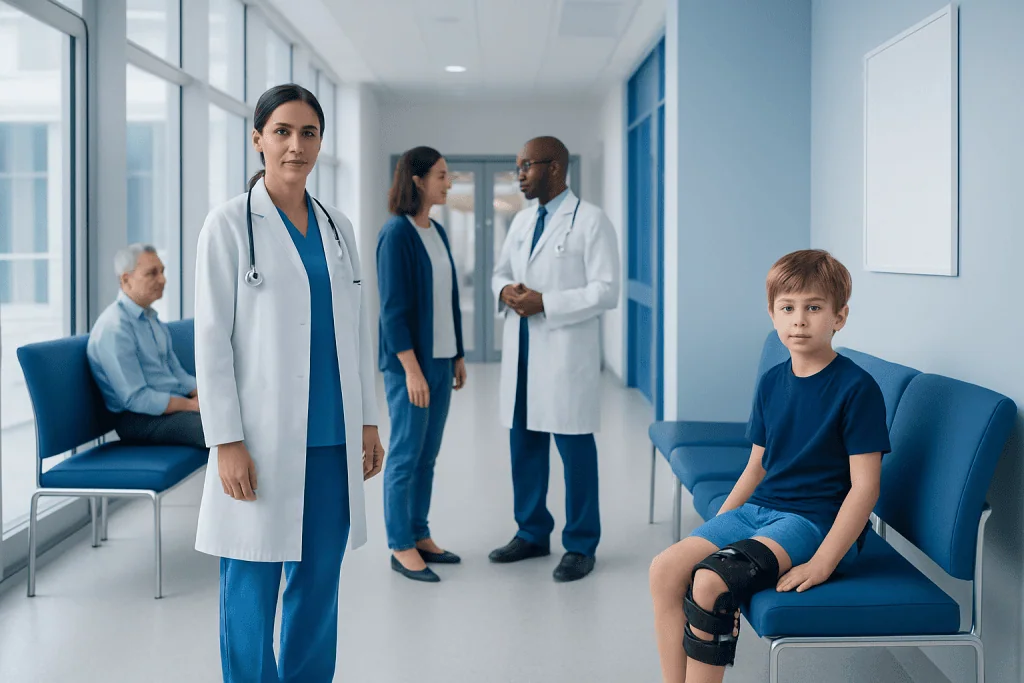
A brace may be considered to maintain hip abduction, a position in which the thigh is held away from the body. The main treatment goal is to preserve a round, well-covered femoral head while the bone heals and remodels.
Key Takeaways
- A brace may be considered to maintain hip abduction, a position in which the thigh is held away from the body.
- The main treatment goal is to preserve a round, well-covered femoral head while the bone heals and remodels.
- Bracing is used selectively and is often combined with physiotherapy, activity modification and regular imaging.
- Older children or those with more severe femoral-head involvement may need surgical containment rather than, or in addition to, non-surgical care.
- Comfort, skin checks, movement exercises and scheduled follow-up are important while a child uses a brace.
A Legg Calve Perthes disease brace is an orthopaedic device that may be used to hold a child’s hip in a position intended to support containment of the femoral head during healing. Bracing is not needed for every child, and current treatment decisions are individualized according to age, symptoms, hip movement and imaging findings.
Overview: What Is a Legg Calve Perthes Disease Brace?
A legg calve perthes disease brace is a custom or prefabricated orthopaedic device used in selected children with Legg-Calve-Perthes disease. It is designed to position the hips with some abduction, meaning the legs are held gently apart. This position may help keep the ball of the hip joint, called the femoral head, better covered by the socket while it is vulnerable to shape changes.
Legg-Calve-Perthes disease is a childhood hip condition in which blood flow to the femoral head is temporarily disrupted. The affected bone can soften, fragment and later heal over several years. The key concern is whether the femoral head remains as round as possible and continues to fit well within the hip socket as the child grows.
A brace is one part of a broader treatment plan rather than a cure for the condition. Some children are managed with observation, physiotherapy and activity adjustments alone, while others may benefit from bracing or surgery. A paediatric orthopaedic specialist uses the child’s clinical examination and imaging results to recommend the most appropriate approach.
How Bracing Supports Hip Containment
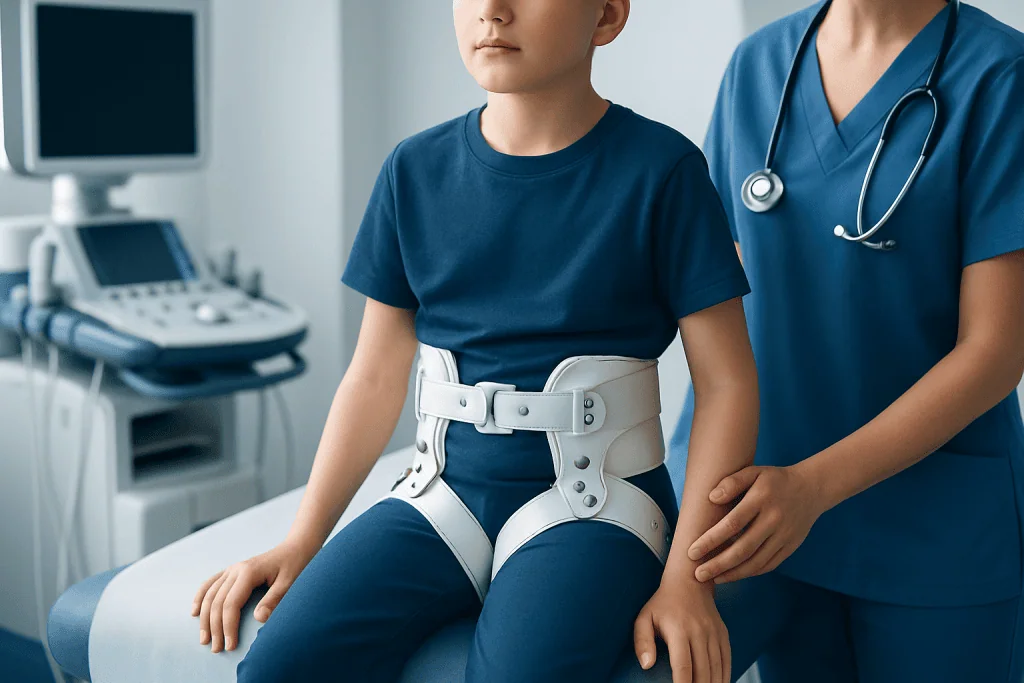
In Perthes disease, the softened femoral head may be more likely to flatten or move partly out of its usual position in the hip socket. The purpose of bracing is called containment: encouraging the femoral head to remain seated within the acetabulum, or hip socket, during the healing and reshaping process.
Many braces hold the hips in abduction and sometimes modest internal rotation. The exact design varies. Some devices are worn for much of the day, while others are primarily used at night or during limited periods, depending on the treatment objective and the specialist’s instructions. The device should be professionally fitted and reviewed as the child grows.
Bracing does not restore blood supply directly, and it cannot guarantee a particular final hip shape. Its potential role is mechanical: maintaining a helpful position while the body repairs the bone. Regular range-of-motion exercises remain important because stiffness, especially reduced ability to move the hip outward, can affect containment and comfort.
Evidence regarding bracing is mixed, particularly for more advanced disease. For this reason, specialists usually consider bracing alongside the child’s age, degree of femoral-head involvement, hip mobility and ability to use the device consistently rather than applying it routinely to every child.
Who May Be a Candidate for a Perthes Brace?
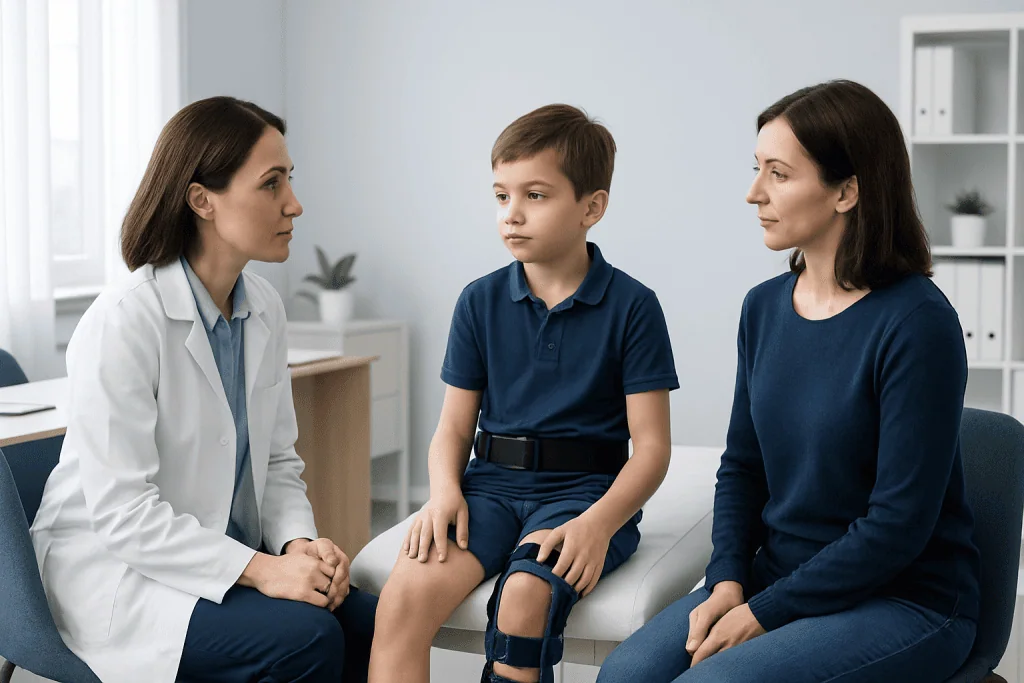
Children with early or less extensive disease, good hip movement and a femoral head that is still reasonably contained may be considered for non-surgical management. A brace may be discussed when a specialist believes that maintaining abduction could help preserve hip alignment during an active stage of the condition.
Age is an important factor. Younger children generally have more time for the femoral head to remodel as they grow, and many can do well with careful non-surgical care. In children who are older at onset, especially those with significant loss of femoral-head shape or reduced containment, surgery may be more likely to be considered because the risk of long-term hip shape changes can be greater.
Bracing may be less suitable when the hip cannot comfortably move into the required position, when disease changes are advanced, or when the child cannot safely tolerate the device. The decision also takes practical issues into account, including school routines, toileting, skin sensitivity, family support and the child’s emotional wellbeing.
A paediatric orthopaedic assessment may include review of related childhood hip concerns, such as hip dysplasia in children, because hip anatomy and containment are central to treatment planning. However, these are distinct conditions with different causes and management pathways.
Assessment and Step-by-Step Brace Fitting
Diagnosis and monitoring usually begin with a medical history, physical examination and hip X-rays. A clinician assesses pain, limp, leg length, hip range of motion and gait. X-rays help identify the stage of Perthes disease, the amount of femoral-head involvement and whether the hip remains well contained. Magnetic resonance imaging may occasionally be used when additional detail is needed.
If bracing is recommended, the specialist prescribes the intended hip position and wearing schedule. An orthotist, a healthcare professional trained in orthopaedic devices, measures the child and fits the brace. Parents or caregivers are shown how to put it on and remove it, fasten straps correctly, check pressure areas and care for the brace.
Follow-up visits are essential. The team checks the brace fit, the child’s skin, comfort, walking ability and hip movement. Repeat X-rays are commonly used over time to monitor the femoral head and ensure the treatment plan remains appropriate. Adjustments may be needed as the child grows or the disease enters a different stage.
Physiotherapy is often integrated into care. Gentle exercises may focus on retaining hip abduction and rotation, improving muscle control and maintaining safe mobility. Families should use only the activities and limits advised by the child’s care team, as recommendations differ according to disease stage and symptoms.
Benefits, Limitations and Possible Risks
The potential benefit of a brace is improved maintenance of hip containment without an operation. For some children, this may support a treatment plan aimed at preserving movement and encouraging favorable femoral-head remodeling. Bracing can also provide a structured way to guide positioning during a period when the hip is healing.
However, a brace can be demanding. It may interfere with dressing, sleep, sitting, school activities and play. Some children find the device uncomfortable or feel self-conscious. Clear explanations, practical support at school and age-appropriate involvement in decisions can make adjustment easier.
Possible physical problems include skin redness, pressure sores, chafing, discomfort, muscle stiffness and reduced activity. These concerns should be reported promptly rather than managed by tightening, loosening or altering the device without advice. Persistent pain, numbness, cold feet, swelling or skin breakdown needs timely clinical review.
Bracing also has limitations: it may not prevent progression in every child, and it may not be the best option for hips with more severe deformity or poor containment. If imaging or examinations show that the current plan is not adequately protecting the hip, the specialist may discuss other treatments, including paediatric orthopaedic surgery.
Recovery Timeline, Daily Life and Rehabilitation
Perthes disease develops and heals gradually, often over several years. The duration of brace use varies widely and depends on the child’s hip findings, growth, symptoms and response to management. Families should expect regular reassessment rather than a fixed recovery date, since the disease changes through stages and treatment may need to evolve.
During brace treatment, the child may need to avoid high-impact activities that increase hip loading, such as running, jumping and contact sports. Low-impact movement may be encouraged in some cases. Swimming, cycling adaptations or other activities may be appropriate for certain children, but the treating team should provide individualized guidance.
Physiotherapy can help maintain flexibility and function. Exercises are typically designed to preserve comfortable hip motion, particularly abduction and rotation, while avoiding pain-provoking movements. A physiotherapist may also advise on safe transfers, mobility aids, school participation and return to activities as symptoms improve.
Emotional adjustment matters as well. Children may benefit from a consistent routine, opportunities to discuss worries and communication between caregivers, teachers and clinicians. If a child has ongoing distress, sleep difficulties or reluctance to attend school because of the brace, the family should mention this at follow-up so practical support can be arranged.
When to Seek Medical Care
A child with a persistent limp, hip pain, groin pain, thigh or knee pain, reduced hip movement, or avoidance of usual activities should be assessed by a doctor. Hip disorders in children can present as knee pain because pain signals may travel along the nerves of the leg. Early evaluation helps identify the cause and supports appropriate monitoring.
Families should contact the treating team sooner if pain is increasing, the child cannot bear weight as usual, the brace causes skin injury or marked discomfort, or there are concerns about brace fit. A child with fever, severe pain, a very unwell appearance, or sudden inability to walk needs urgent medical assessment because symptoms may be caused by conditions other than Perthes disease.
At Acibadem International, multidisciplinary paediatric orthopaedic specialists in JCI-accredited hospitals can assess and treat Perthes disease for international patients, coordinating imaging, rehabilitation and surgical care when required. Families should seek advice from a qualified clinician before changing brace wear, exercise routines or activity limits.
Frequently asked questions
Does every child with Perthes disease need a brace?
No. Many children do not need a brace, particularly when the hip is well contained and the specialist believes observation, activity adjustment and physiotherapy are appropriate. The decision depends on the child’s age, disease stage, hip movement and imaging findings.
How long does a child wear a Legg Calve Perthes disease brace?
The duration varies considerably because Perthes disease changes over time and each child’s hip heals differently. The orthopaedic team sets the wearing schedule and reviews it at follow-up appointments, often adjusting it according to examination and X-ray findings.
Can a child walk while wearing a Perthes brace?
Whether walking is permitted depends on the brace type, disease stage, pain level and the specialist’s activity plan. Some children may walk with restrictions or mobility aids, while others may need more limited weight-bearing for a period. Families should follow the individual instructions provided by their care team.
Is bracing painful for children with Perthes disease?
A properly fitted brace should not cause sharp pain, numbness or skin injury, although it can feel unfamiliar and restrictive at first. Mild pressure or temporary discomfort may occur during adjustment, but ongoing pain, rubbing or redness should be reported so the fit can be checked.
Can physical therapy be used with a Perthes brace?
Yes. Physiotherapy is commonly used alongside bracing to help preserve hip range of motion, strength and safe mobility. The exercises should be specifically prescribed for the child, as some movements and activities may not be suitable at every stage of the condition.
Will a brace prevent arthritis later in life?
A brace cannot guarantee prevention of arthritis. The long-term outlook is influenced by the final shape of the femoral head and how well it fits the hip socket after healing. Appropriate follow-up and individualized treatment aim to support the best possible hip function over time.
References
- American Academy of Orthopaedic Surgeons
- OrthoInfo
- National Institute of Arthritis and Musculoskeletal and Skin Diseases
- Royal College of Surgeons of England
- International Perthes Study Group
This article is for general information only and is not a substitute for professional medical advice. Please consult a qualified doctor about your individual situation.
Joint and spine care in Turkey — expert assessment & treatment
JCI-accredited · board-certified surgeons · reply within 24h
Add us as a Preferred Source to see more of our trusted health content across Google Search, AI Overviews and Discover.