Lhermitte’s Phenomenon: An Evidence-Based Guide for Patients

Lhermitte's phenomenon is a symptom, not a diagnosis. It often feels like a quick electric shock triggered by bending the neck forward.
Key Takeaways
- Lhermitte's phenomenon is a symptom, not a diagnosis.
- It often feels like a quick electric shock triggered by bending the neck forward.
- Possible causes include multiple sclerosis, cervical spondylosis, vitamin B12 deficiency, and other conditions affecting the cervical spinal cord.
- Diagnosis focuses on finding the underlying cause through history, neurological examination, and sometimes MRI or blood tests.
- Treatment aims to manage the cause and reduce symptom triggers.
- New, worsening, or persistent symptoms should be assessed by a qualified doctor.
Lhermitte's phenomenon is a short, electric-shock-like sensation that travels down the neck, spine, or limbs, usually when the neck bends forward. It is not a disease itself, but a symptom that can happen when the cervical spinal cord or its protective covering is irritated.
What is Lhermitte's phenomenon?
Lhermitte’s phenomenon is a sudden, brief sensation that many people describe as an electric shock running from the neck down the spine. In some people, it also travels into the arms or legs. It most often happens when the head is bent forward, although other neck movements can sometimes trigger it.
This phenomenon is a sign that the cervical spinal cord, the part of the spinal cord in the neck, may be irritated or unusually sensitive. The symptom can feel alarming, but the sensation itself is usually short-lived and does not always mean a serious emergency. What matters most is identifying why it is happening.
Lhermitte’s phenomenon is sometimes called Lhermitte’s sign, but “phenomenon” may be more accurate because it is something a person experiences rather than a finding seen directly by a clinician. It can occur in neurological conditions such as multiple sclerosis, but it can also appear with non-inflammatory causes, including wear-and-tear changes in the neck or nutritional deficiencies.
How it feels and common symptoms
The classic symptom is a fast, electric, buzzing, tingling, or shock-like feeling that starts in the neck and moves downward. For some people it reaches only the upper back; for others it may travel along the spine into the legs or arms. The sensation usually lasts only seconds.
Episodes are often brought on by flexing the neck forward, such as when looking down at a phone, tying shoes, reading, or coughing or sneezing in a position that bends the neck. Some people notice it only occasionally, while others have repeated episodes over days or weeks.
Lhermitte’s phenomenon may happen on its own or alongside other symptoms related to the underlying condition. These can include:
- Neck pain or stiffness
- Numbness or tingling in the hands, arms, or legs
- Weakness or clumsiness
- Balance problems
- Changes in walking
- Fatigue or visual symptoms in some neurological disorders
Because the sensation is unusual, people may worry about the heart or circulation. However, Lhermitte’s phenomenon is generally a nerve-related symptom rather than a heart symptom. A doctor can help distinguish it from other causes of tingling, pain, or radiating sensations.
Why it happens: causes and risk factors
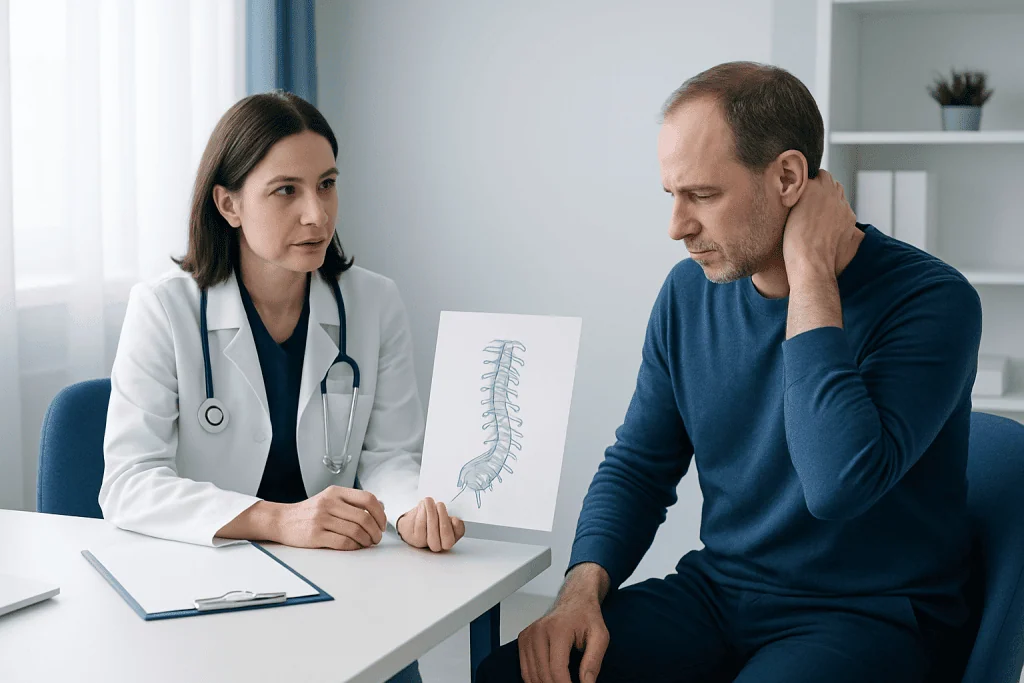
Lhermitte’s phenomenon happens when the nerve pathways in the cervical spinal cord are irritated, compressed, inflamed, or damaged. Neck flexion can briefly stretch these pathways and trigger the shock-like feeling. The symptom is therefore best understood as a clue that the spinal cord in the neck deserves medical attention.
One well-known cause is demyelination, where the protective covering of nerves is affected, as can happen in multiple sclerosis. It may also occur in cervical spondylosis, disc disease, spinal cord compression, inflammation, prior radiation to the neck, trauma, or after some infections. In certain cases, vitamin B12 deficiency or other metabolic problems may contribute because they can affect nerve health.
Less commonly, the symptom may be associated with structural abnormalities in the neck or spinal cord, autoimmune disease, or complications after treatment for another condition. Risk factors therefore depend on the underlying cause and may include a history of neurological disease, degenerative neck disease, nutritional deficiency, previous neck injury, or prior radiation therapy.
The same symptom can arise from very different conditions, which is why self-diagnosis is not reliable. A person with newly developed Lhermitte’s phenomenon should be evaluated in context, especially if other neurological symptoms are present.
How doctors diagnose the cause
Diagnosis begins with a careful description of the sensation: what it feels like, how long it lasts, what triggers it, and whether it is associated with weakness, numbness, vision changes, or bladder or balance problems. A neurological examination helps assess sensation, reflexes, strength, coordination, and gait.
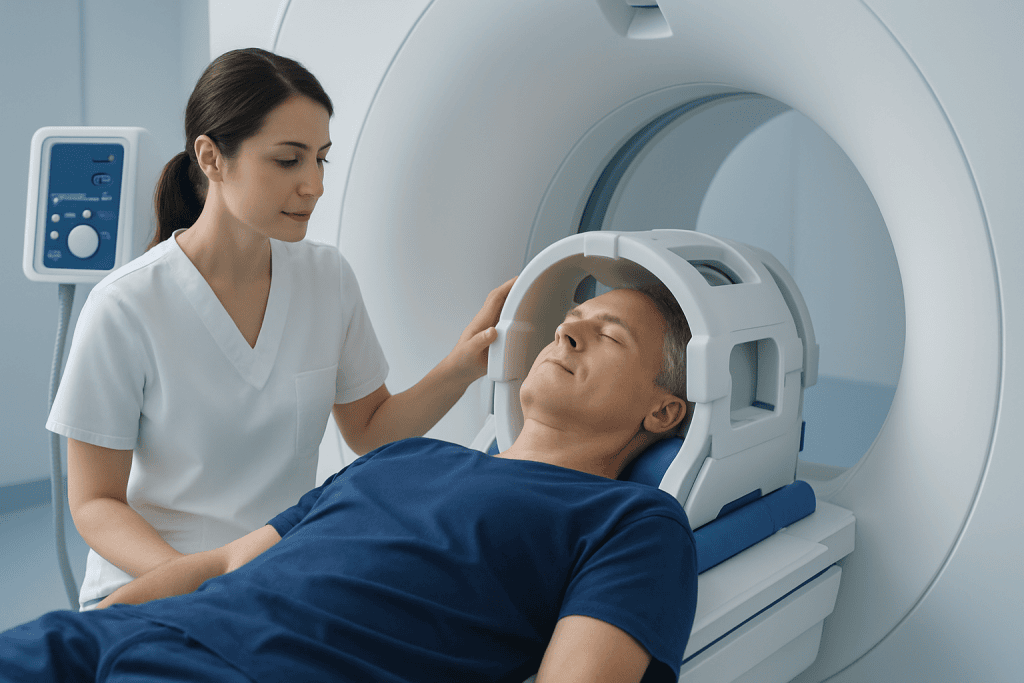
Because Lhermitte’s phenomenon is a symptom rather than a stand-alone disease, testing is chosen to look for the reason behind it. Imaging such as MRI of the brain and especially the cervical spine is often important when a spinal cord or demyelinating cause is suspected. MRI can help identify inflammation, lesions, compression, or other structural changes.
Doctors may also request blood tests to check for vitamin B12 deficiency, inflammatory markers, infection-related concerns, or autoimmune clues when appropriate. In selected cases, additional neurological tests may be considered. If there are signs of compression or complex spinal disease, further evaluation by specialists in neurology or neurosurgery may be recommended.
The diagnostic process aims not only to confirm that the sensation is Lhermitte’s phenomenon, but also to rule out other causes of neck-related symptoms. This can include distinguishing spinal cord irritation from nerve root problems, muscle pain, or non-neurological sensations.
Treatment and symptom management
There is no single treatment for Lhermitte’s phenomenon because management depends on the cause. If the symptom is related to an inflammatory neurological condition, treatment may focus on controlling disease activity. If it is due to spinal cord compression or degenerative neck changes, treatment may target the structural problem. If a vitamin deficiency is found, correcting that deficiency may help.
For some people, the episodes are brief and mild enough that no specific symptom treatment is needed beyond observation and follow-up. For others, reducing triggers can make daily life easier. Common practical steps include avoiding repeated neck flexion, adjusting screen height, improving posture, and taking breaks from activities that keep the head bent down for long periods.
Doctors may also recommend physical therapy or rehabilitation when neck mechanics, posture, stiffness, or mobility issues contribute to symptoms. A tailored plan can support comfort and safe movement without overstraining the neck. If there is significant compression, persistent neurological decline, or another condition that needs procedural treatment, specialist care becomes especially important.
Near the end of the evaluation pathway, some patients benefit from coordinated care across specialties. Acibadem International’s multidisciplinary specialists and JCI-accredited hospitals diagnose and treat neurological and spinal conditions for international patients when this is needed.
Self-care, daily habits, and prevention
Lhermitte’s phenomenon cannot always be prevented, especially when it is related to an underlying neurological condition. Still, daily habits may reduce discomfort or lower the chance of triggering episodes. The most helpful approach is usually to protect the neck from repeated strain while staying active within comfortable limits.
People may benefit from keeping reading material or devices at eye level, using supportive seating, and avoiding prolonged downward head posture. Gentle movement, regular stretching advised by a clinician, and sensible ergonomics at work can also help. Good general health habits, including balanced nutrition and timely treatment of vitamin deficiencies, support nerve health overall.
It is also useful to track patterns. A short symptom diary noting neck position, associated symptoms, and frequency of episodes can help a doctor understand whether the condition is stable, improving, or changing. Self-care should not replace medical review if symptoms are new, progressive, or accompanied by weakness, walking problems, or bowel or bladder changes.
When to seek medical care
Medical assessment is appropriate if Lhermitte’s phenomenon is new, recurrent, or unexplained. It is especially important to seek care if the sensation appears together with numbness, weakness, poor balance, hand clumsiness, visual symptoms, or neck pain that does not improve. These features can suggest a condition affecting the spinal cord or nervous system that needs evaluation.
Urgent care is needed if symptoms develop suddenly after an injury, or if there is rapid worsening, significant weakness, trouble walking, loss of bladder or bowel control, or severe new neurological symptoms. These warning signs do not always mean a serious condition, but they should be checked promptly.
Most cases are not emergencies, and many causes are treatable or manageable once identified. A calm, structured evaluation with a qualified doctor is the safest way to understand the symptom and decide whether monitoring, testing, or specialist treatment is needed.
Frequently asked questions
Is Lhermitte's phenomenon the same as multiple sclerosis?
No. Lhermitte's phenomenon is a symptom, not a disease. It can occur in multiple sclerosis, but it can also happen with cervical spine degeneration, spinal cord compression, vitamin B12 deficiency, and other conditions.
How long does Lhermitte's phenomenon last?
The sensation itself usually lasts only a few seconds. However, episodes may recur over a period of days, weeks, or longer depending on the underlying cause and whether the neck movement that triggers it continues.
Can Lhermitte's phenomenon go away on its own?
Yes, it can sometimes improve or disappear, especially if the underlying irritation settles or a reversible cause is treated. Even so, new or repeated episodes should be discussed with a doctor so the reason can be assessed properly.
Is Lhermitte's phenomenon dangerous?
The sensation itself is usually brief and not dangerous in isolation. The main concern is the condition causing it, which may range from relatively manageable issues to disorders that need neurological or spinal evaluation.
What triggers Lhermitte's phenomenon?
The most common trigger is bending the neck forward. Some people notice it during reading, looking down at a phone, coughing, sneezing, or other movements that briefly change the position of the neck.
What tests might a doctor order?
A doctor may start with a neurological examination and a detailed history. Depending on the situation, tests may include MRI of the cervical spine or brain and blood tests such as vitamin B12 levels or other studies guided by the suspected cause.
References
- National Institute of Neurological Disorders and Stroke
- National Multiple Sclerosis Society
- Mayo Clinic
- Merck Manual Consumer Version
- Cleveland Clinic
This article is for general information only and is not a substitute for professional medical advice. Please consult a qualified doctor about your individual situation.
Joint and spine care in Turkey — expert assessment & treatment
JCI-accredited · board-certified surgeons · reply within 24h
Add us as a Preferred Source to see more of our trusted health content across Google Search, AI Overviews and Discover.