Liquid Radiation: How It Works, Results and What to Expect

Liquid radiation usually refers to radioactive iodine, taken as a capsule or liquid. The treatment targets iodine-absorbing thyroid tissue more than other body tissues.
Key Takeaways
- Liquid radiation usually refers to radioactive iodine, taken as a capsule or liquid.
- The treatment targets iodine-absorbing thyroid tissue more than other body tissues.
- Preparation, safety instructions and follow-up depend on the condition being treated and the dose used.
- Temporary precautions help limit radiation exposure to other people after treatment.
- Fatigue, nausea, neck discomfort and dry mouth can occur, but many effects are manageable with clinical guidance.
Liquid radiation is a common informal term for radioactive iodine treatment, also called radioiodine therapy. It is most often used to treat an overactive thyroid or certain types of thyroid cancer because thyroid cells naturally absorb iodine.
Overview: What Is Liquid Radiation?
Liquid radiation is an informal name for radioactive iodine treatment, also called radioiodine therapy or radioactive iodine ablation. Despite the name, it may be given as a small capsule rather than a drink. The radioactive form of iodine travels through the bloodstream and is absorbed mainly by thyroid cells, where it releases radiation over a short distance.
This treatment may be used for hyperthyroidism, including Graves’ disease or toxic thyroid nodules, and for selected differentiated thyroid cancers, such as papillary and follicular thyroid cancer. It is not appropriate for every thyroid condition, and the decision is based on the diagnosis, medical history, scan findings, goals of treatment and personal circumstances.
Radioactive iodine is different from external-beam radiation therapy, in which radiation is delivered by a machine outside the body. With liquid radiation, the thyroid-targeting substance is swallowed and works internally. A nuclear medicine specialist and endocrinology or oncology team can explain whether radioactive iodine treatment is suitable for the individual situation.
How Liquid Radiation Works
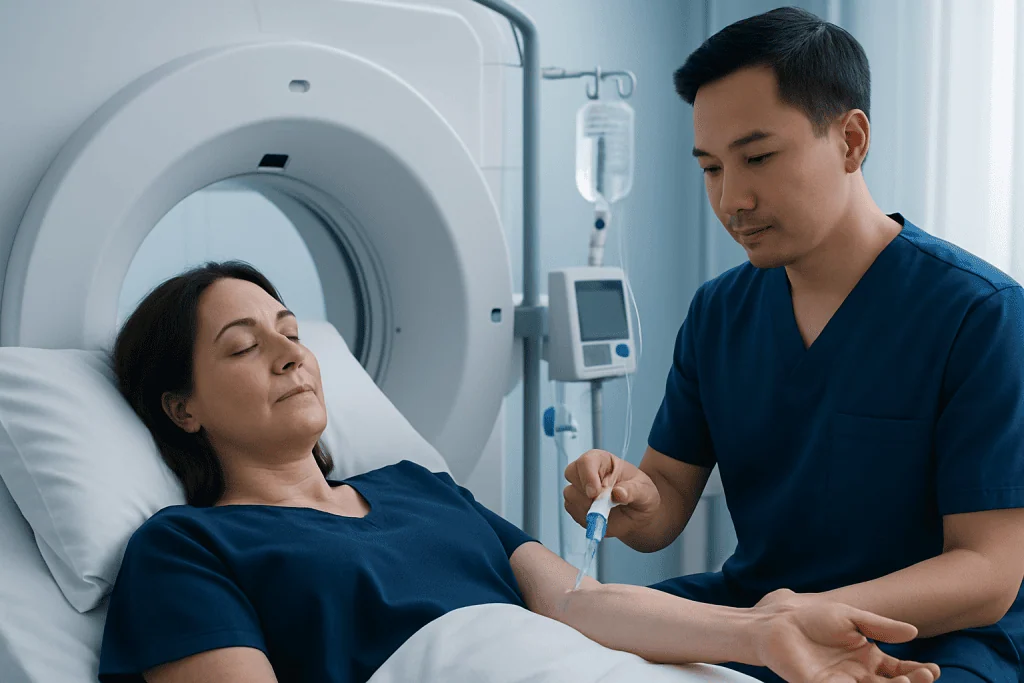
The thyroid gland needs iodine to make thyroid hormones. Thyroid cells have specialized transport mechanisms that draw iodine from the blood, and many differentiated thyroid cancer cells retain this ability. Radioactive iodine uses this natural pathway to deliver focused radiation to thyroid tissue.
After it is swallowed, radioactive iodine is absorbed from the digestive system into the bloodstream. Thyroid cells take up the iodine, and the radiation damages the targeted cells’ ability to grow or function. In hyperthyroidism, this reduces excess hormone-producing tissue. After thyroid cancer surgery, it may be used to remove remaining thyroid tissue or treat iodine-avid cancer cells that cannot be seen or removed surgically.
Most radioactive iodine that is not taken up by thyroid tissue leaves the body, mainly through urine, with smaller amounts in saliva, sweat and stool. This is why temporary radiation-safety instructions are an important part of care. The treatment team individualizes those instructions according to the dose and the patient’s home and work circumstances.
Who May Be a Candidate for Radioactive Iodine?

Radioactive iodine may be considered for people with an overactive thyroid when medicines do not provide lasting control, cause troublesome side effects, or are not a preferred long-term option. It may also be recommended after surgery for some people with differentiated thyroid cancer, depending on the cancer’s features, stage, recurrence risk and laboratory results.
Before treatment, clinicians review pregnancy status, breastfeeding, kidney function, recent iodine exposure, medicines and imaging results. People who are pregnant or breastfeeding should not receive radioactive iodine because iodine can reach a developing baby or breast tissue. Pregnancy must be avoided for a period recommended by the treating team after therapy.
Candidacy is individualized. For example, some people with Graves’ eye disease may need additional planning because thyroid treatment choices can affect eye symptoms. Surgery, antithyroid medicines, observation, and other cancer treatments may be alternatives or complements depending on the diagnosis.
- For hyperthyroidism, the aim is to reduce or stop excess thyroid hormone production.
- For thyroid cancer, the aim may be remnant ablation, treatment of persistent disease or treatment of iodine-avid spread.
- For some low-risk thyroid cancers, radioactive iodine may not be necessary after surgery.
Step by Step: Preparing for and Receiving Treatment
Preparation begins with a consultation and may include blood tests, a pregnancy test when relevant, thyroid imaging or a radioactive iodine scan. The care team reviews medicines and supplements carefully. Iodine-containing products, including some contrast dyes, vitamins, seaweed products and medications such as amiodarone, can reduce iodine uptake and may affect scheduling.
People receiving treatment after thyroid cancer may need to raise thyroid-stimulating hormone (TSH) levels so remaining thyroid cells take up iodine more effectively. This may be done by temporarily adjusting thyroid hormone medication or by using recombinant human TSH injections. A low-iodine diet may be advised for a short period; it reduces dietary iodine but is not the same as a low-salt diet.
On treatment day, the patient swallows the prescribed radioactive iodine capsule or liquid in a nuclear medicine unit. The visit is often brief, although higher doses may require a short hospital stay in a specially prepared room, depending on local regulations and the amount administered. Written instructions explain when normal eating, medications and regular activities can resume.
After treatment, follow-up may include blood tests, thyroid hormone monitoring, thyroglobulin testing for selected thyroid cancers, or scans. Results develop gradually rather than immediately. Ongoing care is especially important because many people treated for hyperthyroidism later need lifelong thyroid hormone replacement.
Benefits, Risks and Recovery Timeline
A central benefit of liquid radiation is that it can target thyroid tissue without an operation. For hyperthyroidism, it can provide long-term control when appropriate. For selected thyroid cancers, it can help treat remaining iodine-absorbing thyroid cells after surgery and can support follow-up testing.
Short-term effects may include mild nausea, altered taste, dry mouth, tender salivary glands, neck discomfort or fatigue. These effects are often temporary, but patients should report persistent or worsening symptoms. Rarely, salivary gland problems, tear duct blockage or changes in fertility may occur, particularly with higher cumulative doses. The treating team discusses the expected risks for the planned dose.
Recovery differs by indication. After treatment for hyperthyroidism, hormone levels can take weeks to months to settle, and symptoms may improve gradually. Thyroid underactivity is an expected outcome for many patients and is treated with prescribed thyroid hormone. After thyroid cancer treatment, imaging and blood-test follow-up are used to assess response over time.
For many people, the most demanding part of recovery is practical: following radiation-safety precautions while feeling well enough to be at home. Planning transport, sleeping arrangements, childcare, meals and work responsibilities ahead of time can make the first few days more manageable.
What Are the Hardest Days After Radiation Treatment?
The hardest days after radioactive iodine treatment are often the first few days, when the body is eliminating the greatest amount of unused radioactive iodine and temporary distance precautions are most important. The emotional and practical impact of avoiding close contact, particularly with children, pregnant people or household members, can feel more challenging than physical side effects.
Some people experience temporary tiredness, nausea, a dry mouth, taste changes or mild tenderness around the neck or salivary glands during the first days. Symptoms are usually manageable, but the care team should be contacted if vomiting prevents fluid intake, pain is severe, swelling is concerning, or there are signs of dehydration.
For people treated for hyperthyroidism, another difficult period can occur later, as hormone levels change. Palpitations, tremor, anxiety, heat intolerance or fatigue should be discussed with the clinician, who may adjust medicines or monitoring. Recovery should not be judged day by day; follow-up tests provide the clearest picture of treatment response.
How Long Do You Stay Radioactive After Radioactive Iodine Treatment?
After radioactive iodine treatment, the amount of radiation in the body falls continuously as the isotope naturally decays and as unused iodine leaves through body fluids. The period when precautions are needed varies widely, commonly from several days to more than a week, depending on the dose, kidney function, the condition being treated and local radiation-safety rules.
The nuclear medicine team provides personalized instructions about sleeping arrangements, physical distance, public transport, work, school, toilet hygiene, laundry and contact with children or pregnant people. These instructions should take priority over general information because they are calculated for the individual treatment plan.
Patients are not usually “radioactive forever.” Once the advised precaution period has passed, radiation exposure to others is expected to be very low. It remains important to tell healthcare professionals about recent radioactive iodine treatment if imaging or hospital care is needed soon afterward.
How Many Rounds of Radiation Is Normal?
There is no single normal number of radioactive iodine treatments. For hyperthyroidism, one treatment is often enough, although some people need another treatment if the thyroid remains overactive. The timing and choice of repeat treatment depend on hormone results, symptoms and treatment goals.
For differentiated thyroid cancer, some people receive one dose after surgery while others do not need radioactive iodine at all. Repeat treatment may be considered only when there is evidence of iodine-avid persistent or recurrent disease and when the likely benefit outweighs the risks. This decision is usually made by a multidisciplinary team that includes endocrinology, nuclear medicine, surgery and oncology specialists.
External-beam radiation follows a different schedule and is measured in daily treatment sessions, often called fractions. It is not the same as liquid radiation. A patient should ask the treating team what kind of radiation is being recommended, why it is advised and how treatment response will be assessed.
What I Wish I Knew Before Radiation
Many people find it helpful to know that preparation matters. Medication changes, a low-iodine diet when recommended, and arrangements for temporary distancing can require advance planning. Before treatment, patients can ask for written guidance and clarify how to manage work, travel, cooking, sleeping and contact with household members.
It is also useful to know that the effects are not always immediate. Radioactive iodine works over time, and follow-up blood tests or scans are part of the treatment process rather than a sign that the treatment has failed. For hyperthyroidism, becoming hypothyroid later is common and can be managed with thyroid hormone replacement.
Patients may wish to prepare questions: What result is expected from this dose? Which medicines should be paused or continued? How long should close contact be limited? Which symptoms require a call to the clinic? Who should be contacted outside regular hours? Clear answers can reduce uncertainty and support safe recovery.
When to Seek Medical Care
Patients should contact their treatment team promptly if they cannot keep fluids down, develop severe or increasing neck swelling or pain, have significant trouble swallowing or breathing, or experience symptoms of dehydration. New severe palpitations, chest pain, fainting, marked shortness of breath or severe weakness require urgent medical assessment.
People treated for hyperthyroidism should also report worsening tremor, rapid heartbeat, fever, agitation or confusion, especially if symptoms are sudden or severe. These symptoms have several possible causes and need timely professional evaluation rather than self-treatment.
Routine follow-up is essential even when recovery feels smooth. Acibadem International’s multidisciplinary specialists and JCI-accredited hospitals diagnose and treat thyroid conditions for international patients, coordinating endocrinology, nuclear medicine, surgery and oncology care when needed.
Frequently asked questions
Is liquid radiation painful?
The treatment itself is usually not painful because radioactive iodine is swallowed as a capsule or liquid. Some people develop temporary nausea, neck tenderness, taste changes or dry mouth afterward. The treatment team can advise on ways to manage symptoms safely.
Can someone be around family after radioactive iodine treatment?
Yes, but temporary precautions are needed to reduce radiation exposure to others. The level of contact that is safe depends on the dose and individual circumstances, particularly whether children or pregnant people live in the home. Patients should follow their nuclear medicine team’s written instructions.
Does radioactive iodine always cause hypothyroidism?
Hypothyroidism is a common and often intended outcome when radioactive iodine is used for hyperthyroidism, because the goal is to stop excess hormone production. It can usually be managed with daily thyroid hormone replacement. The likelihood and timing should be discussed with the treating clinician.
Can radioactive iodine treat every type of thyroid cancer?
No. Radioactive iodine is mainly used for differentiated thyroid cancers whose cells can take up iodine, including many papillary and follicular cancers. Medullary and anaplastic thyroid cancers generally do not respond to it. Treatment planning depends on pathology, stage and individual risk factors.
Can I travel after radioactive iodine treatment?
Travel may need to be postponed or planned carefully during the precaution period. Security equipment can sometimes detect residual radiation, and close seating on public transport may not be appropriate immediately after treatment. The care team can provide a treatment letter and personalized travel advice.
What follow-up is needed after liquid radiation?
Follow-up depends on why treatment was given. It may include thyroid hormone blood tests, medication adjustments, scans or tumor-marker testing after thyroid cancer. Keeping scheduled appointments helps clinicians confirm the response and identify any need for further care.
References
- American Thyroid Association
- Society of Nuclear Medicine and Molecular Imaging
- National Cancer Institute
- International Atomic Energy Agency
- American Cancer Society
This article is for general information only and is not a substitute for professional medical advice. Please consult a qualified doctor about your individual situation.
Oncology care in Turkey — second opinion and treatment plan
JCI-accredited · board-certified surgeons · reply within 24h
Add us as a Preferred Source to see more of our trusted health content across Google Search, AI Overviews and Discover.