

Loathing: A Complete Medical Overview

Loathing means a powerful sense of disgust or extreme dislike. Occasional loathing can be a normal emotional response to distressing experiences.
Key Takeaways
- Loathing means a powerful sense of disgust or extreme dislike.
- Occasional loathing can be a normal emotional response to distressing experiences.
- Persistent loathing, especially self-loathing, may be associated with anxiety, depression, trauma, or other mental health concerns.
- Assessment focuses on the emotion's intensity, duration, triggers, and impact on daily life.
- Treatment may include psychotherapy, lifestyle support, and care for any related mental health condition.
- Urgent medical help is important if loathing is linked with self-harm thoughts, hopelessness, or danger to self or others.
Loathing meaning refers to an intense feeling of disgust, aversion, or deep dislike toward a person, situation, behavior, or oneself. While loathing is a human emotion and not a medical diagnosis on its own, persistent or overwhelming loathing can affect mental well-being and may sometimes signal an underlying mental health condition.
Overview: What does loathing mean?
Loathing meaning is a strong emotional state marked by intense dislike, disgust, or aversion. People may use the word to describe how they feel toward an experience, a memory, a behavior, another person, or themselves. In everyday language, loathing is stronger than simple dislike and often carries a sense of revulsion or emotional distress.
From a medical point of view, loathing itself is not usually considered a disease. It is an emotion. However, emotions can become clinically important when they are persistent, difficult to control, out of proportion to the situation, or severe enough to interfere with relationships, work, sleep, appetite, or safety.
One especially important form is self-loathing, which involves harsh self-judgment, shame, or disgust directed inward. Self-loathing may overlap with low self-esteem, hopelessness, depression, trauma-related symptoms, or other mental health concerns. In these situations, careful evaluation can help clarify whether loathing is part of a broader condition such as depression or an anxiety-related problem.
How loathing may feel in daily life
Loathing can affect thoughts, emotions, and behavior. A person may feel emotionally flooded when they encounter a trigger, such as a conflict, painful memory, perceived failure, or a person associated with distress. Some people describe a knot in the stomach, tension, nausea, or a strong urge to avoid the trigger.
When loathing is directed toward the self, it may appear as relentless inner criticism, shame, guilt, or the feeling of being fundamentally flawed. This can make it harder to accept support, maintain routines, or feel motivated. It may also lead to social withdrawal, perfectionism, or repeated rumination about past mistakes.
Common ways loathing may show up include:
- Intense disgust or aversion
- Repeated negative thoughts about a person, situation, or oneself
- Avoidance of reminders or triggers
- Irritability, anger, or emotional numbness
- Shame, guilt, or harsh self-criticism
- Difficulty concentrating, sleeping, or relaxing
Not every episode of loathing is a sign of illness. After betrayal, grief, trauma, or major stress, strong aversive feelings can be understandable. What matters clinically is how long the feeling lasts, how severe it is, and whether it disrupts healthy functioning.
Possible causes and related mental health conditions
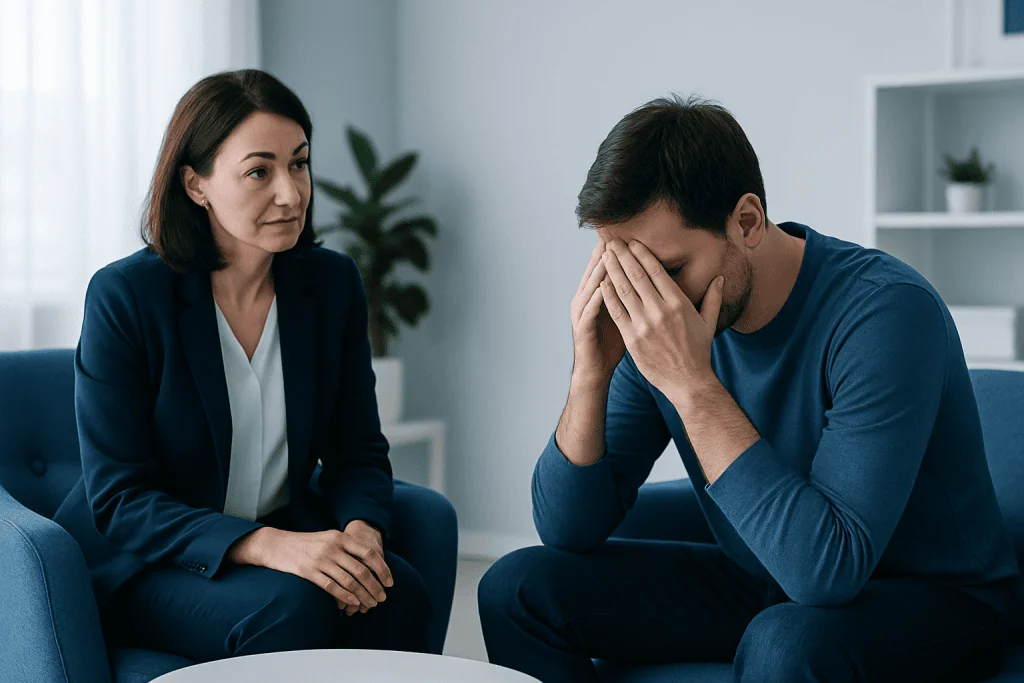
Loathing can arise from many experiences. It may follow emotional injury, conflict, bullying, humiliation, abuse, grief, loss, or repeated criticism. Cultural pressures, unrealistic expectations, social comparison, and chronic stress may also intensify self-directed disgust or hostility. For some people, loathing is tied to a specific event; for others, it develops gradually over time.
Persistent loathing may be associated with mental health conditions rather than existing in isolation. Self-loathing can be seen in depressive disorders, trauma-related disorders, some anxiety disorders, eating disorders, and personality-related difficulties. In these situations, the emotion often reflects deeper patterns of negative thinking, fear, shame, or unresolved psychological pain.
Risk factors that can make severe loathing more likely include:
- Past trauma or adverse childhood experiences
- Chronic stress or burnout
- Depression or anxiety symptoms
- Low self-esteem or perfectionism
- Social isolation or relationship conflict
- Substance misuse
- Body image concerns or disordered eating
It is also important to distinguish loathing from ordinary moral disagreement or temporary anger. A clinician will consider whether the feeling is situational and short-lived, or whether it reflects a longer pattern that causes suffering and may need treatment.
How doctors and mental health professionals assess it
There is no single lab test or scan for loathing. Evaluation usually begins with a conversation about what the person is feeling, when it started, what triggers it, and how it affects daily life. A doctor or mental health professional may ask about sleep, appetite, energy, concentration, substance use, relationships, and any recent losses or stressors.
If self-loathing is present, the assessment often explores whether there are signs of depression, anxiety, trauma, obsessive thoughts, or thoughts of self-harm. Screening tools may be used to measure mood symptoms, but diagnosis depends on a full clinical picture rather than one score alone. In some cases, physical health conditions that affect mood may also be considered.
The goal of assessment is not to label a normal emotion as a disorder. Instead, it is to understand whether loathing is a temporary response, part of a treatable mental health condition, or linked to safety concerns that need urgent attention. If needed, a person may be referred for psychiatric evaluation or structured psychological care.
Treatment and support options
Treatment depends on the cause. If loathing is part of a mental health condition, care usually focuses on that underlying issue. Psychotherapy is often the main treatment. Approaches such as cognitive behavioral therapy, trauma-informed therapy, and other evidence-based counseling methods can help a person identify triggers, challenge harsh thought patterns, regulate emotions, and build healthier coping skills.
For self-loathing, therapy often includes work on self-criticism, shame, and unhelpful beliefs about worth or failure. Some people benefit from structured psychological counseling to improve emotional awareness, strengthen resilience, and restore daily functioning. If symptoms are severe or persistent, medication may be considered by a qualified clinician when appropriate for conditions such as depression or anxiety.
Supportive lifestyle measures can also help. Regular sleep, physical activity, balanced nutrition, reduced alcohol or substance use, and consistent social contact may lower emotional intensity and improve stress tolerance. Journaling, mindfulness, and guided relaxation may help some people notice triggers and respond more calmly.
Care should be individualized. People with trauma, eating disorders, substance use problems, or severe mood symptoms may need a multidisciplinary plan. Near the end of the care pathway, families may also be involved if the person agrees, because practical support and a nonjudgmental home environment can make recovery easier.
Self-care strategies and prevention
Loathing cannot always be prevented, especially after painful life events, but certain habits can reduce its intensity and recurrence. The aim is not to suppress emotions, but to understand them and respond in healthier ways. Small, steady changes are often more effective than trying to force a quick emotional shift.
Helpful self-care approaches may include:
- Noticing triggers and emotional patterns without immediate self-judgment
- Limiting exposure to situations that repeatedly worsen shame or distress
- Building routines around sleep, meals, movement, and hydration
- Practicing balanced self-talk instead of absolute or punishing language
- Reaching out to trusted friends, family, or support groups
- Seeking professional help early if feelings become persistent
People who frequently experience self-loathing may benefit from learning skills that improve self-compassion and emotional regulation. These skills do not mean ignoring responsibility for mistakes. Instead, they support realistic reflection without turning setbacks into global judgments about personal worth.
If loathing is linked to another condition, treating that condition is often the most effective preventive step. For example, better management of anxiety or low mood can reduce the frequency and intensity of self-directed distress.
When to seek medical care
Medical or psychological support is worth considering if loathing lasts for weeks, keeps returning, or begins to affect work, school, relationships, sleep, eating, or day-to-day functioning. Help is also important if the feeling seems out of proportion, follows trauma, or comes with panic, hopelessness, severe guilt, or emotional numbness.
Urgent help is needed if loathing is tied to thoughts of self-harm, suicide, or harming someone else. Emergency care is also appropriate if a person is unable to stay safe, is using substances heavily to cope, or is becoming detached from reality. In these situations, immediate support from emergency services or a crisis resource is the safest option.
For international patients seeking coordinated assessment, Acibadem International’s multidisciplinary specialists at JCI-accredited hospitals evaluate emotional and behavioral symptoms and provide treatment plans when needed, including access to comprehensive medical assessment if physical and mental health factors both need review.
Frequently asked questions
Is loathing a medical diagnosis?
Loathing itself is generally not a medical diagnosis. It is an emotion that may become clinically important when it is intense, persistent, or connected to a mental health condition such as depression, anxiety, or trauma-related distress.
What is the difference between loathing and hatred?
Loathing usually emphasizes disgust, revulsion, or deep aversion, while hatred may focus more on hostility or intense anger. In real life, the two feelings can overlap, but loathing often carries a stronger sense of recoil or emotional repulsion.
What does self-loathing mean?
Self-loathing means directing intense disgust, shame, or harsh criticism toward oneself. It may involve feeling worthless, fundamentally flawed, or undeserving, and it can occur alongside low self-esteem, depression, trauma, or anxiety.
Can loathing be a symptom of depression?
Yes, persistent self-loathing can appear in depression, especially when it is accompanied by hopelessness, guilt, loss of interest, sleep changes, or low energy. A doctor or mental health professional can help determine whether these symptoms fit a depressive disorder.
How is severe loathing treated?
Treatment depends on the cause. Psychotherapy is often the main approach, especially for self-loathing or trauma-related distress, and medication may be considered if an underlying condition such as depression or anxiety is present.
When should someone get help for loathing?
Support is advisable when loathing lasts for weeks, keeps returning, or disrupts daily life, relationships, sleep, eating, or work. Urgent help is needed if it is linked with self-harm thoughts, suicide risk, or inability to stay safe.
References
- World Health Organization
- National Institute of Mental Health
- American Psychiatric Association
- National Health Service
- Centers for Disease Control and Prevention
This article is for general information only and is not a substitute for professional medical advice. Please consult a qualified doctor about your individual situation.
Explore treatments in Turkey — costs, top hospitals & a free quote
JCI-accredited · board-certified surgeons · reply within 24h
Add us as a Preferred Source to see more of our trusted health content across Google Search, AI Overviews and Discover.

More from the Health Library



Related Specialists

Assoc. Prof. Dr. Hatice Yılmaz
Medical Oncology
Dr. Azad Bairamovi
Inpatient Clinic Physicians Clinical Service
Fatma Yilmaz
Physical Medicine & Rehabilitation
Pedagog Seren Öztoprak Kılıç
Pedagogy