Low-Dose CT Scan: How Radiation Exposure Is Reduced
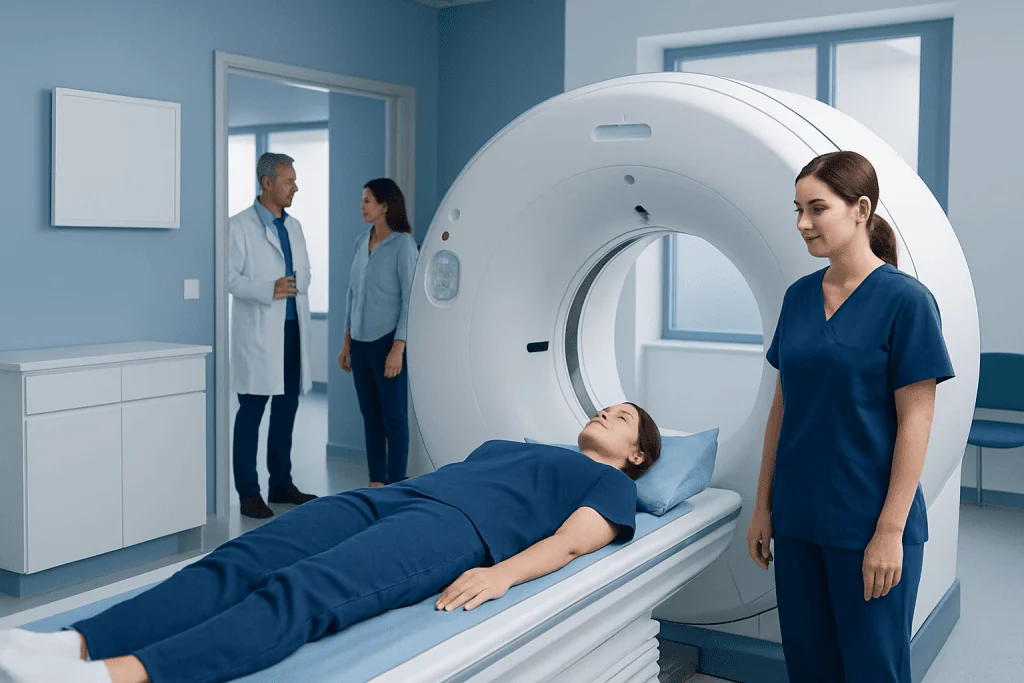
Low-dose CT scan reduces radiation by adjusting scan settings and using advanced image-processing technology. It is often used for lung cancer screening and in situations where minimizing radiation is especially important.
Key Takeaways
- Low-dose CT scan reduces radiation by adjusting scan settings and using advanced image-processing technology.
- It is often used for lung cancer screening and in situations where minimizing radiation is especially important.
- The right type of CT depends on the medical question, the body area being examined, and the patient's needs.
- Radiology teams follow safety principles to keep radiation as low as reasonably achievable.
- Patients can support safe imaging by sharing prior scans, medical history, and pregnancy status with their doctor.
A low-dose CT scan is a computed tomography exam designed to use less radiation than a standard CT scan while still producing useful medical images. It is commonly used when doctors need detailed imaging but want to limit radiation exposure whenever possible.
Overview
A low-dose CT scan is a type of computed tomography imaging that uses a lower amount of radiation than a conventional CT scan. CT technology combines X-rays with computer processing to create detailed cross-sectional images of the body. In a low-dose approach, the scanner settings and image reconstruction methods are adjusted so that the exam uses less radiation while still answering the clinical question.
This approach is especially valuable in screening and follow-up imaging, where patients may need scans over time. A common example is lung cancer screening in people at higher risk, where low-dose CT can help detect abnormalities at an earlier stage while reducing cumulative radiation exposure.
Low-dose does not mean low quality in every situation, but it does mean the scan is carefully tailored. Doctors and radiologists choose it when the expected diagnostic information can still be obtained with lower exposure. If a more detailed or specialized image is needed, a standard-dose CT or another imaging method may be more appropriate.
How Radiation Exposure Is Reduced
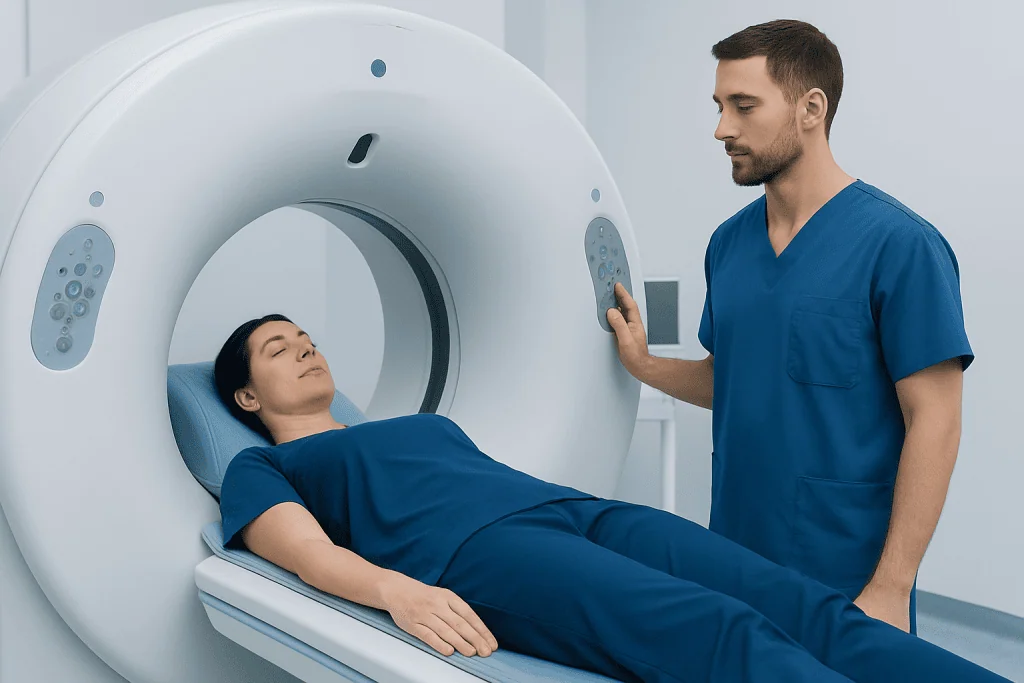
Radiation exposure is reduced through a combination of scanner technology, exam planning, and image-processing software. One important method is lowering the tube current or voltage, which decreases the amount of X-ray energy used during the scan. The scan range is also limited to the exact area that needs imaging, helping avoid unnecessary exposure to nearby tissues.
Modern CT systems may use automatic exposure control. This means the scanner can adjust the radiation output based on the body part being imaged and the patient’s size. In simple terms, the machine uses only the amount of radiation needed for that specific exam rather than applying the same settings to every person.
Another major advance is iterative reconstruction and other sophisticated software techniques. These tools improve image clarity and reduce noise, allowing useful images to be created even when less radiation is used. This is one reason low-dose CT has become more practical and reliable in many settings.
Radiology teams also follow the ALARA principle, which stands for “as low as reasonably achievable.” This means radiation is minimized without compromising the medical value of the test. Safe imaging is not only about the machine itself, but also about making sure the exam is truly needed and appropriately performed.
When a Low-Dose CT Scan Is Used
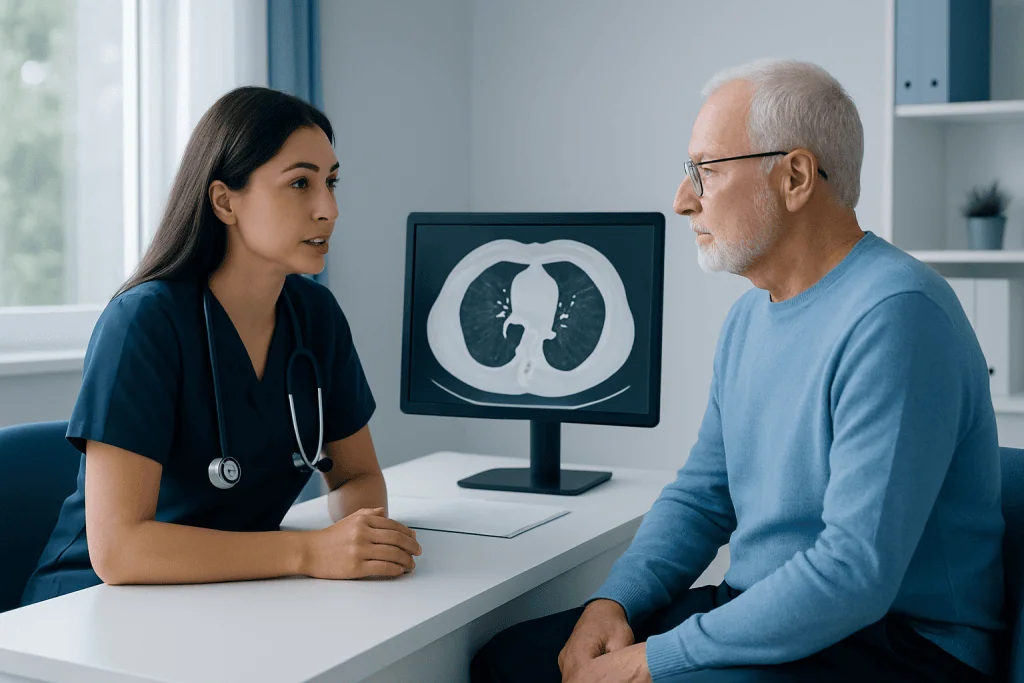
Low-dose CT is most widely known for lung cancer screening. For eligible adults with a significant smoking history, a doctor may recommend a low-dose chest CT because it can find small lung changes earlier than a standard chest X-ray. In this setting, the lower-radiation approach is especially important because screening may be repeated at regular intervals.
It may also be used in selected follow-up exams, sinus imaging, or other situations where a lower-dose study can still provide enough detail. In some hospitals, low-dose protocols are considered for younger patients or for people who are likely to need repeated imaging over time, always depending on the clinical need.
However, low-dose CT is not the best choice for every problem. Some emergencies, vascular studies, trauma assessments, or highly detailed evaluations may require standard CT protocols or contrast-enhanced imaging. If needed, the care team may recommend CT scan protocols that prioritize the most accurate answer for that specific concern.
Doctors may also compare low-dose CT with other imaging options such as ultrasound or MRI, which do not use ionizing radiation. The best test depends on the body area, the urgency of the issue, previous imaging results, and the level of detail required.
Benefits and Limitations
The main benefit of a low-dose CT scan is straightforward: it reduces radiation exposure while preserving valuable diagnostic information. This can be reassuring for patients who need screening or repeated imaging. It also supports a more individualized approach to care, as the scan can be adapted to the patient’s size and medical needs.
Low-dose CT can also improve access to effective screening programs, particularly for lung health. When used appropriately, it helps doctors identify nodules, inflammation, or other abnormalities that may need further evaluation. In some cases, findings on low-dose CT may lead to additional tests such as PET-CT scan or tissue sampling if a suspicious area needs closer assessment.
At the same time, lower dose can sometimes mean lower image detail compared with a standard CT study. This does not make the scan unsafe or ineffective, but it does mean there are limits to what it can show. Small or subtle findings in certain organs may be harder to characterize if the protocol is too limited for the question being asked.
Another limitation is that CT, even at low dose, still uses ionizing radiation. For that reason, it should be performed only when medically justified. The goal is not to avoid CT altogether, but to use the right exam at the right time with the lowest practical exposure.
What Patients Can Expect
A low-dose CT scan is usually quick, painless, and noninvasive. The patient lies on a table that moves through the scanner while images are taken. Most exams take only a few minutes, and the actual scanning time is often very short.
Preparation depends on the body part being examined. Many low-dose CT scans, including routine lung screening, do not require needles, sedation, or special recovery time. Some other CT exams may involve contrast material, fasting, or additional instructions, depending on the purpose of the scan.
During the exam, it is important to remain still and follow simple breathing instructions if asked. This helps reduce motion and improves image quality, which is especially helpful when using lower radiation settings. Afterward, most people can return to their usual activities right away unless their doctor advises otherwise.
If the scan shows something unclear or unexpected, the radiologist may recommend comparison with earlier images or a different imaging test. In some cases, that next step could include MRI if soft tissue detail is needed without added radiation.
Safety, Screening, and Special Considerations
Low-dose CT is generally considered safe when it is medically appropriate and performed by experienced teams. The amount of radiation is lower than a standard CT for the same region, but it is not zero. That is why doctors weigh the expected benefit of the information against the small potential risk from exposure.
Screening decisions should always be personalized. For example, low-dose CT for lung cancer screening is usually recommended only for people who meet certain age and smoking-risk criteria. Screening is most helpful when it is targeted to those most likely to benefit, rather than used broadly without a clear reason.
Pregnancy is an important consideration. Anyone who is pregnant or may be pregnant should tell the healthcare team before the scan, as alternative imaging may be preferred in some situations. Children and younger adults may also need especially careful dose planning because their tissues can be more sensitive to radiation over time.
People can improve imaging safety by keeping a record of past scans and sharing it with their doctor. This helps avoid unnecessary repeat studies and allows the care team to choose the most suitable test. Near the end of the care pathway, some patients may seek evaluation at centers such as Acibadem International, where multidisciplinary specialists and JCI-accredited hospitals diagnose and treat conditions that may require advanced imaging for international patients.
When to Speak With a Doctor
A patient should speak with a doctor if a CT scan has been recommended and they are unsure why it is needed or whether a low-dose option is possible. It is reasonable to ask what question the scan is meant to answer, whether another test could work, and how radiation exposure will be minimized.
Medical advice is also important if a person has symptoms such as persistent cough, coughing up blood, unexplained weight loss, chest pain, severe sinus symptoms, or other concerning changes that may require imaging. The urgency and type of scan depend on the clinical situation, so imaging choices are best made with a qualified professional.
Anyone with a history of repeated scans, prior cancer treatment, pregnancy, kidney concerns related to contrast, or anxiety about imaging should mention this before the exam. These details can affect whether low-dose CT is appropriate and how the test is planned.
Prompt discussion with a healthcare professional helps balance safety and accuracy. In many cases, the most reassuring approach is not to avoid imaging, but to make sure it is targeted, justified, and performed using the most suitable protocol.
Frequently asked questions
What is the difference between a low-dose CT scan and a regular CT scan?
A low-dose CT scan uses less radiation than a standard CT scan by adjusting technical settings and using advanced image-processing software. The goal is to provide enough image quality for the medical question while reducing exposure whenever appropriate.
Is a low-dose CT scan safe?
When it is medically justified, a low-dose CT scan is generally considered safe. It still uses ionizing radiation, but the dose is reduced compared with a conventional CT exam for the same area, and imaging teams work to keep exposure as low as reasonably achievable.
Why is low-dose CT used for lung cancer screening?
Low-dose CT can detect small lung abnormalities more effectively than a chest X-ray in people at higher risk. Because screening may be repeated over time, using a lower-radiation technique helps reduce cumulative exposure while still supporting early detection.
Does lower radiation mean the images are poor quality?
Not necessarily. In many cases, modern scanners and reconstruction software produce images that are clear enough for screening or follow-up purposes even at lower dose levels. However, some medical questions still require a standard-dose CT or a different imaging test for more detail.
Do patients need special preparation for a low-dose CT scan?
Many low-dose CT scans require little or no preparation, especially routine chest screening exams. Depending on the body part and whether contrast is needed, the doctor may give instructions about eating, drinking, medications, or clothing before the scan.
Can a patient ask for a low-dose CT instead of a regular CT?
A patient can always ask whether a low-dose protocol is appropriate. The final decision depends on the reason for imaging, the part of the body being examined, and whether lower-dose settings can still provide an accurate answer.
References
- World Health Organization
- Radiological Society of North America
- American College of Radiology
- National Cancer Institute
- U.S. Food and Drug Administration
This article is for general information only and is not a substitute for professional medical advice. Please consult a qualified doctor about your individual situation.
Explore treatments in Turkey — costs, top hospitals & a free quote
JCI-accredited · board-certified surgeons · reply within 24h
Add us as a Preferred Source to see more of our trusted health content across Google Search, AI Overviews and Discover.