Macular Degeneration Cataract Removal: Procedure, Recovery and Results

Cataract surgery can help people with macular degeneration when cataract-related clouding is contributing to vision loss. The procedure does not cure macular degeneration or reverse existing central retinal damage.
Key Takeaways
- Cataract surgery can help people with macular degeneration when cataract-related clouding is contributing to vision loss.
- The procedure does not cure macular degeneration or reverse existing central retinal damage.
- Retinal imaging and an individual discussion of expected benefit are important before surgery.
- Most people resume light activities within a few days, while full eye healing commonly takes several weeks.
- Blurred vision, dryness and glare can occur temporarily after surgery; urgent symptoms should be assessed promptly.
Macular degeneration cataract removal may make vision clearer, brighter and less affected by glare when a cataract is also limiting sight. The procedure removes the cloudy natural lens, not macular degeneration, so the final visual result depends largely on the health of the macula.
Overview: macular degeneration cataract removal
Macular degeneration cataract removal is cataract surgery performed for a person who also has age-related macular degeneration (AMD). It can improve vision that has become cloudy because of a cataract, but it cannot repair the macula, the central part of the retina affected by AMD. The amount of improvement varies according to the type and stage of macular degeneration and how much the cataract is contributing to reduced sight.
Cataracts and AMD are both more common with age, and their symptoms can overlap. A cataract may cause hazy vision, faded colours, glare and difficulty seeing in low light. AMD more often affects central vision, making faces, reading and straight lines harder to see. An ophthalmologist uses a detailed eye examination and retinal imaging to distinguish their effects and advise whether surgery is likely to be useful.
For appropriate candidates, cataract removal is usually an outpatient procedure. The surgeon replaces the cloudy natural lens with a clear artificial intraocular lens (IOL). People should continue all recommended monitoring and treatment for macular degeneration, including retinal injections where indicated, before and after cataract surgery.
How cataract surgery works and who may benefit
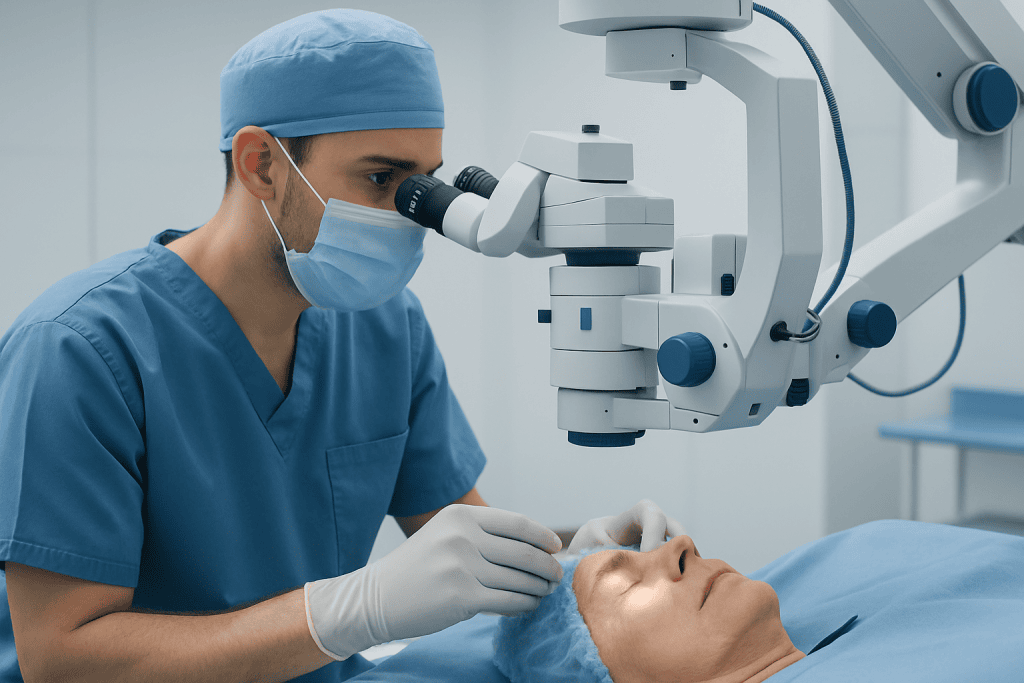
During cataract surgery, the surgeon makes a very small opening in the eye, breaks up the cloudy lens using ultrasound energy and removes it. A folded artificial lens is then placed in the lens capsule. This standard technique is called phacoemulsification and is typically performed using numbing eye drops, sometimes with additional medicine to help the person relax.
Candidacy is based on everyday visual needs rather than cataract appearance alone. Surgery may be considered when clouding interferes with reading, driving, recognising people, mobility, hobbies or independent living. In a person with AMD, the key question is whether the cataract is causing an additional, meaningful limitation that can be improved.
Before recommending surgery, the eye specialist assesses visual acuity, glare symptoms, the retina and optic nerve, eye pressure, corneal health and the measurements needed to select an IOL. Optical coherence tomography (OCT) is particularly helpful for identifying fluid, scarring or other macular changes. If wet AMD is active, the retina specialist may first recommend stabilising it with appropriate treatment.
Lens selection should be discussed carefully. A standard monofocal IOL is often appropriate because it provides clear vision at one main distance and may offer reliable image quality. Multifocal lenses can reduce dependence on glasses for some people, but may also reduce contrast sensitivity or cause halos; these features may be less suitable when macular function is reduced.
Step by step: the procedure and expected benefits

On the day of surgery, the eye is dilated and numbed. The person remains awake in most cases but should feel little or no pain. After the cataract is removed and the IOL is inserted, a protective shield may be placed over the eye. The operation itself is generally brief, and most people go home the same day with postoperative eye drops and written instructions.
The main possible benefit is clearer light reaching the retina. This may improve brightness, contrast, colour perception and vision blurred by lens clouding. Some people find that reading, walking in familiar settings or recognising faces becomes easier, although AMD may continue to limit detailed central vision, especially in advanced disease.
Expected results should be realistic and personal. Cataract surgery does not remove drusen, stop geographic atrophy, treat abnormal blood vessels or restore vision already lost from AMD. However, reducing cataract-related blur can still improve daily function and may make retinal examinations and monitoring clearer for the clinical team.
Modern cataract surgery is planned around the individual eye, including retinal status and visual priorities. The ophthalmologist can explain whether the likely improvement is expected to be substantial, modest or uncertain before a person decides to proceed.
Does macular degeneration get worse after cataract surgery?
Current evidence does not show that uncomplicated cataract surgery routinely causes age-related macular degeneration to worsen. Many people with AMD can undergo surgery safely and gain useful improvement in cataract-related visual symptoms. Nevertheless, AMD can naturally progress over time, whether or not surgery takes place, so ongoing retinal follow-up remains important.
The retina should be assessed before surgery, particularly when wet AMD is known or suspected. Signs such as new retinal fluid or bleeding may require treatment and closer coordination between cataract and retina specialists. Following the established treatment schedule for anti-VEGF injections, when prescribed, helps protect vision from active wet AMD.
After surgery, temporary inflammation is expected and is usually controlled with prescribed drops. A small number of patients may develop swelling in the macula, called cystoid macular edema, which can blur vision and may need additional treatment. Prompt review of unexpected visual change helps distinguish postoperative issues from AMD activity.
Recovery timeline and daily care
Vision is often blurry, watery or light-sensitive on the day of surgery. Many people notice clearer vision over the following days, but the pace differs between individuals. Pre-existing AMD, corneal surface dryness, inflammation and the need for a new glasses prescription can all affect how quickly vision seems to settle.
How many days should I rest after eye cataract surgery? Most people can rest at home on the day of surgery and return to gentle daily activities within one to three days if they feel comfortable. It is usually wise to avoid strenuous exercise, heavy lifting, swimming, dusty environments and rubbing the eye for the period advised by the surgeon, often for at least one to two weeks. Driving should wait until vision is safe and the eye doctor confirms it is appropriate.
Eye drops are commonly prescribed to prevent infection and reduce inflammation. They should be used exactly as directed, with clean hands and without touching the bottle tip to the eye. A protective shield may be recommended while sleeping for the first several nights.
Follow-up appointments allow the surgical team to check healing, eye pressure and visual progress. The final glasses prescription is often assessed several weeks after surgery, once the eye has stabilised. People with AMD should also keep scheduled retina appointments, even if cataract recovery seems to be going smoothly.
Risks, limitations and the biggest complaint after surgery
Cataract surgery has a strong safety record, but no operation is entirely risk-free. Possible complications include infection, bleeding, raised eye pressure, inflammation, retinal detachment, lens-position problems and swelling in the macula. These are uncommon, but they require prompt assessment because early treatment can help protect vision.
What is the biggest complaint after cataract surgery? A common early complaint is that vision is still blurry or fluctuates more than expected. This can result from normal healing, dry eye, residual inflammation, corneal swelling or a need for glasses. Glare, halos around lights and light sensitivity are also common early symptoms and often improve as the eye recovers.
Months or years later, some people develop clouding of the lens capsule behind the artificial lens, often called a secondary cataract. It is not a new cataract and can usually be treated with a brief laser procedure if it affects vision. In people with AMD, persistent central blur or distortion may instead reflect the retinal condition, which is why retinal assessment is important when visual symptoms do not improve as expected.
Contact the surgical team promptly for increasing pain, worsening redness, a sudden decrease in vision, flashes of light, a growing number of floaters, or a curtain-like shadow. These symptoms do not always indicate a serious problem, but they should not be managed by waiting at home.
Is it worth having cataract surgery if you have macular degeneration?
Is it worth having cataract surgery if you have macular degeneration? It can be worthwhile when the cataract is making vision worse and the specialist expects that removing it will improve useful visual function. Even when AMD limits sharp central vision, clearer optics may reduce haze and glare, improve colour and contrast, and support day-to-day comfort and independence.
The decision is most helpful when it is based on a realistic estimate of benefit. People with early or intermediate AMD often have more potential for noticeable visual improvement than those with extensive central scarring or advanced geographic atrophy. However, advanced AMD does not automatically rule out surgery; individual symptoms, retinal findings and personal goals matter.
A person should tell the ophthalmologist about reading needs, driving, work, caring responsibilities and activities they value. Asking what symptoms are likely due to cataract versus AMD can clarify the decision. Low-vision support, magnifiers, stronger lighting and rehabilitation strategies may also be useful alongside eye treatment.
Acibadem International’s multidisciplinary eye specialists and JCI-accredited hospitals can assess cataract and retinal conditions together for international patients, helping coordinate an individual care plan.
When to seek medical care
Anyone with gradual clouding of vision, increased glare, trouble with night driving, distorted straight lines or a new central blind spot should arrange an eye examination. These symptoms can have several causes, including cataract and retinal disease, and an early assessment supports appropriate treatment planning.
Urgent same-day eye care is important for sudden vision loss, new distortion, flashes, many new floaters, a dark curtain or shadow across vision, significant eye pain, or marked redness. These symptoms may be related to retinal changes, infection or other eye conditions that need timely evaluation.
People already diagnosed with AMD should report new changes in central vision without waiting for their next routine appointment. Checking each eye separately when reading or looking at straight lines can help identify changes. Regular monitoring remains essential after cataract surgery because the operation does not replace AMD surveillance or treatment.
Frequently asked questions
Can cataract surgery improve vision in dry macular degeneration?
It may improve the part of vision reduced by the cataract, such as haze, glare and reduced brightness. It does not reverse macular damage from dry AMD, so the degree of improvement depends on how well the macula is functioning.
Can cataract surgery be done while receiving injections for wet AMD?
Yes, cataract surgery can often be performed in people receiving treatment for wet AMD. The cataract surgeon and retina specialist should coordinate the timing of surgery and injections based on retinal activity and the individual treatment plan.
Will I need glasses after cataract surgery if I have macular degeneration?
Many people still need glasses for reading, distance vision or both, depending on the selected lens and their eyesight. Glasses cannot correct vision loss caused by macular degeneration, but the right prescription can optimise the remaining vision.
How long does blurred vision last after cataract surgery?
Some blurring is common during the first days after surgery and often improves over several days to weeks. If vision becomes worse rather than gradually better, or if it is accompanied by pain, redness, flashes or new floaters, the person should contact the eye care team promptly.
Is a multifocal lens suitable for someone with macular degeneration?
Multifocal lenses are not ideal for every person with AMD because they may reduce contrast sensitivity and can cause halos or glare. A surgeon can discuss whether a monofocal lens or another option better matches retinal health and visual goals.
Does cataract surgery cure macular degeneration?
No. Cataract surgery replaces a cloudy lens, while macular degeneration affects the retina at the back of the eye. AMD still requires regular monitoring and, for wet AMD, treatment when recommended by a retina specialist.
References
- American Academy of Ophthalmology
- National Eye Institute
- National Institute for Health and Care Excellence
- American Society of Retina Specialists
This article is for general information only and is not a substitute for professional medical advice. Please consult a qualified doctor about your individual situation.
Macular Degeneration in Turkey — costs, top hospitals & a free quote
JCI-accredited · board-certified surgeons · reply within 24h
Add us as a Preferred Source to see more of our trusted health content across Google Search, AI Overviews and Discover.