Malocclusion: What Patients Need to Know

Malocclusion is a misalignment of the teeth, jaws, or both. It may cause crowding, chewing difficulty, speech changes, jaw strain, or tooth wear.
Key Takeaways
- Malocclusion is a misalignment of the teeth, jaws, or both.
- It may cause crowding, chewing difficulty, speech changes, jaw strain, or tooth wear.
- Dentists and orthodontists diagnose malocclusion through an oral exam and dental imaging.
- Treatment can include monitoring, braces, clear aligners, retainers, or jaw-focused care in selected cases.
- Good oral hygiene and early dental assessment can help reduce complications.
Malocclusion means the teeth or jaws do not line up in the usual way when the mouth closes. It can range from mild crowding to a more noticeable bite problem, and treatment depends on how much it affects comfort, function, and oral health.
Overview
Malocclusion is the medical term for teeth that do not fit together in the expected way when the mouth closes. In simple terms, it describes a bite problem. This may involve crooked, crowded, rotated, or spaced teeth, or it may relate to how the upper and lower jaws meet.
Not every case of malocclusion causes symptoms. Some people have a mild alignment difference that mainly affects appearance, while others develop difficulty chewing, jaw discomfort, tooth wear, or problems keeping the teeth clean. The impact often depends on the type and severity of the misalignment.
Malocclusion can affect children, teenagers, and adults. In many cases it develops gradually as the teeth and jaws grow, but it can also become more noticeable after tooth loss, dental restorations, injury, or habits that influence oral development. A dental evaluation helps clarify whether treatment is needed and which approach is most appropriate.
Common Types and Symptoms
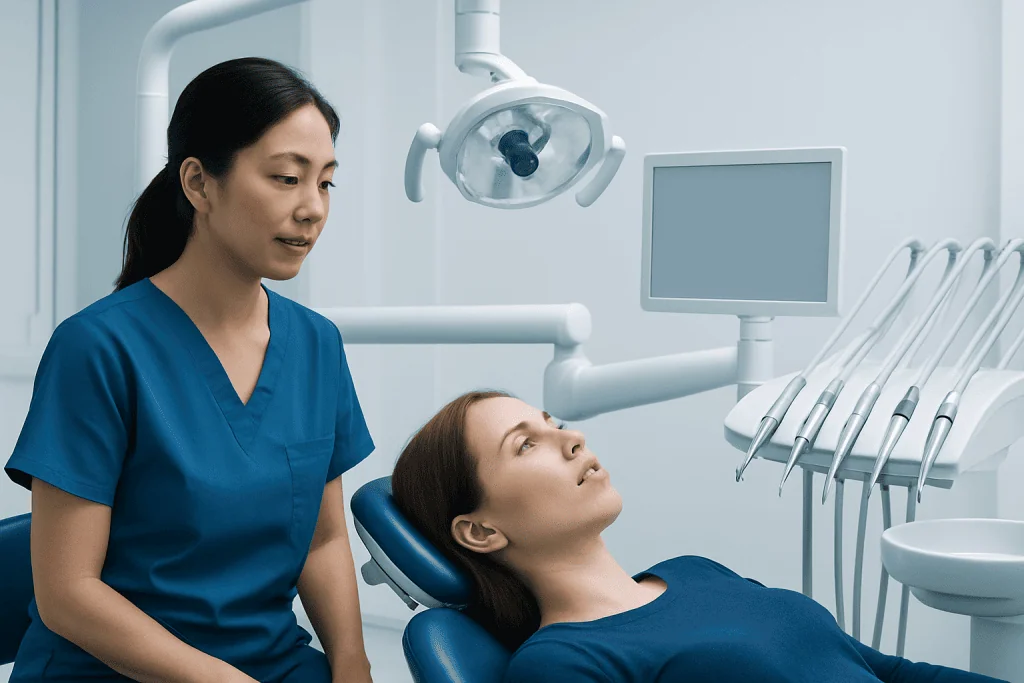
There are several patterns of malocclusion. An overbite means the upper front teeth overlap the lower front teeth more than usual. An underbite happens when the lower teeth or jaw sit forward of the upper teeth. A crossbite means some upper teeth bite inside the lower teeth, and an open bite means the front or back teeth do not meet properly when the mouth closes.
Crowding is another common form of malocclusion. It occurs when there is not enough room in the jaw for all teeth to fit in their usual positions. Spacing, rotated teeth, and a shifted dental midline can also be part of the picture. These differences may be mild or more complex.
Symptoms vary. Some people notice only cosmetic concerns, while others experience:
- Difficulty biting or chewing certain foods
- Speech changes, such as a lisp in some cases
- Frequent cheek or tongue biting
- Jaw fatigue, clicking, or discomfort
- Teeth grinding or uneven tooth wear
- Food trapping between crowded teeth
- Challenges with brushing and flossing effectively
When bite strain affects the jaw joint or surrounding muscles, an assessment may also consider related conditions such as temporomandibular joint disorders. Not everyone with malocclusion develops jaw problems, but the two can sometimes overlap.
Causes and Risk Factors
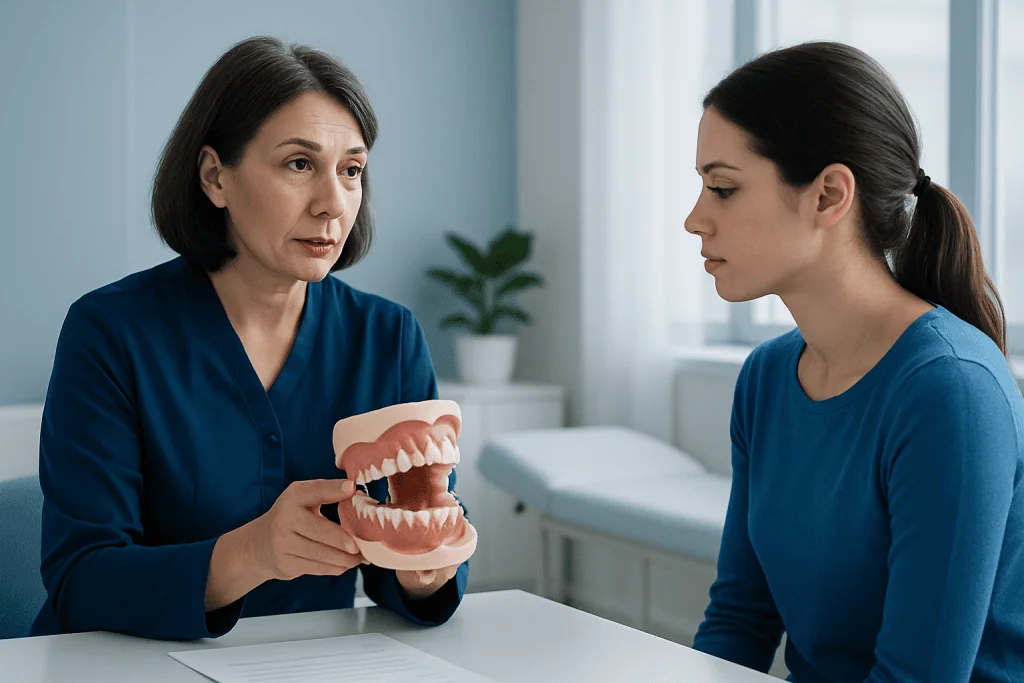
Malocclusion often has more than one cause. Genetics play a major role because the size and shape of the jaws, as well as tooth size, can run in families. A child may inherit a small jaw, larger teeth, or a jaw relationship that makes crowding or bite differences more likely.
Growth and development also matter. Early loss of baby teeth, delayed eruption of permanent teeth, extra teeth, missing teeth, or impacted teeth can change how the bite forms. Oral habits in childhood, such as prolonged thumb sucking, frequent pacifier use beyond the recommended age, or tongue thrusting, may also influence jaw and tooth position.
Other factors can contribute later in life. Trauma to the face or jaw, untreated tooth loss, gum disease that loosens teeth, and certain dental restorations that alter bite contact may affect alignment. Conditions that interfere with nasal breathing can sometimes influence oral posture and jaw development, although this relationship is complex and not the only cause.
Risk factors do not always mean a person will need treatment. However, a family history of significant crowding or bite problems, visible changes in jaw growth, and ongoing difficulty with chewing or oral hygiene are good reasons to seek a professional dental opinion.
How Malocclusion Is Diagnosed
Diagnosis begins with a clinical dental examination. The dentist or orthodontist looks at how the upper and lower teeth meet, whether there is crowding or spacing, how the jaws relate to each other, and whether there are signs of tooth wear, gum problems, or jaw strain. They also ask about chewing difficulty, speech concerns, mouth breathing, and past dental history.
Dental imaging is commonly used to understand the teeth and jaws in more detail. This may include standard dental X-rays, panoramic imaging, or cephalometric imaging to assess growth patterns and jaw relationships. In some cases, digital scans, photographs, or physical or virtual models of the teeth are made to plan treatment precisely.
Diagnosis is not only about describing the bite. It also helps determine whether the problem is mainly dental, mainly skeletal, or a combination of both. That distinction is important because a person with crooked teeth may need a different approach from someone whose upper and lower jaws are significantly mismatched.
If symptoms suggest other oral health issues, the clinician may evaluate for related concerns such as gum disease, tooth decay, impacted teeth, or sleep-related breathing problems. A careful diagnosis supports realistic treatment goals and helps decide whether monitoring or active correction is the better choice.
Treatment Options
Treatment for malocclusion is individualized. Mild cases may only need observation and regular follow-up, especially if function is good and oral hygiene is easy to maintain. When treatment is recommended, the goals may include improving bite function, reducing tooth wear, making cleaning easier, and supporting a balanced appearance.
Orthodontic treatment is the most common approach. Depending on the case, this may involve traditional braces, ceramic braces, or clear aligner systems. These methods gradually move teeth into better positions over time. In many patients, orthodontic treatment can correct crowding, spacing, and several common bite problems.
Some people also need additional dental care as part of treatment planning. For example, treatment may involve managing impacted teeth, replacing missing teeth, or addressing gum health before tooth movement begins. If jaw pain, clenching, or bite-related muscle tension is present, supportive care may be discussed alongside dental treatment.
More complex cases may involve jaw growth guidance in children or combined orthodontic and surgical care in adults with a marked skeletal jaw mismatch. This is less common and is usually considered when bite function is significantly affected. For suitable patients, a specialist may explain whether jaw surgery has a role after careful imaging and planning. Retainers are often needed after active treatment to help maintain the result.
Prevention and Self-care
Not all malocclusion can be prevented, especially when genetics strongly influence jaw growth and tooth position. However, early dental visits can help identify developing bite problems before they become more difficult to manage. Monitoring children as permanent teeth come in is particularly helpful.
Good oral habits support both prevention and day-to-day care. Parents can speak with a dentist about prolonged thumb sucking, pacifier use, or mouth breathing concerns. For adults and children alike, keeping regular dental appointments allows early detection of crowding, tooth loss, and other changes that may affect the bite.
At home, careful brushing and flossing are especially important when teeth are crowded or overlapping, because these areas can be harder to clean. A dentist may recommend specific tools, such as interdental brushes or floss aids, to make hygiene more effective. Limiting sugary snacks and drinks also helps protect teeth that may already be harder to clean.
People wearing braces or aligners should follow the instructions given by their dental team. That includes cleaning appliances properly, attending scheduled checks, and wearing retainers as advised after treatment. Good long-term habits are an important part of maintaining alignment and oral health.
When to Seek Medical Care
It is sensible to seek dental or orthodontic advice if the teeth appear crowded or very uneven, the jaws do not seem to meet comfortably, or chewing feels difficult. An evaluation is also appropriate if there is repeated cheek biting, speech changes that may be related to tooth position, or concern that a child’s bite is developing unusually.
Prompt assessment is particularly important when malocclusion is associated with pain, broken teeth, gum problems, loose teeth, or a noticeable change after injury. Adults who have developed a shifting bite after tooth loss or gum disease should also be reviewed, as untreated changes can become harder to manage over time.
Children benefit from early assessment even if treatment is not started immediately. In some cases, timely guidance can help a specialist decide whether monitoring, habit management, or early intervention would be useful during growth.
For people seeking coordinated evaluation, Acibadem International’s multidisciplinary specialists and JCI-accredited hospitals diagnose and treat malocclusion for international patients, with care tailored to age, bite pattern, and overall oral health.
Frequently asked questions
Is malocclusion always a serious problem?
No. Many cases are mild and may not cause pain or major functional problems. Treatment decisions usually depend on symptoms, oral hygiene challenges, tooth wear, and how much the bite affects daily life.
Can malocclusion get worse over time?
It can in some people, especially if crowding increases, teeth shift after tooth loss, or gum disease affects tooth support. Growth changes in children and teenagers can also make certain bite patterns more noticeable. Regular dental checkups help track these changes.
At what age should malocclusion be checked?
Bite development can be assessed in childhood, even before all adult teeth have come in. Early evaluation does not always mean early treatment, but it can identify habits, growth patterns, or tooth eruption issues that may need monitoring.
Do adults get treatment for malocclusion?
Yes. Many adults seek treatment for crowding, shifting teeth, chewing difficulty, or cosmetic reasons. Depending on the case, options may include braces, clear aligners, retainers, or combined care for jaw-related issues.
Can malocclusion cause jaw pain or headaches?
It can contribute to jaw strain in some people, especially when there is clenching, grinding, or an imbalanced bite. However, jaw pain and headaches have many possible causes, so a proper dental or medical assessment is important before linking symptoms directly to malocclusion.
Will treatment only improve appearance?
Treatment may improve appearance, but it can also help with function. In appropriate cases, correcting malocclusion can make chewing easier, reduce abnormal tooth wear, and improve access for cleaning between teeth.
This article is for general information only and is not a substitute for professional medical advice. Please consult a qualified doctor about your individual situation.
Explore treatments in Turkey — costs, top hospitals & a free quote
JCI-accredited · board-certified surgeons · reply within 24h
Add us as a Preferred Source to see more of our trusted health content across Google Search, AI Overviews and Discover.

More from the Health Library

Split Lip: What Patients Need to Know

Phlegm Color Chart — Explained by Medical Evidence, Not Myths

Inflamed Gallbladder: What Patients Need to Know

Soy Free Products: What Patients Need to Know

Nutrafol for Women — Explained by Medical Evidence, Not Myths