

Mechanical Thrombectomy Risks and Benefits: What Patients and Families Should Know

Mechanical thrombectomy is used mainly for certain ischemic strokes caused by a large artery blockage. The biggest benefit is faster restoration of blood flow, which may reduce disability when treatment is given promptly.
Key Takeaways
- Mechanical thrombectomy is used mainly for certain ischemic strokes caused by a large artery blockage.
- The biggest benefit is faster restoration of blood flow, which may reduce disability when treatment is given promptly.
- Not every stroke patient is a candidate; brain imaging, symptom timing, and the location of the clot help guide the decision.
- Possible risks include bleeding, vessel injury, contrast-related problems, and incomplete clot removal.
- Recovery still requires close hospital care, rehabilitation, and management of stroke risk factors.
Mechanical thrombectomy is an emergency stroke treatment that removes a blood clot from a blocked artery in the brain. For the right patient, it can improve the chance of recovery, but timing, eligibility, and potential risks all matter.
Overview: What mechanical thrombectomy is
Mechanical thrombectomy is a minimally invasive procedure used to treat some ischemic strokes. In an ischemic stroke, a blood clot blocks an artery that supplies the brain. During thrombectomy, a specialist guides a thin tube called a catheter through a blood vessel—usually from the groin or wrist—to the blocked artery in the brain and removes the clot with specialized devices.
This treatment is most often used when a person has a large vessel occlusion, meaning a blockage in one of the brain’s major arteries. These strokes can cause sudden and severe symptoms and may lead to major disability if blood flow is not restored quickly. Mechanical thrombectomy aims to reopen the artery and protect brain tissue that is still salvageable.
Families often hear about thrombectomy during a stressful, time-sensitive situation. The decision usually depends on emergency brain imaging, the person’s symptoms, overall health, and how much time has passed since symptoms began. In many cases, thrombectomy may be used together with clot-dissolving medicine, but some people are treated with thrombectomy alone.
When it may help most
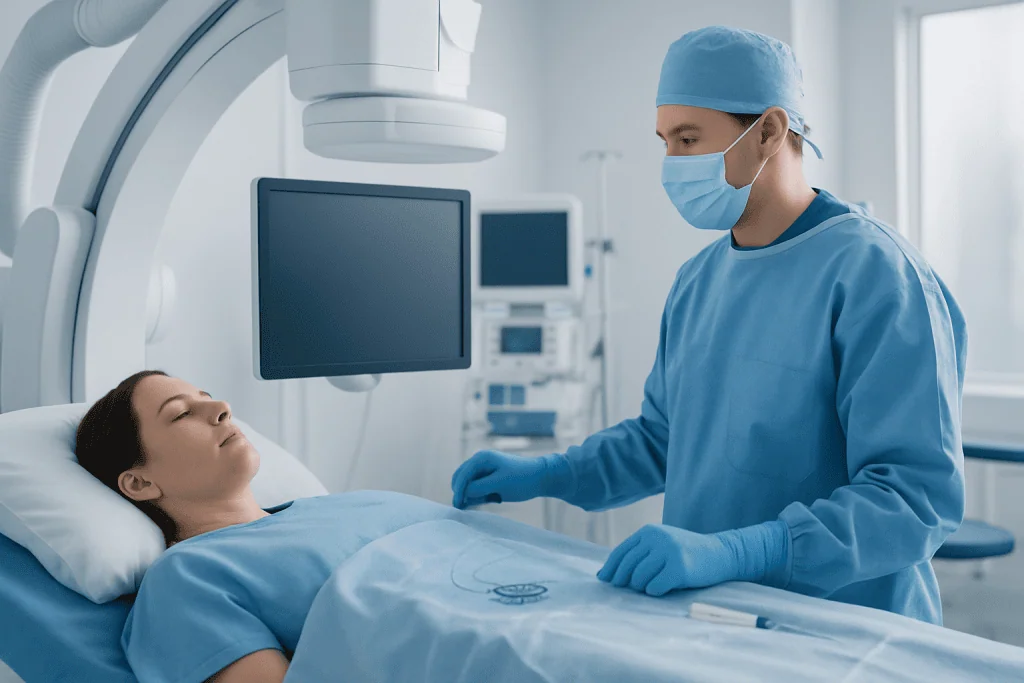
The main benefit of mechanical thrombectomy is the chance to restore blood flow quickly and limit brain damage. When performed in appropriate patients, it may improve the likelihood of surviving the stroke with less disability. In practical terms, this can mean a better chance of walking, speaking, swallowing, or managing daily activities after recovery.
Benefit is usually greatest when treatment happens as early as possible. However, newer imaging methods can sometimes identify patients who may still benefit even when more time has passed since symptom onset. This is why emergency stroke care focuses not only on the clock, but also on what the brain scan shows.
Mechanical thrombectomy is not a general treatment for every stroke. It is typically considered for people with an ischemic stroke due to a large artery blockage, rather than a bleeding stroke. Doctors may explain this as part of a broader plan for stroke care, where rapid diagnosis determines whether the blocked artery can be reopened safely and effectively.
Who may be a candidate

Doctors look at several factors to decide whether a patient may benefit from thrombectomy. These include the type of stroke, the location and size of the clot, the severity of symptoms, and whether brain tissue at risk can still be saved. Advanced imaging such as CT angiography, CT perfusion, or MRI can help answer these questions.
Age alone does not automatically rule out treatment. Many older adults may still be considered if the expected benefit is meaningful and the imaging findings are favorable. At the same time, doctors consider pre-stroke health, independence in daily life, and other medical conditions that might affect recovery or increase risk.
Some patients arrive within the early treatment window and others are evaluated later, sometimes after waking with symptoms. In both situations, stroke specialists use imaging and clinical findings to guide the decision. If a person is not eligible for thrombectomy, the team will discuss other options such as clot-dissolving medication, intensive monitoring, and supportive stroke care.
How the procedure is performed
Mechanical thrombectomy is usually performed by a specially trained neurointerventional team in an angiography suite. After the patient is stabilized, the doctor places a catheter into a blood vessel and carefully navigates it to the artery blocked by the clot. The clot may then be removed with a stent retriever, aspiration catheter, or a combination of techniques.
The procedure may be done with light sedation or general anesthesia, depending on the patient’s condition and the team’s judgment. Throughout treatment, the medical team closely monitors blood pressure, oxygen levels, heart rhythm, and neurologic status. The goal is to reopen the artery as safely and as quickly as possible.
Families may hear the procedure described as interventional neurology treatment or endovascular stroke therapy. Although the approach is minimally invasive compared with open surgery, it is still a major emergency procedure that requires expertise, careful imaging review, and close follow-up in a stroke unit or intensive care setting.
Possible risks and limitations
Like any urgent medical procedure, mechanical thrombectomy has risks. One of the most important is bleeding in or around the brain, especially if the damaged tissue is fragile after the stroke. Other possible complications include injury to the blood vessel, dislodging clot fragments into another artery, infection, reactions to contrast dye, or problems at the catheter entry site such as bruising or bleeding.
Another limitation is that the clot cannot always be removed completely, even in experienced hands. Sometimes the artery reopens only partly, or the brain injury is already too advanced for the procedure to change the outcome significantly. In other situations, the blocked vessel may be difficult to reach because of anatomy or severe narrowing in the arteries.
It is also important for patients and families to understand that a successful procedure does not guarantee a full recovery. Some brain tissue may already be permanently injured before treatment begins. The stroke team weighs the chance of meaningful benefit against the risks in each individual case and explains the plan as clearly as possible.
Diagnosis, timing, and the hospital decision process
Stroke diagnosis begins with recognizing sudden neurologic symptoms and calling emergency services immediately. In the hospital, doctors first determine whether the stroke is caused by a clot or by bleeding. A non-contrast CT scan is usually the first imaging test because it can rapidly identify bleeding. Additional imaging then helps locate a blockage and estimate how much brain tissue may still be saved.
Time remains a critical factor, but imaging has become just as important in deciding on thrombectomy. A patient may appear to be outside the earliest treatment window but still qualify if scans show a relatively small core of permanent injury and a larger area of threatened brain tissue. This careful selection helps doctors offer treatment to those most likely to benefit.
Many hospitals use a coordinated stroke pathway involving emergency physicians, neurologists, neuroradiologists, interventional specialists, and critical care teams. Families may also hear about imaging-based evaluation for related cerebrovascular problems such as brain aneurysm, although aneurysm care is distinct from clot-removal treatment. The key point is that rapid assessment by an experienced team helps guide safe decisions.
Recovery, rehabilitation, and long-term care
After thrombectomy, patients are monitored closely for changes in neurologic status, blood pressure, swallowing safety, and signs of complications. Follow-up brain imaging may be done to assess for bleeding or stroke progression. Some people improve quickly after the artery is reopened, while others need more time and intensive supportive care.
Recovery often continues well beyond the hospital stay. Rehabilitation may include physical therapy, occupational therapy, speech and language therapy, and support for cognition or mood. The type and intensity of rehabilitation depend on which areas of the brain were affected and how much function was lost during the stroke.
Long-term treatment usually focuses on preventing another stroke. This may involve medicines to reduce clotting risk, treatment of high blood pressure, cholesterol management, diabetes care, smoking cessation, and evaluation for heart rhythm problems such as atrial fibrillation. For some patients, care may include stroke rehabilitation and further neurologic follow-up to support recovery and independence.
Prevention, self-care, and when to seek urgent help
Mechanical thrombectomy treats an emergency after it has happened, but prevention remains essential. Healthy lifestyle choices can lower stroke risk, including controlling blood pressure, staying physically active, eating a balanced diet, managing diabetes, avoiding tobacco, and limiting alcohol. Regular medical follow-up is especially important for people with atrial fibrillation, vascular disease, or a past stroke or transient ischemic attack.
Patients and families should learn the warning signs of stroke: sudden facial drooping, arm weakness, speech difficulty, confusion, vision loss, severe imbalance, or sudden trouble walking. These symptoms need immediate emergency evaluation, even if they improve quickly. Fast action gives doctors the best chance to consider clot-dissolving medication or thrombectomy before more brain tissue is injured.
If there are questions about treatment options, recovery, or candidacy for advanced stroke procedures, specialist assessment can help. Acibadem International’s multidisciplinary teams in JCI-accredited hospitals diagnose and treat stroke for international patients, including neurology care and endovascular evaluation when appropriate.
Frequently asked questions
Is mechanical thrombectomy the same as clot-busting medicine?
No. Clot-busting medicine is given through a vein to dissolve certain clots, while mechanical thrombectomy physically removes a clot using a catheter inside the blood vessel. Some patients receive both treatments, and some are candidates for only one of them.
How quickly does mechanical thrombectomy need to be done?
In general, the sooner blood flow is restored, the better the chance of preserving brain function. Doctors use both time from symptom onset and brain imaging findings to decide whether thrombectomy may still help.
Does a successful thrombectomy mean the patient will fully recover?
Not always. Even if the blocked artery is reopened, some brain injury may already have occurred before treatment. Recovery depends on the size and location of the stroke, the patient’s overall health, and the rehabilitation process.
What are the main risks families should understand?
The major risks include bleeding in the brain, injury to the blood vessel, incomplete clot removal, and complications related to the catheter entry site or contrast dye. The medical team weighs these risks against the possible benefit of restoring blood flow.
Can older adults still have mechanical thrombectomy?
Yes, in many cases they can. Doctors consider imaging results, stroke severity, previous level of function, and other medical conditions rather than making the decision based on age alone.
What happens after the procedure?
Patients are monitored closely in a stroke unit or intensive care setting. After stabilization, many people need rehabilitation and long-term treatment to lower the risk of another stroke.
References
- World Stroke Organization
- American Heart Association
- National Institute of Neurological Disorders and Stroke
- European Stroke Organisation
- Society of NeuroInterventional Surgery
This article is for general information only and is not a substitute for professional medical advice. Please consult a qualified doctor about your individual situation.
Explore treatments in Turkey — costs, top hospitals & a free quote
JCI-accredited · board-certified surgeons · reply within 24h
Add us as a Preferred Source to see more of our trusted health content across Google Search, AI Overviews and Discover.
Check your numbers in seconds
BMI, calories, due date, blood pressure and 30+ more clinical calculators — free, instant, doctor-reviewed ranges.

More from the Health Library



Related Specialists

Dr. Yusuf Gençten
Urology
Prof. Dr. Yavuz Atar
Otorhinolaryngology
Assoc. Prof. Dr. Işık Türkalp
Clinical Laboratory
Dr. Ahmet Kurt
Internal Medicine