Medial Epicondyle Fracture Recovery: A Week-by-Week Timeline
Most medial epicondyle fractures occur in children and adolescents, often after a fall or elbow dislocation. A cast or brace may be used initially, followed by carefully guided elbow movement and strengthening.
Key Takeaways
- Most medial epicondyle fractures occur in children and adolescents, often after a fall or elbow dislocation.
- A cast or brace may be used initially, followed by carefully guided elbow movement and strengthening.
- Bone healing often takes 6–12 weeks, but return to throwing, contact sports, or gymnastics may take several months.
- Surgery may be recommended when the fracture fragment is displaced, trapped in the joint, or associated with elbow instability.
- New numbness in the ring or little finger, worsening pain, a cold hand, or an obvious deformity needs urgent medical assessment.
Medial epicondyle fracture recovery time commonly includes about 6–12 weeks for the bone to heal, followed by progressive rehabilitation to restore elbow movement and strength. The exact timeline depends on fracture displacement, whether surgery is needed, age, sport demands, and how well the elbow regains motion.
Medial Epicondyle Fracture Recovery Time: The Short Answer
Medial epicondyle fracture recovery time is commonly around 6–12 weeks for the bone to unite, although the elbow may need additional time to regain comfortable motion, strength, and confidence. Children and teenagers who play throwing sports, gymnastics, or contact sports may need several months before returning safely to their previous level of activity.
Recovery is not identical for everyone. A stable fracture treated with immobilization may progress differently from a displaced fracture treated with surgery. Follow-up examinations and X-rays help the orthopedic team decide when it is appropriate to increase movement, strengthening, and sport-specific activity.
The medial epicondyle is an attachment point for forearm muscles and ligaments on the inner side of the elbow. Because this area contributes to gripping, wrist motion, and elbow stability, rehabilitation focuses on healing the bone while avoiding stiffness and protecting the recovering soft tissues.
Understanding Medial: Four Common Anatomy Questions
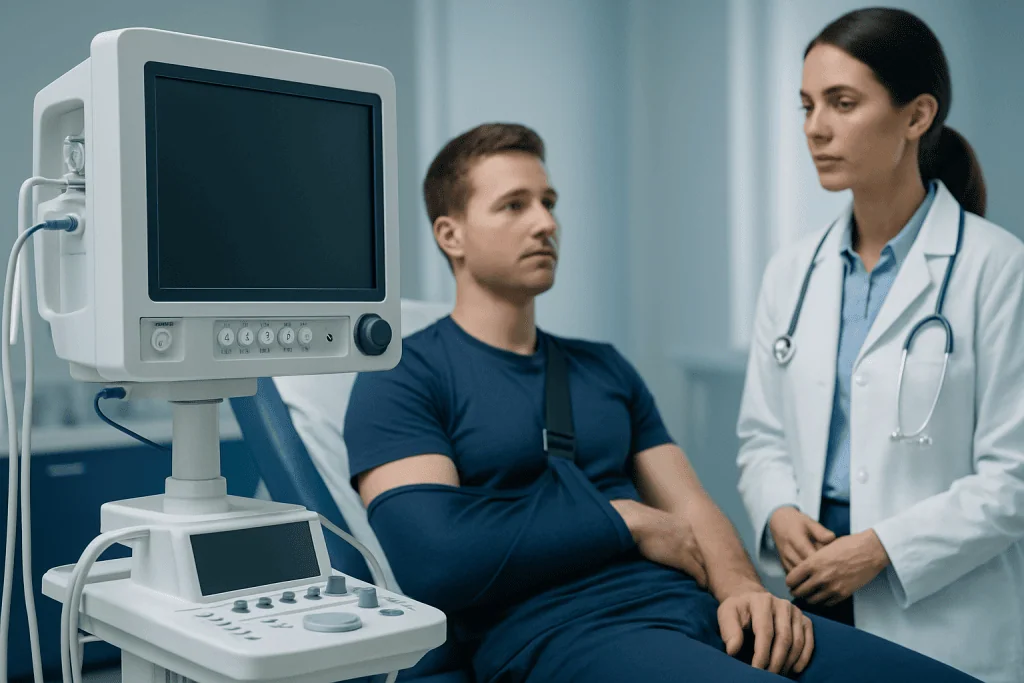
What does medial mean? In anatomy, medial means closer to the middle line of the body. It is a directional word used by clinicians to describe the position of a body part, symptom, or injury accurately.
What is a medial in anatomy? “Medial” is not a separate body structure. It is an anatomical direction. For example, the inner side of each elbow is medial compared with the outer side, which is called lateral.
What is your medial side? Your medial side is the side facing toward the center of your body. At the elbow, the bony prominence felt on the inner side is the medial epicondyle of the humerus, the upper-arm bone.
What is another word for “medial”? Depending on the body area and context, “inner” or “toward the midline” may be used in everyday language. However, medial is more precise in medical communication because “inner” can be unclear when the arm or leg is rotated.
What Is a Medial Epicondyle Fracture?
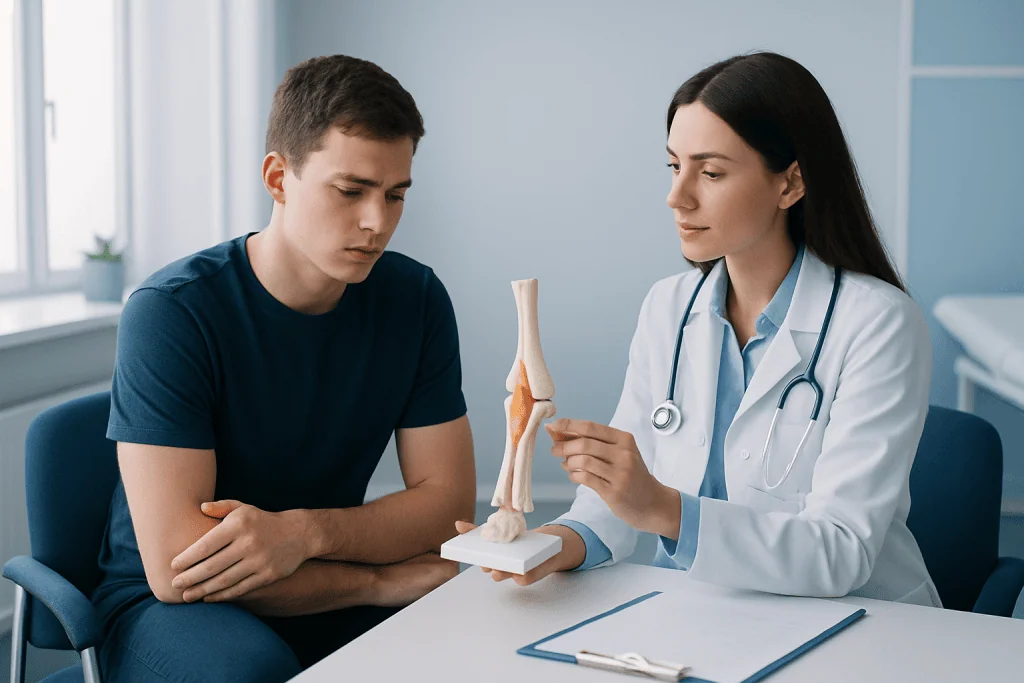
A medial epicondyle fracture is a break involving the small bony prominence on the inner elbow. It is most often seen in children and adolescents because the growth area and attached muscles and ligaments can be vulnerable during falls, forceful throwing, or an elbow dislocation.
The injury can occur when a pull from the forearm muscles and the ulnar collateral ligament pulls a piece of bone away from the humerus. This is sometimes called an avulsion injury. A medial epicondyle avulsion fracture recovery time can therefore reflect both bone healing and healing of the attached ligament and muscles.
Symptoms may include inner-elbow pain, swelling, bruising, tenderness, reduced movement, and difficulty gripping objects. Some people also notice tingling or numbness in the ring and little fingers because the ulnar nerve passes close to the medial epicondyle.
Not every injury to the inner elbow is a fracture. Sprains, tendon injuries, and other elbow fractures can cause similar symptoms. Prompt assessment is important after a significant fall, visible deformity, or suspected dislocation.
How Diagnosis and Treatment Decisions Are Made
Clinicians usually diagnose a medial epicondyle fracture through a history of the injury, examination of the elbow and hand circulation, and X-rays. The examination includes checking sensation and movement in the fingers, particularly signs involving the ulnar nerve. Further imaging may occasionally be useful when the fracture pattern is uncertain or associated injuries are suspected.
The care plan depends on the degree of displacement, elbow stability, whether the fragment is trapped inside the joint after an elbow dislocation, nerve symptoms, age, and activity needs. A fracture that is minimally displaced and stable may be managed without an operation using a cast or removable brace for a limited period.
Surgery is more likely to be discussed when a fragment is significantly displaced, lodged in the elbow joint, associated with an unstable elbow, or affecting nerve function. The purpose is to restore the position of the fragment and create conditions for stable healing. Orthopedic teams also consider the person’s dominant arm and participation in high-demand sports.
For patients needing specialist review, orthopedic surgery assessment and treatment can help establish an individualized plan based on imaging, examination findings, and functional goals.
If Surgery Is Needed: How It Works, Candidacy and Steps
Medial epicondyle fracture surgery is usually an open reduction and internal fixation procedure. “Open reduction” means the surgeon makes an incision to place the bone fragment correctly. “Internal fixation” means that an implant, commonly a screw and sometimes additional fixation, holds the fragment while it heals.
People may be candidates for surgery when the fragment is incarcerated in the joint, the elbow remains unstable, there is substantial displacement, or there are concerning nerve-related findings. Surgery may also be considered for selected athletes whose sport places repeated stress on the inner elbow. The decision should be made with an orthopedic surgeon after discussing expected benefits, alternatives, and recovery requirements.
During the procedure, the surgical team positions the bone fragment, protects nearby structures including the ulnar nerve, and secures the fragment. The incision is closed and the elbow is protected in a splint or brace. Most patients then have scheduled reviews to monitor wound healing, X-rays, movement, and nerve function.
Potential benefits include improved alignment and stability in appropriately selected fractures. Risks can include infection, wound problems, stiffness, persistent pain, irritation from hardware, nonunion, nerve irritation, and the possible need for future procedures. These complications are not expected for every patient, but should be discussed before surgery.
Week-by-Week Recovery Timeline
Days 1–7: The priority is protection, swelling control, and pain management as advised by the treating team. The arm is commonly supported in a splint, cast, or brace. Fingers and shoulder are often encouraged to move if permitted, while the elbow remains protected. Severe pain, increasing swelling, blue or cold fingers, or new numbness should be reported urgently.
Weeks 2–3: Follow-up may include examination and X-rays. For nonoperative care, the clinician decides when immobilization can be reduced and when gentle motion can begin. After surgery, the wound is reviewed and a brace may be adjusted. The goal is not to force movement, but to regain it steadily while protecting the healing fracture.
Weeks 4–6: Many patients begin more structured range-of-motion work, depending on fracture stability and treatment. Stiffness is common after immobilization and usually improves gradually. Light daily activities may become easier, but lifting, pushing, pulling, throwing, and contact activity generally remain restricted unless the clinician confirms otherwise.
Weeks 6–12: X-rays may show progressive healing, and strengthening of the arm, wrist, hand, and shoulder can be introduced when appropriate. This is often the period when people ask about medial epicondyle recovery time because pain may be much better while strength and full extension are still returning. Return to normal school or work tasks depends on the demands of the activity and the treating clinician’s advice.
Three months and beyond: Sport-specific drills, progressive throwing programs, gymnastics conditioning, or contact-sport preparation should only start once healing, movement, strength, and elbow stability are satisfactory. Medial epicondyle fracture surgery recovery time may extend beyond three months for athletes returning to demanding overhead or collision activities. A gradual return reduces the chance of reinjury or overload.
Rehabilitation, Self-Care and a Safe Return to Activity
Rehabilitation is tailored to the fracture and person rather than following a fixed calendar. A physiotherapist or orthopedic rehabilitation professional may help restore elbow extension and flexion, forearm rotation, grip strength, shoulder control, and coordinated arm function. Exercises should be performed only at the stage advised by the treating team.
At home, patients can protect the elbow by following brace or cast instructions, avoiding prohibited lifting and sports, attending follow-up appointments, and keeping the cast or wound dry when instructed. Balanced nutrition, adequate protein, and avoiding smoking or nicotine exposure support general bone healing. Children should have activity restrictions explained clearly to school staff and coaches.
A person should not return to throwing, wrestling, gymnastics, climbing, or contact sports simply because the elbow feels less painful. Clearance typically considers imaging, range of motion, strength, elbow stability, and the ability to perform sport-specific tasks without pain. This is particularly important after an avulsion-type injury, where muscle pull can stress the healing attachment site.
Acibadem International’s multidisciplinary orthopedic specialists and JCI-accredited hospitals support diagnosis, treatment, and rehabilitation planning for international patients with elbow injuries.
When to Seek Medical Care
Medical assessment is recommended promptly after an elbow injury that causes substantial pain, swelling, deformity, inability to use the arm, or loss of movement. An injury associated with a fall, a “pop,” or suspected elbow dislocation should be evaluated urgently because fractures and nerve injuries can occur together.
Emergency care is needed for a pale, blue, cold, or weak hand; uncontrolled pain; an open wound over the injury; or increasing numbness or weakness in the hand. Tingling in the ring and little fingers should also be reported, especially if it develops or worsens after the injury or treatment.
During recovery, contact the treating team if pain or swelling increases rather than improves, a cast feels excessively tight or damaged, the surgical wound becomes increasingly red or drains fluid, fever develops, or elbow function deteriorates. Follow-up is essential even when symptoms improve because X-rays and examination confirm whether healing is progressing safely.
Frequently asked questions
How long does a medial epicondyle fracture take to heal?
Bone healing commonly takes about 6–12 weeks, although the exact timing depends on the fracture pattern, treatment method, age, and follow-up X-rays. Full recovery of strength, elbow motion, and readiness for sport can take longer, particularly for throwing athletes and gymnasts.
What is the medial epicondyle fracture surgery recovery time?
After surgery, the elbow is initially protected in a splint or brace, followed by progressive movement and strengthening as directed by the surgeon. Bone healing often occurs over several weeks, while return to high-demand sport may take several months. The treating team uses examinations and imaging rather than time alone to determine readiness.
Can a medial epicondyle fracture heal without surgery?
Yes, many stable or minimally displaced medial epicondyle fractures can heal with nonoperative treatment such as short-term immobilization and supervised rehabilitation. Surgery may be advised when the fragment is trapped in the joint, the elbow is unstable, displacement is substantial, or there are nerve concerns.
When can a child return to sports after a medial epicondyle fracture?
Return to sport should be individualized and approved by the orthopedic team. The child should have adequate healing on assessment, near-normal movement, restored strength, and no pain with sport-specific tasks. Throwing and contact sports often require a slower, staged return than routine daily activity.
Why is my elbow stiff after a medial epicondyle fracture?
Stiffness is common after an elbow fracture because pain, swelling, and immobilization limit movement. Gentle, clinician-approved exercises usually help restore motion over time. Forcing the elbow through painful movement can be harmful, so rehabilitation should follow the treatment plan.
What symptoms after a medial epicondyle fracture need urgent attention?
Urgent symptoms include a cold, pale, blue, or weak hand; worsening severe pain; increasing swelling in a cast or splint; an open wound; or new or worsening numbness and weakness in the fingers. These signs may indicate problems with circulation, nerves, pressure, or the injury itself and need prompt medical review.
References
- American Academy of Orthopaedic Surgeons
- OrthoInfo
- Pediatric Orthopaedic Society of North America
- American Academy of Pediatrics
- National Institute of Arthritis and Musculoskeletal and Skin Diseases
This article is for general information only and is not a substitute for professional medical advice. Please consult a qualified doctor about your individual situation.
Joint and spine care in Turkey — expert assessment & treatment
JCI-accredited · board-certified surgeons · reply within 24h
Add us as a Preferred Source to see more of our trusted health content across Google Search, AI Overviews and Discover.

More from the Health Library

Related Specialists

Dr. Shabnam Islamova
Emergency Service
Dr. Semra Kavas
Infectious Diseases & Clinical Microbiology
Asst. Prof. Dr. Gökhan Arslanhan
Cardiovascular Surgery
Dr. Atilay Büker
Radiology