Melena: An Evidence-Based Guide for Patients

Melena usually means there is bleeding somewhere in the upper digestive tract, such as the esophagus, stomach, or first part of the small intestine. It differs from ordinary dark stool because it is typically black, tarry, and difficult to flush, often with a distinctive strong odor.
Key Takeaways
- Melena usually means there is bleeding somewhere in the upper digestive tract, such as the esophagus, stomach, or first part of the small intestine.
- It differs from ordinary dark stool because it is typically black, tarry, and difficult to flush, often with a distinctive strong odor.
- Common causes include ulcers, gastritis, esophageal varices, and medicines such as NSAIDs or blood thinners.
- Doctors often diagnose the cause with a medical history, examination, blood tests, and endoscopy.
- Melena can be serious if it is accompanied by dizziness, fainting, weakness, chest pain, or vomiting blood.
- Treatment depends on the cause and may include medications, endoscopic therapy, and supportive care.
Melena is black, sticky, foul-smelling stool caused by digested blood, most often from bleeding in the upper digestive tract. It is a symptom rather than a disease, and while not every case is an emergency, melena should be assessed promptly by a doctor to find and treat the source of bleeding.
Overview: what melena means
Melena is the medical term for black, tarry stool caused by blood that has been digested as it passes through the gastrointestinal tract. In most cases, it points to bleeding from the upper part of the digestive system, such as the esophagus, stomach, or duodenum. Because the blood has been exposed to stomach acid and digestive enzymes, the stool becomes dark, sticky, and often has a very strong odor.
Melena is a symptom, not a diagnosis on its own. Some causes are treatable and straightforward, while others need urgent attention. This is why doctors focus not only on the color of the stool but also on associated symptoms, recent medications, underlying health conditions, and whether there are signs of active blood loss.
Many people worry after seeing a dark stool once. It is true that certain foods, iron tablets, and bismuth-containing medicines can darken stool without bleeding. However, true melena usually has a tar-like appearance rather than simply being dark brown or black. If there is any doubt, medical assessment is the safest approach.
How melena looks and feels
Patients often describe melena as jet black, shiny, sticky, or tarry. It may be looser than usual and can cling to the toilet bowl or be difficult to flush away. The odor is often stronger and more distinctive than with a normal bowel movement because blood has been broken down during digestion.
Melena may appear with other symptoms of internal bleeding. These can include fatigue, weakness, lightheadedness, fainting, shortness of breath, palpitations, abdominal pain, nausea, or vomiting blood. Some people also develop symptoms of anemia over time if bleeding is slower but ongoing.
Not every black stool is melena. Iron supplements, activated charcoal, black licorice, blueberries, and medicines containing bismuth can darken stool. Even so, when stool is truly tarry or the person feels unwell, a healthcare professional should determine whether bleeding is present.
- Typical melena: black, tar-like, sticky, foul-smelling stool
- Possible accompanying signs: dizziness, weakness, abdominal discomfort, vomiting blood
- Common lookalikes: iron supplements, bismuth medicines, certain dark foods
Common causes and risk factors

The most common reason for melena is bleeding in the upper gastrointestinal tract. A frequent source is a peptic ulcer in the stomach or duodenum. Ulcers may develop because of Helicobacter pylori infection, long-term use of nonsteroidal anti-inflammatory drugs, or less commonly severe illness and other medical conditions. Related stomach inflammation, known as gastritis, can also lead to bleeding.
Other causes include erosive esophagitis, tears in the lining of the upper digestive tract, enlarged veins in the esophagus or stomach called varices, and tumors of the esophagus, stomach, or small intestine. In some cases, blood swallowed from a nosebleed or bleeding in the mouth can also make stool appear black, although this is less common.
Risk factors often help doctors narrow the cause. These include a history of ulcers, liver disease, heavy alcohol use, chronic acid reflux, prior gastrointestinal bleeding, and the use of aspirin, NSAIDs, corticosteroids, or blood thinners. Older age and serious chronic illness can increase the risk of both bleeding and complications.
Sometimes melena is part of a broader digestive condition such as stomach ulcer disease or other forms of upper gastrointestinal bleeding. Identifying the exact source matters because treatment varies depending on whether the bleeding comes from an ulcer, inflamed tissue, a vessel abnormality, or another condition.
How doctors diagnose the cause
Evaluation begins with a careful history and physical examination. The doctor will ask when the black stools started, whether they are ongoing, whether there is abdominal pain or vomiting blood, and which medicines or supplements the patient takes. Questions about liver disease, alcohol use, ulcers, recent illness, and prior bleeding episodes are also important.
Blood tests are often used to look for anemia, signs of active blood loss, clotting problems, infection, and changes in kidney or liver function. Depending on the situation, stool testing may be used, but with obvious melena, doctors usually focus more on identifying the source than confirming that blood is present.
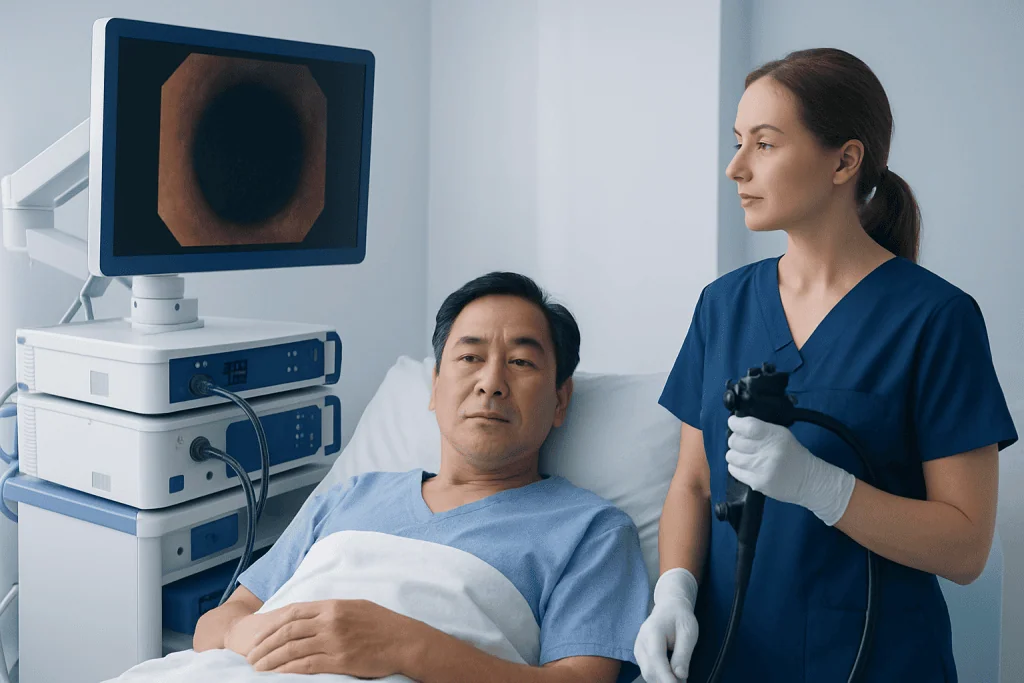
The key diagnostic test is often upper endoscopy, also called esophagogastroduodenoscopy. This allows the specialist to look directly at the esophagus, stomach, and duodenum to find ulcers, inflamed tissue, enlarged veins, tears, or other lesions. When needed, endoscopy can be used not only for diagnosis but also for treatment, such as stopping active bleeding with clips, cautery, injection therapy, or other techniques used during endoscopy.
If the cause is not found in the upper digestive tract, additional testing may be considered. Depending on symptoms and stability, this may include imaging, capsule studies, or colon evaluation to look for less typical bleeding sources. The choice depends on the patient’s age, medical history, and the amount of blood loss.
Treatment options for melena
Treatment for melena depends on the underlying cause, how much blood has been lost, and whether bleeding is continuing. When patients are stable, doctors may begin with intravenous fluids, blood tests, and medicines to reduce stomach acid while planning further evaluation. If there are signs of significant bleeding, hospital care may be needed for monitoring and supportive treatment.
For many people, the bleeding source can be treated during endoscopy. Ulcers may be sealed, injected, or clipped. Variceal bleeding may need banding or other specialized measures. If a medicine such as aspirin or an NSAID contributed to the problem, the care team will review whether it should be paused, changed, or protected with additional treatment.
Acid-suppressing treatment is commonly used when an ulcer or erosive inflammation is suspected. If Helicobacter pylori is found, it is usually treated to help reduce the chance of recurrent bleeding. Some patients may also need care from specialists in gastroenterology to investigate the cause and plan prevention after the bleeding has stopped.
In a smaller number of cases, surgery or interventional radiology may be necessary if endoscopic treatment does not control the bleeding or if the source cannot be reached safely. When appropriate, a doctor may discuss general surgery as part of treatment planning. The overall goal is to stop the bleeding, replace lost blood if needed, and address the reason it happened.
Self-care, recovery, and prevention
There is no safe home treatment that can rule out melena or treat internal bleeding. Self-care is mainly about reducing risk and supporting recovery once a doctor has assessed the cause. Patients should avoid starting or stopping prescribed medicines on their own unless a doctor advises it, especially blood thinners and heart medications.
Preventive steps often include using NSAIDs only when necessary, taking them exactly as directed, and telling a doctor about any past ulcer or bleeding history before using them. Limiting alcohol, managing reflux symptoms, and following treatment for H. pylori or ulcer disease can also lower the chance of future bleeding.
After treatment, follow-up matters. Some people need repeat testing to confirm ulcer healing or to manage chronic conditions such as liver disease or inflammation of the stomach lining. People with recurrent symptoms, anemia, or ongoing digestive complaints should keep their follow-up appointments even if the stool color returns to normal.
Near the end of the care pathway, some patients benefit from coordinated evaluation by internists, gastroenterologists, surgeons, and radiology teams. Acibadem International’s multidisciplinary specialists in JCI-accredited hospitals diagnose and treat digestive bleeding causes for international patients when this level of care is needed.
When to seek medical care
Melena should be evaluated promptly, even if there is no pain. Black tarry stool may be the first visible sign of internal bleeding, and the amount of blood loss is not always obvious from appearance alone. A same-day medical assessment is a sensible step for most people who notice this symptom.
Urgent or emergency care is especially important if melena happens together with fainting, dizziness, rapid heartbeat, confusion, severe weakness, chest pain, shortness of breath, vomiting blood, or severe abdominal pain. These symptoms can suggest significant blood loss or another serious complication that needs immediate attention.
People at higher risk should be particularly cautious. This includes older adults, anyone taking blood thinners, people with liver disease, those with a history of ulcers, and patients who have recently had gastrointestinal procedures or severe illness. When in doubt, it is safer to contact a healthcare professional promptly rather than wait for symptoms to pass.
Frequently asked questions
Is melena always a sign of bleeding?
True melena usually means there is digested blood in the stool, most often from the upper digestive tract. However, some medicines and foods can make stool look dark or black without bleeding. Because it can be hard to tell the difference at home, medical evaluation is recommended.
What is the difference between melena and bright red blood in stool?
Melena is black, tarry stool caused by digested blood, usually from bleeding higher up in the digestive system. Bright red blood often suggests bleeding closer to the rectum or lower bowel, although there can be exceptions. Both symptoms deserve medical attention.
Can iron tablets cause stool that looks like melena?
Yes. Iron supplements can turn stool very dark, sometimes black, but this usually does not create the sticky, tar-like quality typical of melena. If the stool is truly tarry or the person feels weak, dizzy, or unwell, a doctor should assess it.
Does melena always cause pain?
No. Some people with melena have abdominal pain, nausea, or discomfort, but others do not feel pain at all. This is one reason melena should not be ignored even if the person otherwise feels relatively well.
How quickly should someone see a doctor for melena?
Melena should generally be assessed the same day because it can indicate internal bleeding. If it is accompanied by dizziness, fainting, vomiting blood, chest pain, shortness of breath, or severe weakness, emergency care is appropriate.
Can melena go away on its own?
The black stool may stop if bleeding stops, but that does not mean the cause has been resolved. A person may still have an ulcer, inflamed tissue, a medication-related injury, or another problem that needs treatment. Medical follow-up helps prevent recurrent bleeding and complications.
This article is for general information only and is not a substitute for professional medical advice. Please consult a qualified doctor about your individual situation.
Explore treatments in Turkey — costs, top hospitals & a free quote
JCI-accredited · board-certified surgeons · reply within 24h
Add us as a Preferred Source to see more of our trusted health content across Google Search, AI Overviews and Discover.

More from the Health Library

Vision: An Evidence-Based Guide for Patients

Body Double ADHD: What Patients Need to Know

Non Comedogenic Moisturizer: An Evidence-Based Guide for Patients

Flutter Valve — Explained by Medical Evidence, Not Myths

Cycle Syncing: What Patients Need to Know