Vision: An Evidence-Based Guide for Patients
Vision depends on the cornea, lens, retina, optic nerve, and brain working together. Common vision problems include refractive errors, age-related changes, dry eye, cataracts, glaucoma, and retinal disease.
Key Takeaways
- Vision depends on the cornea, lens, retina, optic nerve, and brain working together.
- Common vision problems include refractive errors, age-related changes, dry eye, cataracts, glaucoma, and retinal disease.
- Blurred vision, sudden vision loss, flashes, floaters, eye pain, or double vision should not be ignored.
- Regular eye exams help detect vision problems early, sometimes before symptoms begin.
- Lifestyle habits such as managing diabetes, protecting the eyes from UV light, and limiting eye strain support long-term eye health.
Vision is the process that allows a person to detect light, focus images, and interpret what they see in the brain. Healthy vision depends on many parts of the eye and nervous system working together, and changes in vision can range from minor, correctable issues to signs that need prompt medical attention.
What vision is and why it matters
Vision is the body’s ability to detect light, focus it correctly, and turn it into meaningful images. In simple terms, light enters the eye, is directed toward the retina at the back of the eye, and is then converted into electrical signals that travel through the optic nerve to the brain. The brain interprets those signals as shapes, color, depth, and movement.
Good vision supports reading, driving, working, learning, balance, and everyday safety. Vision also affects quality of life in less obvious ways, including confidence, independence, and social interaction. Because sight relies on several delicate structures, even a small problem in one area of the eye or visual pathway can change how clearly a person sees.
Not every change in vision means serious disease. Many vision problems are caused by common and treatable issues such as nearsightedness, farsightedness, astigmatism, or age-related difficulty focusing up close. At the same time, some symptoms can be the first sign of conditions that need timely care, which is why persistent or sudden changes should be assessed by a qualified doctor.
How the eye and brain create sight
Vision begins when light passes through the cornea, the clear front surface of the eye. The cornea does much of the eye’s focusing work. Light then moves through the pupil, the opening in the center of the iris, and reaches the lens, which fine-tunes focus so images can land sharply on the retina.
The retina contains specialized cells called rods and cones. Rods help with night vision and detecting movement, while cones are responsible for color vision and fine detail. The center of the retina, called the macula, is especially important for tasks such as reading and recognizing faces.
Once the retina converts light into nerve signals, these signals travel through the optic nerve to the brain. The brain combines information from both eyes to create a single image and helps a person judge distance and depth. This is why some vision problems may begin in the eye itself, while others can involve the optic nerve or the brain’s visual pathways.
If any part of this system is affected, vision may become blurred, dim, distorted, or incomplete. In some cases, problems such as glaucoma or retinal disorders can develop slowly, while other conditions cause sudden symptoms.
Common vision changes and symptoms
People describe vision changes in many ways. Some notice blurred vision at distance or near, difficulty reading small print, trouble seeing at night, or needing brighter light than before. Others report seeing glare around lights, faded colors, sensitivity to light, or eyes that feel tired after screen use or reading.
Additional symptoms can include double vision, blind spots, flashing lights, new floaters, distorted straight lines, or a curtain-like shadow across part of the visual field. Eye discomfort, redness, dryness, or headaches may also occur with certain vision problems, though not all eye diseases are painful.
Common causes of symptoms include:
- Refractive errors such as nearsightedness, farsightedness, and astigmatism
- Age-related near vision changes, often called presbyopia
- Dry eye disease
- Cataracts
- Glaucoma
- Retinal conditions such as retinal detachment
- Medical conditions that affect the eyes, including diabetes and high blood pressure
The pattern of symptoms matters. A gradual decline may suggest age-related or chronic eye disease, while a sudden change can point to an urgent problem. Any new vision symptom that persists, worsens, or interferes with daily life deserves medical evaluation.
Causes and risk factors that affect vision
Vision can change for many reasons. Some causes are mechanical, such as the eye being too long or too short, which affects focus. Others involve age-related changes in the lens or retina. Infections, inflammation, injury, autoimmune conditions, and neurological disorders can also affect vision.
Several health conditions increase the risk of vision problems. Diabetes may damage small blood vessels in the retina. High blood pressure can affect retinal circulation. Smoking is linked to eye disease, including cataracts and retinal damage. Long-term exposure to ultraviolet light may also contribute to certain eye problems over time.
Family history is important as well. Some eye diseases, including glaucoma and certain retinal disorders, may be more likely in people with affected relatives. Age is another major factor, since cataracts, presbyopia, and some retinal diseases become more common over the years.
Everyday habits can influence symptoms too. Prolonged screen use may worsen eye strain and dryness. Poorly controlled chronic disease, inconsistent use of prescribed glasses, and skipping routine eye examinations can delay diagnosis. Understanding risk factors helps people seek care before vision loss becomes more difficult to reverse.
How vision problems are diagnosed
Diagnosis starts with a careful medical history and a description of the symptoms. A doctor or eye specialist will ask when the symptoms began, whether they came on suddenly or gradually, whether one or both eyes are affected, and whether there are associated symptoms such as pain, flashes, headache, or double vision.
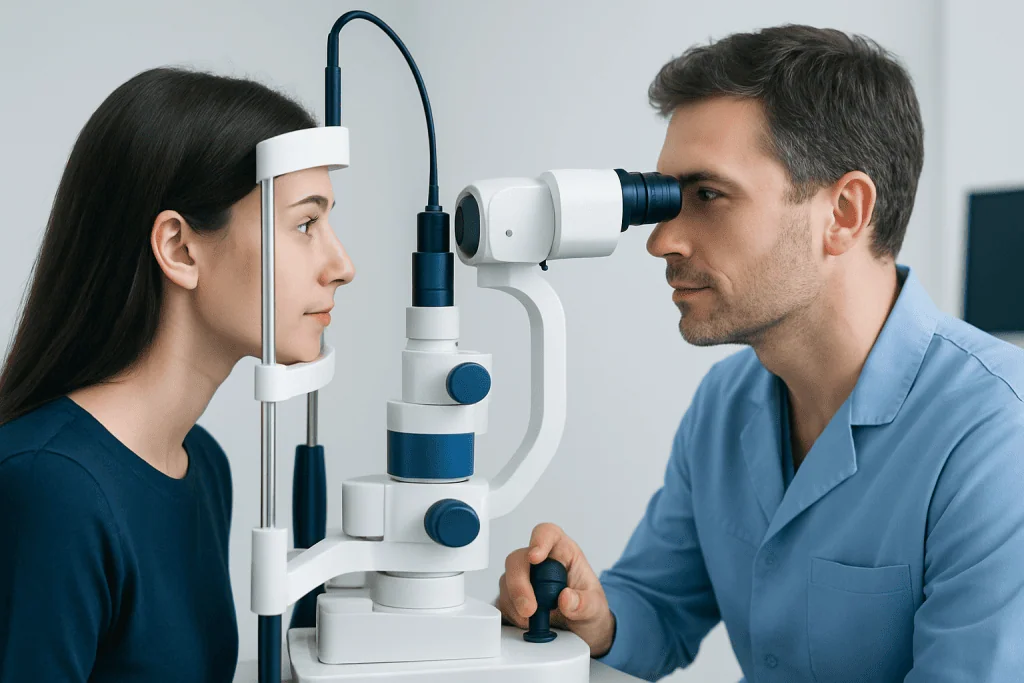
A standard eye examination may include visual acuity testing, refraction to measure the need for glasses, and an assessment of eye pressure. The front of the eye can be examined with a slit lamp, while dilating eye drops allow the specialist to inspect the retina and optic nerve more closely.
Depending on the situation, additional tests may be recommended. These can include visual field testing, retinal imaging, optical coherence tomography, ultrasound, or blood tests. When symptoms suggest a neurological cause, the evaluation may also involve imaging of the brain or referral to specialists in neuro-ophthalmology or neurology.
Early diagnosis matters because some vision conditions can progress quietly. For example, cataracts often develop gradually and may be confirmed during a routine exam before symptoms become severe. If surgery is needed, cataract surgery is a common treatment that can improve vision when lens clouding interferes with daily activities.
Treatment options for vision problems
Treatment depends on the cause of the vision change. Refractive errors are usually managed with glasses, contact lenses, or selected procedures to correct focus. Dry eye may improve with lubricating drops, environmental changes, and treatment of underlying eyelid or surface problems. Infections, inflammation, and allergy-related symptoms may require targeted medical therapy prescribed by a clinician.
Age-related and structural conditions are treated differently. Cataracts are treated by removing the cloudy lens and replacing it with an artificial lens when symptoms are bothersome. Glaucoma treatment focuses on lowering eye pressure and may involve eye drops, laser therapy, or surgery to protect the optic nerve. When appropriate, glaucoma surgery may be discussed as part of a broader management plan.
Retinal problems often need specialized care. Depending on the condition, treatment may include medication injections, laser procedures, or surgery. If a retinal tear or detachment is suspected, urgent treatment is important to protect sight. In some cases, retinal surgery is used to repair damage and support retinal healing.
Some people have vision symptoms that relate to the shape of the cornea, lens, or other structures. For selected conditions, procedures such as cornea transplant may be considered. The best treatment plan is individualized, based on the exact diagnosis, overall health, visual needs, and the advice of an experienced eye specialist.
Protecting vision with daily habits and regular care
Many vision problems cannot be fully prevented, but healthy habits can reduce risk and support earlier detection. Routine eye examinations are one of the most effective steps, especially for older adults, people with diabetes or high blood pressure, contact lens wearers, and those with a family history of eye disease.
Simple protective measures are also helpful. Wearing sunglasses with UV protection may reduce long-term sun-related eye damage. Safety eyewear is important during sports, home repairs, and work activities that could cause eye injury. Good contact lens hygiene lowers the risk of infection and irritation.
Screen users may benefit from taking regular breaks, blinking more often, adjusting room lighting, and keeping screens at a comfortable distance. General health supports eye health too. Managing blood sugar and blood pressure, avoiding smoking, eating a balanced diet, staying physically active, and getting enough sleep all contribute to healthier vision over time.
For people seeking expert assessment, Acibadem International’s multidisciplinary specialists and JCI-accredited hospitals diagnose and treat a wide range of vision conditions for international patients. Even so, self-care should not replace professional medical advice when symptoms are new, persistent, or worsening.
When to seek medical care
A prompt medical review is advisable if vision becomes blurred and does not improve, if glasses no longer seem effective, or if daily tasks such as reading, driving, or using stairs become harder. Ongoing eye discomfort, redness, or light sensitivity should also be assessed, especially if symptoms recur.
Urgent care is important for sudden vision loss, new flashes of light, a sudden shower of floaters, a shadow or curtain over part of the vision, severe eye pain, or double vision that starts unexpectedly. These symptoms can be associated with conditions that may threaten sight if treatment is delayed.
People with diabetes, high blood pressure, autoimmune disease, or a history of eye surgery should be especially cautious about new symptoms. Children who squint, sit very close to screens, complain of headaches, or struggle at school because of possible vision problems should also have an eye evaluation.
When in doubt, it is safer to ask a qualified doctor. A timely eye examination can identify whether the cause is minor and easily corrected or whether further testing and treatment are needed to protect long-term vision.
Frequently asked questions
What is vision in simple terms?
Vision is the ability to see by detecting light and turning it into images the brain can understand. It depends on healthy eyes, optic nerves, and visual centers in the brain working together.
What are the most common causes of blurred vision?
Blurred vision is often caused by refractive errors such as nearsightedness, farsightedness, astigmatism, or age-related focusing changes. It can also happen with dry eye, cataracts, glaucoma, retinal disease, migraine, or uncontrolled diabetes, so persistent symptoms should be checked.
Can vision get worse with age?
Yes. Aging can affect the lens, retina, tear production, and the eye’s ability to focus up close. Some age-related changes are common and manageable, but regular eye exams are important because certain diseases also become more likely over time.
When is a vision change an emergency?
Sudden vision loss, a curtain-like shadow, new flashes and floaters, severe eye pain, or sudden double vision should be treated as urgent. These symptoms can be linked to serious eye or neurological conditions that need prompt assessment.
How often should a person have an eye exam?
The right schedule depends on age, symptoms, family history, and medical conditions such as diabetes or high blood pressure. A qualified eye care professional can advise how often exams are needed, but regular checkups are important even when vision seems normal.
Can screen time permanently damage vision?
Screen use does not usually cause permanent vision damage, but it can contribute to digital eye strain, dryness, blurred vision, and headaches. Taking breaks, blinking regularly, and adjusting screen distance and lighting can help reduce symptoms.
References
- American Academy of Ophthalmology
- National Eye Institute
- Centers for Disease Control and Prevention
- World Health Organization
- American Optometric Association
This article is for general information only and is not a substitute for professional medical advice. Please consult a qualified doctor about your individual situation.
Explore treatments in Turkey — costs, top hospitals & a free quote
JCI-accredited · board-certified surgeons · reply within 24h
Add us as a Preferred Source to see more of our trusted health content across Google Search, AI Overviews and Discover.
Check your numbers in seconds
BMI, calories, due date, blood pressure and 30+ more clinical calculators — free, instant, doctor-reviewed ranges.

More from the Health Library



Related Specialists
Prof. Dr. Ahmet Ümit Güllü
Cardiovascular Surgery
Prof. Dr. Fuat Demirkıran
Gynecology & Obstetrics
Dr. Nıgar Alıyeva
Pediatric & Adolescent Psychiatry
Dr. Sünkar Kaya Bayrak
Anesthesiology