Meniscus Surgery vs Physical Therapy: How Treatment Decisions Are Made

Not every meniscus tear needs surgery; many people improve with structured physical therapy and activity changes. Treatment decisions are based on tear pattern, knee locking, pain, swelling, age, lifestyle, and whether arthritis is also present.
Key Takeaways
- Not every meniscus tear needs surgery; many people improve with structured physical therapy and activity changes.
- Treatment decisions are based on tear pattern, knee locking, pain, swelling, age, lifestyle, and whether arthritis is also present.
- Surgery is more often considered for persistent symptoms, mechanical locking, unstable tears, or injuries linked to ligament damage.
- Shared decision-making with an orthopedic specialist and physical therapist helps match treatment to the patient’s goals.
Choosing between meniscus surgery and physical therapy depends on the type of tear, the person’s symptoms, knee stability, activity level, and overall health. In many cases, a careful exam and a trial of rehabilitation help determine whether surgery is necessary or whether non-surgical care is likely to work well.
Overview: Why the Decision Is Not the Same for Everyone
The meniscus is a C-shaped piece of cartilage in the knee that helps cushion the joint, spread weight, and improve stability. Each knee has two menisci, one on the inner side and one on the outer side. A meniscus can tear during a sudden twist in sports or daily activity, or it can gradually wear down over time as part of age-related degeneration.
When a tear is found, the next question is often whether surgery is needed or whether physical therapy may be enough. There is no single answer for every patient. Doctors consider how the injury happened, what the tear looks like on imaging, whether the knee is catching or locking, and how much the symptoms affect daily life.
In general, treatment aims to reduce pain and swelling, restore movement, rebuild strength, and help the person return safely to normal activities. Some tears heal or become manageable with rehabilitation. Others are less likely to improve without an operation, especially if the tear is unstable or causing repeated mechanical symptoms.
Symptoms and How Meniscus Tears Affect Daily Life
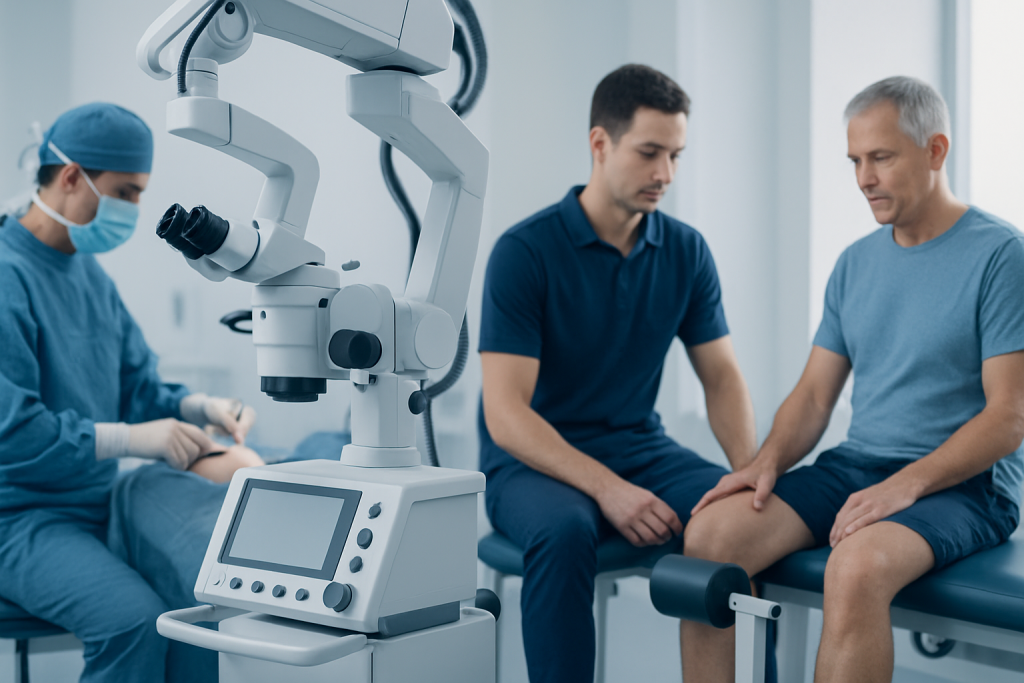
A meniscus tear can cause pain along the joint line of the knee, swelling, stiffness, and difficulty bending or straightening the leg fully. Some people feel clicking, catching, or a sense that the knee may give way. Others notice pain mainly when squatting, pivoting, climbing stairs, or getting up from a seated position.
The severity of symptoms does not always match the size of the tear. A small tear in a sensitive area may be very uncomfortable, while a larger tear may cause only mild pain. Some tears are found on MRI in people who have little or no symptoms, especially as they get older.
Doctors pay special attention to “mechanical” symptoms. True locking means the knee gets physically stuck and cannot fully move. This can suggest a displaced tear that may need more urgent orthopedic evaluation. Ongoing swelling after activity, repeated episodes of catching, and pain that limits work or exercise also help guide treatment choices.
How Doctors Decide Between Physical Therapy and Surgery
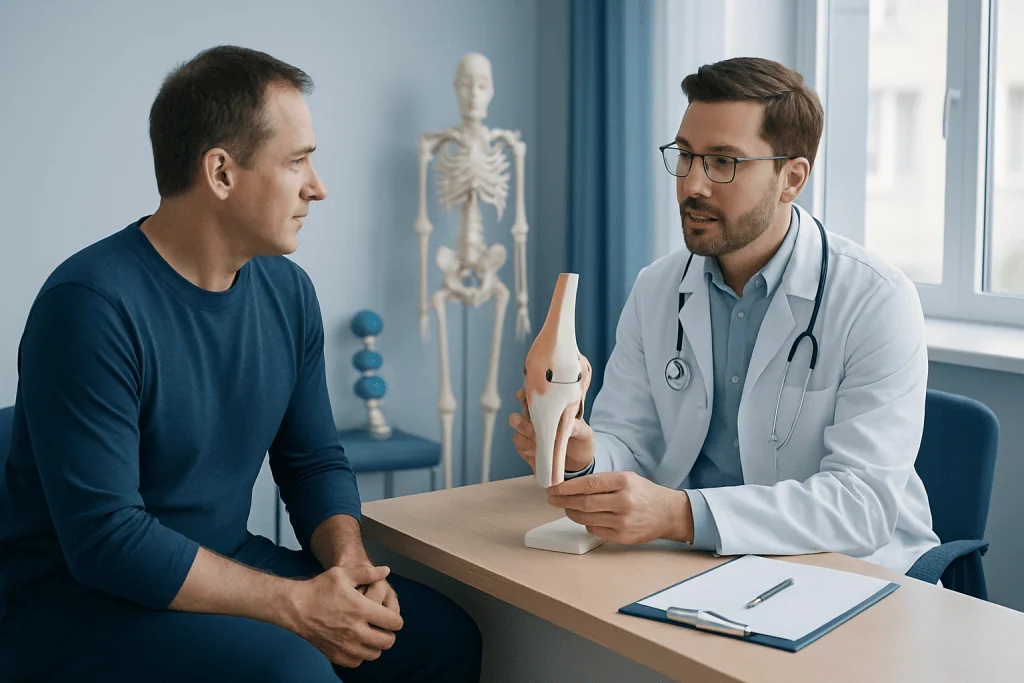
Several factors shape the treatment plan. One of the most important is the type of meniscus tear. Tears at the outer edge of the meniscus may have a better blood supply and a greater chance of healing, while tears in the inner area are less likely to heal on their own. Pattern matters too: simple stable tears may respond better to rehabilitation, while bucket-handle or displaced tears may be more likely to require surgery.
The patient’s age and knee health also matter. Younger people with a sudden sports injury and a repairable tear may be stronger candidates for surgery that aims to preserve the meniscus. In contrast, middle-aged or older adults with a degenerative tear and early osteoarthritis often begin with non-surgical care, since symptoms can improve meaningfully with exercise-based treatment.
Doctors also consider how unstable the knee feels and whether there are other injuries, such as an anterior cruciate ligament problem. When a meniscus tear occurs together with ligament injury, the overall treatment plan may change. Daily demands are important as well: a competitive athlete, a person with a physically demanding job, and someone focused mainly on comfortable walking may not choose the same path.
Shared decision-making is central. A clinician explains what is known about expected benefits, limits, recovery time, and possible risks of each option. The patient’s goals, tolerance for symptoms, and preferences then help determine the most appropriate next step.
When Physical Therapy Is Often the First Step
Physical therapy is commonly recommended first for many meniscus tears, especially when the knee is stable and there is no true locking. A rehabilitation plan usually focuses on reducing swelling, restoring knee motion, strengthening the quadriceps and hip muscles, improving balance, and gradually returning the person to walking, work, or sport.
Guided exercise can help the knee move more efficiently and reduce stress on the injured meniscus. Therapists may also advise temporary changes in activity, use of ice, and strategies for pacing daily tasks. This approach can be especially helpful for degenerative meniscal tears, which often occur alongside age-related joint changes rather than a single major injury.
A trial of therapy also provides useful information. If pain, swelling, and function improve over several weeks, surgery may not be necessary. If symptoms remain significant despite a good rehabilitation effort, the doctor may revisit imaging findings and discuss whether an operation is likely to offer additional benefit. In some cases, rehabilitation remains the main treatment even when surgery is not chosen, because strong muscles and good movement patterns support long-term knee health.
- Often suitable for stable tears without locking
- Usually includes strength, flexibility, balance, and movement training
- May be combined with temporary activity modification and pain management
- Can be effective for both recovery and long-term symptom control
When Meniscus Surgery May Be Recommended
Surgery is generally considered when symptoms are severe, persistent, or mechanically limiting despite appropriate non-surgical care. It may also be advised earlier if the knee repeatedly locks, if the tear is clearly displaced, or if there is a repairable traumatic tear in a younger patient. The goal is not simply to remove pain quickly, but to choose the option most likely to preserve function and protect the joint over time.
There are two main surgical approaches. In a meniscus repair, the surgeon stitches the torn tissue to try to preserve it. This is often preferred when the tear pattern and location make healing possible. In a partial meniscectomy, the damaged fragment is trimmed when repair is unlikely to succeed. Preserving as much healthy meniscus as possible is important because the meniscus plays a protective role in the knee.
Most meniscus procedures are performed using knee arthroscopy, a minimally invasive technique using small incisions and a camera. Surgical planning may also take into account other knee injuries or structural problems. If the meniscus tear occurs together with ligament instability, related procedures such as ACL surgery may be part of a broader plan.
Recovery after surgery varies by procedure. Meniscus repair usually requires a more cautious rehabilitation program and may involve temporary limits on weight-bearing or knee bending. Partial meniscectomy often allows a quicker return to basic activities, but the choice depends on what best fits the tear and the long-term needs of the knee, not simply the fastest recovery.
Diagnosis: Exam, Imaging, and the Role of MRI
The diagnosis usually begins with a detailed history and physical examination. The doctor asks how the pain started, whether swelling followed an injury, and whether the knee clicks, catches, or locks. During the exam, the clinician checks range of motion, tenderness along the joint line, swelling, stability, and how the knee responds to specific movements.
X-rays may be used first to look for arthritis or other bone problems, especially in middle-aged and older adults. An MRI can show the meniscus and other soft tissues more clearly, which helps identify the tear pattern and whether ligaments or cartilage are also injured. However, MRI findings are interpreted together with symptoms and examination results, because not every tear seen on MRI is the main cause of pain.
This is one reason treatment should not be based on imaging alone. A person may have a degenerative meniscal tear on MRI but improve well with non-surgical care. Another person with a displaced tear and a locked knee may need prompt orthopedic review. The complete picture matters more than a scan result by itself.
Recovery, Self-care, and Long-Term Knee Health
Whether treatment is surgical or non-surgical, recovery usually depends on rehabilitation. Muscle weakness, stiffness, and altered movement patterns can continue to affect the knee even after pain begins to settle. A structured program helps the joint regain support and can lower the chance of reinjury.
At home, people are often advised to follow the care plan given by their clinician or therapist. This may include relative rest from aggravating movements, gradual return to low-impact exercise, use of ice for swelling, and attention to body mechanics during daily activities. Weight management, when relevant, may also reduce stress on the knee joint.
Long-term outlook depends on the type of tear, whether other knee conditions are present, and how well rehabilitation progresses. Some people recover fully and return to sports or physically demanding work. Others may need to modify certain activities. If there is coexisting arthritis or another knee condition such as osteoarthritis, expectations and treatment goals are adjusted to focus on lasting function and symptom control.
In more complex cases, patients may benefit from evaluation by orthopedic and rehabilitation specialists together. Acibadem International’s multidisciplinary teams in JCI-accredited hospitals diagnose and treat meniscus injuries for international patients, including rehabilitation and, when needed, advanced knee surgery options for selected broader knee problems.
When to See a Doctor
Medical evaluation is important if knee pain follows a twisting injury, if swelling appears soon after activity, or if symptoms do not improve with rest and simple home care. A doctor should also assess knees that feel unstable, repeatedly catch, or cannot fully straighten or bend.
Urgent evaluation is especially important if the knee is locked, cannot bear weight, looks significantly swollen after trauma, or if there are signs of a major ligament injury or fracture. Prompt assessment helps clarify the diagnosis and can improve the chances of choosing the right treatment at the right time.
People should also seek advice if they have ongoing symptoms despite a good course of physical therapy, or if knee pain is interfering with work, sleep, mobility, or exercise goals. Early guidance can prevent frustration and help create a realistic plan for recovery.
Frequently asked questions
Is physical therapy as effective as surgery for a meniscus tear?
For many people, especially those with stable or degenerative meniscus tears, physical therapy can reduce pain and improve function enough that surgery is not needed. However, surgery may be more appropriate for certain tear types, persistent mechanical symptoms, or knees that do not improve with rehabilitation.
How long should someone try physical therapy before considering surgery?
The timeline varies, but many clinicians look for meaningful progress over several weeks of a structured program. If pain, swelling, or function does not improve as expected, or if symptoms worsen, the treatment plan may be reassessed sooner.
Does every meniscus tear show up clearly on MRI?
MRI is very useful for identifying meniscus tears and related knee injuries, but it is only one part of the diagnosis. Doctors interpret MRI findings together with the patient’s symptoms and physical examination because some tears seen on MRI may not be the main source of pain.
What symptoms make surgery more likely?
True locking of the knee, repeated catching, a displaced or unstable tear, and symptoms that continue despite appropriate non-surgical care can make surgery more likely. Younger patients with traumatic, repairable tears may also be advised to consider surgery earlier.
Is meniscus repair better than removing part of the meniscus?
When a tear can be repaired successfully, preserving the meniscus is often preferred because it helps protect the knee joint over time. Still, not all tears are repairable, and the best operation depends on the tear’s pattern, location, and tissue quality.
Can a person return to sports after a meniscus tear?
Many people do return to sports, either after successful rehabilitation or after surgery followed by rehab. The timing depends on pain, swelling, strength, balance, knee control, and the specific demands of the sport.
References
- American Academy of Orthopaedic Surgeons
- National Institute for Health and Care Excellence
- National Library of Medicine
- American Physical Therapy Association
- OrthoInfo
This article is for general information only and is not a substitute for professional medical advice. Please consult a qualified doctor about your individual situation.
Meniscus Surgery in Turkey — costs, top hospitals & a free quote
JCI-accredited · board-certified surgeons · reply within 24h
Add us as a Preferred Source to see more of our trusted health content across Google Search, AI Overviews and Discover.