Mesothelioma Screening: How It Works, Results and What to Expect

There is currently no proven routine screening test that reliably finds mesothelioma early in people without symptoms. A detailed asbestos exposure history helps clinicians decide whether imaging or specialist follow-up is appropriate.
Key Takeaways
- There is currently no proven routine screening test that reliably finds mesothelioma early in people without symptoms.
- A detailed asbestos exposure history helps clinicians decide whether imaging or specialist follow-up is appropriate.
- Blood tests alone cannot diagnose or rule out mesothelioma.
- Persistent breathlessness, chest pain, fluid around the lungs or unexplained weight loss should be medically assessed.
- A definitive mesothelioma diagnosis usually requires imaging and a tissue biopsy interpreted by experienced specialists.
Mesothelioma screening is not a single routine test. For people with a significant history of asbestos exposure or concerning symptoms, clinicians may use an exposure review, examination, imaging and targeted tests to look for disease and decide whether further investigation is needed.
Mesothelioma screening: what it is and who it may help
Mesothelioma screening refers to evaluating a person for possible mesothelioma before or after symptoms develop, usually because of past asbestos exposure. It may involve a review of occupational and environmental history, a physical examination, chest imaging and, when indicated, further diagnostic testing. At present, no screening programme or blood test has been shown to reliably detect mesothelioma early enough for routine use in all people exposed to asbestos.
Mesothelioma is a rare cancer arising in the mesothelium, a thin lining around internal organs. Most cases involve the lining of the lungs, called pleural mesothelioma. Because the disease is uncommon and available tests can produce uncertain or false-positive findings, clinicians generally individualize assessment rather than offering regular testing to every person with a past exposure.
Screening or surveillance may be considered for people with substantial occupational exposure, particularly if they have worked with asbestos-containing materials in construction, shipbuilding, insulation, manufacturing, demolition or related industries. The most suitable plan depends on the level and duration of exposure, age, smoking history, symptoms and personal medical circumstances. A clinician or occupational health professional can help determine whether review by a respiratory or oncology specialist is appropriate.
How mesothelioma screening works
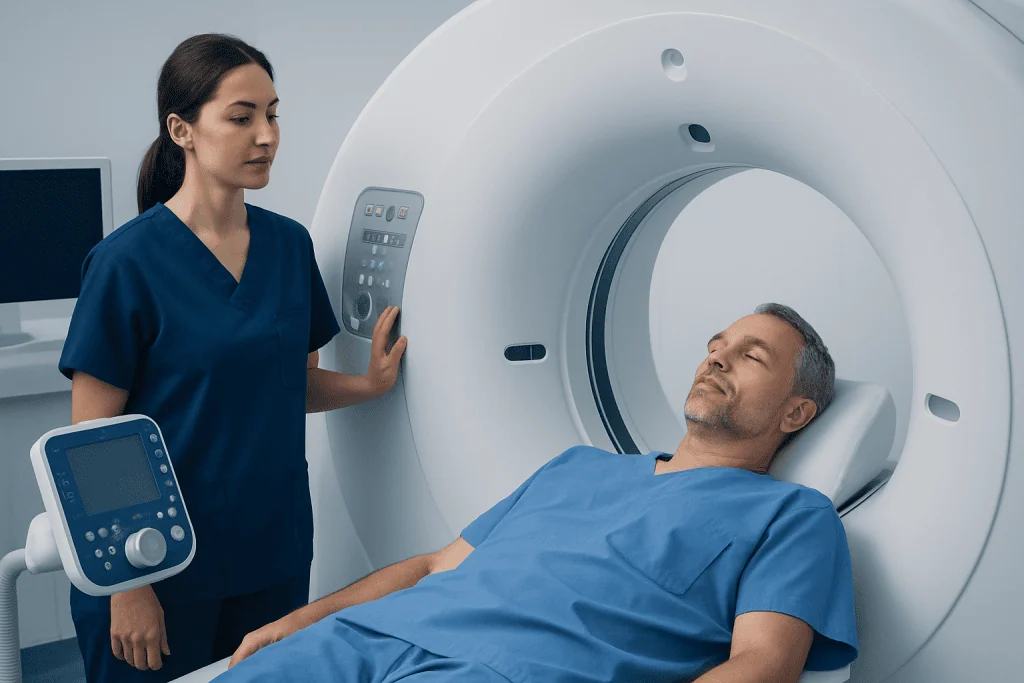
The process normally begins with a conversation about asbestos exposure. A clinician may ask about past jobs, workplace tasks, protective equipment, years of exposure and whether asbestos was brought home on work clothing. It is also important to discuss symptoms, smoking history, previous chest conditions and any family history that could affect cancer risk.
A physical examination may focus on the chest and breathing, although early mesothelioma may not cause clear examination findings. If testing is appropriate, a chest X-ray may be used as an initial assessment. Computed tomography (CT) gives more detailed images of the chest and can identify pleural thickening, fluid around the lungs or other abnormalities that may need further evaluation.
Imaging findings are not diagnostic on their own. Pleural changes and fluid can occur for many reasons, including infection, inflammation and other lung conditions. If a scan identifies a concerning change, doctors may recommend follow-up imaging, drainage and analysis of fluid, or a biopsy to obtain tissue. Diagnosis should be based on the full clinical picture and specialist pathology review.
People with prior asbestos exposure may also benefit from broader respiratory assessment, because asbestos can contribute to non-cancerous lung and pleural disease. Stopping smoking, when relevant, is especially important because smoking adds substantially to the risk of lung cancer in people exposed to asbestos, even though it is not considered a direct cause of mesothelioma.
Does mesothelioma show up in bloodwork?

Mesothelioma does not reliably show up in routine bloodwork. Standard blood tests may help clinicians assess general health, organ function, inflammation, anemia or fitness for possible procedures, but they cannot confirm or exclude mesothelioma.
Researchers have studied biomarkers in blood and other body fluids, including mesothelin-related markers, fibulin-3 and others. Some markers may be elevated in certain people with mesothelioma, but they can also be normal when cancer is present or increased for non-cancerous reasons. For this reason, they are not recommended as stand-alone screening or diagnostic tests.
If symptoms, an examination or imaging raise concern, a doctor will usually arrange imaging and may refer the person to a specialist. A tissue sample examined by a pathologist is generally required to establish the diagnosis and identify the specific cell type.
Where does mesothelioma cancer usually start?
Mesothelioma cancer most often starts in the pleura, the thin membrane surrounding the lungs and lining the inside of the chest. This form is called pleural mesothelioma. It can cause fluid buildup between the lung and chest wall, known as a pleural effusion, as well as pleural thickening or nodules.
Less commonly, mesothelioma starts in the peritoneum, the lining of the abdomen. Rare forms can arise in the lining around the heart or the testicles. Symptoms and investigations vary according to where the disease begins, which is why an individual assessment is necessary.
Asbestos exposure is the main recognized risk factor for malignant mesothelioma. The disease can develop many years after exposure, and not everyone with exposure will develop it. A specialist may also consider other explanations for symptoms or scan findings before recommending invasive testing.
How long can you have mesothelioma without knowing?
Mesothelioma can remain unnoticed for a long time because symptoms often develop gradually and can resemble common respiratory or digestive conditions. Following asbestos exposure, the time between exposure and diagnosis is commonly measured in decades. This long interval is called latency.
Once mesothelioma begins to develop, the exact period before symptoms become noticeable differs from person to person. It depends on where the cancer starts, how quickly it grows, the amount of fluid or tissue change present and an individual’s overall health. There is no reliable way to estimate this timeframe from exposure history alone.
New or persistent symptoms should not be dismissed simply because an exposure happened long ago. Sharing a complete work and environmental history with a healthcare professional can help ensure that the most appropriate tests are considered.
What is the most common presenting symptom of malignant mesothelioma?
For pleural malignant mesothelioma, the most common presenting symptom is usually shortness of breath, often related to fluid accumulating around the lung. Chest pain, commonly persistent and sometimes worsening with breathing or movement, is also frequent. A dry cough, fatigue, reduced appetite and unintended weight loss can occur, but these symptoms are not specific to mesothelioma.
Peritoneal mesothelioma may present differently, with abdominal swelling or pain, changes in appetite, nausea or unexplained weight changes. Many benign and treatable conditions can cause similar symptoms, so their presence does not mean a person has mesothelioma.
A medical assessment is particularly important when symptoms persist, worsen, interfere with usual activities or occur in someone with known asbestos exposure. Prompt review can identify the cause and guide symptom management, whatever the diagnosis may be.
What to expect if further tests are needed
If an initial assessment raises concern, the next steps are designed to clarify the cause safely and accurately. CT imaging may be followed by more detailed imaging, such as PET-CT in selected cases, to assess suspicious areas and help plan a biopsy. If fluid is present around the lungs, a clinician may remove some with a needle procedure called thoracentesis to ease breathlessness and send the sample for laboratory analysis.
A biopsy provides the most reliable diagnosis. Depending on the location of the abnormality, this may be obtained through a needle guided by imaging, thoracoscopy to examine the chest lining, or another surgical approach. Local anesthetic, sedation or general anesthesia may be used depending on the procedure. The care team explains preparation, expected discomfort, recovery and individual risks beforehand.
After a simple blood draw or chest X-ray, people can generally return to normal activities immediately. Recovery after fluid drainage or biopsy varies: mild soreness and tiredness can occur, while some procedures require a short observation period or hospital stay. Potential risks include bleeding, infection, air leakage around the lung and reactions to sedation, but teams take steps to reduce these risks and provide clear aftercare instructions.
The benefit of targeted diagnostic testing is that it can provide answers, guide treatment and address symptoms such as breathlessness. However, testing may also identify uncertain findings or lead to procedures that ultimately show a non-cancerous condition. Shared decision-making helps weigh these possibilities against a person’s exposure history, symptoms and preferences.
When to seek medical care
People should arrange medical care for persistent or unexplained shortness of breath, chest pain, a new ongoing cough, recurrent fluid around the lungs, abdominal swelling, unexplained fatigue or unintentional weight loss. Urgent assessment is needed for severe difficulty breathing, sudden chest pain, coughing up blood, fainting or other rapidly worsening symptoms.
Anyone who believes they had substantial asbestos exposure can discuss this with a primary care clinician even if they feel well. Bringing information about former jobs, work sites, tasks and approximate dates can support a useful risk assessment. Clinicians may recommend monitoring symptoms, respiratory testing or imaging based on individual circumstances rather than scheduling unproven routine cancer screening.
If mesothelioma is suspected or diagnosed, care is typically coordinated by respiratory physicians, radiologists, pathologists, thoracic surgeons and medical oncologists. Acibadem International’s multidisciplinary specialists and JCI-accredited hospitals diagnose and treat mesothelioma for international patients, with care plans based on pathology, disease extent and individual health needs.
Frequently asked questions
Is there a routine screening test for mesothelioma?
No routine test is currently proven to reliably screen all asbestos-exposed people for mesothelioma and improve outcomes. Assessment is usually individualized, based on exposure history, symptoms and clinical findings. A doctor can advise whether imaging or specialist follow-up is appropriate.
Can a chest X-ray detect mesothelioma?
A chest X-ray can show findings such as pleural fluid or thickening, but it cannot confirm mesothelioma. CT imaging provides more detail, and a biopsy is usually needed for a definite diagnosis. Abnormal X-ray findings can have many causes.
Should people with asbestos exposure have regular CT scans?
Regular CT scans are not automatically recommended solely because of asbestos exposure. CT involves radiation and can find incidental changes that require further testing. A clinician can consider the exposure level, smoking history, symptoms and other risks when deciding whether imaging is useful.
Can mesothelioma be diagnosed from pleural fluid?
Testing fluid drained from around the lungs can sometimes identify cancer cells, but a negative or unclear result does not rule out mesothelioma. In many cases, a tissue biopsy is required to make a reliable diagnosis and determine the cancer type. The care team selects the safest and most informative approach.
Is asbestos exposure always linked to mesothelioma?
Most mesothelioma cases are associated with asbestos exposure, but not every person with past exposure develops the disease. The likelihood is influenced by the intensity and duration of exposure and the long period that may pass afterward. A healthcare professional can help interpret an individual exposure history.
What should I bring to a mesothelioma screening appointment?
It is helpful to bring a record of past jobs, work tasks, possible asbestos contact and approximate dates of exposure. A list of symptoms, medicines, previous chest scans and relevant medical records is also useful. This information helps the clinician decide which tests, if any, are appropriate.
References
- World Health Organization
- American Cancer Society
- National Cancer Institute
- American Thoracic Society
- European Society for Medical Oncology
This article is for general information only and is not a substitute for professional medical advice. Please consult a qualified doctor about your individual situation.
Explore treatments in Turkey — costs, top hospitals & a free quote
JCI-accredited · board-certified surgeons · reply within 24h
Add us as a Preferred Source to see more of our trusted health content across Google Search, AI Overviews and Discover.