Metatarsal Bones: A Complete Medical Overview

The metatarsal bones form the middle part of the foot and play a central role in weight-bearing and walking. Pain, swelling, bruising, or difficulty putting weight on the foot may point to injury, inflammation, or overuse.
Key Takeaways
- The metatarsal bones form the middle part of the foot and play a central role in weight-bearing and walking.
- Pain, swelling, bruising, or difficulty putting weight on the foot may point to injury, inflammation, or overuse.
- Common problems include stress fractures, acute fractures, metatarsalgia, and alignment-related pressure issues.
- Diagnosis often involves a physical exam and imaging such as X-rays, with MRI or CT scans used in selected cases.
- Treatment depends on the cause and may include rest, supportive footwear, immobilization, rehabilitation, and sometimes surgery.
- Early medical evaluation can help prevent complications such as poor healing, chronic pain, or changes in gait.
Metatarsal bones are the five long bones in the middle of the foot that connect the toes to the rest of the foot and help the body stand, balance, and move efficiently. Understanding their structure, common symptoms, and treatment options can help people recognize problems early and protect long-term foot health.
Overview: what the metatarsal bones are
The metatarsal bones are five long bones located in the middle of each foot. They connect the tarsal bones near the ankle to the toe bones, called phalanges. Together, they create the forefoot framework that helps distribute body weight and supports smooth movement during standing, walking, and running.
Each metatarsal has a base, shaft, neck, and head. The heads of the metatarsals are the rounded ends closer to the toes and are important in push-off when taking a step. The first metatarsal, which sits behind the big toe, usually bears a large share of force during walking, while the second through fifth metatarsals help maintain balance and adapt to different surfaces.
Because these bones are involved in almost every step, they are exposed to repeated stress. Problems can develop from a sudden injury, long-term overuse, poor footwear, changes in foot shape, or medical conditions that weaken bone. A person may hear about the metatarsals when being evaluated for forefoot pain, a sports injury, or a suspected metatarsalgia problem.
How the metatarsals support movement and balance
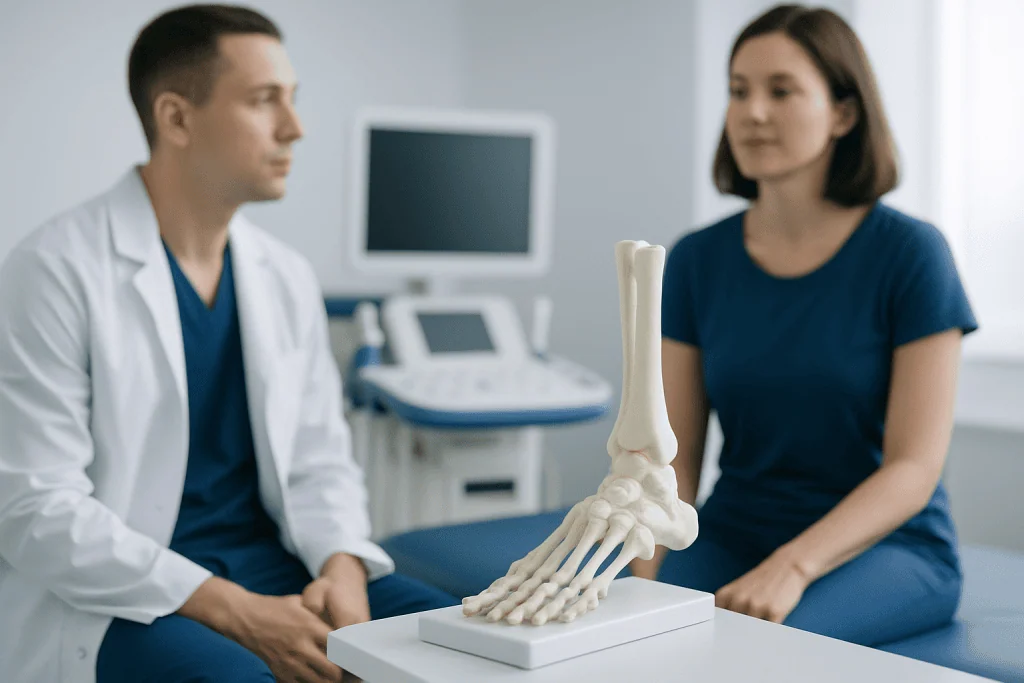
The metatarsals do more than simply connect the toes to the rest of the foot. They help form the arches of the foot, especially the transverse arch across the forefoot. These arches allow the foot to absorb impact, adapt to uneven ground, and then become more rigid for efficient push-off during walking.
As the foot moves through a step, force passes from the heel toward the forefoot. The metatarsal heads help transfer this force into forward motion. If one metatarsal carries too much pressure, symptoms can develop not only in the bone itself but also in nearby soft tissues, joints, and nerves.
Small changes in alignment can affect how the metatarsals function. Flat feet, high arches, toe deformities, obesity, tight calf muscles, or altered walking mechanics after an injury may shift pressure toward the forefoot. Over time, this can lead to inflammation, callus formation, or pain under one or more metatarsal heads.
Common symptoms and conditions affecting the metatarsal bones

Symptoms related to the metatarsal bones often include pain in the ball of the foot or along the top of the foot, tenderness when pressing on a specific area, swelling, bruising, or pain that worsens with standing and walking. Some people describe a sharp pain after an injury, while others notice a gradual ache that comes on with activity and improves with rest.
One common issue is metatarsalgia, a general term for pain in the forefoot, especially under the metatarsal heads. This may happen because of pressure overload, foot shape, high-impact activity, or poor-fitting shoes. Stress fractures can also affect the metatarsals, particularly in runners, dancers, and people who suddenly increase exercise intensity. Unlike an acute fracture, a stress fracture usually causes pain that builds over days or weeks.
Acute metatarsal fractures may occur after twisting injuries, falls, direct impact, or sports accidents. Other possible problems include joint inflammation, tendon irritation around the forefoot, bunion-related pressure changes, and less commonly infection or arthritis. In some cases, persistent foot pain may also overlap with conditions such as foot pain caused by soft tissue or nerve problems rather than the bone alone.
- Pain in the ball of the foot
- Swelling or bruising
- Tenderness over a specific bone
- Pain with walking, running, or standing
- A feeling of stepping on a pebble
- Difficulty bearing weight after an injury
Causes and risk factors
Metatarsal problems may result from either a single traumatic event or repeated small stresses. A direct blow to the foot, a heavy object falling on it, or a twisting motion can break a metatarsal. Repetitive loading from running, jumping, dancing, or long hours on the feet can lead to overuse injuries, including stress fractures and soft tissue irritation.
Foot structure also matters. High arches may concentrate force on the metatarsal heads, while flat feet can change pressure distribution and gait. Tight footwear, high heels, worn-out athletic shoes, or shoes with poor cushioning can increase forefoot load. Toe deformities such as bunions or hammertoes may also change how body weight is transferred across the metatarsals.
Certain health conditions can raise the risk of injury or delayed healing. These include osteoporosis, diabetes, inflammatory arthritis, circulation problems, and nutritional issues that affect bone health. Age, previous foot injuries, sudden increases in exercise, and reduced muscle strength can further increase vulnerability.
How doctors diagnose metatarsal bone problems
Diagnosis begins with a careful medical history and physical examination. The doctor asks when symptoms started, whether there was an injury, what activities worsen the pain, and whether there are other health conditions that could affect bone or nerve health. During the exam, the doctor checks for swelling, bruising, tenderness, deformity, range of motion, circulation, and how the person walks.
X-rays are often the first imaging test used to look for fractures, alignment problems, arthritis, or structural changes. However, a stress fracture may not always appear on an early X-ray. If symptoms strongly suggest a stress injury or another hidden problem, the doctor may recommend MRI, CT, or occasionally ultrasound to evaluate the bones and surrounding soft tissues in greater detail.
In some cases, additional tests may be needed to understand why the problem developed. These can include blood tests for inflammation or infection, bone density evaluation, or gait assessment. People with persistent symptoms may be referred to a foot and ankle specialist, and some may benefit from orthopedic evaluation to guide treatment planning.
Treatment options and recovery
Treatment depends on the cause, severity, and exact location of the problem. For many overuse injuries and mild forefoot pain, initial care includes rest, reducing high-impact activity, applying ice, and using supportive shoes or inserts to reduce pressure on the affected area. Some people also benefit from activity modification and a gradual return to exercise rather than complete long-term inactivity.
When a metatarsal fracture is present, treatment may involve a stiff-soled shoe, walking boot, cast, or crutches to protect the bone while it heals. Recovery time varies based on which metatarsal is involved, whether the bone is displaced, and the person’s overall health. Physical therapy may be recommended to restore strength, flexibility, and walking mechanics after the acute phase.
Surgery is not needed for most metatarsal problems, but it may be considered for displaced fractures, unstable injuries, poor healing, or structural problems that continue to cause pain despite conservative care. In selected situations, options provided through foot and ankle surgery or physical therapy and rehabilitation can support recovery. Near the end of the care pathway, Acibadem International’s multidisciplinary specialists in JCI-accredited hospitals also diagnose and treat foot and forefoot conditions for international patients when specialist assessment is needed.
Self-care, prevention, and protecting foot health
Good foot care can reduce stress on the metatarsal bones and lower the chance of recurrent pain. Shoes should fit well, offer enough room in the toe box, and provide cushioning and support appropriate for the activity. Replacing worn footwear and avoiding sudden switches to much higher-impact exercise can be especially helpful.
Gradual training progression is important for runners, dancers, and people starting a new exercise routine. Stretching the calf muscles, strengthening the feet and lower legs, and allowing time for recovery between intense activities can improve load distribution. If a person has a known foot shape issue or recurring forefoot pressure, custom or prefabricated orthotic support may help after medical assessment.
General bone health also matters. Adequate nutrition, regular weight-bearing exercise, and management of conditions such as osteoporosis or diabetes can support healing and prevention. People should avoid ignoring persistent pain, because continuing to exercise through symptoms can sometimes turn a minor overuse problem into a more significant injury.
When to seek medical care
Medical evaluation is advisable if foot pain lasts more than a few days, keeps returning, or interferes with walking, work, sleep, or exercise. A person should also seek care if there is significant swelling, visible deformity, bruising after an injury, or inability to bear weight on the foot. These signs may suggest a fracture or another condition that benefits from early diagnosis.
More urgent assessment is important if the foot becomes very swollen, cold, numb, pale, or increasingly painful, or if there is an open wound, fever, or signs of infection. People with diabetes, poor circulation, or weakened immunity should be especially cautious with foot symptoms because complications may develop more easily.
Early evaluation can help identify whether the problem is a stress injury, acute fracture, joint condition, nerve irritation, or pressure-related forefoot pain. Getting the right diagnosis often shortens recovery time and helps prevent long-term gait changes, chronic discomfort, or repeat injuries.
Frequently asked questions
What are the metatarsal bones?
The metatarsal bones are the five long bones in the middle part of the foot. They connect the toes to the rest of the foot and help with balance, weight transfer, and forward movement during walking and running.
How many metatarsal bones are in each foot?
Each foot has five metatarsal bones. They are numbered from the first metatarsal near the big toe to the fifth metatarsal near the little toe.
Can metatarsal pain happen without a fracture?
Yes. Metatarsal pain may result from pressure overload, inflammation, joint irritation, nerve-related pain, tendon strain, or poorly fitting shoes. A fracture is one possible cause, but not the only one.
What is the difference between metatarsalgia and a metatarsal fracture?
Metatarsalgia is a general term for pain in the ball of the foot, usually related to pressure and irritation under the metatarsal heads. A metatarsal fracture is a break in one of the metatarsal bones and often needs imaging to confirm the diagnosis.
How long does a metatarsal injury take to heal?
Healing time depends on the type of injury, the exact bone involved, and the person’s overall health. Mild overuse conditions may improve in weeks, while fractures often take longer and may require protection, rehabilitation, and follow-up care.
When should someone see a doctor for metatarsal symptoms?
A doctor should assess ongoing foot pain, swelling, repeated symptoms, or pain that affects walking and daily activities. Prompt care is especially important after an injury, if weight-bearing is difficult, or if there is deformity, numbness, or signs of infection.
References
- American Academy of Orthopaedic Surgeons
- American Orthopaedic Foot & Ankle Society
- National Institute of Arthritis and Musculoskeletal and Skin Diseases
- MedlinePlus
- Mayo Clinic
This article is for general information only and is not a substitute for professional medical advice. Please consult a qualified doctor about your individual situation.
Explore treatments in Turkey — costs, top hospitals & a free quote
JCI-accredited · board-certified surgeons · reply within 24h
Add us as a Preferred Source to see more of our trusted health content across Google Search, AI Overviews and Discover.