Microcephaly Specialist: An Evidence-Based Patient Guide

Microcephaly means a child’s head circumference is smaller than expected for age and sex, usually based on standardized growth charts. Its effects range widely: some children have mild or no functional difficulties, while others need ongoing developmental and medical support.
Key Takeaways
- Microcephaly means a child’s head circumference is smaller than expected for age and sex, usually based on standardized growth charts.
- Its effects range widely: some children have mild or no functional difficulties, while others need ongoing developmental and medical support.
- A careful microcephaly evaluation may include growth measurements, developmental assessment, family history, imaging, and selected laboratory or genetic testing.
- There is no procedure that enlarges the brain or reverses established microcephaly, but early therapies and treatment of associated conditions can improve function and quality of life.
- Prognosis and life expectancy depend primarily on the cause and associated medical conditions, not on head circumference alone.
- Families should seek timely pediatric assessment if a baby’s head growth slows, developmental skills are delayed, or seizures or feeding problems occur.
A microcephaly specialist is usually a pediatric neurologist, developmental pediatrician, geneticist, or multidisciplinary team member who evaluates a child’s head growth, development, and possible underlying cause. Care focuses on understanding the child’s individual needs, monitoring health, and arranging therapies and support rather than treating head size itself.
Overview: what a microcephaly specialist does
A microcephaly specialist helps determine why a child has a smaller-than-expected head circumference and what support may be useful over time. The term microcephaly describes a measurement, not a single disease. It is generally identified when head circumference is substantially below the expected range for a child’s age and sex on validated growth charts.
Depending on the child’s age, symptoms, and family history, the specialist may be a pediatric neurologist, clinical geneticist, developmental pediatrician, neonatologist, or pediatrician with experience in neurodevelopment. Many children benefit from coordinated care involving therapists, rehabilitation professionals, nutrition specialists, and other clinicians.
A specialist’s role is not limited to confirming the measurement. They review head-growth patterns, assess development, look for possible associated conditions, explain testing choices, and create a practical follow-up plan. The aim is individualized care that supports the child’s abilities and the family’s goals.
Understanding microcephaly and its possible effects
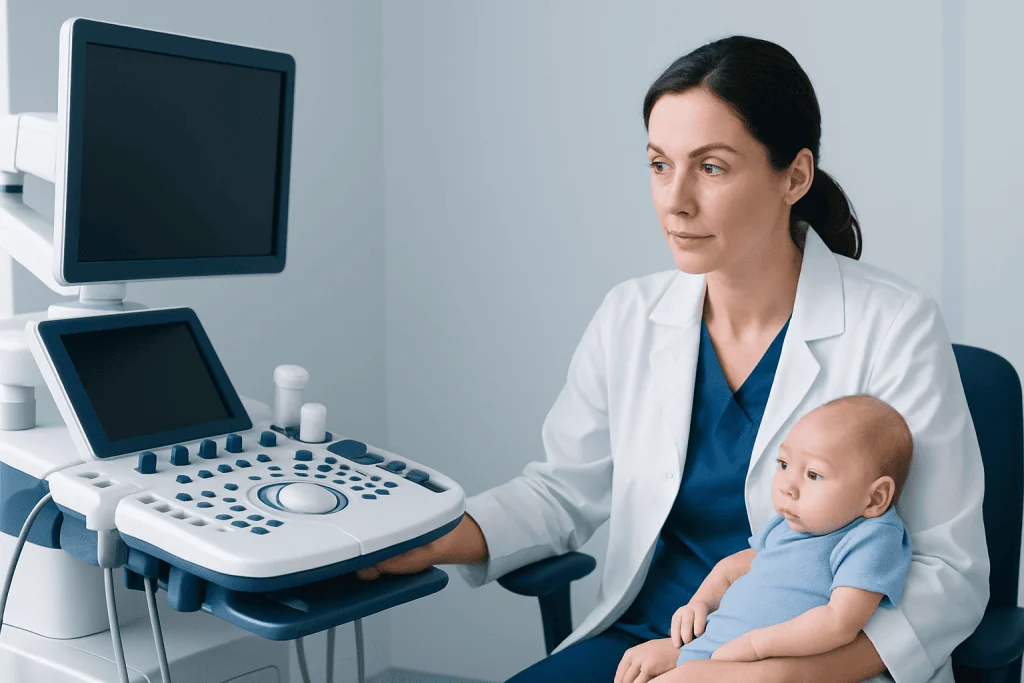
Microcephaly may be present at birth, called congenital microcephaly, or become apparent after birth when head growth slows compared with expected patterns. Some children have isolated or familial microcephaly, meaning small head size occurs in relatives and development may be typical. Others have microcephaly as part of a genetic, developmental, infectious, metabolic, or brain-related condition.
Possible effects vary considerably. A child may have no obvious concerns beyond a small head size, or may experience developmental delay, learning differences, speech or movement difficulties, seizures, challenges with feeding or swallowing, vision or hearing concerns, or differences in muscle tone. Not every child develops these problems.
Head circumference is only one part of the clinical picture. A child’s developmental progress, neurological examination, growth, feeding, behavior, hearing, vision, and day-to-day participation provide more meaningful information for planning care. Regular monitoring can help the care team respond early when a new need emerges.
Causes and risk factors a microcephaly evaluation may consider

Microcephaly can have many causes, and in some children a precise cause is not found despite appropriate testing. Potential causes include genetic changes, chromosomal conditions, differences in early brain development, reduced blood flow or injury affecting the developing brain, and certain metabolic disorders. A detailed pregnancy, birth, medical, and family history can guide the investigation.
Some prenatal infections, including congenital infections, may affect fetal brain development. Exposure to certain medicines, alcohol, recreational drugs, environmental toxins, or severe maternal malnutrition can also be relevant in selected situations. These factors do not mean that a parent caused the condition; identifying a cause often requires careful clinical assessment and may remain uncertain.
A microcephaly protocol is tailored rather than identical for every child. It may include asking whether relatives have smaller head sizes, reviewing prenatal ultrasound findings, considering newborn records, and looking for physical or neurological features that suggest a particular syndrome. Genetic counseling can help families understand what testing can and cannot answer, including implications for future pregnancies.
How microcephaly specialists evaluate a child
Microcephaly evaluation usually begins with accurate head measurement and review of measurements over time. The clinician compares head circumference with standardized charts and considers height and weight, parental head size when relevant, gestational age at birth, and whether the head has continued to grow along a consistent pattern.
The appointment commonly includes a neurological and physical examination, a developmental review, and discussion of pregnancy, delivery, illness, medications, family history, and current concerns. Hearing and vision assessments may be recommended because these senses are important for development and communication.
Further tests are chosen only when clinically useful. Brain imaging, often magnetic resonance imaging (MRI), may be considered if there are seizures, developmental concerns, abnormal examination findings, or uncertainty about brain structure. Blood tests or a genetic microcephaly panel may be appropriate when the history or examination suggests a genetic or metabolic cause. Testing may identify an explanation, but a normal result does not rule out every possible cause.
Families can prepare by bringing growth records, prenatal and birth information, lists of medicines, videos of unusual movements if present, and questions about development. The clinician should explain what each proposed test may show, its limitations, and how results could affect care.
Care plan: how treatment and supportive therapies work
There is no single procedure that treats microcephaly itself or makes a child’s head grow to a typical size. Treatment addresses the child’s specific symptoms, developmental needs, and underlying condition when one is identified. A good plan is reviewed over time because needs can change as a child grows.
Early intervention may include physical therapy for mobility and muscle tone, occupational therapy for daily skills and hand use, and speech-language therapy for communication, feeding, or swallowing. Educational assessments can help tailor support in nursery or school. A dietitian or feeding team may help if a child has difficulty gaining weight, chewing, swallowing, or managing reflux.
If seizures occur, a pediatric neurologist can assess their type and discuss appropriate treatment. Hearing, vision, orthopedic, sleep, behavioral, and gastrointestinal concerns may also need targeted care. When a genetic diagnosis is found, the care team may recommend screening for health issues known to occur with that condition.
In multidisciplinary care, clinicians work together rather than treating one measurement in isolation. Acibadem International’s multidisciplinary specialists and JCI-accredited hospitals can assess and support international patients with complex neurodevelopmental needs, with care coordinated according to the child’s clinical findings.
Candidacy, steps, recovery, benefits and risks of testing
There is no surgical “microcephaly procedure” for most children. Instead, candidacy for investigations such as MRI or genetic testing depends on the clinical picture. Testing may be particularly helpful when head growth declines over time, development is delayed, seizures are present, the examination is unusual, or there is a family history suggesting an inherited condition.
A typical evaluation pathway starts with measurement and clinical assessment, followed by selected referrals and tests. For MRI, the team first checks whether imaging is likely to answer an important question. Young children may need sedation or anesthesia to remain still, and the imaging team will explain preparation, safety checks, and what to expect on the day. Genetic testing usually involves a blood sample or cheek swab, followed by laboratory analysis and a results discussion.
Recovery after a clinic assessment or blood test is generally immediate. After sedation for MRI, a child is monitored until awake and safe to go home; temporary sleepiness, nausea, or irritability can occur. Genetic test results can take time, and families may find the waiting period difficult, so a scheduled follow-up discussion can be valuable.
Potential benefits of evaluation include identifying treatable associated problems, clarifying follow-up needs, connecting families with services, and sometimes finding a cause. Limitations and risks include inconclusive results, uncertain genetic findings, the small risks associated with blood draws or sedation, and emotional stress. The care team should help families weigh these considerations before proceeding.
What is the life expectancy of a child with microcephaly?
Life expectancy for a child with microcephaly cannot be predicted from head size alone. It depends on the underlying cause, the severity of brain and developmental involvement, and whether the child has associated health concerns such as difficult-to-control seizures, severe feeding problems, heart or lung conditions, or a progressive metabolic disorder.
Many children with mild or isolated microcephaly, including some with familial small head size, can live into adulthood. Children with more complex conditions may need closer medical support, but individual outcomes still vary widely. A child’s own diagnosis, growth, development, and medical history are more informative than general online estimates.
A microcephaly specialist can discuss prognosis honestly while recognizing uncertainty. Families may also benefit from speaking with a genetic counselor or the relevant disease specialist when a specific cause has been identified.
Can a child outgrow microcephaly?
A child may continue to gain head circumference over time, but whether they “outgrow” microcephaly depends on the cause and pattern of growth. If the child’s head measurement remains below the usual range while following a stable curve and development is progressing well, this may be reassuring in some situations, especially when small head size runs in the family.
Established microcephaly caused by a difference in brain development generally does not completely resolve. However, a head measurement does not determine a child’s potential to learn, build relationships, communicate, or develop skills. Early support and regular review focus on progress and participation rather than on trying to change head size.
Repeated measurements using the same technique and appropriate chart are important. A pediatric clinician should assess a child whose head growth slows, crosses down growth percentiles, or is accompanied by developmental regression or neurological symptoms.
Are there any famous people with microcephaly, and who is the longest living person?
It is not reliable or respectful to diagnose public figures with microcephaly based on appearance, photographs, or unverified reports. Health information is private, and the term microcephaly covers a broad range of causes and experiences. Families are best served by evidence-based information about their own child rather than comparisons with people in the media.
There is no verified, medically meaningful record for the “longest living person with microcephaly.” Because microcephaly is a clinical finding rather than one uniform condition, lifespan records would not provide a useful prognosis. Individual health needs, the cause of microcephaly, access to supportive care, and associated conditions all matter more.
When families encounter claims online about notable people or lifespan predictions, it is sensible to discuss them with the child’s clinician. The clinical team can redirect attention to the child’s current health, strengths, and support plan.
When to seek medical care
Parents and caregivers should arrange a pediatric assessment if they are concerned that a baby’s or child’s head seems small, head growth has slowed, or developmental milestones are not being reached. An appointment is also appropriate when there are feeding difficulties, poor weight gain, unusual stiffness or floppiness, problems with hearing or vision, or concerns raised during pregnancy or after a prenatal scan.
Urgent medical care is needed for a first seizure, a seizure lasting longer than expected or occurring repeatedly without recovery, severe breathing difficulty, marked sleepiness or unresponsiveness, dehydration, or sudden loss of previously acquired skills. Emergency services should be used when a child appears seriously unwell.
Ongoing care can include scheduled measurements, developmental screening, therapy reviews, and condition-specific monitoring. Keeping a record of new symptoms, developmental changes, therapies, and questions can make follow-up visits more productive and help the family participate in shared decisions.
Frequently asked questions
What kind of doctor is a microcephaly specialist?
A microcephaly specialist may be a pediatric neurologist, clinical geneticist, developmental pediatrician, or pediatrician experienced in neurodevelopment. The most appropriate clinician depends on the child’s symptoms and suspected cause. Many children are supported by a multidisciplinary team.
How is microcephaly diagnosed?
Diagnosis begins with accurately measuring head circumference and comparing it with standardized growth charts for age and sex. Clinicians also review growth over time, pregnancy and family history, development, and the neurological examination. Imaging or genetic tests may be offered when they could clarify the cause or guide care.
Does every child with microcephaly have developmental delay?
No. Some children, particularly those with isolated or familial small head size, may have typical development. Others may have developmental, learning, movement, speech, feeding, or seizure-related needs. Regular developmental monitoring helps identify support needs early.
Can microcephaly be detected during pregnancy?
A smaller-than-expected head measurement may sometimes be seen on prenatal ultrasound, particularly later in pregnancy. Ultrasound findings alone may not establish the cause or predict a child’s outcome. Obstetric and fetal medicine specialists can advise on follow-up imaging and testing when appropriate.
Is microcephaly hereditary?
Some forms of microcephaly are inherited, while others result from non-inherited genetic changes, prenatal exposures, infections, or other factors. Family history and examination findings help determine whether genetic counseling and testing are useful. A genetic result may also inform recurrence discussions for future pregnancies.
What support helps a child with microcephaly?
Support is tailored to the child and may include early intervention, physical therapy, occupational therapy, speech-language therapy, feeding support, educational planning, and management of seizures or other medical concerns. Family support and regular review are equally important. The goal is to promote comfort, development, participation, and quality of life.
References
- Centers for Disease Control and Prevention
- American Academy of Pediatrics
- National Institute of Neurological Disorders and Stroke
- World Health Organization
- Genetics in Medicine
This article is for general information only and is not a substitute for professional medical advice. Please consult a qualified doctor about your individual situation.
Explore treatments in Turkey — costs, top hospitals & a free quote
JCI-accredited · board-certified surgeons · reply within 24h
Add us as a Preferred Source to see more of our trusted health content across Google Search, AI Overviews and Discover.

More from the Health Library


Related Specialists

Prof. Dr. Yüksel Ersoy
Physical Medicine & Rehabilitation
Dr. İmam Bakir Batı
Liver Transplant Center
Dr. Kadir Yavaşoğlu
Orthopedic Surgery & Traumatology
Dr. Sirri Baştürk
Orthopedic Surgery & Traumatology